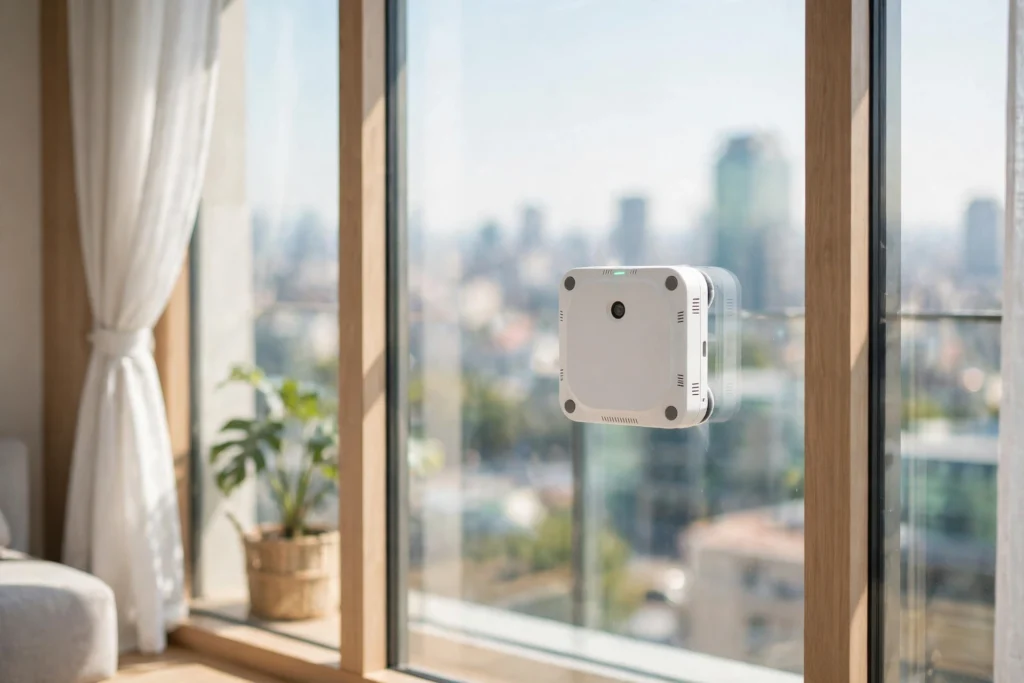
A window cleaning robot sticks to a pane of glass, moves across it in a planned pattern, and wipes away dust and grime as it goes. It usually grips the glass with suction or a magnetic pair, senses the edges of the window, and uses spinning or flat cleaning pads to scrub the surface. You still need to set it up properly, especially on an outside window, but once it starts, it does the slow, repetitive wiping for you.
Key Takeaways
- Most home window cleaning robots grip smooth glass with suction, while some use magnets on opposite sides of the pane.
- Sensors and bumpers help the robot find edges, avoid frames, and plan a path that covers the whole window.
- Cleaning pads, a small spray, and steady movement do most of the work; streaks usually come from dirty pads or too much cleaning fluid.
- A safety cord matters on high or outside windows, because suction alone is not a guarantee.
- These robots suit large, flat, frameless or lightly framed panes best, and they are not a good fit for every window shape.
How does a window cleaning robot stay on the glass?
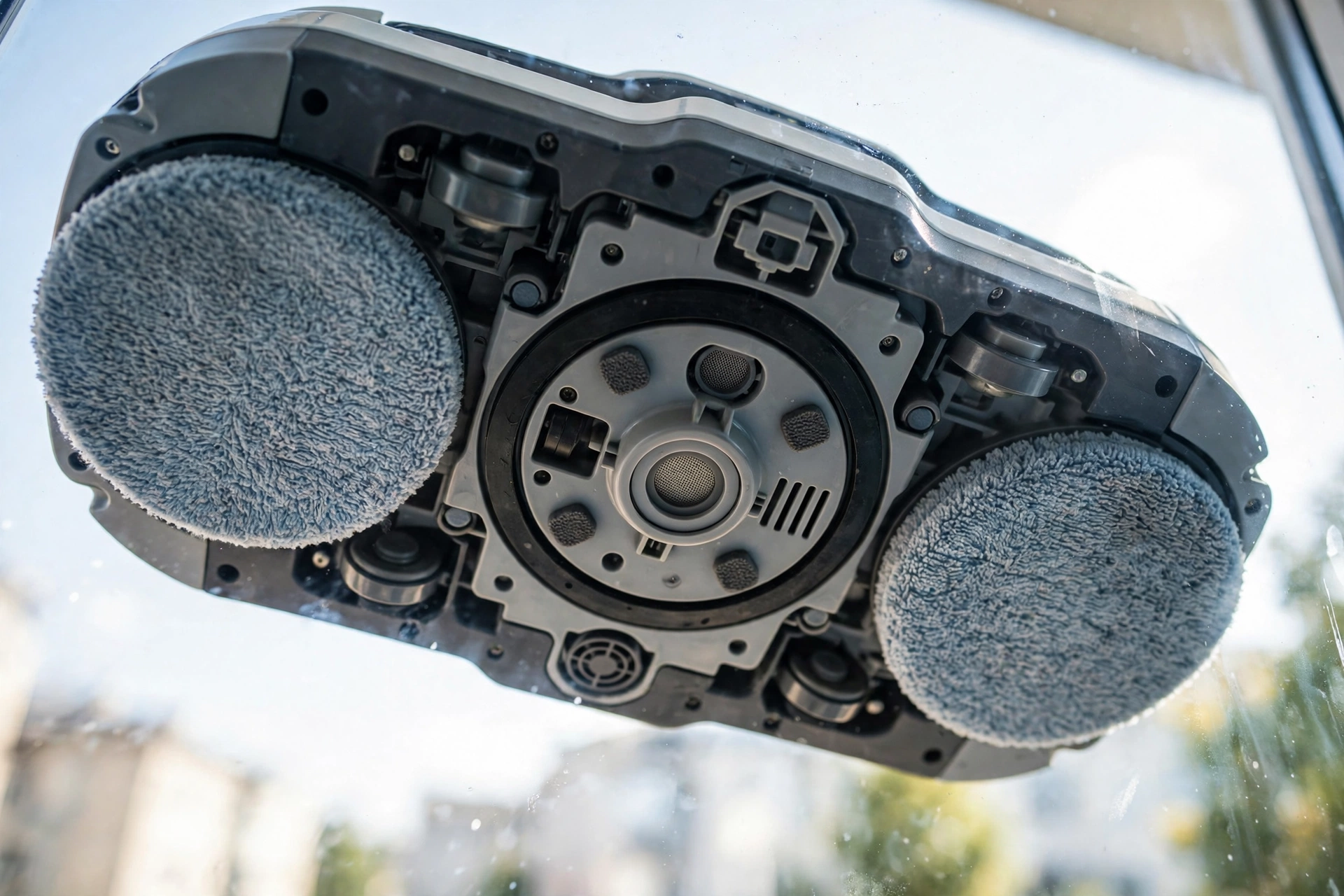
Suction is the most common method. A small fan or vacuum motor pulls air out from between the robot and the glass, so outside air pressure presses the robot against the pane. Think of it like a suction cup, only powered and constantly adjusted. If the seal weakens, the motor works harder or the robot warns you, depending on the model.
Magnetic models work differently. One unit sits on the outside of the glass and another on the inside, and magnets hold them together through the pane. The inside unit drives the movement, and the outside unit follows, cleaning the outer surface. This design can be useful for windows you cannot reach from outside, but it depends on the glass thickness matching what the model is made for. If the glass is too thick, the magnetic hold may be too weak; if it is too thin, the pair may be harder to handle.
Either way, do not treat grip as magic. Clean glass, a flat surface, and a working seal matter more than the brand name on the box. A dusty frame edge, a cracked pane, or a loose pad can all change how well the robot holds on.
How does it know where to clean?
Once it is attached, the robot needs a map of the window, even if that map is very simple. Many models start by moving to an edge, then work across the pane in a zigzag or a series of straight passes. Sensors detect the frame, a sudden drop at the edge, or a change in resistance when the robot meets a mullion or handle.
Some models plan more carefully than others. A basic robot may simply bounce from edge to edge until it has covered the area, which can still work on a small, plain window. A more advanced model may track its own position, remember where it has already cleaned, and avoid going over the same patch again and again. Neither approach needs you to draw a map yourself; the robot builds its working picture from what its sensors meet as it moves.
That is also why unusual windows can confuse it. Round corners, decorative dividers, stickers, and very small panes can interrupt its path. If your window has lots of small sections, check the model’s minimum pane size before you buy or borrow one. A robot made for large sliding doors may not be happy on a small bathroom window.
What actually cleans the window?
The cleaning itself is refreshingly ordinary. A pad, usually made from a soft microfibre-style cloth, rubs the glass. Some robots have two round pads that spin, a bit like small polishing discs. Others have a rectangular pad that slides back and forth. A few spray a fine mist of water or cleaning fluid ahead of the pad, either automatically or after you dampen the pad yourself.
This is where expectations matter. A window robot is good at regular upkeep: dust, light fingerprints, and everyday grime. It is not a miracle worker for paint splashes, dried bird droppings, or years of neglected dirt. For a stubborn spot, you may still need to pre-clean it by hand, then let the robot handle the wider surface. Using clean pads helps a lot. A pad that is already full of dirt will just move that dirt around, and that is often the real cause of streaks.
Water matters too. Too little fluid can leave dry patches; too much can drip, especially on an outside pane. Start with the amount the manual suggests, and change or wash the pads between windows if they look dirty. It is a small habit, but it makes the biggest difference to the finish.
Is a window cleaning robot safe to use upstairs?
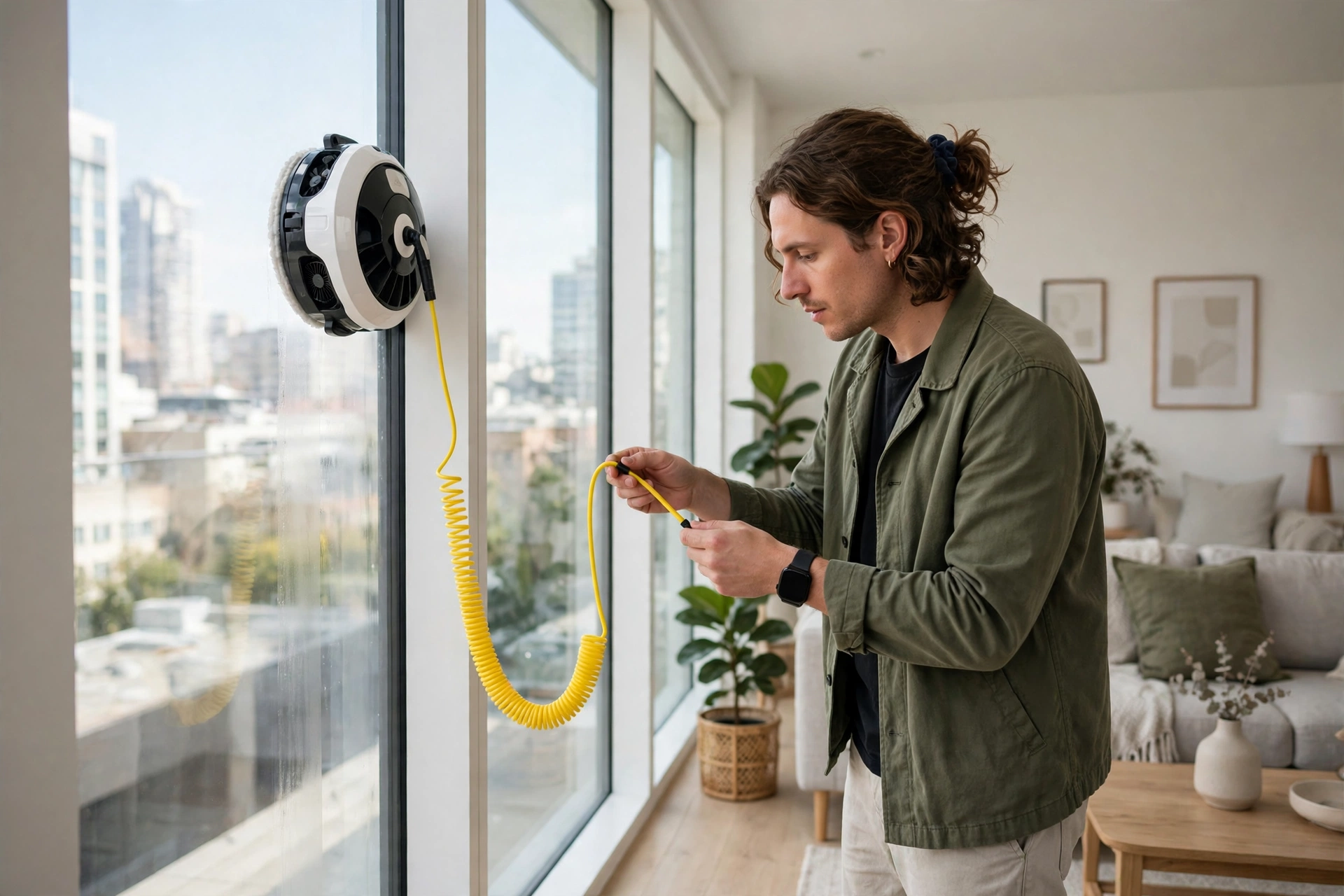
It can be, if you follow the safety steps for that model. The most important one is the safety cord or tether. On an outside or high window, attach the cord to something solid inside the room before you place the robot on the glass. That way, if suction fails, the robot hangs from the cord instead of falling.
Also check the power setup. Many window robots run from a mains cable, not a battery, because suction needs steady power. That cable can limit how far the robot can travel, so make sure it reaches comfortably without pulling tight. Some models have a small backup battery that keeps suction going briefly during a power cut, giving you time to grab the robot. That is a useful feature, not a reason to leave the robot running while you leave the house.
A sensible rule is to stay nearby during the first few runs, especially on a high window. Watch how it handles the edges, listen for changes in the motor sound, and see where it struggles. Once you know how it behaves on your windows, later runs feel much less nerve-wracking. And if a window is cracked, loose in its frame, or coated in a way the manual warns against, do not use the robot on it. A hand clean, or a professional clean for a difficult outside pane, is the safer choice there.
Where do window cleaning robots work best?
They shine on big, flat panes: apartment windows, sliding glass doors, glass balcony panels, and large office-style windows at home. The larger and simpler the pane, the easier it is for the robot to plan a clean path and show a clear result.
They are less suited to windows with many small panes, heavy frames, frosted or textured glass, and curved surfaces. Some models also struggle with very narrow strips, because the robot needs room to turn. Tinted or coated glass needs a check too, since some coatings do not suit every cleaning fluid or pad. When in doubt, test on a small, low window first and check the manual for the glass types it supports.
Compared with other home robots, a window cleaner has a narrower job than a robot vacuum, which must navigate furniture and different floor types, and it faces a different challenge from a pool cleaning robot, which works underwater on floors and walls. A window robot’s main problem is simpler to state and harder to ignore: it must stay stuck to a vertical surface while it works.
For background on the wider field, see Britannica’s robotics overview and Wikipedia’s robotic vacuum cleaner article.
What should you check before buying one?
Start with your windows, not the robot. Measure the smallest pane you want to clean, note whether it is single or double glazed, and check the glass thickness if you are considering a magnetic model. Then look at practical details: how the robot is powered, whether it has a backup battery, how long its cable is, and whether spare pads are easy to find.
Also think about who will use it. If the windows are high, the safety cord and a calm first run matter more than extra cleaning modes. If you have mostly large, plain panes, a simpler model may be enough. If your windows have frames, handles, or dividers, look for a model that handles edges well and can cope with obstacles without getting stuck every few minutes.
You do not need the most advanced model to get a good result. Clean pads, the right amount of fluid, and a window that suits the robot will do more for the finish than a long feature list. Like a robot arm, which is only as useful as the task and gripper it is matched to, a window robot works best when it is matched to the glass in front of it.
Frequently Asked Questions
Can a window cleaning robot clean the outside of a window?
Yes, many models can, but only with the safety cord attached and the power cable managed properly. Check that the model is rated for outside use on your glass type, and stay nearby during the first run.
Do window cleaning robots work on double-glazed windows?
Many suction models do, because they grip one pane at a time. Magnetic models are more sensitive to total glass thickness, so check the thickness range in the manual before using one on a double-glazed unit.
Why does my window robot leave streaks?
The most common causes are dirty pads, too much cleaning fluid, or a pad that has dried out partway through a run. Wash or replace the pads, use the suggested amount of fluid, and try a second pass on a lightly soiled window.
Can it clean framed or divided windows?
It depends on the size of each pane and the model. Large panes with simple frames usually work well, while many small divided panes can interrupt its path. Check the minimum pane size for the model you are considering.
What happens if the power goes out while it is cleaning?
Some models have a short backup battery that holds suction for a brief period, giving you time to reach the robot. Others do not, which is why the safety cord is essential on high or outside windows. Do not rely on suction alone.
Conclusion
A window cleaning robot is a simple idea done carefully: grip the glass, follow a path, and wipe as it goes. Choose one that fits your pane size and glass type, keep its pads clean, attach the safety cord on high windows, and stay nearby for the first run. Try it first on a large, low, plain window, and you will quickly learn whether it earns its place in your cleaning routine — and which windows are still better cleaned by hand. For a broader introduction, see What Is Robotics?.