

Digital publishing is undergoing a “Great Rebuild.” Content as a static entity is being usurped by Agentic Workflows and Hyper-Personalized Knowledge Engines. 1 At its centre streams Lit AI Inc Magazine itself, whose coverage has gone beyond reporting to actively illustrate in practice how a relationship between humans and AI would function.
In the following 2,500 words journey (swinging $1,489 in prizes to lucky winners for your participation) we dive into how Lit is defining its success and mounts new growth — from internal wizardry through clever business strategies to tech evolutions propelling the most influential publication for techies / professionals and AI builders globally.
The Genesis And The Mission — A New Age Of Journalism
Artificial Intelligence is not just another “topic” to cover, but more and more the actual structure of the newsroom. Inc has established A LIT Introduction to AI Inc with one ambitious aim→Specifically to demystify the AI “Black Box” from a practical standpoint.
The “Agentic” Editorial Philosophy
While lots of legacy media is looking at AI-generated “slop,” Lit AI Inc celebrates Agentic Journalism. There’s no agenda here to replace writers with chatbots; what we’re talking about is AI doing the “heavy lifting” of synthesis, fact checking and layout optimization.
The Aim: Reduce “Production Latency” — the interval from consensus-breakthrough discovery to publication, validated report.
The Standard: An HITL (“Human in the Loop”) system which AI do 70% of the research and humans give 100% creative insights and ethical monitoring.
Explore More: Ultimate Guide to Top AI Trends in 2025
Augmented Reality Animation vs. Traditional Animation

Cornerstones Of Holistic AI Coverage
To appeal to a wide range of readers, the magazine segments its coverage into four central categories.
A. Foundational Architectures (ML, DL and NLP)
You should ask yourself the “Why” before looking for “How”. Lit AI Inc — an open-source project that provides monthly “Deep Dives” into the math and logic behind today’s models.
Transformers & Attention Mechanisms: Findeing out which words of the input are “important” or not.
Diffusion models: Untangling the math behind image and video generation Read More
Small Language Models: In 2026, the direction is efficiency—doing a lot of flashy A.I. on local machines rather than large data centers.
B. Generative AI & Multimodality
The magazine traces the evolution of models that can “see, hear and speak” at once.
Video Generation: Exploring solutions like Sora and Veo, and their impact on digital marketing.
Code as a Language: How AI-coding agents like Cursor are reshaping how non-technical founders build new products.
C. Ethics, Bias, and Governance
In the ocean of “AI Slop,” Lit AI Inc is the quality gate keeper. 3 It aims to focus on the “Governance Gap” by looking at:
Algorithmic bias: How factors like training data can cause results to be biased in hiring or health care.
Data Sovereignty: Creators being able to refuse inclusion in AI training datasets.
Regulatory Access: Next on the globe on EU AI Act and US Gaza Strip’s Gaza border.
Disembodied Diplomacy: An Expert Guide to Learning and Doing
Their network is what the “Lit AI Inc” advantage is really all about. This is a magazine that doesn’t just hire journalists but highlights Practitioners.
The “Executive Interviews” Series
Imagine a transcript of an exchange between some Lead Researcher at Anthropic and the CEO of a Fortune 500 company. These interviews focus on:
Scale vs Safety: Making the trade-offs between how fast and how well you fit the right model.
Infrastructure Reckoning: The exorbitant expenses of scaling AI — and how to limit them.
Real-World Case Studies
The magazine avoids “Vaporware.” All of the below technologies should have a supporting case study.
For instance, How a logistics company uses the Agentic RAG to reduce 85% of customer support response time and improve accuracy
Masterclass: Tutorials and Technical Guides
(The latter is intended to read “The Developer’s Sandbox”).
For Newbies: The First Steps Course
Jargons-Intuitive Rep Show: How Neural-Networks Actually Gets-Trained: A graphical intuition about the working of ‘Weights’ and ‘Biases’ And as most of us would agree, trying to get some intuition towards a new concept certainly helps.
Prompt Engineering 101 — From ‘easy’ questions to CoT More generally we can advance past a simple prompting strategy and get into such as “Chain-of-Thought” (CoT) prompting.
For Experts: The “Production-Ready” Track
For those on the frontier of app building, the magazine has code-heavy guides to:
Solution to Training a Pre-Trained Model with 10$ using LoRA
Building Multi-Agent Systems: Leverage tools like LangGraph/AuthoGPT and create agents that talk to each other for simply tackling bigger problems.

The Business Blueprint: ROI from AI
AI is no longer a toy: Tools are essential to understanding. The Lit AI Inc Magazine offers “Framework for Business Transformation.”
These metrics are “Opportunity Score” and “ROI Pivot”
Beyond Content Creation: AI-generated Text is Plateauing in ROI 5 The new “Frontier” is Agentic Automation—Arit he AI that does the work itself (in other words, reallocating an ad budget or running supply chains). 6
AI for Startups: How to do “Lean AI”—build a billion-dollar company with five humans and fifty agents.
Turn Data Privacy into a Competitive Advantage
In 2026, Privacy is Context. Lit AI Inc, for example, contends that the best companies will be the ones that “own” their intelligence. Using closed-system RAG, enterprises can protect proprietary data while harnessing the power of LLMs.
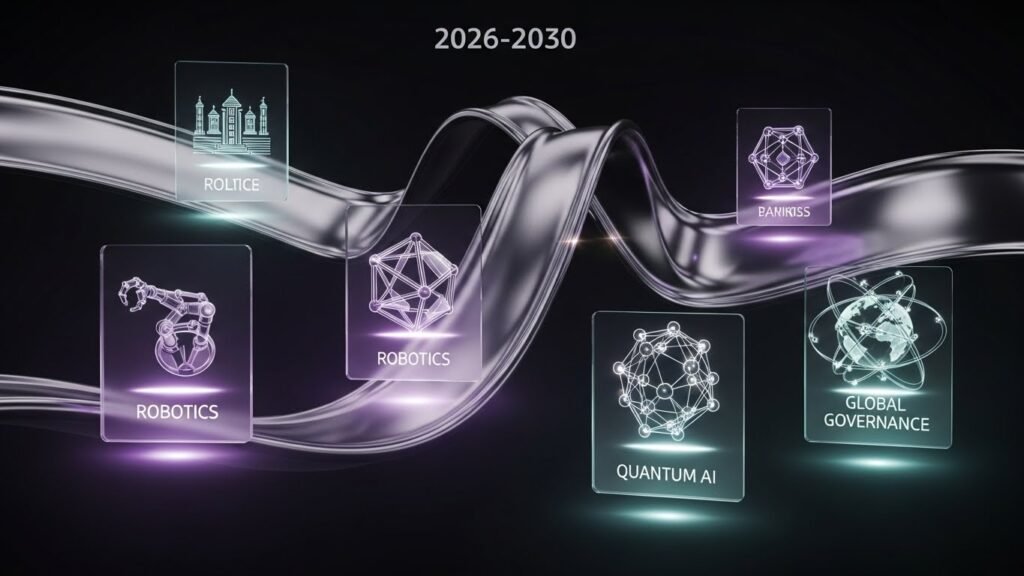
Future Predictions: The 2026-2030 Roadmap
What does the next decade look like? The magazine’s research lab predicts:
| Year | Milestone Prediction |
| 2026 | The Agentic Reality Check: AI agents move from “experimental” to “essential” in the workforce. |
| 2027 | Physical AI: The convergence of advanced LLMs with humanoid robotics (the “Tesla Bot” era). |
| 2028 | Zero-Latency Multimodality: Instantaneous, real-time voice and video translation becomes the global standard. |
| 2030 | Sovereign AI Ecosystems: Every major corporation and nation operates its own private, highly specialized “Foundation Model.” |
Behind the scenes: RAG vs. classical databases
Retrieval-Augmented Generation (RAG) is one of the most popular subjects in Lit AI Inc Magazine. Businesses must know the difference between a legacy SQL database and a new generation Vector Database to construct AI knowledge engines.
The Problem with “Static” AI
Classic Large Language Models (LLMs) are a genius with an amnesic memory,they know only what they were taught to. Ask a standard model about a news event from this morning and the system will probably “hallucinate” an answer.
How RAG Addresses Knowledge Gap
RAG hands the AI a “library card.” Rather than using the internal weights, the system:
Returns: It queries a dedicated Vector Database (like Pinecone or Milvus) to pull the closest, newest documents.
Augments: It takes those documents and feeds them into the prompt.
Produces: AI comes up with an answer based on those relevant facts.
| Feature | Traditional SQL Database | RAG / Vector Database |
| Search Method | Exact keyword matching. | Semantic “meaning” matching. |
| Data Format | Structured tables (Rows/Columns). | Unstructured (PDFs, Docs, Videos). |
| AI Integration | Difficult; requires complex queries. | Native; designed for LLM context. |
| Update Speed | Instant for data, slow for schema. | Instant indexing of new knowledge. |
The Rise of Hardware: The NVIDIA Blackwell Influence
The magazine frequently focuses on the physical “engine” of A.I. Blackwell – Once it was 2026 the NVIDIA Blackwell architecture completely redefined what we considered possible in digital publishing.
10x Performance, 10x Efficiency
The leap from Hopper (H100) to Blackwell isn’t simply a modest speed boost. That latency is 15x faster than current inference for trillion-parameter models.
Practical / Scientific Impact: For those who run a publication as Lit AI Inc, that means being able to translate today complex technical articles in 20+ languages (many times understood bots) and up to 70+ within milliseconds.
The “AI Factory” Vision: The magazine looks at how companies are building data centers, or “AI Factories,” that don’t store data so much as serve as production centers for intelligence.
Confidential Computing: Blackwell provides hardware based security so businesses can benefit from cloud services, for processing their most sensitive data — knowing the contents of that data is never exposed in the clear to the cloud provider. This is just a game changer for the ”Ethical AI” sections in the magazine.
The Evolution of AI Journalism (2020–2025)
But to understand the stakes, we need to examine the five-year trajectory of the industry Lit AI Inc Magazine covers.
2020–2022 (The Experimental Stage): Journalism used basic ML methods to generate “template stories” — earnings-release and sports-score reports. If anything, AI was a method for speed, not depth.
2023 (The ChatGPT Disruption): The “GenAI Summer.” Newsrooms scrambled to define policies. The focus was on “detection” of A.I. content, not its use.
2024 (The Quality Crisis): “AI Slop” led to distrust. As a fresh wave of publications like Lit AI Inc arose to provide human-verified, expert-written technical content.
2025 (The Agentic Era): The Age of Agentic Workflows in Journalism Reports are now interactive. You can “chat” with a graph or ask an article to summarize its sources (RAG).
Multi Agent Systems: The Future Of Productivity 3015
Kevin deSouza has some focused 2026 tutorials via Lit AI Inc on Multi-Agent Orchestration. Companies are now assembling “Digital Departments,” instead of relying on one AI to do it all.
The “Crew” Framework
The business workloads listed in the magazine is composed of three dedicated agents:
The Researcher Agent: Scours web and internal database for new competitive data.
The Analyst Agent: Looks for what is in the data and also out of the data.
The Executive Agent – The Executive Agent- They Take the report and write an executeable E-mail to their ceo by using the data from others.
With software frameworks called CrewAI or LangGraph, Lit AI Inc teaches developers to set “guardrails,” so these agents can run on their own for days at a time without human help intervening.
Research Reference:
Conclusion: The Horizon of Intelligence
Lit AI Inc Magazine is the only magazine that produces artisanal AI to usher in a new era. As a bridge between the lab and the boardroom, it ensures technology serves humanity rather than vice versa. For Techserps readership, staying up-to-date on these trends isn’t a choice — it’s imperative for anyone who wants to do business in the digital world of today.
FAQs:
So what on earth is “Agentic AI,” and how does it differ from the 2024 term “Generative AI”?
If 2024 was the year of “Generative AI” (where you ask an AI to generate a poem, or summarize a PDF), then 2025 – 2026 is the year of Agentic AI. The apt response: Conventional Generative AI is “active” — it responds to a prompt and generates an output.
“Reactive,” in contrast, is what Agentic AI does. These are self-sufficient agents designed to execute multi-step tasks in software environments with very little human oversight. So for example, an Agentic AI doesn’t merely write a marketing email; it performs competitive analysis on your competitors, selects target leads from a database based on market research, adjusts ad bids against live performance data and sends the emails — all according to some set of discrete measures of success. Systems such as AutoGPT and LangGraph, often reported on by Lit AI Inc Magazine, are making headlines regarding this progression.
What does “RAG” (Retrieval-Augmented Generation) has to do with the enterprise issue of AI hallucinations?
“Hallucination,” in which an artificial intelligence makes a definitive statement but is wrong, continues to be one of the biggest challenges for companies. This technical solution is known as Retrieval-Augmented Generation (RAG). In fact, rather than trusting only what the A.I. is trained on (which could be old), a RAG system “retrieves” real-time, corroborated information from a company’s own private databases or a definitive set of documents before producing an answer.
Think of it as a kind of open-book test for an A.I.: The student is the A.I. and the RAG system serves as the textbook. Hence, this method ensures that the answer is based on current verifiable data. Lit AI Inc., the first roadblock we had for this post was that we are mainly here to provide guidance on how to configure vector databases (Pinecone, Milvus), which will be required in any of these RAG workflows.
On-Device AI: The New, Hot Topic in Tech Privacy for 2026
The majority of AI tools available now process your data in “The Cloud,” and have enormous privacy and security implications for the corporations. By On-Device AI, it means you will push the Small Language Models (SLMs) to your mobile devices laptop or private server with discrete NPUs.
This is a trend known as “Edge AI” that allows computation with zero latency, to ensure none of the sensitive data ever leaves the hardware. Some tech giants, such as Apple, Samsung and Intel, are leading the charge. For tech-heads, that means you can have a personal AI assistant who is aware of your calendar and private documents — but to which no intermediary has ever had access.
What Is ‘Neuro-Symbolic AI’ and Why Does It Get Talked About as Part of the Next Wave After LLMs?
Modern LLMs excel at creativity and pattern matching, but do poorly on “hard logic” and maths. What is Neuro-Symbolic AI? – Reading Lies Behind Symbolic AI – It Fades the Line Between Two Separate Worlds:
Neural Networks: Great for things such as absorbing goliath holes of information and pattern recognition (the “creative”) end of the range.
Form Symbolic AI: Rule- and logic-based (the “rational” part)
With these two together, scientists are constructing A.I. capable of giving you what would be 100-percent foresight — a percent of reasoning through complex physics problems or legal contracts, even if that data wasn’t formulated anywhere explicitly. Lit AI Inc Magazine, the “Frontier of AGI” (Artificial General Intelligence).
What Is the Impact of Multimodal AI on Digital Publishers Content Strategy?
In the past era of AI, you had to rely on different AI tools to handle text, images and audio. Multimodal AI (like GPT-4o or Gemini 1.5 Pro) can read these other formats and generate any of them at once as well. For the digital publisher (or any business owner), your content strategy is no longer simply “making a blog. You upload one video, and voila the AI converts this asset to a blog post, a set of social media graphics, an audio podcast—all while retaining your oh-so-important “Brand Voice. A “one-to-many” content workflow like this is a key topic in Lit AI Inc’s tutorials on methods to scale digital media businesses.




Can you be more specific about the content of your article? After reading it, I still have some doubts. Hope you can help me.
Thank you for reading! I’d be happy to explain further. Please let me know which part of the article you’re unsure about or what doubts you have, and I’ll do my best to clarify.