

AI ethics is the study of how artificial intelligence should be designed and used. It covers bias in automated decisions, privacy in data collection, and transparency about how systems work. Responsible AI means building and deploying systems that are fair, accountable, and respectful of people’s rights and dignity.
Key Takeaways
- AI systems learn from data, and data can carry historical biases into automated decisions about hiring, lending, and more.
- AI raises privacy questions: what data is collected, how it is used, who can see it, and what can be inferred from it.
- Responsible AI combines technical practices — testing, documentation, human oversight — with clear organizational policies.
- International guidelines, such as those from UNESCO and the OECD, offer shared principles that anyone can reference.
What Is AI Ethics?
AI ethics asks who is affected by an AI system, who is accountable when something goes wrong, and what values the system should reflect. It is not a single rulebook: philosophers, engineers, policymakers, and the public all contribute, and reasonable people disagree about hard cases. That disagreement is normal, because ethics deals with trade-offs between competing goods — safety versus convenience, innovation versus caution.
Most systems in use today are narrow AI — tools designed for specific tasks — which means ethical questions are usually about particular applications, not about machines in general. A hiring tool, a medical imaging assistant, and a content recommendation feed raise different issues, and each deserves its own careful look.
What does “responsible AI” mean?
“Responsible AI” generally means AI that is developed and used with care for its effects on people. Common principles include fairness, transparency, privacy, safety, and accountability — keeping humans responsible for consequential decisions rather than handing that responsibility to software.
How Does Bias Get Into AI Systems?
Machine learning models learn patterns from training data. If that data reflects historical inequalities or underrepresents certain groups, the model can reproduce those patterns in its outputs — for example in hiring tools, lending assessments, or facial recognition. This is often called algorithmic bias. It is rarely intentional; it emerges from the data and from choices about what the system is optimized to do.
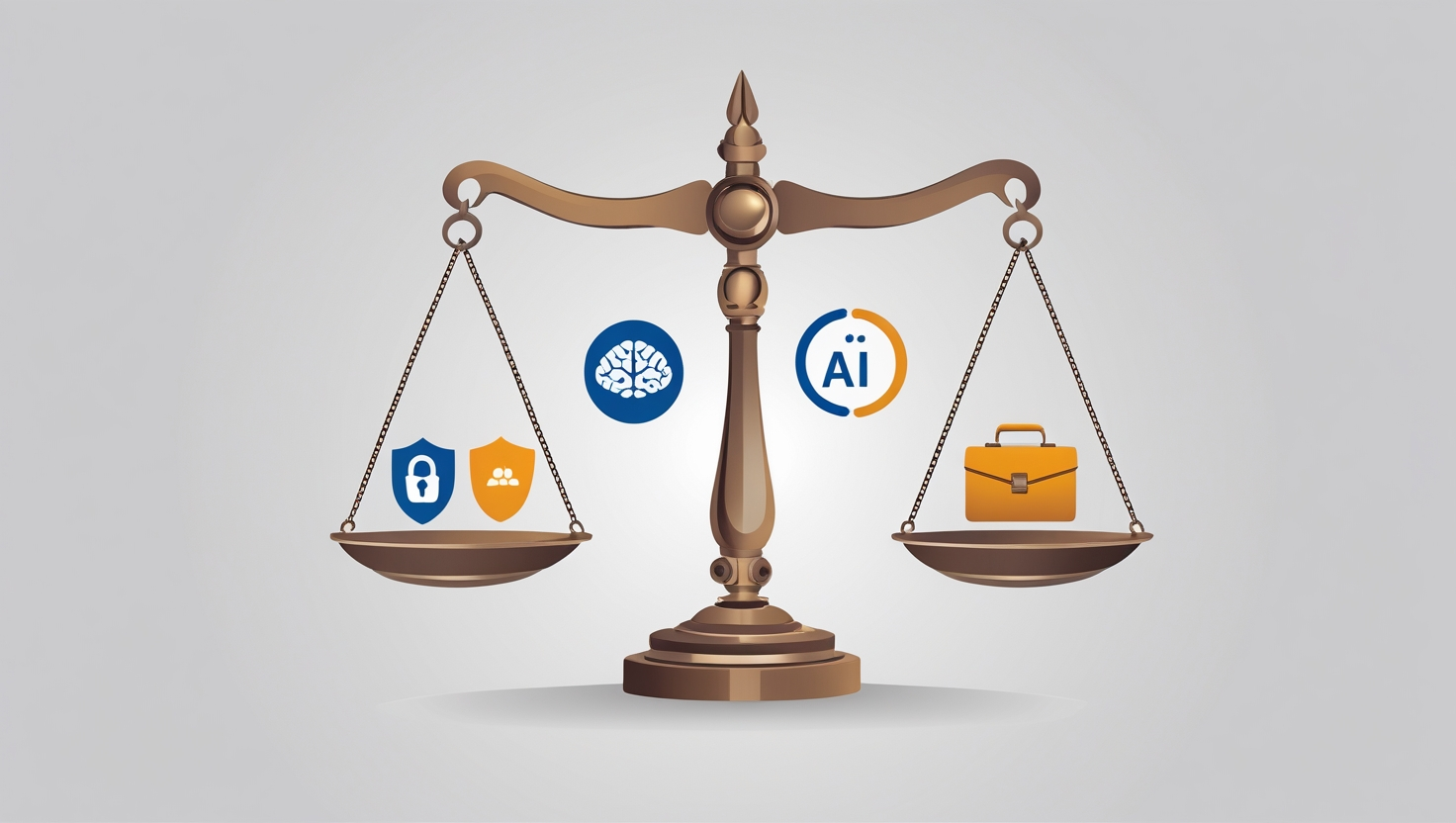
Where does biased training data come from?
Training data comes from the real world: historical records, web pages, images, and human-labeled examples. All of these can contain gaps and skews. A hiring model trained on past hiring decisions may learn to prefer the profiles that were hired before. A language model trained mostly on text from one region may handle other dialects poorly. Even the labels humans attach to data can reflect the labelers’ own assumptions.
How can bias be reduced?
Teams can audit datasets for representation gaps, test models on diverse groups before deployment, and monitor outputs once systems are live. Techniques include rebalancing training data, adding fairness checks during development, and — importantly — keeping human reviewers in the loop for high-stakes decisions. No method eliminates bias entirely, which is why ongoing testing and honest documentation of a system’s limits matter more than any single fix.
What Are the Privacy Risks of AI?
AI systems are often data-hungry: they improve with more examples, which creates pressure to collect personal information such as photos, voice recordings, location histories, and messages. Risks include data breaches exposing that information, secondary uses of data beyond the original purpose, and inference — AI can sometimes deduce sensitive attributes, like health conditions or political views, from seemingly harmless data.

Practical protections include data minimization (collecting only what is needed), anonymization where possible, clear consent, and strong security practices. Regulation in many regions now gives people rights over their data, such as access and deletion — and organizations deploying AI are increasingly expected to honor those rights by design.
What Does Responsible AI Look Like in Practice?
Responsible AI is a set of habits, not a single tool. For organizations, it often includes documenting what a system is meant to do and its known limits; testing for bias and safety before launch; giving users clear explanations and ways to appeal automated decisions; assigning a named person or team accountable for the system; and planning for failures with human fallback.
For individuals, responsible use means checking AI outputs before acting on them, understanding what data a tool collects, and being honest about when content is AI-generated. As uses of AI and machine learning across industries keep growing, these habits matter in more and more settings.
Two widely referenced sources of guidance are the OECD’s work on artificial intelligence, which sets out principles for trustworthy AI, and UNESCO’s recommendation on the ethics of artificial intelligence, a global framework covering fairness, privacy, and human oversight.
Frequently Asked Questions
Is AI bias a technical problem or a social problem?
Both. Bias enters through data and design choices, but those reflect social realities. Technical fixes help, but they work best alongside diverse teams, clear policies, and accountability for outcomes.
Can AI be made completely unbiased?
Probably not. Every dataset and design choice involves trade-offs, and “unbiased” depends on which definition of fairness you use. The realistic goal is to measure bias, reduce it where it causes harm, and keep humans accountable for consequential decisions.
Does AI violate my privacy?
It depends on the system. Some AI tools process data locally or with strong protections; others collect broad personal data. Reading privacy policies, limiting app permissions, and using available privacy settings are reasonable steps anyone can take.
Who is responsible when AI makes a harmful decision?
Responsibility generally sits with the people and organizations that build, deploy, and oversee the system — not the software itself. That is why accountability frameworks, documentation, and human oversight are central to responsible AI.
What is the difference between AI ethics and AI safety?
AI ethics covers broad moral questions: fairness, privacy, accountability. AI safety focuses more narrowly on making systems behave reliably and avoiding harmful outcomes. The two overlap heavily, and progress on one usually helps the other.
Conclusion: A Practical Next Step
AI ethics can feel abstract, but it becomes concrete when you apply it to one system you actually use. Pick an AI tool in your work or daily life and ask three questions: what data does it use, who could be affected by its mistakes, and who is accountable if something goes wrong? Those questions turn principles into practice — which is what responsible AI is really about.