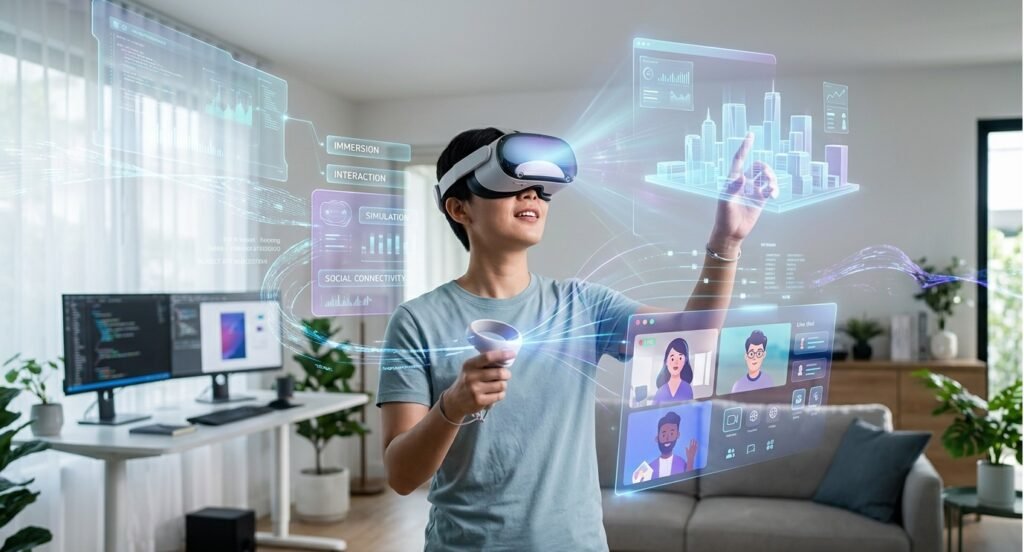
Virtual reality is used well beyond gaming: companies train employees in VR simulations, medical professionals use it for therapy and surgical practice, and designers walk through 3D building models before anything is built. By placing people inside realistic, interactive environments, VR makes training safer, therapy more accessible, and design reviews faster and cheaper.
Key Takeaways
- VR creates realistic, interactive environments for more than entertainment.
- It is widely used for job training, medical therapy and education, and design review.
- It makes risky training safer and design decisions cheaper to test.
- Costs, motion sickness, and space needs remain real limitations.

How Does Virtual Reality Work Beyond Games?
A VR headset places screens in front of your eyes and tracks your head and hand movements, so when you turn your head, the virtual world turns with you. That sense of “being there” — presence — is what makes VR useful beyond entertainment. A trainee can practice a difficult procedure, a patient can confront a fear in a controlled setting, or a designer can stand inside a building that exists only as a digital model.
The same hardware used for gaming powers these professional uses. What changes is the software: training simulations, therapy programs, and design tools built for specific jobs rather than for play.
How Is VR Used for Training?
Training is one of the biggest non-gaming uses of VR, because it lets people practice difficult or dangerous tasks without real-world consequences.
Dangerous and Expensive Job Training
Firefighters can walk through burning buildings, electricians can practice on high-voltage equipment, and pilots can rehearse emergency procedures — all in simulation. Mistakes cost nothing and can be repeated until the skill is learned. Companies also save on travel and physical mock-ups: a trainee anywhere in the world can step into the same virtual factory or hospital ward.
Soft Skills and Customer Service
VR also trains people skills. Employees practice job interviews, difficult customer conversations, and public speaking in front of virtual audiences that react to their words. Practicing with a responsive virtual audience feels more real than rehearsing alone, and feedback can be given immediately after each attempt.
How Is VR Used in Healthcare?
In healthcare, VR is used both for treating patients and for educating professionals. These are supportive tools used alongside normal care, not replacements for medical advice.
Therapy and Rehabilitation
Therapists use VR for controlled exposure therapy: a patient with a fear of heights can stand on a virtual balcony, gradually increasing the height over sessions, while the therapist guides the process. VR is also used in physical rehabilitation, where game-like exercises encourage patients to repeat movements, and in pain management, where immersive environments help distract patients during uncomfortable procedures.
Medical Education and Surgical Practice
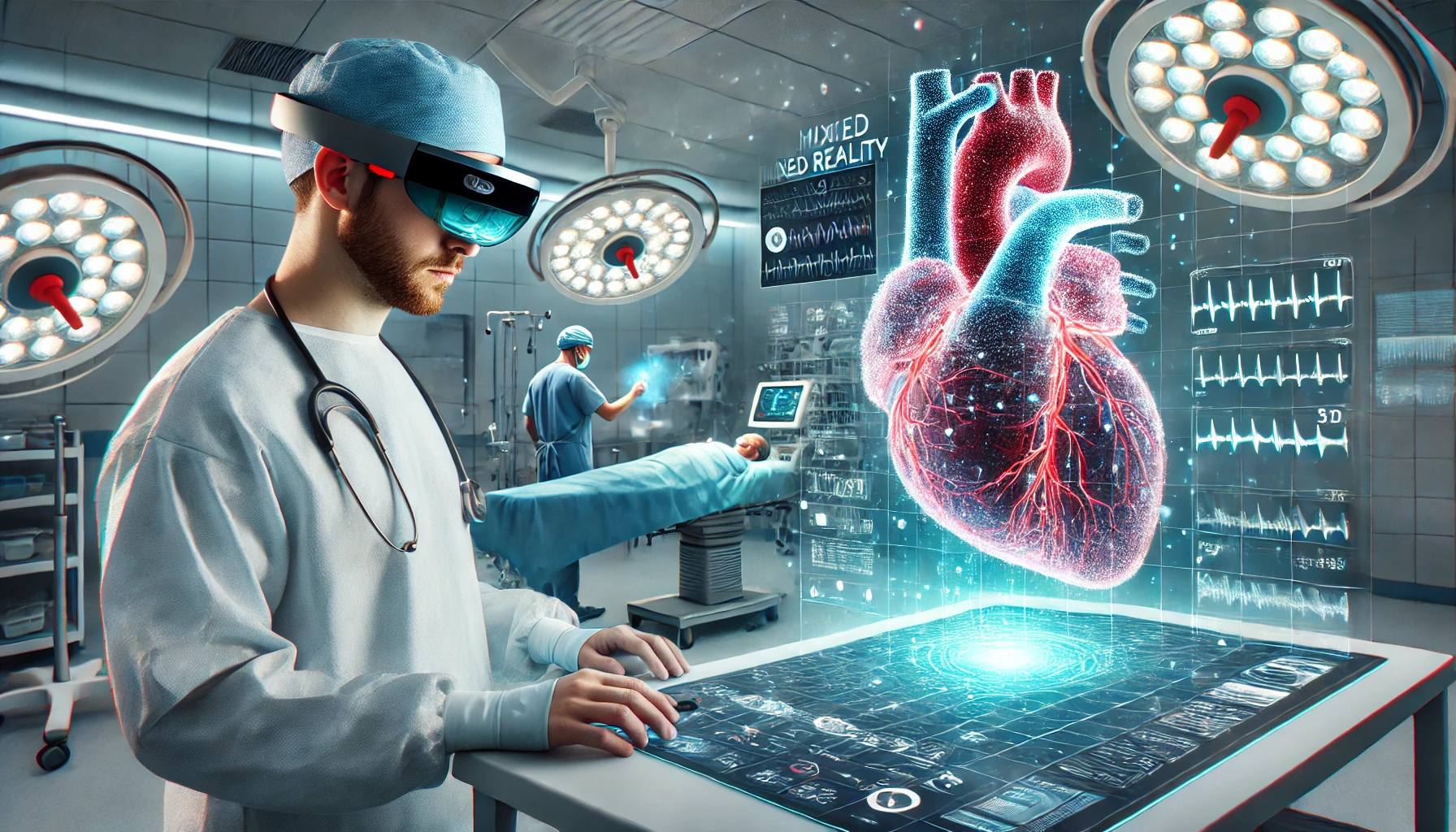
Medical students can explore detailed 3D models of human anatomy, rotating and dissecting virtual organs in ways no textbook allows. Surgeons can rehearse complex procedures on virtual patients before entering the operating room. This kind of practice builds familiarity without any risk to real patients.
How Is VR Used in Design?
Architecture and Construction
Architects invite clients to walk through buildings before they are constructed. Problems that are hard to see on flat plans — a hallway that feels too narrow, a window placed awkwardly — become obvious when you stand inside the space. Catching these issues in VR is far cheaper than fixing them after construction.
Product and Interior Design
Product designers test how a new device looks and feels in a virtual room before making physical prototypes. Interior designers let customers try different furniture arrangements and color schemes in a virtual version of their own space. Car designers review full-size virtual models of new vehicles, checking sightlines and dashboard layouts.
What Are the Benefits and Limits of VR?
The main benefit is safe, repeatable practice and visualization. Training can happen anywhere, mistakes are free, and designs can be tested and changed in minutes instead of weeks. For remote teams, shared virtual spaces can make collaboration feel more natural than video calls.
The limits are practical. Good headsets still cost a meaningful amount, especially when buying many for a company. Some people experience motion sickness or eye strain, which limits session length. VR also needs physical space to move safely, and not everyone can use it comfortably — accessibility for people with certain disabilities remains a work in progress. Finally, VR complements real-world experience; a simulated surgery or fire drill builds skills, but it does not fully replace the real thing.
Frequently Asked Questions
Is VR only for gaming and entertainment?
No. Training, healthcare, design, and remote collaboration are all major professional uses, and in some industries they are now more important than gaming.
Do you need expensive equipment for professional VR?
Consumer headsets work for many professional applications, and prices have fallen over the years. Large training programs may invest in higher-end devices and custom software, but getting started is far cheaper than it used to be.
Can VR replace real training?
It complements real training rather than replacing it. VR builds skills, confidence, and familiarity safely, but most programs still include hands-on practice with real equipment and supervision.
Is VR therapy safe?
VR therapy is conducted by trained professionals as part of a treatment plan. Like any therapy, it should be guided by a qualified practitioner, not self-administered from random apps.
What is the difference between VR and AR?
Virtual reality replaces your surroundings with a fully digital world, while augmented reality overlays digital elements on the real world you still see. Both are used professionally, but VR’s full immersion suits training and design review especially well.
Conclusion
Virtual reality has grown far past gaming: it trains workers for dangerous jobs, supports therapy and medical education, and lets designers test ideas before committing to them. Its strengths — safe practice, immersive visualization, and anywhere access — come with real limits around cost, comfort, and accessibility. A practical next step is to look for a VR demo near you: many training centers, clinics, and design studios now offer short sessions, and ten minutes inside a headset explains the technology better than any article.