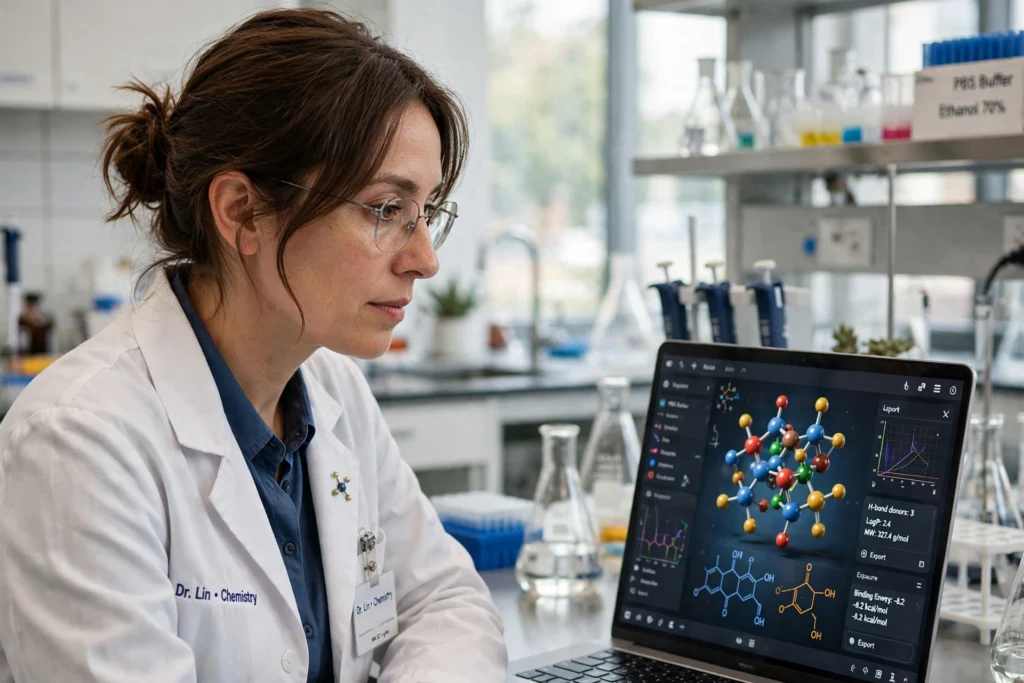
AI drug discovery uses machine learning to search through huge collections of molecules, predict how they might behave in the body, and flag the most promising candidates for lab testing. It does not replace scientists or clinical trials, but it helps researchers focus on the compounds most likely to work, which can save years of slow, manual screening.
Key Takeaways
- AI screens and ranks candidate molecules far faster than manual methods, so researchers focus on the most promising ones.
- Models learn from known drugs and lab results to predict how a new molecule might bind, behave, or cause side effects.
- AI can suggest entirely new molecular structures, but every suggestion still needs lab testing and clinical trials.
- AI also helps run clinical trials, from finding suitable participants to spotting safety signals early.
- The limits are real: thin or biased training data and strict safety rules mean human experts stay in charge.
What does AI actually do in drug discovery?
Finding a new medicine the old-fashioned way is slow: researchers work out which protein is involved in a disease, then test thousands of compounds to find one that affects it safely. Most fail, and the journey from first idea to approved medicine can take many years.
AI changes the early part of that journey. Instead of testing every compound by hand, researchers train machine learning models on data about known drugs, proteins, and past experiments. The model learns which shapes bind to a target and which chemical groups often cause side effects, so a new molecule gets a quick, educated prediction.
Think of it as a very fast shortlist. The AI narrows a huge field down to a manageable few hundred candidates, scientists test those in the lab, and the results feed back into the model. Our complete guide to artificial intelligence explains how these models learn.
How does AI screen millions of molecules?
Screening is where AI earns its keep. A research team may hold a virtual library of millions of chemical compounds, and testing each one in a real lab would take years. A trained model can score them all in hours or days, ranking each by how likely it is to bind to the target protein.
The model looks at a molecule’s structure — its atoms, bonds, and shape — and compares it with what it has seen before. Modern deep learning systems can work directly from a molecule’s 3D shape, which matters because binding is a physical fit, a bit like a key sliding into a lock.
AI screening also filters out likely failures early. A compound might bind well but break down too quickly in the body, or look toxic in early tests. Safety data can raise a flag before anyone spends months on lab work.
Can AI design a brand-new drug from scratch?
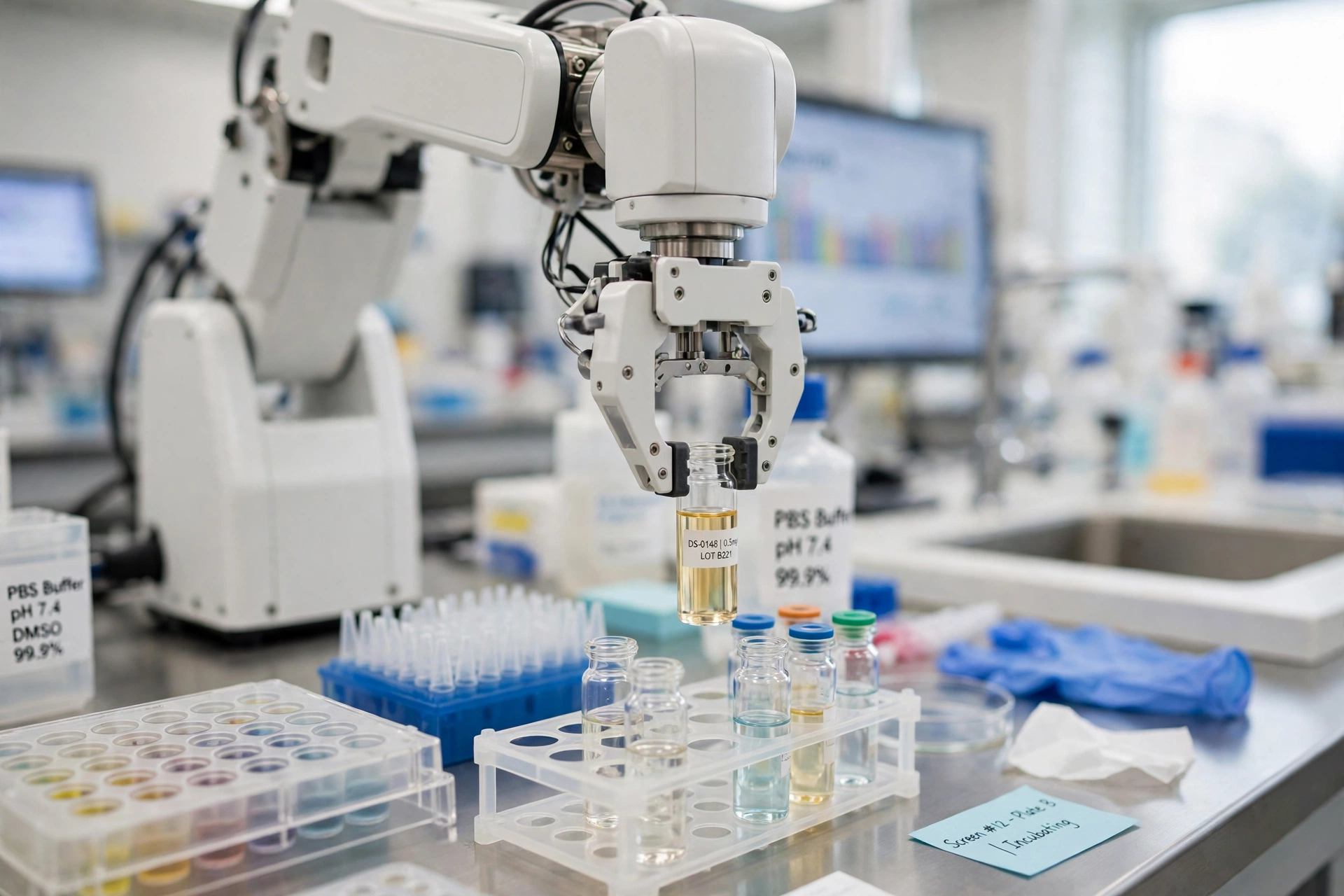
Yes, up to a point. Generative models can propose molecules that no one has made before, built to fit a specific target. Researchers set the goal — say, a molecule that binds tightly to a protein linked to a disease but stays clear of a similar protein in healthy cells — and the model generates candidates that meet those conditions.
But a computer-generated molecule is only a suggestion. It still has to be made in a real lab, which is sometimes harder than the model assumed, and then it faces the same long road as any other candidate: cell tests, animal studies, and human trials. AI can suggest a starting point in weeks; proving it works still takes years.
How does AI help with clinical trials?
Once a candidate reaches human testing, AI keeps helping behind the scenes. Trials need the right participants, and matching people by hand is slow work. AI systems can scan medical records — with permission and privacy safeguards — to find people whose condition, age, and medical history fit the trial’s criteria.
During a trial, AI can also watch for patterns as data comes in, such as early signs that a dose is too strong. This does not change the trial’s rules — independent reviewers and regulators still decide what counts as safe and effective — but it helps teams spot issues sooner. AI in healthcare is already used for tasks like this, from reading scans to managing patient records.
What are the limits of AI drug discovery?
AI is only as good as its training data. If the data is thin, old, or skewed towards certain kinds of molecules, the model’s predictions will be too, and a model trained mostly on one disease area may give poor advice in another. That data problem is the biggest reason AI suggestions still need human checking.
There is also the question of trust. Many models are hard to explain: they give an answer, but not a clear reason, and in medicine “the computer said so” is not enough. Regulators expect evidence, not just predictions, which is why AI-discovered drugs go through exactly the same testing as any other. IBM’s reporting on AI in drug discovery labs shows how researchers are working to make these models explain their reasoning, so predictions can be checked rather than taken on trust. The FDA’s page on artificial intelligence in drug development is a useful starting point.
Finally, AI cannot fix the biology. Some diseases are poorly understood, and no amount of computing power changes that. If researchers do not know which protein to target, the AI has nothing useful to aim at.
Will AI replace scientists in the lab?
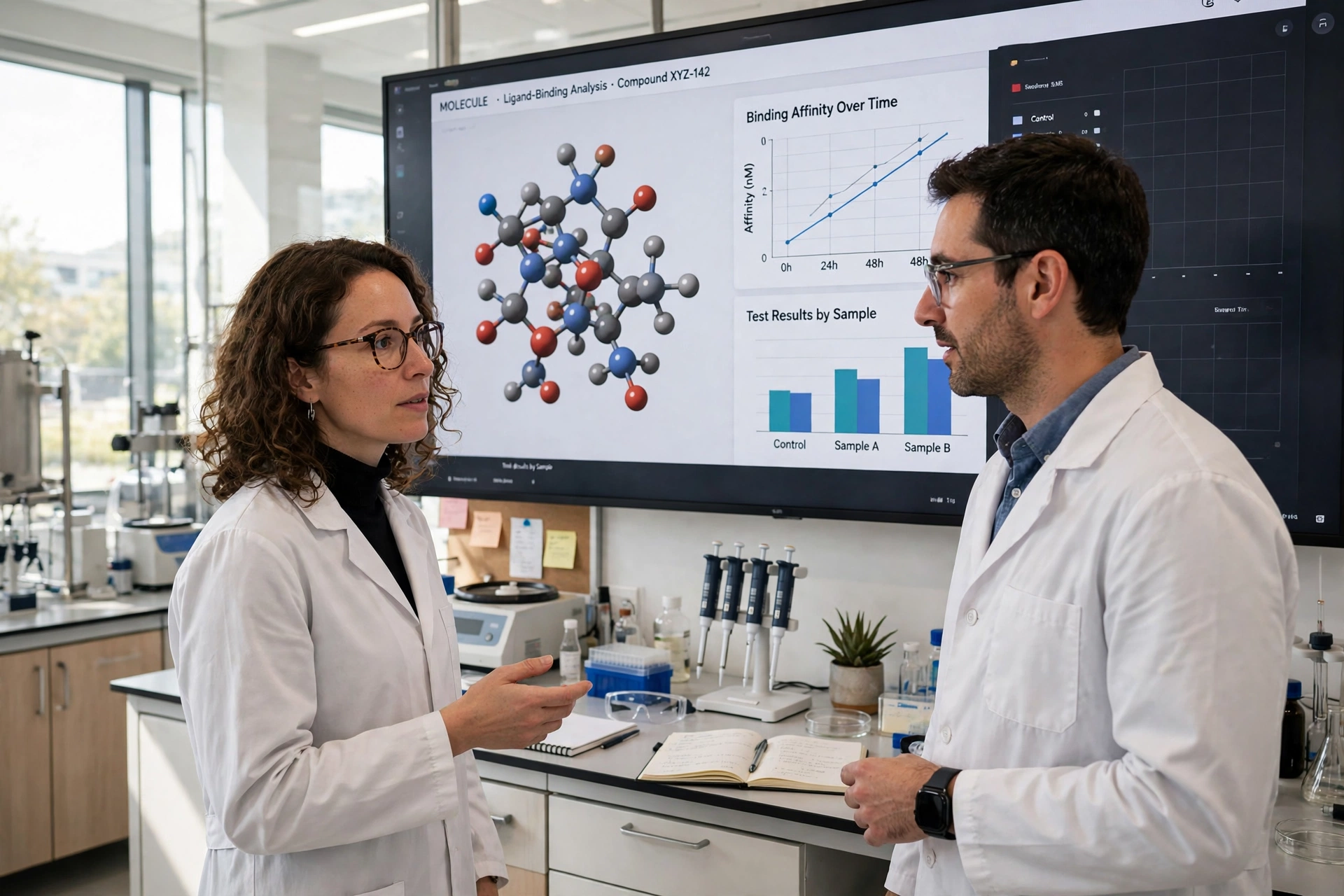
No — and that is not really the goal. Drug discovery still needs chemists who can make a molecule, biologists who understand the disease, and doctors who run the trials. What AI does is take over the repetitive, large-scale searching that humans are slow at, leaving people free to do the judging and the careful checking.
Think of it as a new instrument in the lab, like a better microscope. It lets scientists see further and move faster, but it does not decide what is true. Every AI suggestion still faces the same proof: does it work in cells, in animals, and in people?
Frequently Asked Questions
How long does AI drug discovery take?
AI shortens the early stages — finding candidates can take weeks instead of months. But the full process, with lab tests and trials, still takes many years, because safety testing cannot be rushed.
Has AI actually discovered a real drug yet?
AI-designed molecules have entered human trials, and several are being tested right now. The medicines people take today, though, were still developed through the usual long process, with AI playing a supporting role.
Is AI drug discovery safe?
AI itself does not make a drug safe or unsafe. Safety is decided by lab tests, animal studies, and human trials, followed by review from regulators. AI changes how candidates are chosen, not how they are approved.
Do drug companies really use AI, or is it just hype?
Many drug companies and research labs use machine learning for screening, molecule design, and trial planning. It is a real tool in daily use, but it has not replaced traditional chemistry or biology.
Can AI find cures for rare diseases?
It can help. Rare diseases often lack data, which makes AI harder to train, but AI can also make the most of small datasets and suggest candidates that would be too costly to find by hand.
Conclusion
AI drug discovery is already changing how new medicines are found, mainly by making the early search faster and smarter. It screens millions of molecules, suggests new ones, and helps run trials — but it does not skip the hard parts. Lab tests, clinical trials, and regulatory review still decide whether a candidate becomes a medicine. If you are curious, follow one AI-designed drug through its trial results: it shows, better than any headline, where the technology genuinely helps.