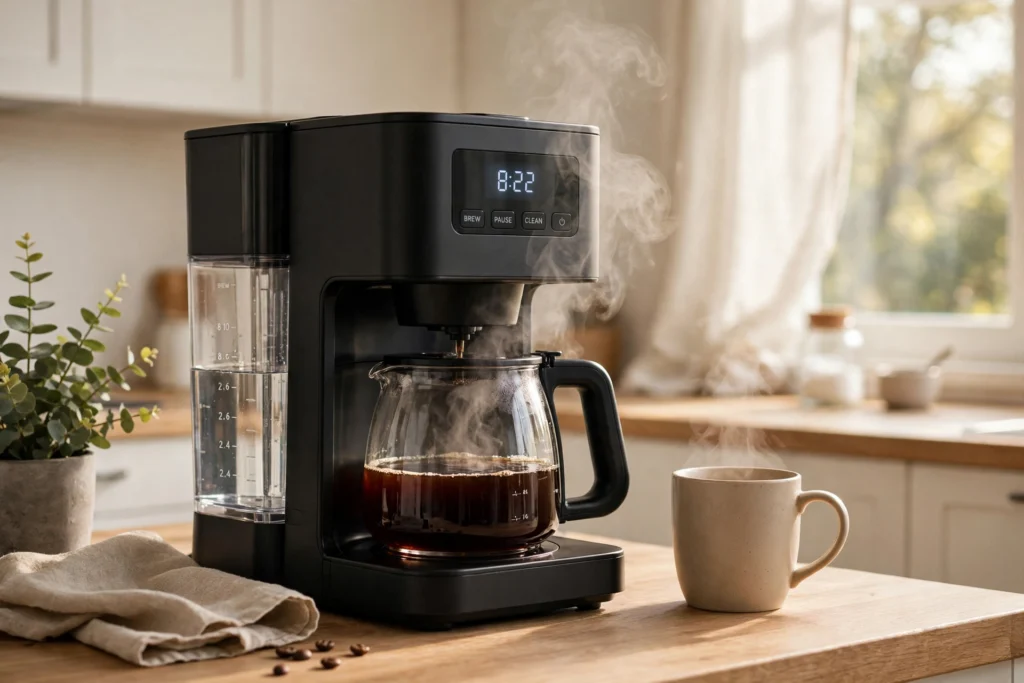
A coffee maker works by heating water to the right temperature, passing it slowly through ground coffee, and collecting the brewed drink in a carafe below. The whole job takes only a few minutes, yet each step matters: water that is too cool makes weak coffee, and water that is too hot can turn it bitter.
Inside the machine, a heating element and a network of thin tubes move water around without a pump in most drip models. Once you understand that flow, the machine stops looking like a mystery box.
Key Takeaways
- A drip coffee maker heats cold water, lifts it through a tube, and showers it over ground coffee.
- The filter holds the grounds back while brewed coffee drips into the carafe.
- A warming plate keeps coffee hot, though it can change the taste over time.
- Grind size, water temperature, and clean parts matter more for flavour than the price of the machine.
- Regular descaling keeps the heater working well and the coffee tasting fresh.
What are the main parts of a coffee maker?
Most drip coffee makers share the same basic layout. There is a water reservoir at the back or side, a heating element near the base, a filter basket in the middle, and a glass or thermal carafe underneath.
The reservoir holds the cold water you pour in. One tube runs from its base to the heating element, a metal coil that gets hot when you switch the machine on. Another tube carries the heated water up to a shower head above the filter basket, which holds a paper or mesh filter full of ground coffee, and the carafe catches whatever drips through.
How does a coffee maker heat the water?
The heating element works much like the one in an electric kettle: electricity flows through a resistive coil, the coil turns that energy into heat, and water against the hot metal warms up fast. HowStuffWorks has a clear illustrated guide to the heating element and one-way valve inside a drip machine.
In many drip machines the heating is cleverer than it first looks. The tube past the element is narrow, so a small amount of water heats quickly and turns partly to steam. That steam creates pressure, which pushes the hot water up towards the filter basket: cold water in at the bottom, hot water out at the top, driven by heat alone. That gurgling you hear is water boiling in a narrow tube and pushing itself upward. Espresso makers use a pump instead, but the classic drip machine needs none.
How does the brewing step work?
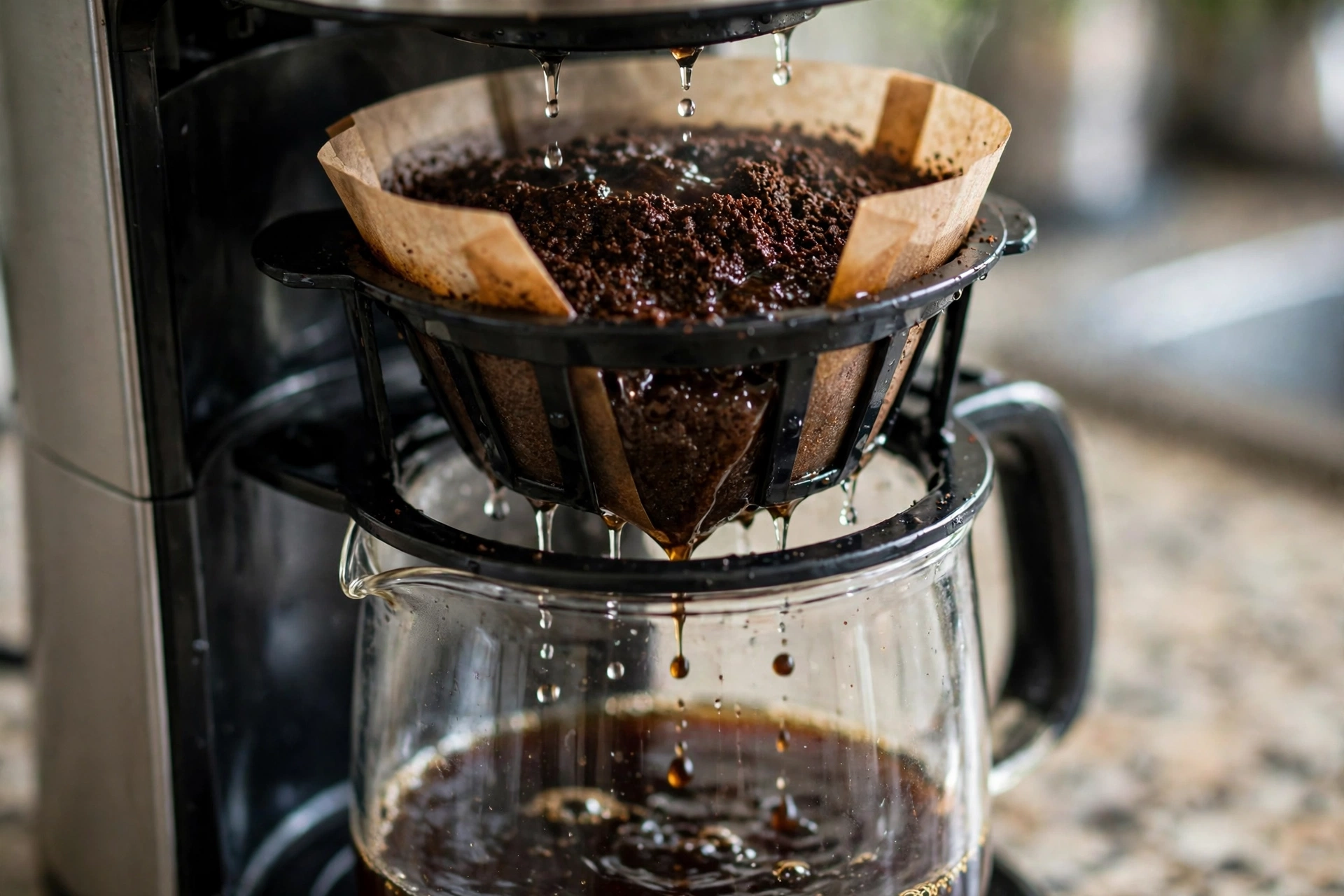
Once the hot water reaches the top, a small shower head spreads it over the grounds evenly. As the water seeps through, it picks up oils and soluble compounds from the coffee — that extraction is what gives coffee its flavour and colour.
The filter keeps the drink smooth: paper traps fine grounds and some oils for a cleaner cup, while a reusable mesh filter lets more oils through for a richer taste. General guides to coffee preparation explain the same variables — grind, temperature, time, and ratio — in more depth. Timing matters too — water that rushes through makes thin, sour coffee, while water that sits too long makes it bitter. A medium grind suits most drip machines, and freshly ground beans help, since ground coffee loses aroma quickly once exposed to air.
How does a coffee maker keep coffee warm?
Under the carafe sits a warming plate — really the same heating element doing a second job. Once brewing finishes, the plate holds the coffee at drinking temperature for an hour or two.
That convenience has a trade-off: coffee left on a hot plate keeps cooking slowly, and after an hour or so it can taste stale or burnt. Thermal carafes avoid this — they are insulated jugs that keep coffee hot without a plate. If your machine uses a glass carafe and a hot plate, pour what you need and switch it off once the pot is done, or use a smart plug on a timer to do it for you. If a cup has already gone cold, warming the mug in the microwave is kinder to the flavour than leaving the whole pot on the plate all morning. Some newer machines are smart coffee makers that connect over Wi-Fi, so you can start a brew from your phone — handy, though the coffee itself still depends on the same heating and brewing steps.
What is the difference between drip, pod, and espresso machines?
A drip machine brews a whole pot at once by letting hot water fall through a basket of grounds. It is the cheapest to run and the easiest to clean, and it suits households where several people drink coffee.
A pod machine pushes hot water through a sealed capsule of ground coffee instead. It is faster and tidier, and every cup tastes much the same, but the pods cost more per cup and give you less control over strength. An espresso machine forces hot water through finely ground, tightly packed coffee at high pressure, making a small, strong shot with crema on top. It needs more care, but it is the only one of the three that makes a true espresso. There is no single best type — a drip machine fits a busy family kitchen, a pod machine fits one quick cup, and an espresso machine fits someone who enjoys the ritual.
Why does coffee sometimes taste bitter or weak?
Bitter coffee usually means over-extraction: the water was too hot, the grind too fine, or the grounds sat in the water too long. Weak or sour coffee means the opposite — the water was too cool, the grind too coarse, or there was too little coffee.
A good starting point is one to two tablespoons of ground coffee per cup of water, adjusted to taste. Use fresh, cold tap water, not water that has been sitting in the reservoir overnight, and keep the machine clean — old coffee oils go stale and leave a taste no fresh beans can fix. If your coffee suddenly tastes worse than usual, check the simple things first: a clogged shower head can leave dry patches in the grounds, and limescale can slow the water down and drop the temperature.
How do you clean and look after a coffee maker?
Daily care is simple: empty the filter basket after each brew, rinse the carafe, and wipe up spills. Leaving wet grounds in overnight invites mould and stale smells.
Every month or so, descale the machine: fill the reservoir with equal parts white vinegar and water, run a half brew cycle, switch it off for half an hour, then rinse with two or three cycles of plain water. This clears the limescale that builds up on the heating element and keeps the brew temperature where it should be. Replace paper filters as you go, wash reusable mesh filters with warm soapy water, and check the carafe for chips.
Frequently Asked Questions
How long does a coffee maker take to brew a pot?
Most drip machines brew a full pot in five to ten minutes. A single cup from a pod machine is usually ready in under a minute.
Can I use a coffee maker without a paper filter?
Yes, if your machine has a reusable mesh filter or you buy one that fits. The coffee tastes fuller, but you may find a little fine sediment in the cup.
Why is my coffee maker so slow?
Limescale on the heating element is the most common cause. Descaling with vinegar and water usually restores the speed.
Is it safe to leave a coffee maker on?
Most modern machines have an auto shut-off, but older ones do not. Switch it off once you have poured what you need. A smart plug with a timer can do it for you.
Should I use hot or cold water in a coffee maker?
Always use cold, fresh water. The machine is designed to heat cold water to the right brewing temperature, and hot tap water can make the coffee taste flat.
Conclusion
A coffee maker is a simple machine doing a careful job: heating water, moving it without a pump, and drawing flavour out of ground coffee at just the right pace. The common problems make sense once you know that flow — bitter, weak, or slow coffee almost always comes back to temperature, grind, or cleanliness.
Your next step is easy. Next time you brew, check three things: fresh cold water, a medium grind, and a clean filter basket. Small habits like these turn an ordinary coffee maker into a reliable part of the morning.