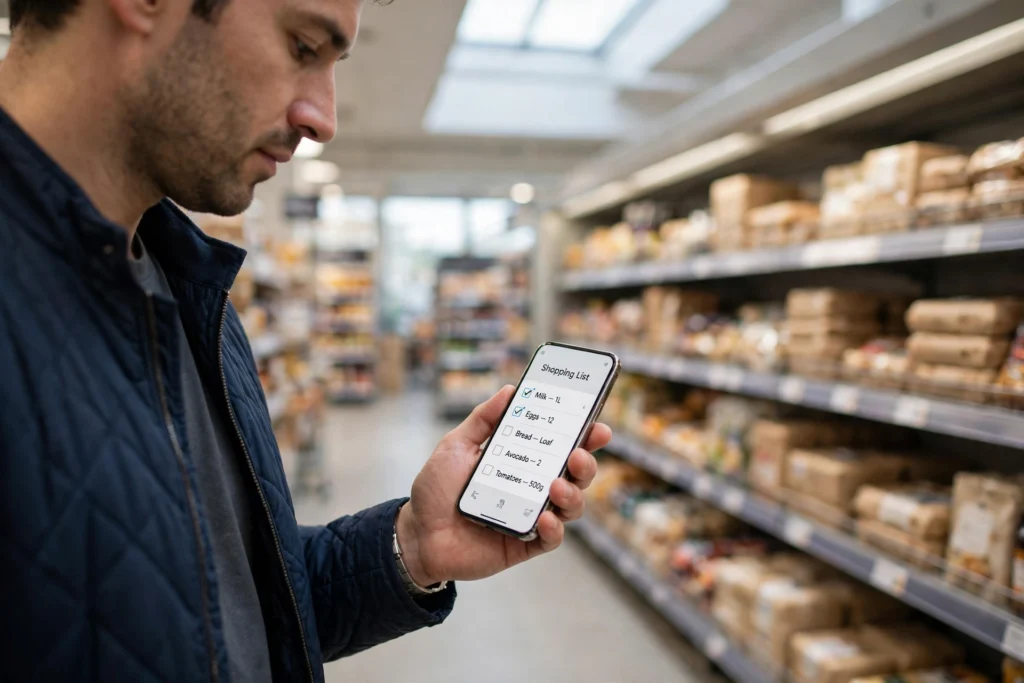
AI in retail is the use of machine learning tools to help shops decide what to stock, what to charge, and how to serve each customer. It studies past sales, the weather, local events, and browsing habits, then turns those patterns into forecasts, recommendations, and prices — taking the guesswork out of the decisions behind the till.
Key Takeaways
- AI in retail mostly works behind the scenes: forecasting demand, managing stock, and setting prices.
- Recommendations and search use your browsing and buying history to suggest products you are more likely to want.
- Shelf cameras and smart price labels help staff spot empty shelves and change prices without reprinting tickets.
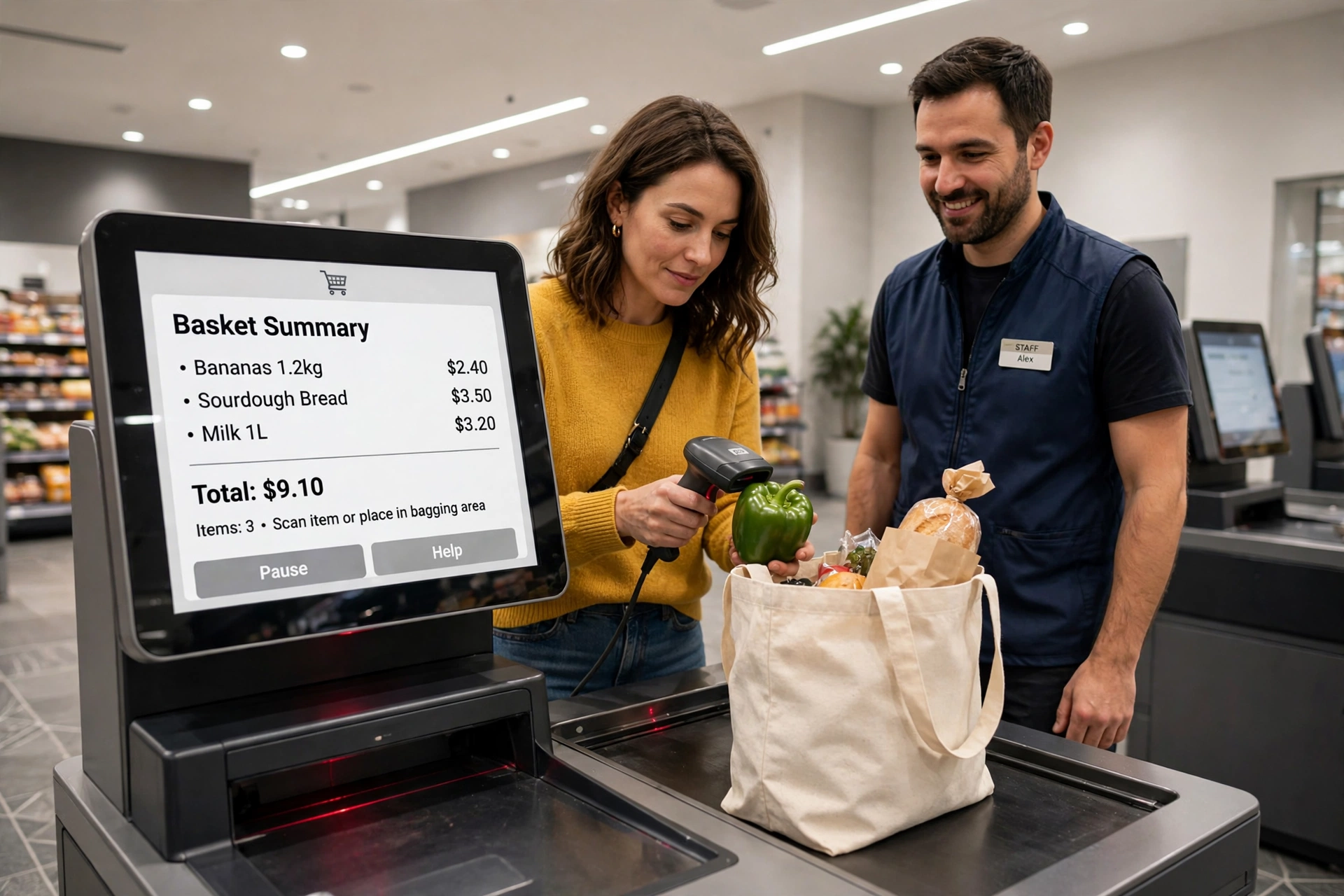
- Self-checkouts and chatbots handle routine jobs; staff handle complaints, advice, and anything unusual.
- The technology still gets things wrong, so a good shop keeps a human in charge of the final call.
How does AI predict what shoppers will buy?
Every shop faces the same puzzle: order too much and stock sits unsold; order too little and shelves empty before the weekend. Demand forecasting is the most common use of AI in retail, and it works by finding patterns a person would struggle to spot across thousands of products.
The system looks at years of till receipts, then layers in other signals: the time of year, school holidays, a match nearby, a cold snap in the forecast. Rain coming? Expect more soup and fewer barbecue supplies. A local festival? Expect a run on drinks and snacks. The forecast then tells buyers how much of each item to order, and when. This is machine learning doing what it does best: learning from examples and applying the lesson to new data. Large retailers such as Walmart use this kind of forecasting to manage stock across thousands of stores, and simpler versions are now aimed at smaller shops. For the bigger picture, start with our guide to what artificial intelligence is.
What do smart shelves and cameras actually do?
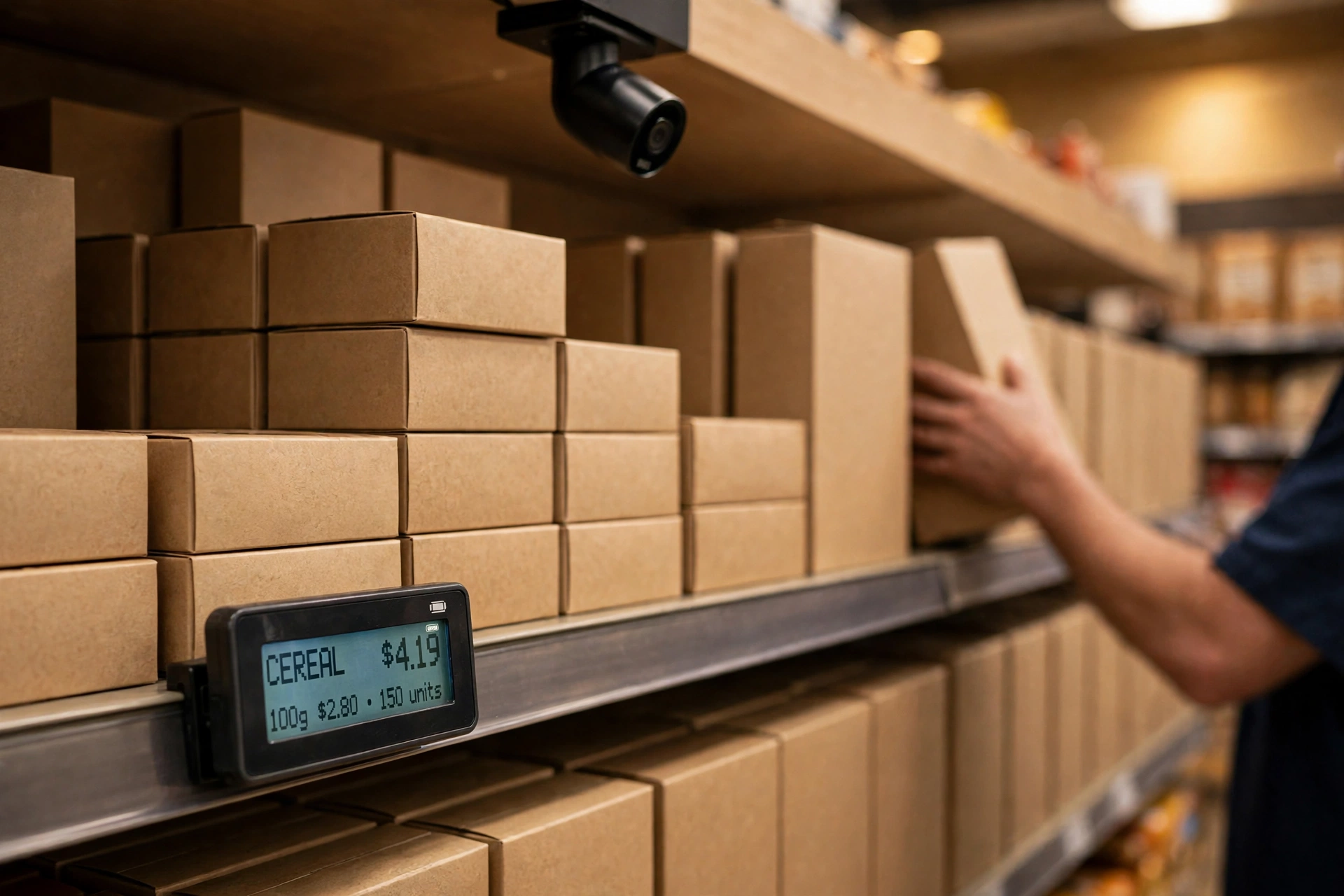
Walk down a supermarket aisle and you may be walking past more technology than you realise. Cameras above the shelves, weight sensors under them, and small digital price labels all feed information back to the shop’s systems.
A shelf camera can spot a gap where the cereal should be and alert staff before a shopper has to ask. It can also count how many people stopped at a display, which tells the shop which promotions actually work. This is computer vision in an everyday setting: software that reads images and turns them into useful facts. Digital shelf labels are the quiet partner here. When a price changes, the label updates in seconds, so the price on the shelf matches the price at the till — no one has to walk the aisles swapping paper tickets. The trade-off is that these systems collect images of shoppers too, which is why clear signs and honest privacy policies matter.
How does AI change prices — and is that fair?
Prices in many online shops now move. The same item can cost a little more on a busy evening than on a quiet Tuesday morning, because software adjusts the price to match demand, stock levels, and what rival shops are charging. Airlines and hotels have done this for years; retail is catching up.
Used well, dynamic pricing can mean genuine bargains: a shop drops the price of food near its sell-by date instead of throwing it away, or discounts slow-moving stock to clear space. Used badly, it can feel like the shop is charging you more simply because it knows you will pay. That is why many retailers cap how far a price can move in a day, and keep staple goods out of the system altogether. If a price looks odd, check the same item on another day or in another shop before buying.
How does AI help when you need a human?
Most shoppers meet retail AI first as a chatbot: the little window that asks how it can help. Modern versions can check an order, explain a returns policy, or compare two products using the shop’s own catalogue. When the question gets complicated, a good system hands over to a person, with the chat history attached so you do not have to repeat yourself.
That handoff is where AI customer support succeeds or fails. A chatbot that keeps you circling through the same three answers is worse than no chatbot at all. The best setups use AI to prepare the answer and let a person deliver it, which is faster for you and less stressful for staff — and the same idea works behind the counter, where AI drafts replies to reviews and flags the cases that need a manager.
What AI in retail still gets wrong
For all its promise, retail AI has clear limits. A forecast is only as good as its data, and unusual events still catch it out — a sudden heatwave, a road closure, a product that goes viral overnight. When the model has never seen a situation before, its guess can be worse than an experienced manager’s hunch.
Recommendations can also go stale: buy a gift once and the shop may keep suggesting it for months. And a system trained on past buying patterns can steer certain offers towards some customers and away from others, which is why retailers need to check who benefits from their pricing, not just how much they sell.
Who does what: AI or staff?
| Job | AI handles | Staff still handle |
|---|---|---|
| Forecasting demand | Spotting patterns across thousands of products | Overriding the forecast when something unusual happens |
| Pricing | Adjusting prices to demand and stock levels | Setting the limits and checking fairness |
| Finding products | Search, recommendations, and aisle-ordered lists | Advice on which product fits your need |
| Checkout | Scanning, totals, and card payment | Age checks, errors, and a friendly word |
| Complaints | Drafting replies and finding the order | Listening, apologising, and making it right |
Frequently Asked Questions
Does AI in retail watch me while I shop?
Some stores use cameras to track stock levels and queues, which can include images of shoppers. A reputable shop should say so on signs at the entrance and in its privacy policy.
Will AI replace shop workers?
It changes their work more than it removes it. Self-checkouts and chatbots take routine tasks, while staff focus on advice and problem-solving.
Why does the price change when I shop online?
Many online shops adjust prices to demand, stock, and rival prices. If a price seems high, try again later, compare with another shop, or check whether the same item is cheaper in store.
Is my shopping data safe?
It should be, but no system is perfect. Use a strong, unique password for shop accounts, and check what a loyalty scheme collects before joining.
How can a small shop use AI?
Start with one job, not a grand plan. Demand forecasting for your bestsellers, or a simple chatbot that answers opening hours and delivery questions, can pay for itself before you invest in anything bigger.
Conclusion
AI in retail is already part of an ordinary shop: forecasting what will sell, keeping shelves full, nudging prices, and answering the easy questions so staff can handle the hard ones. The shops that use it well treat it as a helper, not a replacement, and keep a person in charge of the decisions that affect real customers. Next time you shop, notice what worked — and if something felt off, tell the staff. That feedback is exactly the kind of signal the system needs to get better.
Further reading: IBM — AI in retail and The Motley Fool — How AI is being used in retail.