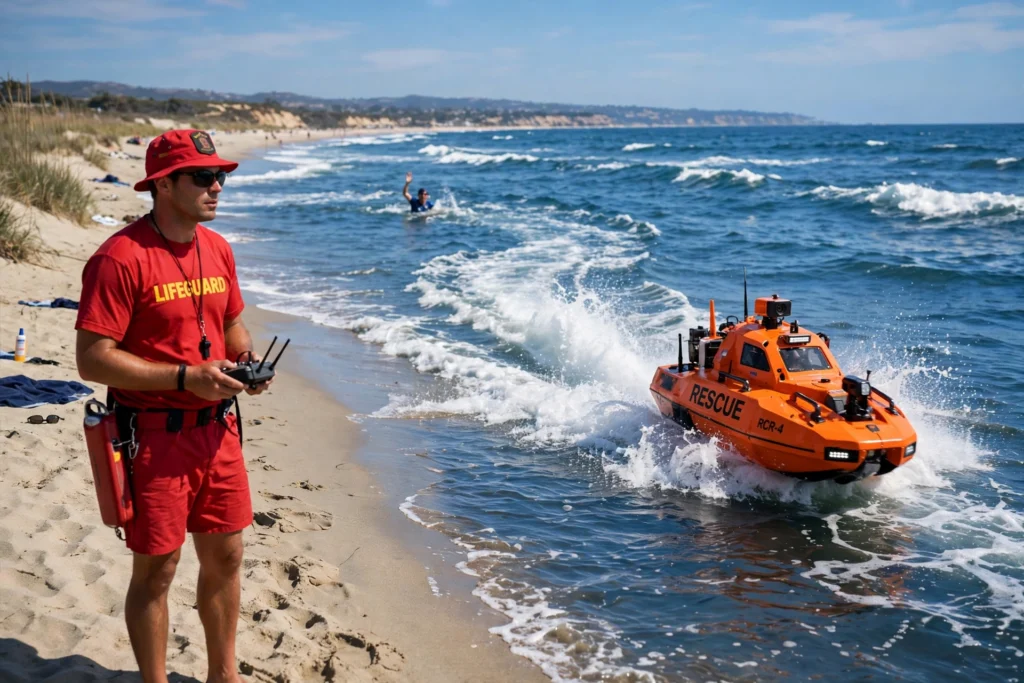
Can a robot save a drowning swimmer? Yes — robot lifeguards are already doing it. These small, remote-controlled rescue machines speed across the water to a struggling swimmer, give them something buoyant to hold onto, and either tow them back or keep them afloat until a human lifeguard arrives. They do not replace lifeguards; they buy precious minutes.
This post is general information about rescue equipment, not lifeguard training. Always swim where lifeguards are on duty, and learn water safety from a qualified instructor.
Key Takeaways
- Robot lifeguards are small floating machines, steered by remote control, that carry flotation to a swimmer in trouble.
- They move with a water jet, like a miniature jet ski, and travel several times faster than a human swimmer.
- The best-known example is EMILY, a four-foot, 25-pound rescue buoy developed with the US Navy.
- They work best as a team with human lifeguards: the robot arrives first, the person takes over.
- They cannot perform CPR or medical care, and rough seas, short battery life, and cost still limit where they are used.
What exactly is a robot lifeguard?
A robot lifeguard is a self-propelled floating device built to reach a swimmer in trouble faster than a person could swim there. Most look nothing like a humanoid robot. They are closer to a powered life ring or a small remote-controlled boat — a simple shape that floats well, survives being thrown into surf, and gives a panicking swimmer something solid to grab.
The best-known design is EMILY, short for Emergency Integrated Lifesaving Lanyard. Developed with the US Navy and now managed by Hydronalix, a company in Arizona, it is about four feet long, weighs around 25 pounds, and is built from tough composite materials, including Kevlar, so it can be dropped from a helicopter and keep working. Another design, U-SAFE, is a symmetrical remote-controlled buoy that still works even if a wave flips it over.
A lifeguard on the beach spots trouble, launches the device, and steers it to the swimmer. The swimmer holds on, and the machine either tows them gently back toward shore or keeps them afloat while the lifeguard swims out. Some versions also carry a camera and a two-way radio, so the lifeguard on shore can talk the swimmer through the wait.
How does it move so fast?
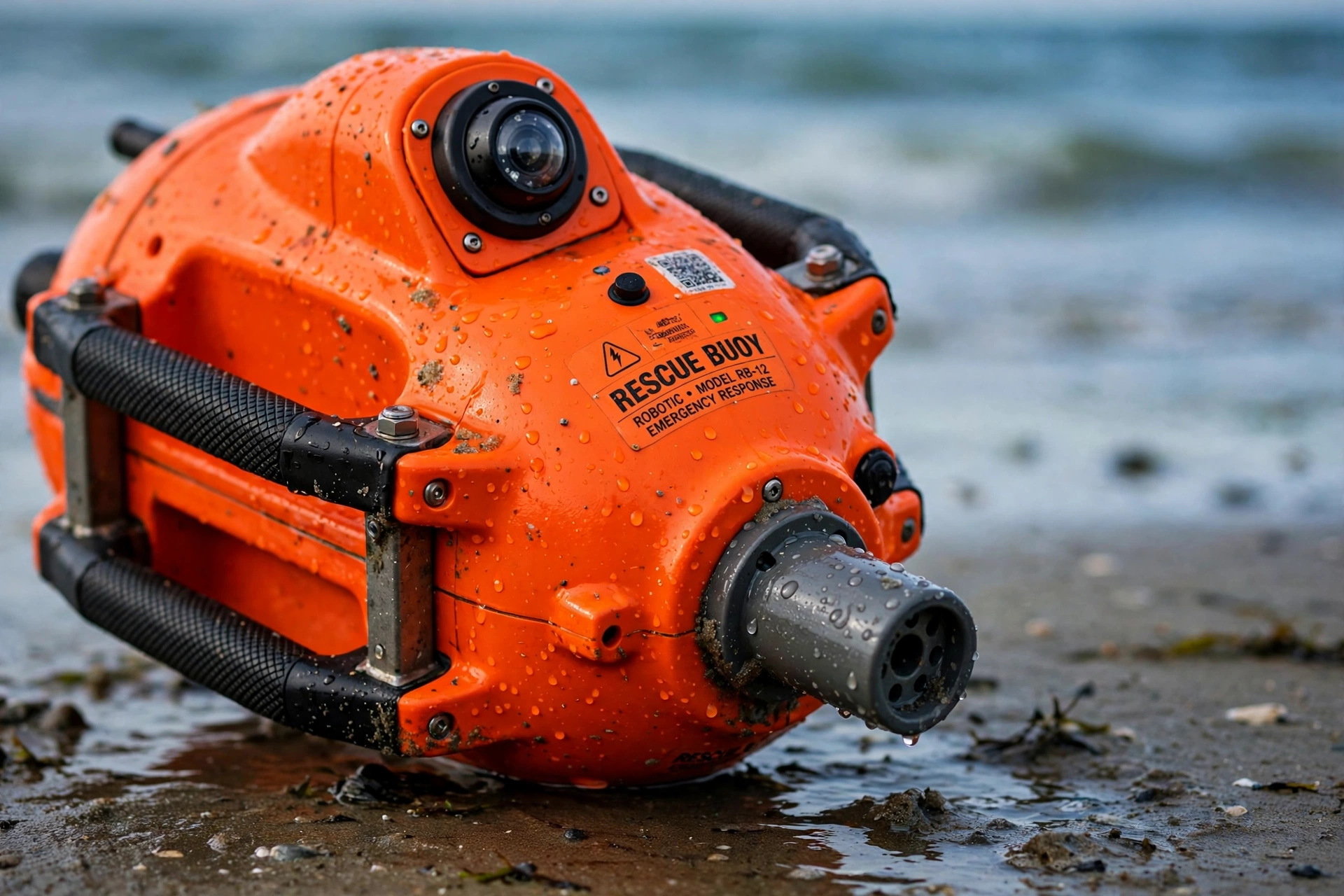
The secret is a water jet. Inside the hull sits an electric motor that drives a pump, which sucks water in through an intake on the underside and fires it out of a nozzle at the back — the same principle as a jet ski, shrunk down. Steering comes from moving that nozzle, and speed comes from how hard the pump pushes.
That design matters for two reasons. First, speed: EMILY travels at roughly 20 miles per hour or more, several times faster than even a strong swimmer, and it does not get tired on the way out. Second, safety: the propeller is hidden inside the housing, so there is no exposed blade near a frightened swimmer, and a screen over the intake keeps fingers and clothing out of the suction.
How does it find someone in trouble?
Most robot lifeguards in service today are remote-controlled, not fully autonomous. A lifeguard watches the water, spots a swimmer waving or struggling, and steers the machine with a handheld controller, watching through its camera feed. That human judgement is still the most reliable sensor on the beach.
Newer versions add electronic help: sonar to scan for a swimmer in distress, GPS to hold course, and thermal cameras for night or murky water. A speaker lets the lifeguard on shore talk to the swimmer, which matters, because a panicking person is harder to rescue. Fully autonomous patrols are being tested, but for now the robot is a fast pair of hands, not a replacement pair of eyes.
A rescue, step by step
Picture a summer afternoon at a beach with a strong rip current. A swimmer drifts out past the breaking waves and starts waving one arm — the signal for help. The lifeguard grabs the controller and launches the robot lifeguard from the sand. Within seconds it is skimming across the waves toward the swimmer, far quicker than any human could cover the same distance.
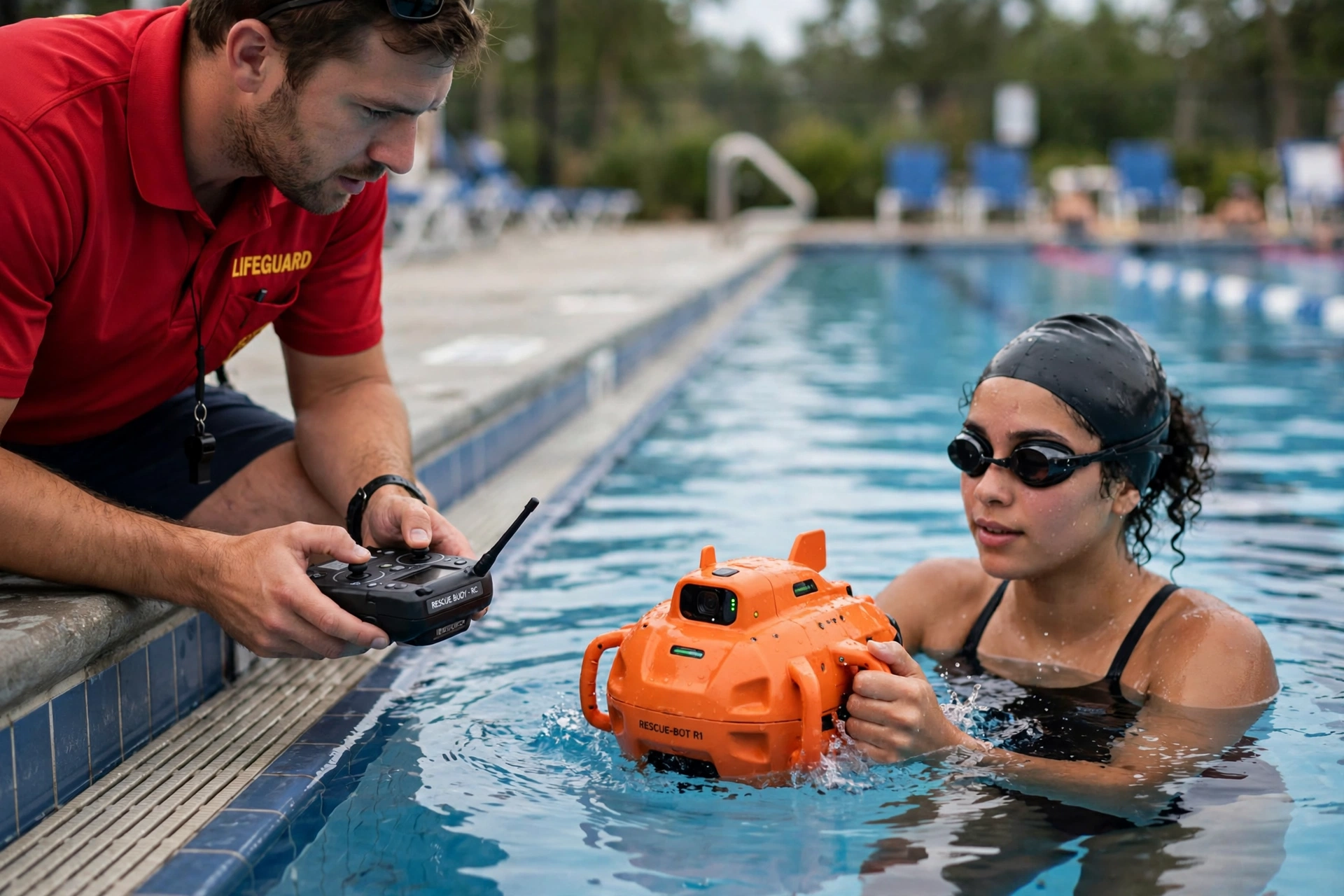
It arrives, and the swimmer grabs the handles. The device is buoyant enough to keep several adults afloat — reports put EMILY’s buoyancy at around 80 pounds — so the swimmer can rest and stop fighting the water. Then the lifeguard steers it gently back toward shore, or keeps it in place while swimming out to take over. The robot does the long, tiring part; the person does the caring part.
Robot lifeguard vs human lifeguard
It helps to see the two as a team rather than rivals. Each covers the other’s weak spots.
| Robot lifeguard | Human lifeguard | |
| Speed to the swimmer | Very fast, roughly 20 mph or more | Limited by swimming speed and fitness |
| Stamina | Battery-limited, but never tires mid-rescue | Tires, especially in rough water |
| Flotation | Built in, keeps several people afloat | Carries a float, must hold it and the swimmer |
| Judgement | Follows a controller or basic sensors | Reads the water, the crowd, and the swimmer |
| Medical help | None — cannot do CPR or first aid | Trained in first aid, CPR, and spinal care |
| Cost | One device can cost thousands of dollars | Salary and training, every season |
Machines win on speed and stamina; people win on judgement and care. Beaches that use both get the best of each.
Where are they used now?
Robot lifeguards are already in service with coastguards, fire departments, and beach patrols. EMILY units have been used in rescues at California beaches and in the Mediterranean, off the Greek island of Lesbos. Hundreds of units have been sent to first responders in different countries.
Flood rescue teams use them to reach people trapped by rising water without putting a rescuer in a dangerous current, and harbour crews keep them ready for someone falling off a pier. Like underwater robots and drone robots, they are part of a wider shift: sending a machine into the dangerous spot first, and the person second.
What they can’t do yet
Robot lifeguards have real limits. They cannot pull an unconscious swimmer from the water, perform CPR, or judge whether someone is hurt, cold, or in shock. A machine that arrives quickly is only useful if a trained person follows behind it.
Rough conditions are another limit. Big surf, strong wind, and thick seaweed can slow a small craft or push it off course, and batteries run down fast at top speed. Price is a barrier too: one EMILY unit has been reported at around $14,000, before shipping and import costs, which puts it out of reach for many small beaches and community pools.
That is why the realistic picture is not “robots replace lifeguards” but “lifeguards get a faster tool.” Rescue robots on land face the same pattern: the machine handles the dangerous first approach, and the human handles the rescue itself. Security patrol robots work the same way on dry land, patrolling and alerting while people make the decisions.
FAQs
Are robot lifeguards already saving lives?
Yes. EMILY and similar devices have been used in real rescues at beaches and in flood and migrant rescue operations. They are not a laboratory idea; coastguards and fire services already carry them.
How fast can a robot lifeguard go?
Roughly 20 miles per hour or more in calm water, several times faster than a human swimmer. Exact top speed varies by model and by sea conditions, and it drops in heavy surf.
Can a robot lifeguard work on its own?
Most current models are remote-controlled by a lifeguard. Autonomous versions are being developed and tested, but a human is still in charge in normal service.
Will robot lifeguards replace human lifeguards?
No. They cannot do first aid, judge a swimmer’s condition, or manage a crowded beach. Their job is to get flotation to a swimmer fast; the lifeguard’s job is everything after that.
Conclusion
Robot lifeguards are a simple idea done well: a tough little floating machine that gets to a struggling swimmer in seconds, not minutes, and gives them something to hold onto while help arrives. They are fast, they do not tire, and they keep the rescuer out of the most dangerous part of the water. They are not a substitute for a trained lifeguard — but on a beach with a strong current, those seconds can be the whole rescue.
If you swim at the beach, the practical step is the old one, and it still matters most: swim where lifeguards are on duty, stay inside the flagged area, and if you see someone in trouble, alert a lifeguard rather than swimming out yourself.
Further reading: ASME on EMILY, the robotic lifeguard and Wikipedia on lifeguards.