
An air conditioner cools a room by moving heat outside, not by creating cold air. A fluid called refrigerant soaks up heat from the indoor air, a compressor pumps it outdoors, and a fan blows it away. The cooled air is blown back into the room, and the cycle repeats until the room reaches the temperature you set.
Key Takeaways
- An air conditioner moves heat out of a room; it does not make cold air from nothing.
- Refrigerant, a compressor, and two coils do most of the work.
- Split, window, and portable models all use the same cycle in different shapes.
- Cooling also pulls moisture from the air, which is why a cooled room feels less sticky.
- Clean filters, closed windows, and a sensible setting keep running costs down.
How does an air conditioner actually cool a room?
Think of it as a heat taxi. Warm room air crosses a cold indoor coil, and the refrigerant inside absorbs the heat. Now a warm gas, it travels outdoors, releases the heat, cools back into a liquid, and returns indoors for more.
The idea is over a century old: Willis Carrier built the first modern electric air-conditioning system in 1902. The thermostat decides when the loop runs — when the room is warmer than your setting, the system switches on, and once the room reaches the target, it eases off.
What are the main parts inside an air conditioner?
Four parts matter most.
The evaporator coil sits indoors. Cold refrigerant flows through it, and room air blown across it gives up its heat — and moisture in the air condenses here, which is why air conditioners dry a room as they cool it.
The compressor sits in the outdoor unit. It squeezes the warm refrigerant gas, raising its pressure and temperature so the heat can be released outside, even on a hot day. It uses the most electricity of any part.
The condenser coil also sits outdoors, where a fan blows outside air across it so the heat escapes and the refrigerant cools back into a liquid. The expansion valve then drops the liquid’s pressure, making it cold again before it re-enters the indoor coil.
Around those parts sit two fans, a filter that catches dust, and the thermostat that tells the system what to do — a modern smart thermostat can manage the same job with schedules and phone control.
What is the difference between a split system, a window unit, and a portable air conditioner?
All three use the same refrigerant cycle; what changes is where the parts live.
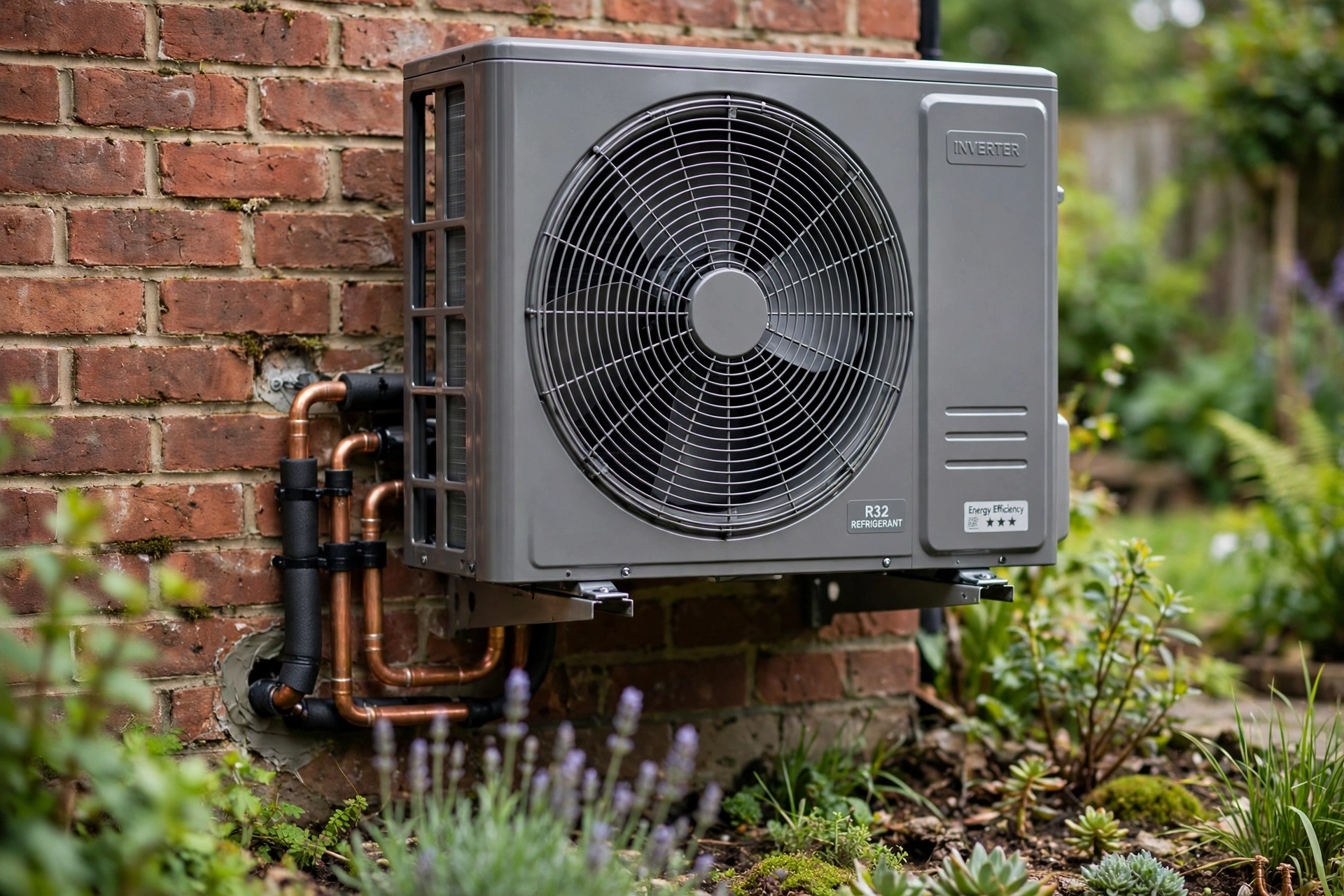
A split system has an indoor wall unit and a separate outdoor unit, joined by pipes. It is quiet indoors because the noisy compressor sits outside, and it cools a room more evenly. Fitting needs a wall hole and a professional, so it costs more upfront.
A window unit packs everything into one box that sits in a window opening. It is cheaper and easier to install, but noisier, since the compressor sits in the room with you. It suits a single room or a rented flat.
A portable air conditioner stands on the floor and vents hot air outside through a hose in a window. It is the easiest to set up and move, but the hose lets some warm air back in, so it is the least efficient of the three.
Why does an air conditioner also dry the air?
Warm air holds more moisture than cold air. When room air crosses the cold indoor coil, moisture condenses on it, just like on a cold glass, then drips into a tray and drains away outside.
That drying effect is a big part of why air conditioning feels so comfortable. Sticky, humid air makes sweat evaporate slowly, so you feel warmer than the thermometer suggests. Water pooling under an indoor unit usually means a blocked drain — worth sorting quickly, since standing water can stain walls and encourage mould.
How can you use an air conditioner without wasting energy?
Start with the temperature setting: each degree lower makes the compressor work harder, so around 24 to 26 degrees is a sensible balance between comfort and cost.
Keep the cool air in: close doors and windows while the unit runs, and draw curtains on sunny windows so the sun isn’t fighting the air conditioner. Look after the filter, too: a clogged filter blocks airflow, so the unit works harder for less cooling. Most filters rinse clean in a few minutes.
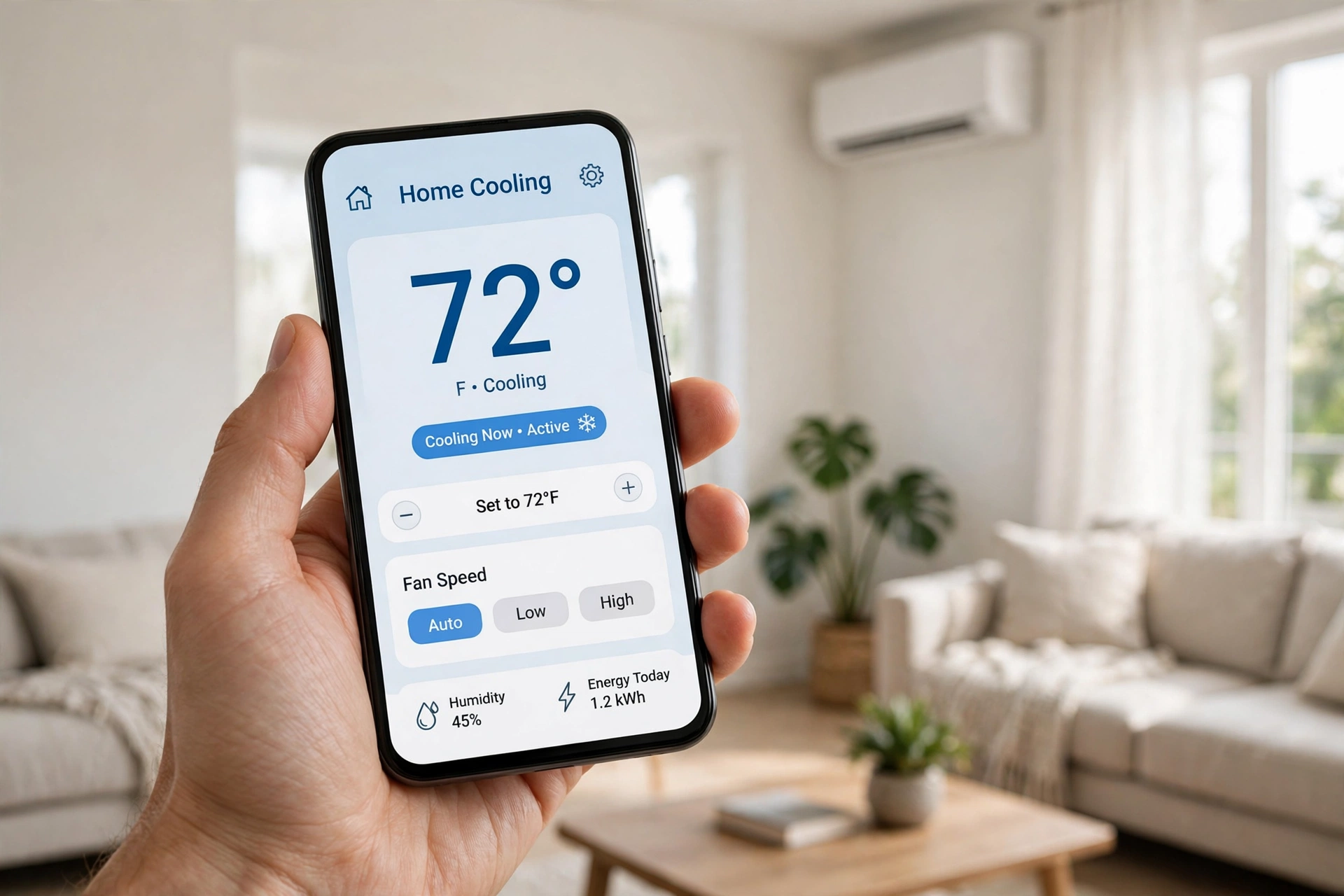
Use the fan and timer settings. The fan mode circulates air without cooling, which is enough on a mild evening. A timer can cool the bedroom before bedtime and switch off overnight. Many newer models connect over Wi-Fi, so you can start cooling from your phone on the way home.
What should you do when your air conditioner stops cooling properly?
Check the simple things first. Is the filter dirty? Is the remote set to cool rather than fan? Is the outdoor unit blocked by leaves?
If the air is barely cool and the unit runs constantly, the refrigerant level may be low, which usually means a leak. Topping it up needs a qualified technician, both for safety and to find and fix the leak.
Strange noises, a burning smell, or water leaking inside are all signs to switch the unit off and call a professional. Yearly servicing before the hot season usually costs less than an emergency repair.
Frequently Asked Questions
Does an air conditioner bring in fresh air from outside?
Most split and window units do not. They recirculate the room’s air, cooling the same air again and again. For real ventilation, open a window now and then or use a separate ventilation system. An air purifier can help with dust and pollen indoors, but it does not replace fresh air.
Is it cheaper to leave the air conditioner on all day or switch it off?
For most homes, switching it off when nobody is home costs less. Modern units cool a room fairly quickly, so leaving one running in an empty house wastes energy. A timer that starts cooling half an hour before you get home is the best of both.
Why does my air conditioner smell when I switch it on?
A musty smell usually comes from mould or bacteria on a damp indoor coil or a dirty filter. Cleaning or replacing the filter often helps, but if the smell stays, the coil and drain tray may need a professional clean.
How long should an air conditioner last?
With regular filter cleaning and yearly servicing, a good unit often lasts 10 to 15 years. Units that run constantly in dusty conditions, or never get serviced, tend to fail sooner. If repairs start costing a large share of a replacement’s price, replace it instead.
Conclusion
An air conditioner is a heat-moving machine: refrigerant carries warmth from your room to the outdoors, a compressor drives the cycle, and fans keep the air moving. Pick the right type for your space, keep the filter clean, and set a sensible temperature — or let a smart home hub run the schedule for you — and it will cool well without wasting energy. If you are shopping for one, the U.S. Department of Energy’s air conditioning guide is a good place to compare efficient models before you buy.