
AI job hunting works by matching your skills and experience against job adverts at speed. Software reads your CV, compares it with open roles, suggests jobs you might have missed, and helps you prepare for interviews. It can save hours of searching, but it cannot judge your motivation or fit with a team — that part still belongs to people.
Key Takeaways
- AI job hunting tools scan your CV and match it against thousands of job adverts in seconds.
- Applicant tracking systems filter CVs by keywords, skills, and experience before a human reads them.
- AI can suggest roles you would not have searched for, based on your skills rather than your job title.
- AI interview practice and CV drafting help, but the final wording should always be yours.
- Bias is a real risk: systems trained on past hiring data can repeat past patterns, so keep applying directly too.
How does AI read your CV?
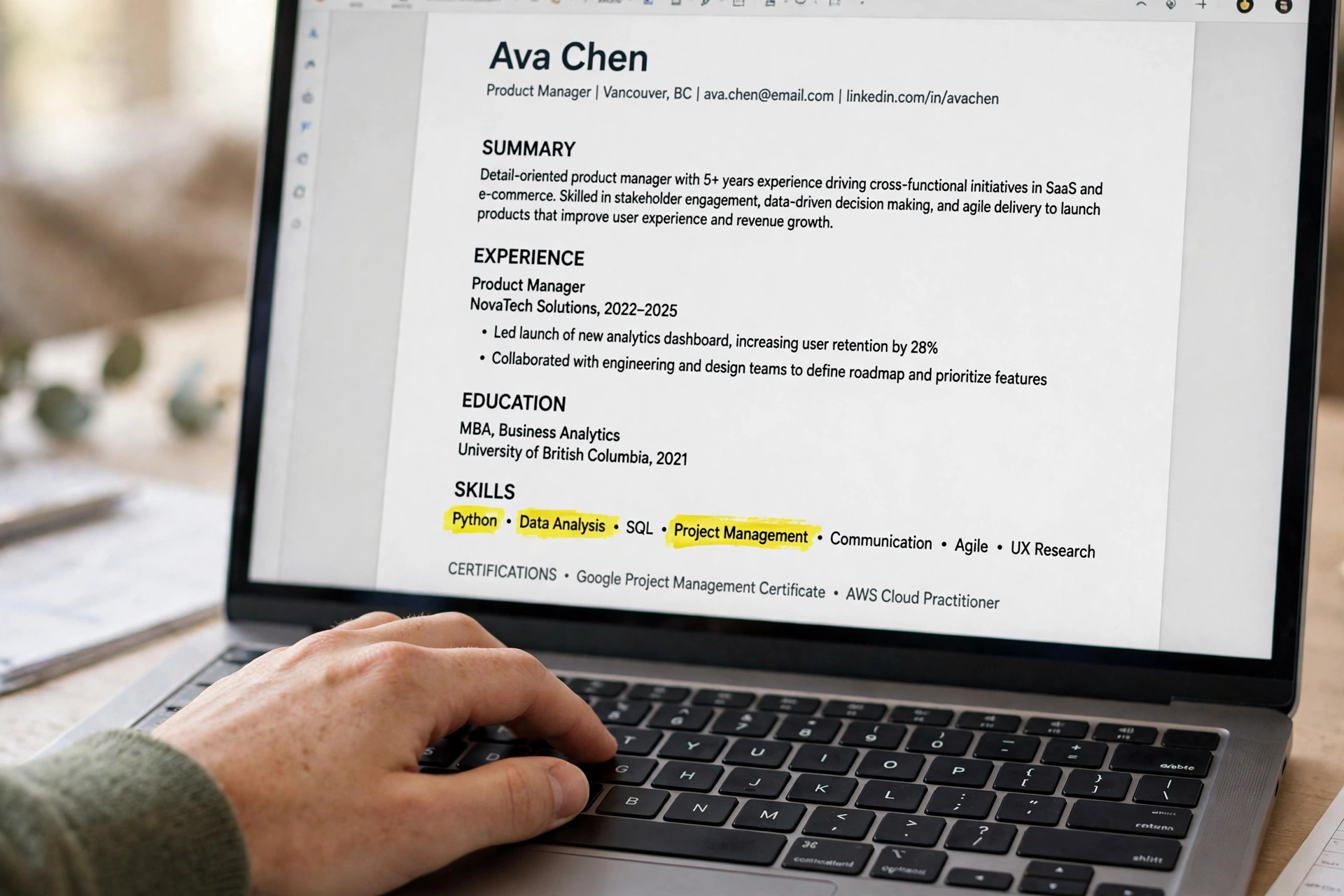
Most large employers no longer read every CV by hand. The first reader is usually an applicant tracking system, or ATS — software that parses your CV into fields such as job titles, dates, skills, and qualifications. Wikipedia explains how applicant tracking systems work.
The system then compares what it found with the job description. If the advert asks for “project management” and your CV says “led a team of six on a six-month rollout”, the software has to decide whether those mean the same thing. Modern systems use natural language processing to make that connection, rather than matching exact words alone — though exact keywords still help, because simpler systems rely on them.
How does AI match you with jobs?
Job boards use recommendation systems, like the ones that suggest films, to match your profile and past searches with open roles. This is where AI job hunting earns its keep: it can surface a role with a different title that needs exactly your skills, a job you would never have typed into a search box.
Some tools score the match, showing “92% match” next to a vacancy. Treat that number as a rough guide, not a verdict. A high score usually means the wording lines up well; it says nothing about whether you would enjoy the job or whether the salary and hours work for you.
Can AI help you write a better CV and cover letter?
Yes, and this is probably the most useful part of the process for most job seekers. An AI writing assistant can tighten a rambling paragraph, suggest stronger verbs, and spot the achievement buried in a list of duties. Paste in a job advert and it can point out which of your experiences match the requirements and which are missing.
The trap is letting it write everything. A CV that reads like it was generated from a template sounds like every other generated CV, and recruiters notice. Worse, AI can invent details — a skill you do not have, a result you did not achieve — and that can sink an application the moment someone checks. Use AI as an editor, not an author: you write the facts, it helps with the phrasing, and you check every line before sending. Our guide to how AI summarises text shows the same idea at work.
How does AI prepare you for interviews?
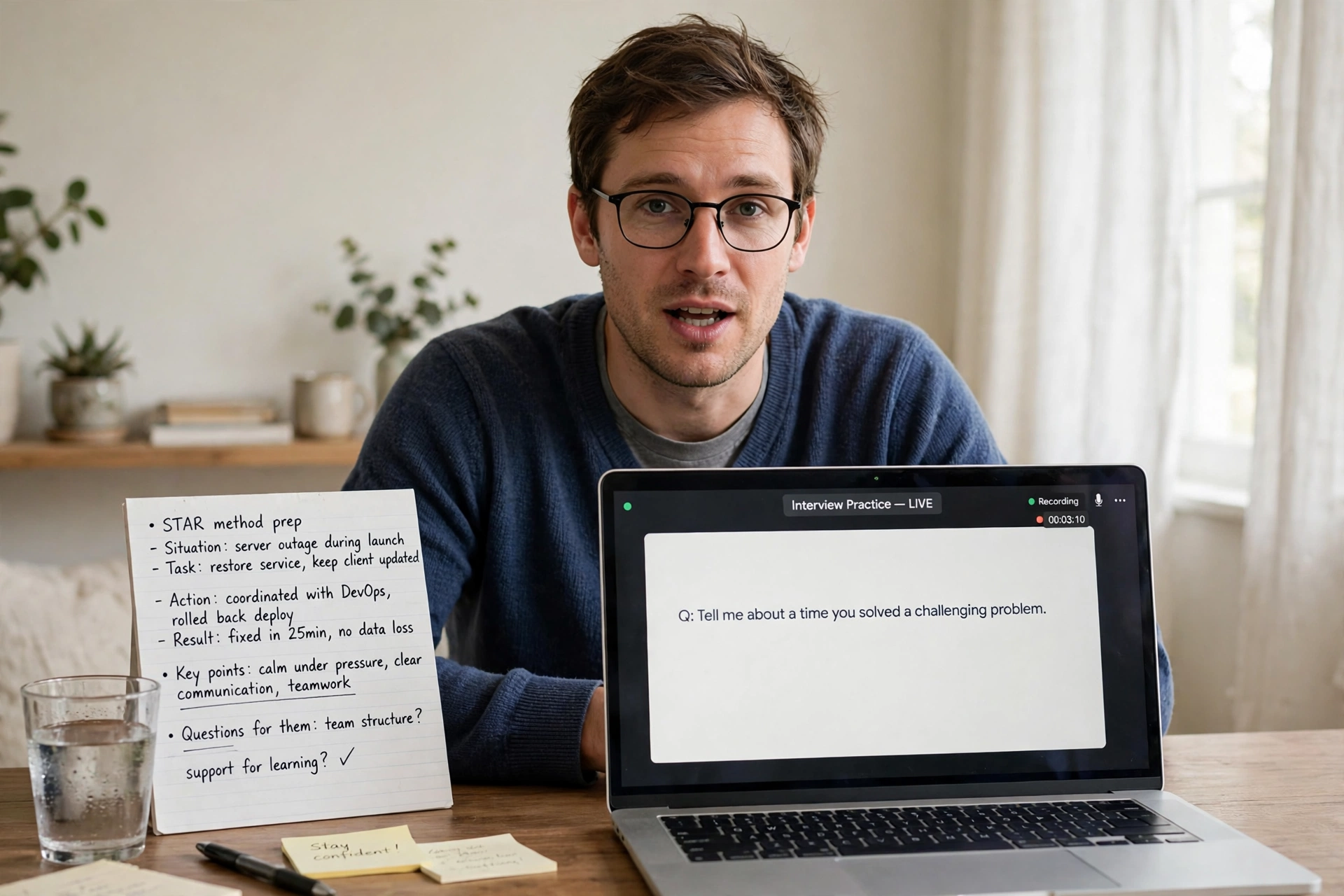
In a mock interview you answer questions out loud, and the software gives feedback on pace, filler words, and whether you actually answered the question asked.
Some employers also use AI to screen recorded video answers, which is controversial and varies a lot by country and company. If you are asked to record answers, treat it like a real interview — look at the camera and keep answers short — but ask how the recording will be used and who will review it.
Where does AI job hunting fall short?
The biggest problem is bias. AI systems learn from past hiring data, and past hiring was not always fair. If a company’s history favours certain universities or career paths, the software can quietly repeat that pattern — rejecting good candidates for reasons no one intended. This is one of the core concerns covered in our guide to AI ethics, and it is why many employers now audit their hiring tools and keep a human in the loop.
There are practical limits too. AI struggles with career changers, because a CV that does not match the usual pattern scores poorly even when the person’s skills transfer well. It also struggles with gaps — time spent caring for family or studying — because a gap looks like missing experience to a parser.
How can you use AI without losing the human touch?
Think of AI as a research assistant for your job search, not a replacement for it. Use it to find roles, clean up your CV, and practise interviews — then bring the human parts yourself. The strongest applications still come from people who understand the company and can explain why they want the role in their own words.
A few habits help. Keep a master CV with everything in it, then tailor a shorter version for each application, using the advert’s own language for skills you genuinely have. And remember the hiring side is using AI too — IBM’s overview of AI in recruitment describes how employers automate screening, scheduling, and first-round interviews. Knowing how it works on their side helps you present yourself in a way both the software and the humans can understand — see our complete guide to artificial intelligence for the background.
Frequently Asked Questions
Will AI reject my CV before a human sees it?
It can. Many employers use automated screening, so a CV the parser cannot read, or one lacking the core keywords for the role, may be filtered out. A clean layout, standard headings, and the exact skill terms from the advert — where you genuinely have them — give you the best chance of reaching a human.
Should I use AI to write my whole CV?
No. Use it to edit and improve what you wrote, not to invent it. AI can phrase your achievements more clearly, but it can also add skills and results you do not have. Check every line, and make sure the final CV sounds like you.
Can AI find jobs I would not find myself?
Often, yes. Recommendation systems match on skills rather than job titles, so they can surface roles with unfamiliar titles or in industries you had not considered. They work best when your profile lists concrete skills and results rather than vague descriptions.
Is it cheating to use AI in a job application?
Using AI to draft, edit, or practise is widely accepted. Passing off AI-generated work as your own experience, or letting AI answer interview questions for you, crosses the line and can cost you the role.
Does AI job hunting work for every industry?
It works best in industries with high application volumes, such as retail, hospitality, and customer service, where automated screening is common. In small companies and specialist fields, hiring is still mostly human, so a direct approach matters more.
Conclusion
AI job hunting works best as a partnership: the software does the searching, sorting, and first-pass matching, and you do the thinking, the tailoring, and the talking. Keep your CV clean and honest, use AI to sharpen it rather than write it, and do not rely on a single channel — apply directly and through contacts as well as job boards. The most useful next step takes ten minutes: open your CV, check it reads cleanly as plain text, and make sure the three skills your target roles ask for most appear in your own words. If they do, the machines can see you — and so can the humans.