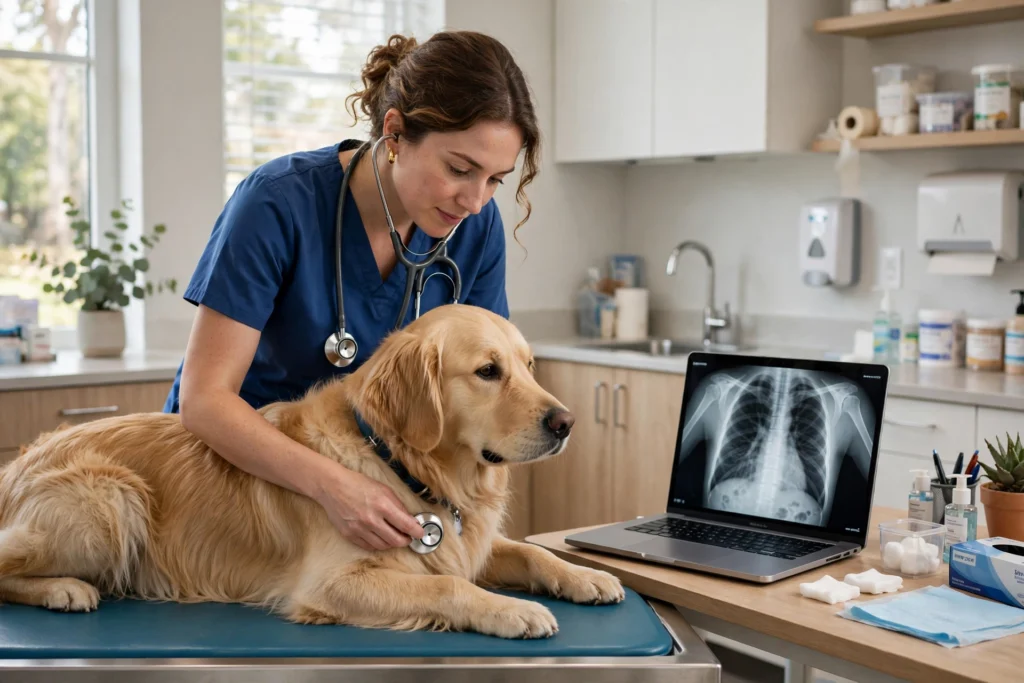
AI in veterinary care means software that helps vets read scans, track symptoms and spot patterns in an animal’s health records. It does not replace the vet: it flags things worth a closer look, so problems can be caught earlier and routine paperwork takes less time.
This article is general information, not veterinary advice. If your pet seems unwell, contact your vet.
Key Takeaways
- AI in veterinary care works behind the scenes: reading scans, sorting records and tracking change over time.
- Its biggest win is imaging: AI can highlight subtle changes on X-rays a tired eye might miss.
- Smart collars let owners and vets watch a pet’s activity, sleep and appetite between visits.
- AI cannot examine an animal or diagnose it. The vet still makes the call.
- It works best on common pets, less well on rare species.
A check-up that shows how it works
Picture a seven-year-old Labrador called Bella at her annual check-up. She seems fine, so her vet takes a chest X-ray as a routine precaution, and the clinic’s software scans the image while the vet talks to her owner.
The software flags one thing: the shadow of Bella’s heart looks slightly larger than on last year’s X-ray. It is not a diagnosis, just a nudge that says “look here”. The vet looks, agrees the change is worth checking, and books an ultrasound, which confirms an early heart change. Bella starts treatment months sooner than she might have done otherwise.
The vet still examined Bella by hand and made the decision; the AI simply noticed a small change between two pictures taken a year apart.
What does AI actually do in a vet clinic?
Most veterinary AI falls into three jobs.
First, image reading. Tools trained on large collections of X-rays and ultrasounds scan a new image and point out anything unusual. Radiograph-reading services such as SignalPET are already offered by imaging providers, and vets use them as a second pair of eyes. The vet still reads the image too.
Second, paperwork. AI scribes can draft the visit notes, summarise lab results and draft the follow-up message to the owner, which the vet checks before it goes anywhere.
Third, pattern spotting. Software can look at years of weight, blood results and visit notes together and notice slow drifts, such as a cat steadily losing weight. Each reading looks normal alone; together they form a trend.

How does AI read an X-ray?
The short version is that it has seen a lot of X-rays before. A system built for this job is trained on thousands of labelled scans, each marked by specialists as healthy or showing a particular problem. It learns which shapes and shades go with which conditions, then circles matching areas on a new scan — the same basic idea behind computer vision in other fields, applied to animal scans.
Two limits matter. First, data: dogs and cats are well covered, but a tortoise or a parrot has far fewer labelled scans to learn from. Second, an X-ray is a flat picture of a three-dimensional animal, and AI cannot tell the vet how the animal feels or what the owner noticed at home — which is why clinics call these tools assistants, not diagnosticians.
Can a smart collar really warn you before your pet looks ill?
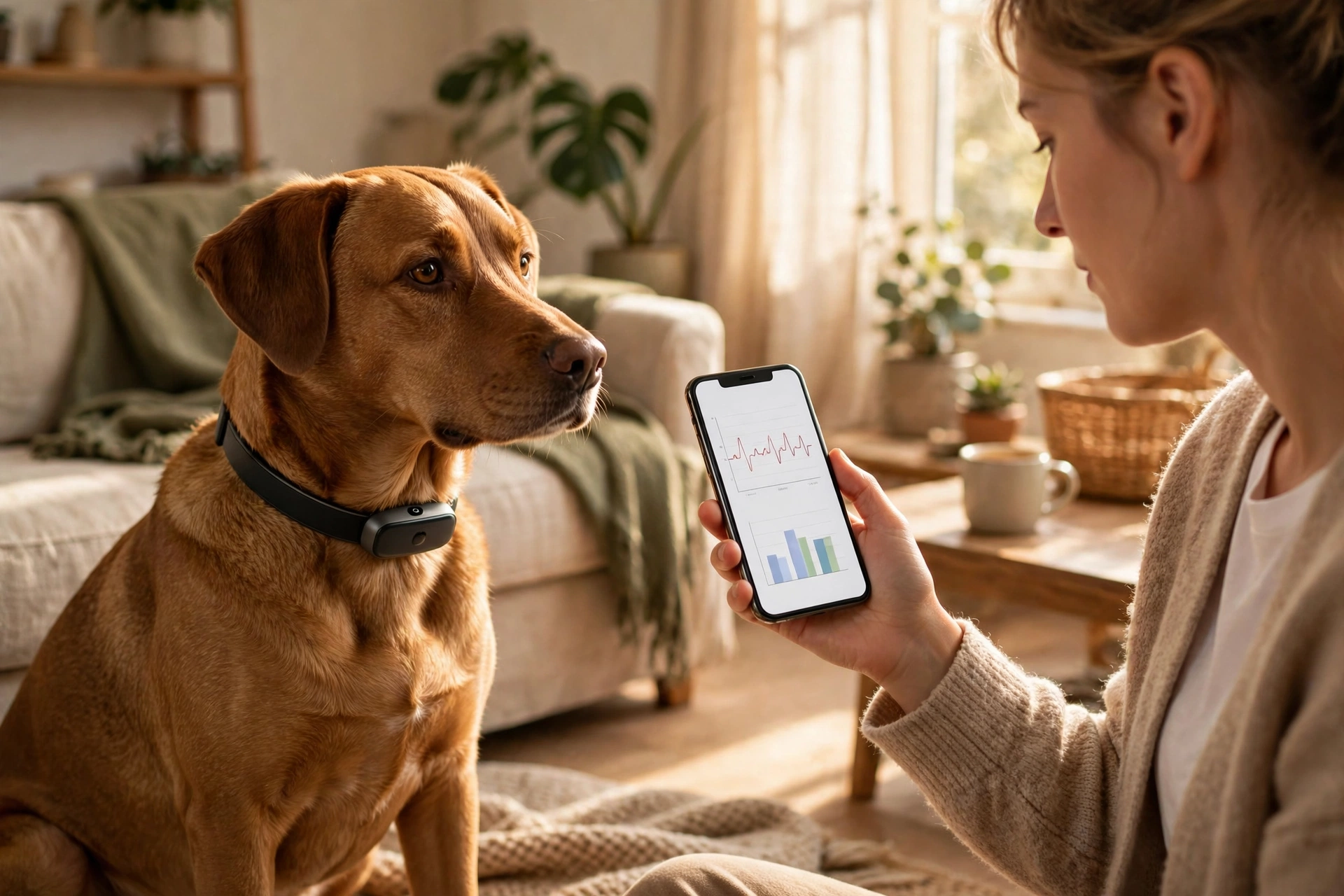
This is the part of AI in veterinary care that owners meet first, because it lives in their own home. A smart collar tracks activity, rest, scratching and, in some models, heart rate. The data goes to an app, which learns what “normal” looks like for that particular animal.
The useful bit is the change, not the numbers. A dog that usually sleeps eight hours a night and suddenly sleeps eleven, or a cat that visits its food bowl less often, may be showing early signs of pain or stress. Animals hide discomfort well, so a quiet change in routine can be the first clue.
A collar is not a vet, though: it cannot tell an ill dog from one having a lazy week in hot weather, and a loose fit or flat battery can throw its readings off. Treat alerts as a reason to watch closely and call the vet if the change lasts.
What about farm animals and wildlife?
Veterinary AI is not only about pets. On farms, cameras and sensors watch herds for the same slow changes, and wildlife researchers use it to sort thousands of camera-trap photos — in both cases the software watches at scale, and a human decides what it means.
Where does AI still fall short?
AI can be wrong, and confidently wrong: a system trained mostly on one breed can misread another, and a smudge on a scan can look like a shadow worth flagging. Every serious veterinary AI product is built to be checked by a vet, not trusted blindly.
Data is uneven: dogs and cats dominate the training data, while exotic pets get less coverage.
Privacy matters too. A pet’s health record belongs to its owner, and clinics using AI need to be clear about where that data goes. The same questions about bias and data handling that surround AI in human healthcare apply here, as do the principles in our guide to AI ethics.
Finally, cost is a real barrier: software, scanners and subscriptions add up, so AI in veterinary care is most common in larger practices for now.
AI-assisted care vs a traditional check-up
| Step | Traditional check-up | With AI assistance |
|---|---|---|
| X-ray reading | Vet reads the image alone | Software highlights areas to double-check |
| Record keeping | Vet writes notes after the visit | AI drafts notes; the vet edits and approves |
| Final decision | The vet’s | Still the vet’s |
The table makes the point plainly: AI changes how the vet works, not who is in charge.
Frequently asked questions
Can AI diagnose my pet on its own?
No. AI can highlight patterns and suggest things to check, but a diagnosis needs a vet who has examined the animal and taken its history.
Is AI veterinary care more expensive?
It can be at first, as clinics pay for the software and equipment, and some pass part of that cost on. In return, visits may be shorter and problems caught earlier, when treatment is often simpler.
Do smart collars really work?
They work best as trend-watchers, not medical devices. A collar that learns your dog’s routine and flags a change is genuinely useful; one claiming to detect a specific disease from a single reading should be treated with scepticism.
Will AI replace vets?
Not in any realistic sense. Animals need hands-on examination, and owners need someone who can explain a difficult decision with care.
Should I ask my vet whether they use AI?
Yes. Ask what tools they use, what the tools do, and who checks their output; a good clinic will be happy to explain. For the bigger picture, see our guide to artificial intelligence.
The practical next step
AI in veterinary care is already quietly useful when it stays in its lane: a second pair of eyes on a scan, a watcher of slow trends, and a helper with the paperwork. The vet remains the one who examines your pet, talks to you, and decides what happens next.
If you own a pet, ask your vet at your next visit whether they use any AI tools and what those tools check. At home, keep a brief note of appetite, energy, sleep and thirst — those everyday observations are the data that helps your vet, and their software, spot a change early.
Further reading: How AI Is Revolutionizing Pet Health — Yeshiva University and Uptrend of AI technology in veterinary medicine today — Vet Times.