
Artificial intelligence (AI) is software that learns from examples to do things we’d normally call thinking — understanding language, recognizing faces in photos, predicting what comes next. It isn’t one app or one robot. It’s a whole toolkit of techniques, from the spam filter quietly sorting your inbox to chatbots that can draft your emails.
Key Takeaways
- AI is software that learns patterns from data to make predictions or decisions. It’s not conscious, and it isn’t magic.
- Nearly all AI in use today is “narrow AI” — brilliant at one specific job and clueless outside of it.
- The big recent shift is generative AI, which creates new text, images, and more from simple written prompts.
- AI is already baked into search, maps, streaming recommendations, healthcare, classrooms, and small businesses.
- It has real limits: it can be confidently wrong, reflect biased data, and mishandle private information.
- The fastest way to understand AI is to try it on small, low-stakes tasks — and always check its work.
So, What Exactly Is Artificial Intelligence?
Here’s the simplest way I can put it: most software follows fixed rules, but AI software learns from examples.
Take a thermostat. It does exactly what it’s told — if the temperature drops below 68, turn on the heat. It will never surprise you, because it can’t learn anything. Your email spam filter is the opposite. Nobody sat down and wrote a rule for every spammy phrase ever invented. Instead, the filter studied millions of emails that humans had already marked as spam or not spam, and figured out the patterns itself. New scam wording shows up tomorrow? The filter still has a decent shot at catching it, because it learned what spamminess looks like, not just a list of banned words.
That learning-from-examples trick is the heart of AI. Give a system enough labeled examples, and it can start handling cases it never explicitly saw before — recognizing faces, translating languages, predicting which customers might cancel.
A few things worth clearing up early. “AI” is an umbrella term, not a single technology. Machine learning, deep learning, computer vision, natural language processing — these are all flavors of AI, and we’ll tour them in a bit. And no, today’s AI isn’t conscious. It doesn’t understand anything the way you do. It’s extraordinarily good pattern matching, which turns out to be enough for a startling number of jobs.
One more thing: when people say “AI,” they usually mean whatever feels new and slightly magical. Thirty years ago, a chess-playing computer was “AI.” Now it’s just… chess software. The label moves. What doesn’t move is the underlying idea: software that improves with data instead of only with hand-written rules.
How Does AI Actually Work? (In Plain English)
Think about how you’d teach a child to recognize dogs. You wouldn’t hand them a dictionary definition of “dogginess” — you’d point at dogs. Dozens of them. Big ones, small ones, scruffy ones. Eventually the child just gets it, even for a breed they’ve never seen. Training an AI system works in a surprisingly similar way.
Step one is data — lots of examples. Step two is training, where the system studies those examples and adjusts itself, over and over, until it can spot the pattern on its own. Step three is prediction: you show it something new, and it makes its best guess based on everything it learned. A spam filter guesses “spam or not spam.” A photo app guesses “that’s your sister.” A chatbot guesses which word should come next.
That last one deserves a closer look, because it’s the trick behind the chatbots everyone is talking about. Modern chatbots — the technical name is large language models — are trained on enormous piles of text: books, websites, articles, forums. During training, they play one game billions of times: given these words, what word probably comes next? Get good enough at that game, and something remarkable happens — the system can write essays, answer questions, and hold a conversation. It’s still predicting one word at a time. It’s just doing it so well that it looks like understanding.
That’s also why chatbots can be wrong in such confident tones. They don’t check facts against some inner encyclopedia; they generate the most plausible-sounding continuation. Plausible isn’t the same as true. Keep that in mind and you’ll avoid most AI disappointment.
There’s usually a human step in the loop, too. People rate the system’s answers — helpful, harmful, nonsense — and those ratings steer the next round of training. So today’s AI is really a partnership: massive data, clever math, and human feedback shaping the result. If you want to follow how this research is evolving, Stanford’s Human-Centered AI institute is one of the most readable places to do it.
What Are the Main Types of AI?
AI comes in flavors, and the names get thrown around loosely. Here’s a practical map.
Narrow AI: the only kind that actually exists
Every AI system you can use today is narrow AI — software designed to do one thing well. Your voice assistant can set a timer but can’t diagnose your car trouble. A fraud-detection system can flag a suspicious charge but can’t write a poem. This isn’t a criticism; it’s the whole business model. Narrow AI works because it stays in its lane.
Generative AI: the new arrival
Older AI mostly classified things — spam or not, cat or dog. Generative AI creates: paragraphs, images, music, code, video. You describe what you want in plain language, and it produces something new. That shift from sorting to creating is why AI suddenly went mainstream — creation feels a lot more magical than classification.
Machine learning and deep learning: the engine room
Machine learning is the technique of learning from data that we just described — it’s the biggest branch of AI. Deep learning is machine learning with layered “neural networks” loosely inspired by the brain. It’s the engine behind the biggest recent leaps: image recognition, voice assistants, chatbots. You don’t need to memorize the hierarchy; just know that when someone says “deep learning,” they mean AI with extra layers and extra data hunger.
Computer vision: AI that sees
Computer vision lets machines interpret images and video — unlocking your phone with your face, self-checkout cameras that recognize produce, quality-control cameras on factory lines. It’s one of the quietest AI success stories because it mostly works in the background.
Notice what’s missing from this list? Anything resembling general human intelligence. Researchers call that AGI — artificial general intelligence — and it’s still theoretical. Every “AI is about to become conscious” headline is really about better narrow AI. Impressive narrow AI, but narrow all the same.
Where Is AI Actually Being Used?
Let’s start with your own day, because AI is already in it more than you think.
You search for something and the search engine seems to know what you meant despite your typos. Your maps app reroutes you around a traffic jam it saw forming. Your streaming service queues up a show you’d probably pick yourself. Your phone takes a decent photo in a dim restaurant — that’s AI stitching multiple exposures together. Your bank texts you about a suspicious charge within seconds. None of this announces itself as “artificial intelligence.” It just feels like software getting smarter.
At work, the picture gets more interesting:
- Healthcare. AI helps radiologists review medical scans, turns doctor-patient conversations into written notes, and predicts appointment no-shows so clinics can plan better. It’s an assistant to trained professionals, not a replacement for them — anything involving diagnosis still needs a qualified human in charge. Here’s a closer look at AI in healthcare, including where its limits are.
- Small business. A one-person shop can now draft product descriptions, answer common customer questions at midnight with a chatbot, and get help keeping the books straight — tasks that used to require staff or expensive software. These low-cost AI uses for small businesses are a good place to start if this is you.
- Education. Teachers use AI to draft lesson plans and quizzes; students use it to get a tricky concept explained three different ways until one clicks. See how teachers and students are actually using AI today.
- Cybersecurity. Security teams use AI to spot unusual patterns in network traffic — the digital equivalent of noticing someone jiggling every doorknob on the street. Here’s how AI helps detect threats.
The pattern across all of these: AI handles the repetitive, data-heavy parts, and humans handle the judgment calls. Wherever you see that split, you’ll probably find AI nearby.
What Are the Real Benefits of AI?
Let’s be honest about the upside without the hype.
The most universal benefit is time. A first draft in thirty seconds beats a blank page. Summarizing a forty-page report into the five paragraphs that matter is genuinely useful. None of this is glamorous, and that’s the point — AI’s biggest wins are boring ones, repeated millions of times.
Then there’s accessibility, which doesn’t get enough attention. Live captions, real-time translation, voice control, text-to-speech — these aren’t conveniences for some people, they’re independence. AI has quietly become one of the most important accessibility technologies ever built.
Scale is the third benefit. A small team — or a solo founder — can now produce work that used to need a department: marketing copy, basic designs, data analysis, customer support coverage. It doesn’t turn a three-person company into a three-hundred-person company. But it narrows the gap more than anything else in recent memory.
And in research, AI is speeding up the slow parts of science — scanning mountains of papers, suggesting molecules worth testing, finding patterns in climate data. The breakthroughs still need human scientists. They just arrive faster.
The honest caveat: none of these benefits are automatic. AI amplifies whatever it’s pointed at. Point it at good data with clear goals and human oversight, and it’s remarkable. Point it at messy data with no supervision, and it will confidently scale up your mistakes.
What Are the Limits and Risks of AI?
Every strength of AI has a shadow. Here’s the other half of the picture.
It can be wrong — confidently. AI systems sometimes “hallucinate,” producing answers that sound authoritative but are simply made up: fake citations, wrong dates, plausible-sounding nonsense. This isn’t a rare bug; it’s a known property of how these systems work. The fix is unglamorous: check important claims against a real source.
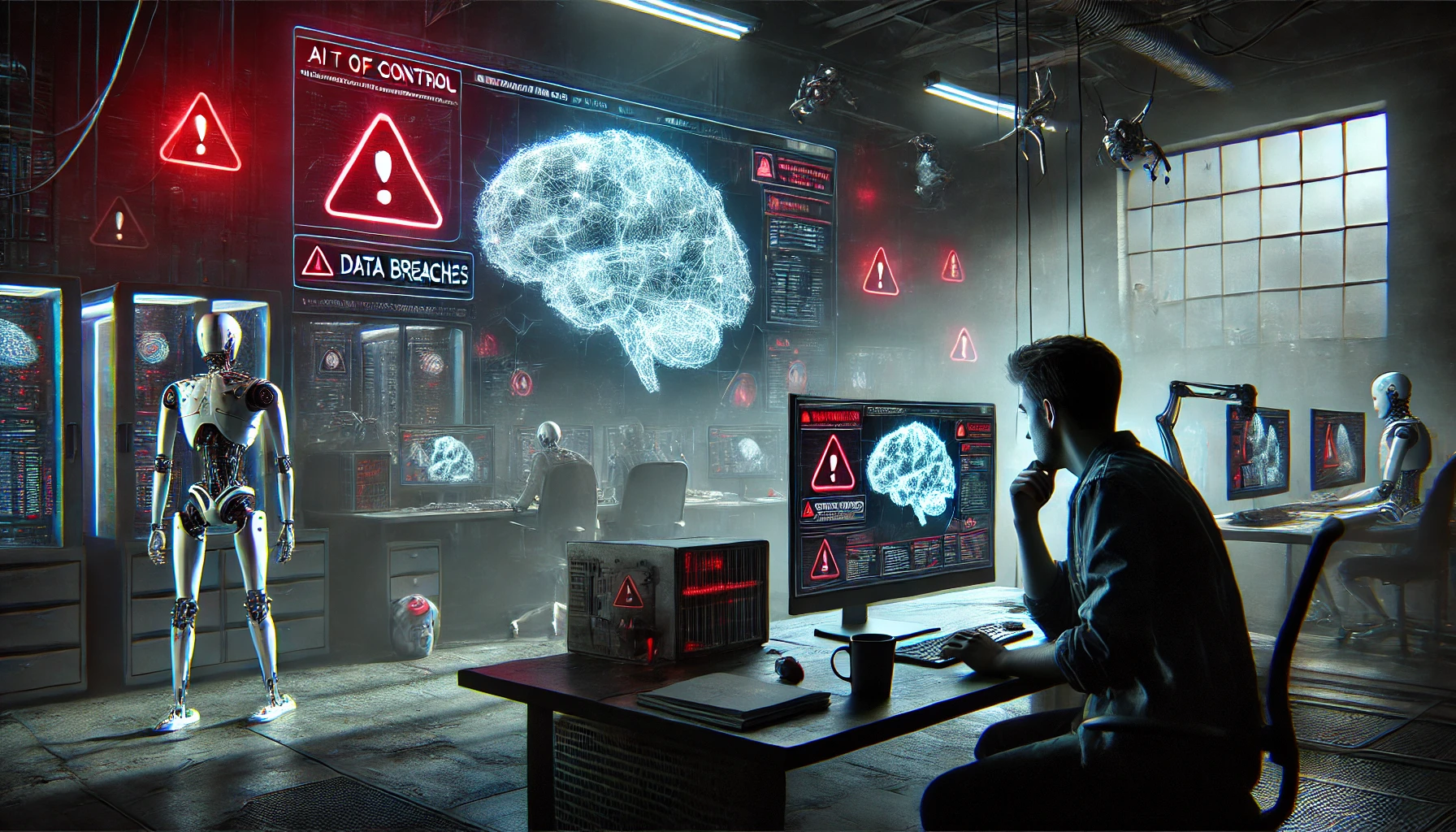
It learns our biases. AI trained on human data absorbs human patterns — including the unfair ones. A hiring tool trained on a company’s historical hires can learn to prefer the same demographics the company always preferred. The data is the destiny here, which is why diverse, carefully chosen training data matters so much. Our guide to AI ethics goes deeper into bias, privacy, and what “responsible AI” actually means.
Your inputs aren’t always private. Many AI tools use conversations to improve their products, and some have human reviewers. Assume anything you type could be seen by someone else. Don’t paste passwords, financial details, private health information, or other people’s personal data. This one rule prevents most AI privacy mishaps.
Work will change. Some tasks will be automated; that’s already happening in customer support, data entry, and basic content production. History suggests jobs morph more than they vanish — ATMs didn’t kill bank tellers, they changed what tellers do — but transitions are rough for the people living through them. The practical move is the same one it’s always been: keep learning.
Over-reliance is a quiet risk. If you let AI do all your writing, your writing gets rusty. If students let it do all their thinking, the thinking doesn’t develop. Use AI as a sparring partner, not a substitute — the goal is to stay sharper, not to outsource your brain.
None of this means AI is too dangerous to use. It means it’s powerful enough to deserve care — the same way you’d treat a car or a power tool. NIST, the U.S. measurement and standards agency, has even published a risk management framework for organizations building and deploying AI, which tells you how seriously the grown-ups are taking this.
How Can I Start Learning or Using AI?
Forget courses and certificates for now. The best first step is embarrassingly practical: pick one small, annoying task and try an AI tool on it.
Summarize that long email thread you’ve been avoiding. Draft a polite-but-firm reply to a difficult message. Brainstorm ten birthday gift ideas for someone hard to shop for. Plan three dinners from what’s already in your fridge. Low stakes, real usefulness — that’s the sweet spot for learning.
A few habits will take you far:
- Give context, not just commands. “Write a product description” gets you something generic. “Write a 60-word product description for a handmade ceramic mug, warm tone, aimed at gift buyers” gets you something usable. The output is only as good as the brief.
- Verify everything that matters. Treat AI like a brilliant intern: fast, eager, and occasionally wrong. Our guide to using AI tools safely walks through checking facts, protecting your privacy, and avoiding over-reliance.
- Keep sensitive stuff out. If you wouldn’t post it publicly, don’t paste it into an AI tool you don’t fully trust.
- Start free. The free tiers of the major AI tools are more than enough to learn on. Pay only when you’ve found a use that’s genuinely worth it.
And if you want to understand what’s happening under the hood, you’re already doing it — this guide and the linked explainers are the curriculum. No math degree required.
What’s Coming Next for AI?
Predictions about AI have a famously bad track record — the field has lived through several “AI winters” where the hype collapsed. So take everything in this section as informed guessing, not prophecy.
The clearest trend is AI moving from chatbots you visit to assistants woven into everything. Instead of opening an AI app, you’ll just find your software quietly better at its job: email that drafts itself, spreadsheets that build their own formulas, design tools that mock up your rough idea. Less “go talk to the AI,” more “the AI is already in the room.”
We’re also likely to see more AI agents — systems that don’t just answer questions but carry out multi-step tasks: researching options, comparing prices, booking the thing. Early versions exist and they’re uneven, but the direction is obvious.
On the rules side, governments are catching up. The OECD’s AI Policy Observatory tracks how different countries are approaching AI regulation, and it’s worth a browse if you want the global picture rather than the headlines.

My honest advice: don’t try to predict the specifics. Just stay flexible. The people who benefit most from new technology are rarely the ones who guessed right about it — they’re the ones who kept experimenting while everyone else argued about the forecast.
Frequently Asked Questions
Is AI the same as machine learning?
Not quite — machine learning is a subset of AI. AI is the big umbrella: any software that does tasks requiring human-like judgment. Machine learning is the most popular technique under that umbrella, the “learn from data” approach this whole guide is about. All machine learning is AI, but not all AI is machine learning (some older systems just follow hand-written rules).
Will AI take my job?
It will change your job — that much is nearly certain. AI is best at specific, repeatable tasks, so roles built entirely on those are the most exposed. But most jobs are bundles of tasks, and AI tends to automate some while making the human parts more valuable. The people thriving aren’t the ones ignoring AI or fearing it; they’re the ones learning to direct it.
Can I trust what an AI chatbot tells me?
Trust but verify — mostly verify. Chatbots are excellent at explaining, brainstorming, drafting, and summarizing. They’re unreliable at facts, figures, quotes, and anything where precision matters. For anything important, check the answer against a primary source. It takes ten seconds and saves real embarrassment.
Is my data safe when I use AI tools?
Safer than a group chat, less safe than your password manager. Many services retain conversations for training or safety review. The practical rule: don’t share anything you couldn’t afford to see on a billboard — no passwords, no financial account numbers, no private health details, no one else’s personal information.
Do I need to learn to code to use AI?
No. The whole point of modern AI tools is that you talk to them in plain language. Coding helps if you want to build AI-powered products or automate workflows, but for using AI day to day, clear writing beats programming every time.
What’s the difference between AI and generative AI?
AI is the entire field — everything from spam filters to self-driving tech. Generative AI is the branch that creates new content: text, images, music, code. When people say “AI” today, they usually mean generative AI, because that’s the part that arrived most recently and feels most dramatic.
The Bottom Line
Artificial intelligence is software that learns from data — not magic, not conscious, but genuinely useful and genuinely flawed. It’s already inside your phone, your workplace, and your kids’ classroom. It will keep getting better at specific things, keep making confident mistakes, and keep rewarding the people who learn to use it thoughtfully.
Here’s your next step, and it’s a small one on purpose: this week, take one tedious task — summarizing meeting notes, rewriting a confusing email, planning meals from leftovers — and run it through an AI tool. Then check every claim it makes. Twenty minutes of that will teach you more about AI than twenty articles. This guide will be here when you want to go deeper.
AI Terms You’ll Keep Hearing, Translated
AI comes with jargon. Here’s a cheat sheet for the words you’ll actually encounter:
- Algorithm — a set of step-by-step instructions. In AI, the instructions for how the system learns.
- Training data — the examples a system learns from. Quality in, quality out.
- Model — the trained system itself: data plus training, baked into software you can use.
- Prompt — the instruction or question you give an AI tool. Better prompts, better results.
- Hallucination — when an AI confidently makes something up. Not lying (there’s no intent involved), just wrong.
- Bias — unfair skew in a system’s outputs, usually inherited from its training data.
- Neural network — a popular AI design loosely inspired by brain cells, built in layers.
- AGI (artificial general intelligence) — the still-theoretical idea of AI with broad, human-like abilities.
You don’t need to memorize these. Just recognize them when they show up — which they will, constantly.
Where Did AI Come From? A 60-Second History
AI feels new, but the idea is older than computers. In 1950, Alan Turing asked whether machines could think, and proposed a test: if you couldn’t tell a machine from a human in conversation, that counted for something. The term “artificial intelligence” itself was coined at a 1956 Dartmouth workshop, where researchers confidently predicted human-level AI was just around the corner.
It wasn’t. Progress stalled, funding dried up, and the field went through “AI winters” — long stretches where almost nobody wanted to say the words “artificial intelligence” in a grant application. What changed was data and computing power. By the 2010s, the internet had produced oceans of training data, and graphics chips made massive training runs practical. Deep learning took off, image recognition got startlingly good, and then large language models brought AI to everyone’s browser.
The lesson of that history: AI advances in bursts, and every burst brings both a wave of hype and a trough of disappointment. Knowing the pattern helps you read today’s headlines with the right amount of skepticism — excited, but not gullible. Which brings us full circle: software that learns from data, getting better in fits and starts, now sitting at the center of how we work and live.