Self-supervised learning is a way of training AI on large amounts of unlabeled data by turning the data itself into the lesson. Instead of waiting for a person to label every example, the model hides part of the input, predicts what is missing, and learns useful patterns from getting that prediction right or wrong.
Key Takeaways
- Self-supervised learning creates its own training signals from unlabeled data, so it does not need a label for every example.
- A pretext task is the practice exercise, such as predicting a missing word or a hidden part of an image.
- A downstream task is the real job the model is later used for, such as sorting photos or answering questions.
- It often works best when a pretrained model is then fine-tuned on a smaller set of labeled examples.
- It still needs care: biased or low-quality data can shape what the model learns.
How is it different from supervised learning?
In supervised learning, a person provides the answer in advance. A photo is labeled “cat,” a review is labeled positive or negative, and the model learns the link between the input and that label. That can work well, but labeling takes time and judgment, and some data is hard to label at scale.
Self-supervised learning changes where the answer comes from. The model might see a sentence with one word removed and try to guess it. It might see two cropped views of the same photo and learn that they belong together, even though no one told it what the photo shows. The “label” is built into the task, not added by a person.
That is why it is often described as sitting between supervised and unsupervised learning. Like unsupervised learning, it starts from unlabeled data. Like supervised learning, it still has a clear target to predict and a way to measure mistakes during training.
For a broader starting point, see What Is Artificial Intelligence? The Complete Guide, and for training from labeled examples, see What Is Supervised Learning?
What is a pretext task?
A pretext task is a task the model is given mainly to help it learn, not because the task itself is the end goal. Think of it like a warm-up drill: a player does passing drills to get better at the game, not because the drill is the match. A model does a pretext task to build a richer understanding of the data.
Common examples include:
- Predict the missing word. Hide a word in a sentence and ask the model to fill it in. To do this well, it must pick up grammar, word meaning, and context.
- Predict the hidden part of an image. Cover a patch of a photo and ask the model to guess what belongs there. That pushes it to learn shapes, textures, and how objects usually fit together.
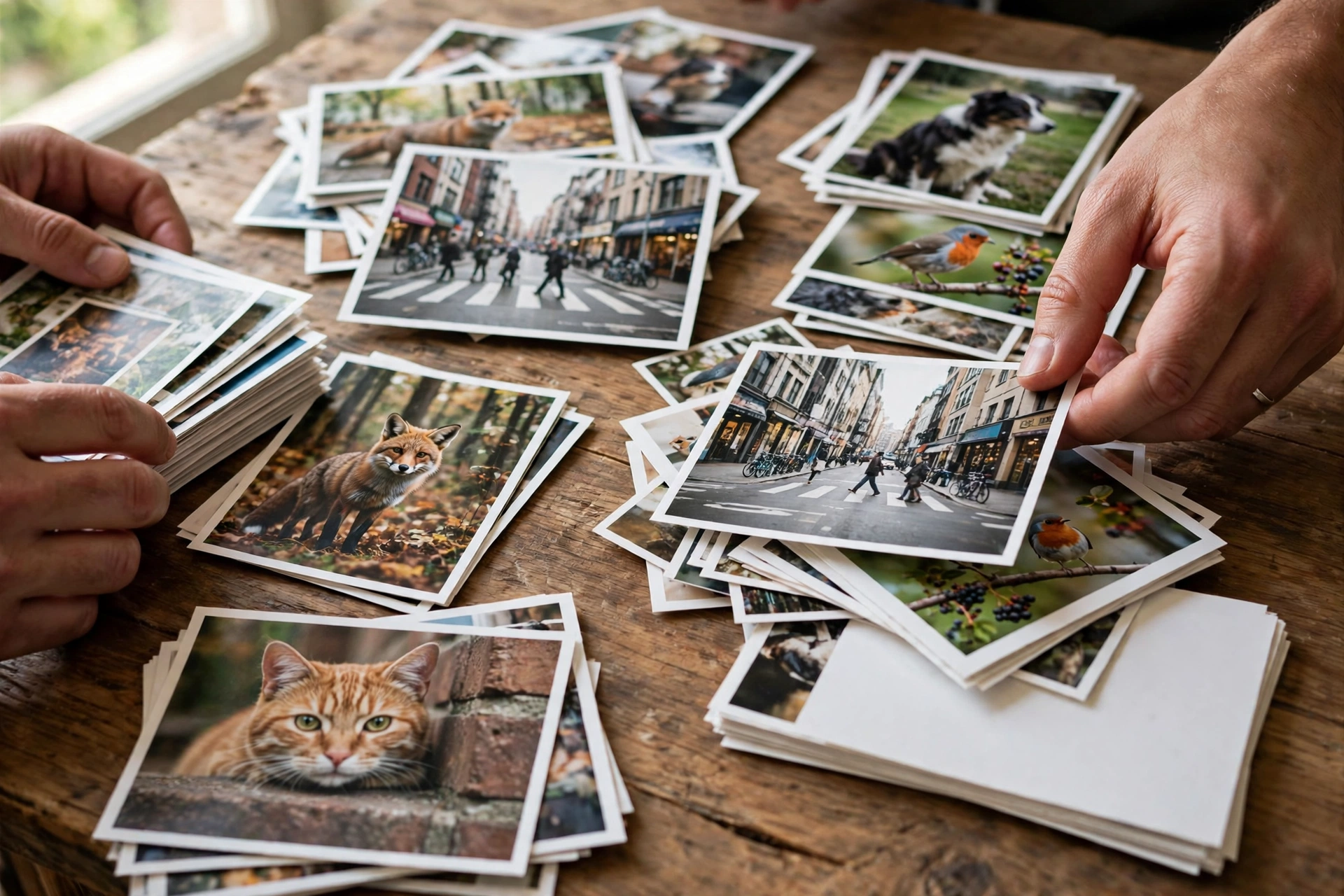
- Match two views of the same thing. Show two altered versions of one photo, perhaps cropped or brightened, and teach the model to treat them as the same item. This helps it focus on what stays the same, rather than small surface changes.
- Put things in order. Shuffle parts of a short sequence and ask the model to restore the order. This can help with language, video, and other ordered data.
None of these needs a human-written label. The data already contains the answer: the original word, the original image patch, or the original order. The model learns by comparing its guess with that built-in answer and adjusting itself.
How does a pretrained model become useful for a real task?
After the pretext stage, the model has usually learned a general representation of the data. In plain terms, it has learned how to turn raw input into a compact summary that keeps the important features and drops much of the noise. That summary can then be reused.
The next step is often fine-tuning. A smaller labeled dataset adapts the pretrained model to a specific job. A vision model trained on many unlabeled photos might later be fine-tuned to sort images into a few categories. A language model trained on large amounts of text might be fine-tuned to answer questions in a particular style.
This two-step pattern is one reason the method matters in practice. Collecting a huge unlabeled dataset can still be hard, but it is often easier than labeling every item by hand. Once a strong general model exists, a team may need far fewer labeled examples for a new task. That does not remove the need for good labeled data, testing, and human review. It changes where that effort is spent.
It connects closely with machine learning in general, and with deep learning, because many self-supervised models are neural networks trained on very large datasets.
Where is self-supervised learning used?
In language, models often learn by predicting missing or next words in text. That helps them pick up grammar and patterns in longer passages. Later fine-tuning can shape the same base model for chat, summarization, or translation.
In vision, models learn from unlabeled images by comparing views, filling in hidden regions, or grouping similar pictures. Meta’s DINOv2, for example, is described as a self-supervised vision method that learns strong visual features without labeled training data, and can then be used for tasks such as classification and segmentation. See Meta’s own DINOv2 introduction for more detail.
In speech, a model might learn from raw recordings by predicting masked parts of the sound, then be adapted for transcription with a smaller labeled set. The same idea helps in scientific work, where labeled examples may be rare or costly, but raw measurements are plentiful.
None of this means the model understands the world the way a person does. It means it has found patterns that are useful for the tasks it was tested on. That distinction matters when you decide how much to trust its output.

What are the limits and risks?
Self-supervised learning reduces the labeling bottleneck, but it does not remove the other hard parts of building AI.
First, it still needs a lot of computing power and data. Training a large model is not a small job, and the cost can limit who can build these models.
Second, unlabeled data is not neutral data. If the photos or text reflect narrow viewpoints, errors, or unfair patterns, the model can absorb those patterns too. Careful data choices, evaluation, and human oversight still matter.
Third, success on a pretext task does not guarantee success on a downstream task. A model can get very good at guessing missing words while still struggling with a specific real-world job, especially if the fine-tuning data is small or different from the data it will face in use.
Finally, these models can still make confident-sounding mistakes. Data augmentation can help a model handle variations in its input, but it does not make the model correct by default. Outputs should still be checked, especially when they affect health, money, or safety. IBM’s guide to self-supervised learning explains the pretext and downstream distinction in more detail.
Frequently Asked Questions
Is self-supervised learning the same as unsupervised learning?
Not quite. It is often described as a form of unsupervised learning, because it starts from unlabeled data. The difference is that it creates its own prediction targets from that data, so training still has a clear answer to check against.
Does it mean no labels are ever used?
No. Labels may still be used later, during fine-tuning, and when the model is evaluated. The key point is that the large pretraining stage does not require a label for every example.
Why do companies use it for large models?
Because labeling at the scale needed for a large model is slow and costly. Learning from unlabeled data first lets a team build a general model, then adapt it to specific tasks with a smaller labeled dataset.
Can a self-supervised model learn without any human involvement?
No. People still choose the data, design the pretext task, set up training, and decide how the model is tested and used. The method reduces manual labeling; it does not remove human judgment.
Is it better than supervised learning?
It depends on the task and the data available. Self-supervised pretraining can be very effective when labeled data is scarce, but a well-labeled dataset and careful evaluation may still give a better result for a narrow, well-defined job.
Conclusion
Self-supervised learning works by giving a model a useful puzzle to solve, using the data itself as the answer key. The model learns general patterns first, and those patterns can then be adapted to real tasks with a smaller amount of labeled data. That is a powerful shift, but it is not magic. Data quality, computing cost, and careful testing still shape the result.
A good next step is to look at one model you already use and find out whether it was pretrained in this way. Once you can spot the pretext task behind the tool, the rest of the idea falls into place much more easily.