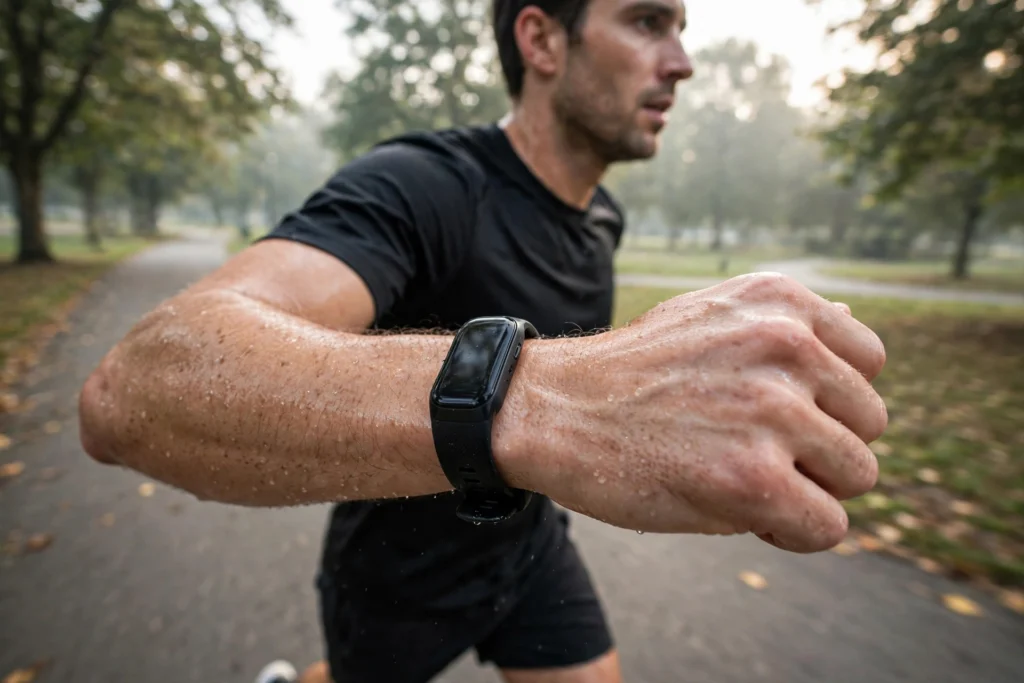
This article explains how the technology works. It is general information, not medical advice, and a tracker is not a substitute for professional health guidance.
A fitness tracker does not watch you walk, run, or sleep. It feels tiny movements, flashes light into your skin, and then guesses — usually quite well — what you were doing. The magic is not in one sensor. It is in several small sensors working together, plus software that turns messy signals into steps, heart rate, distance, and sleep stages.
Key Takeaways
- A fitness tracker combines motion sensors, an optical heart-rate sensor, and software to estimate activity.
- Steps come mainly from an accelerometer spotting the repeating pattern of walking or running.
- Heart rate is usually estimated with green light reflected from blood under the skin, a method called photoplethysmography.
- Sleep is an estimate based on stillness, heart rate, and time of night — not a direct recording of brain waves.
- Step and resting heart-rate figures tend to be more reliable than calorie burn or detailed sleep stages.
What sensors are inside a fitness tracker?
Most wrist trackers start with an accelerometer, which measures acceleration in three directions. Think of it as a very sensitive motion detector. It notices when your arm swings, when you sit still, and when you jolt awake at night. Many trackers also add a gyroscope, which senses rotation, so the device can tell a twist from a straight swing.
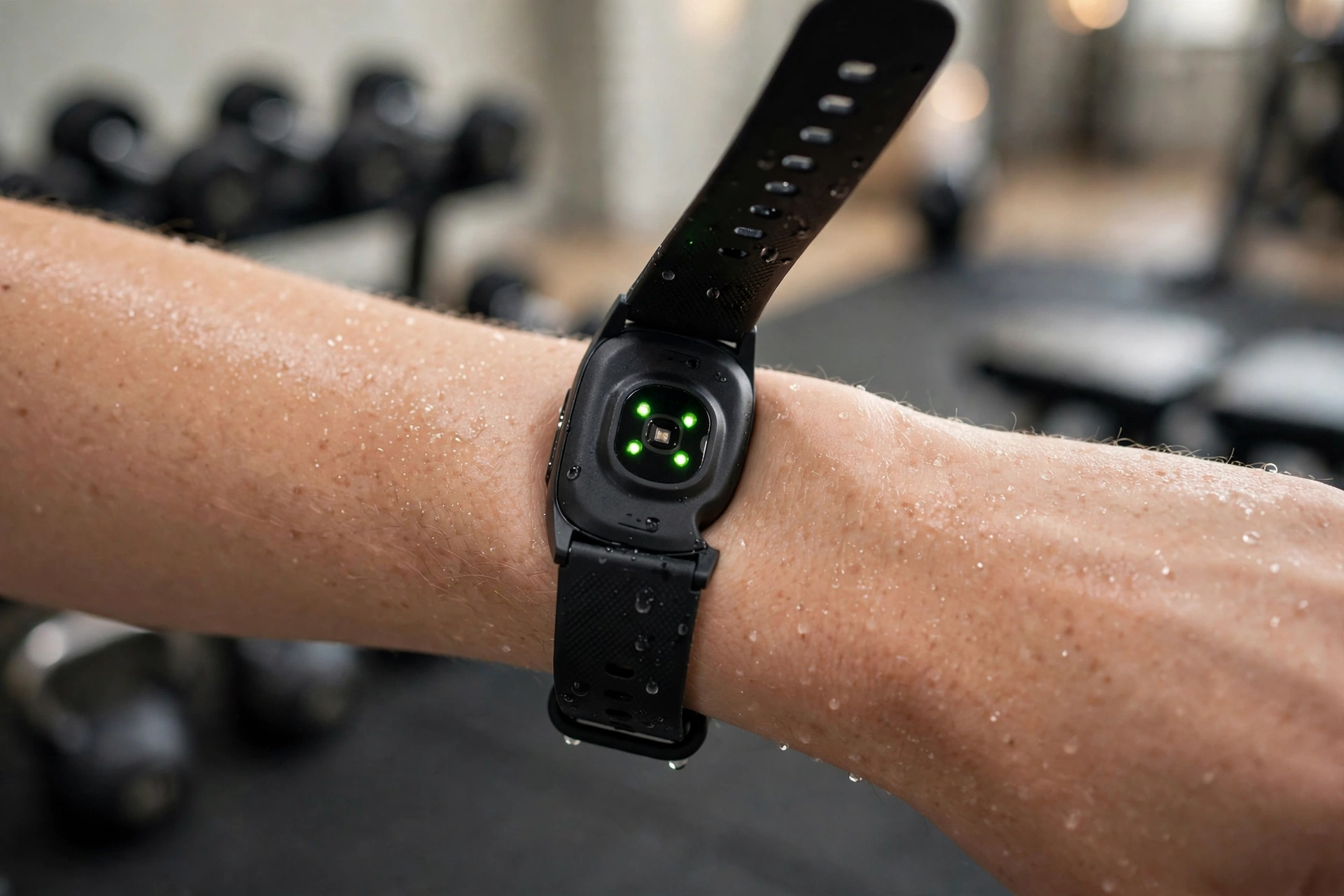
Then there is the optical sensor on the underside, the one with the green lights you may have noticed in a dark room. It also often includes a GPS chip, an altimeter for height changes, and a temperature sensor in some models. Together, these sensors collect raw data all day. None of them, on its own, knows that you took a step or fell asleep. That interpretation happens later, in software.
How does a fitness tracker count steps?
Walking has a rhythm. Each step creates a small, repeating pattern of acceleration as your foot strikes the ground, your body moves forward, and your arm swings. The tracker’s software looks for that pattern and counts it as a step, while trying to ignore other movements such as brushing your teeth or waving at a friend.
That is why step counts are usually close during a normal walk but can drift in other situations. If you push a shopping trolley, your arm barely swings, so some steps may be missed. If you are on a bumpy bus ride, the tracker may count vibrations it should not. A tracker worn on the wrist is convenient, but it is measuring your wrist, not your feet, so it has to infer what your feet did.
Distance is then estimated from steps and stride length, or from GPS during an outdoor run. GPS gives a better route and distance, but it uses more battery, which is why many trackers use it only when you start a workout rather than all day.
How does it measure heart rate?
The green lights on the underside are doing real work. This method, photoplethysmography, shines light into the skin and measures how much is reflected back. Blood absorbs green light, so as your pulse pushes blood through the small vessels in your wrist, the reflected light changes slightly with each beat. The sensor picks up those changes and turns them into a heart-rate reading.
It works best when the tracker sits snugly and you are fairly still. During a hard workout, the watch can slide, sweat can change the light path, and arm movement can swamp the pulse signal. That is why resting heart rate, measured quietly over time, is often more useful than a single reading taken mid-sprint. Some trackers also use the variation between beats, known as heart-rate variability, to estimate recovery or stress, but again, this is an estimate drawn from the same optical signal.
For more detail on the sensors involved, see the USC guide to how fitness trackers work and the Wikipedia overview of fitness trackers.
How does a fitness tracker estimate sleep?
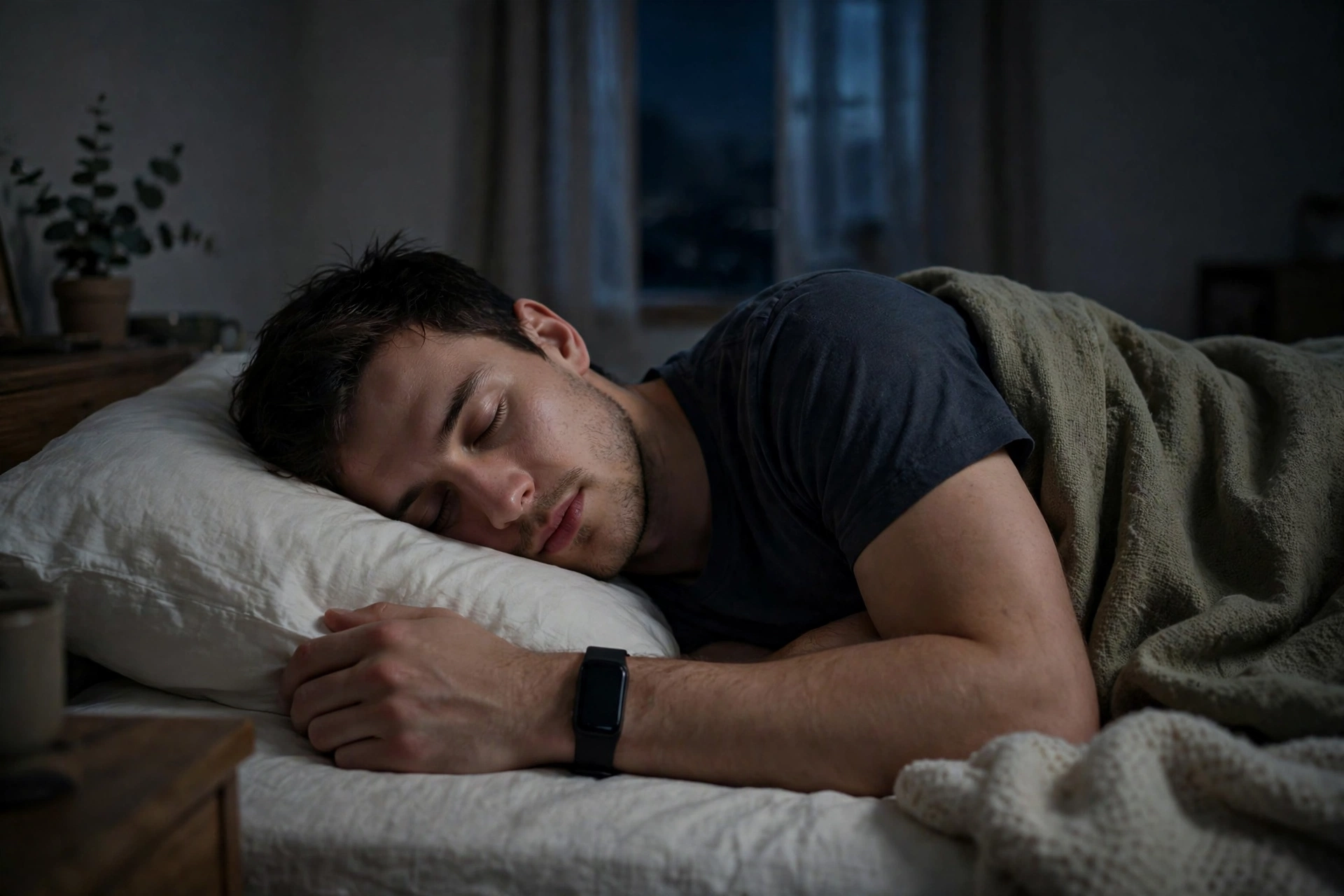
Sleep tracking is the part most people over-trust. A wrist tracker cannot see your brain waves, so it cannot directly tell whether you are in light, deep, or REM sleep in the clinical sense. Instead, it combines stillness from the accelerometer with heart-rate changes and the time of night.
Long, quiet periods with a slowing heart rate look like sleep. Tossing and turning looks like light sleep or wakefulness. The tracker then builds a nightly picture from those clues. Total sleep time is often reasonable over several nights, but the exact split into stages is rough, and lying still while awake can be mistaken for sleep.
What about calories, floors, and other numbers?
Calorie burn is the shakiest number on most trackers. The device starts with your age, height, weight, and resting metabolism, then adds activity. That is a model, not a measurement, and small errors in each input add up. Treat it as a rough guide for comparing one week with another, not as an exact account of what you burned.
Floors climbed usually come from an altimeter, which senses small changes in air pressure as you go up stairs. It can be fooled by weather changes or by a lift ride, so it is best treated as a nudge rather than a precise count. The same logic applies to active minutes and exercise rings: they are useful habits, not laboratory measurements.
How does the tracker sync with your phone?
Most trackers send their data to a phone app over Bluetooth, the short-range wireless link used by earbuds and many other gadgets. The phone app then shows trends, weekly totals, and goals, and may back the data up to an online account when your phone has internet access. That is also why a tracker can keep recording when your phone is in another room, then catch up later. If you want a refresher on the wireless side, our explainer on how Wi-Fi works covers the home-network part of that journey.
Syncing also explains why battery life matters so much. A tracker that checks GPS constantly or keeps its screen on will drain faster than one that samples sensors quietly and syncs in short bursts. Charging is usually done with a small magnetic cable or dock, similar in idea to the pads explained in our guide to how wireless charging works.
Why do two trackers give different numbers?
Two people wearing different trackers on the same walk can get different step counts, and neither is necessarily broken. Sensors differ, the fit differs, and each company’s software makes different choices about what counts as a step or a sleep stage. A loose strap, a tattoo under the sensor, cold skin, and vigorous arm movement can all shift the result.
That is also why trends matter more than single days. If your average resting heart rate drifts down over a month of regular walks, that trend is more meaningful than whether Tuesday’s count was 8,412 or 8,900. If a reading suddenly looks wildly off, check the fit first, then whether the device was charged and updated, before worrying about the number itself.
How accurate are fitness trackers, really?
Step counts during normal walking and resting heart rate are generally the strongest figures. Heart rate during intense exercise and calorie estimates are weaker, and sleep stages are the weakest of all. None of this makes a tracker useless. It makes it a habit tool, not a medical instrument.
Think of it like a bathroom scale that is always a little off in the same direction. It can still show whether you are moving in the direction you want, even if the absolute number is not perfect. The danger is treating a single night’s sleep score or a single day’s calorie total as a verdict on your health.
Should you worry about privacy?
A tracker collects a lot of personal data: where you walk, when you sleep, and how your heart behaves. That data usually travels to an app and sometimes to an online account, so it is worth checking what is shared, whether location history is stored, and whether you can delete old data. The same caution applies to other connected home gadgets, including the cameras and doorbells in our guide to how a smart doorbell works.
Turning off features you do not use, such as continuous location tracking, and reviewing app permissions now and then, will cut the data trail without losing the basic step and sleep counts most people actually check.
Frequently Asked Questions
Do fitness trackers work without a phone nearby?
Yes, for most daily tracking. The tracker stores steps, heart rate, and sleep on the device, then syncs to your phone over Bluetooth when you are back in range. You only need the phone nearby for live GPS maps, notifications, and software updates.
Why does my tracker count steps while I am driving?
Vibration and arm movement can mimic the pattern of walking, especially on a rough road. Most software filters out some of this, but it is not perfect, and a bumpy journey can add a few phantom steps.
Can a fitness tracker diagnose a heart problem?
No. It can flag an unusual pattern and prompt you to seek advice, but it is not a diagnosis. If you notice persistent irregular readings, dizziness, chest pain, or other worrying symptoms, seek professional medical advice promptly rather than relying on the tracker.
Do I need to wear it at night for sleep tracking?
Yes, if you want sleep estimates. The tracker needs overnight movement and heart-rate data to build its picture. If you charge it overnight instead, you will get no sleep data for that night, which is fine — one missing night does not ruin the weekly trend.
How long does a fitness tracker battery usually last?
It varies a lot by model and features, from a few days for a bright-screen smartwatch to a week or more for a simple band. GPS workouts, always-on displays, and frequent notifications all shorten battery life, while a snug fit and regular charging keep readings steadier.
Conclusion
A fitness tracker is a small bundle of sensors and educated guesses. An accelerometer spots the rhythm of your steps, green light estimates your pulse, and software pieces together sleep, distance, and calories from those clues. Used with that in mind, it is a genuinely useful habit tool: it makes movement visible, rewards consistency, and shows trends you would otherwise miss.
A practical next step is simple. Wear the tracker snugly for a week without chasing a perfect score, then look at the weekly averages for steps, resting heart rate, and sleep time. Pick one habit to change — a short daily walk, a regular bedtime, or a phone-free wind-down — and let the tracker show whether that habit sticks. The number is not the goal. The habit is.