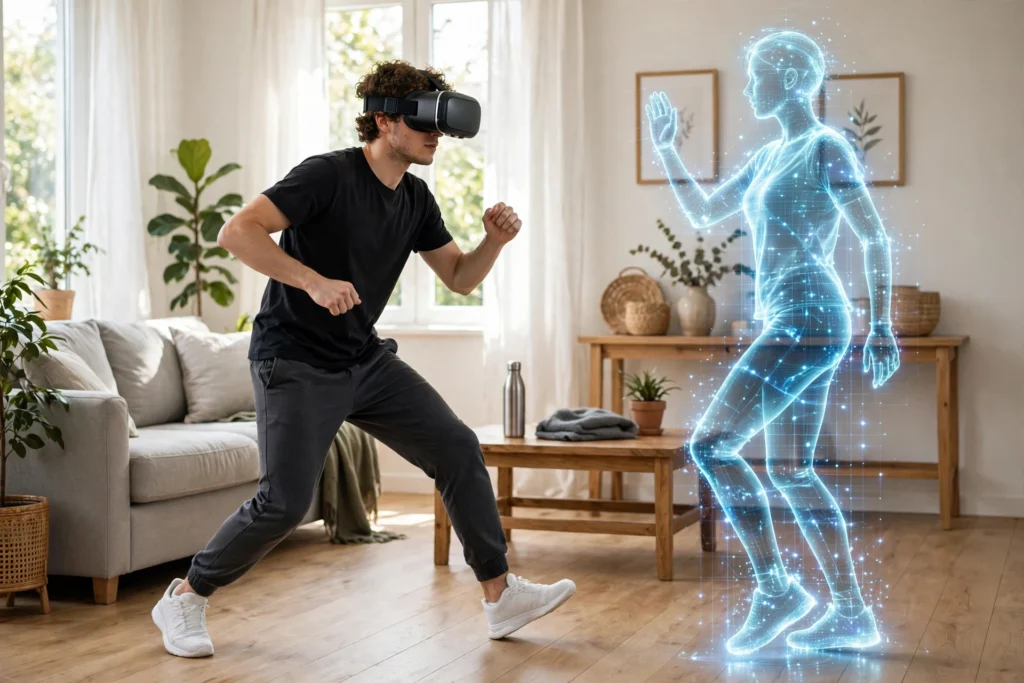
VR dance lessons put a teacher, a mirror, and a practice room inside a headset, so you can learn steps at home. The headset shows a virtual instructor, tracks your head and hands, and plays music in time with the routine. You copy the movement, get feedback on timing, and repeat the tricky part as often as you like.
Key Takeaways
- A VR dance lesson combines a headset, motion tracking, music, and a virtual mirror or instructor.
- Slow practice, looping, and instant timing feedback help beginners build rhythm step by step.
- A clear floor, good lighting for tracking, and comfortable shoes matter more than fancy gear.
- VR is strong for solo practice and confidence, but partner work and detailed technique still benefit from a human teacher.
What happens in a VR dance lesson?
A typical lesson starts with a short warm-up, then breaks a routine into small pieces. The instructor might show a basic step, count it in, and ask you to copy it. You can watch from the front, from behind, or from the side, which is handy when a turn looks confusing in a normal mirror. Many lessons let you slow the music down, repeat eight counts, and only move on when you feel ready.
That control is the real appeal. In a group class, the music keeps going whether you caught the step or not. In VR, you can pause, rewind, and practise the same transition ten times without feeling watched. It won’t make you a dancer overnight, but it can make those first, awkward weeks a lot less stressful.
How does the headset track your dancing?
Your headset tracks your head position and, in many systems, your hands through controllers or hand tracking. When you step, turn, or raise an arm, the virtual camera and your avatar move with you. That is why a lesson can tell whether you stepped on the beat or a little late.
Feet are trickier. Most home headsets do not track each foot directly, so they estimate leg movement from your head and hand positions. That works well enough for rhythm and general shape, but it cannot judge every foot detail. Think of it as a helpful coach for timing and flow, not a judge for exact foot placement. If you want to understand the hardware behind this, our guide to how VR headsets work explains screens, lenses, and tracking in plain language.
Why does a virtual mirror help?
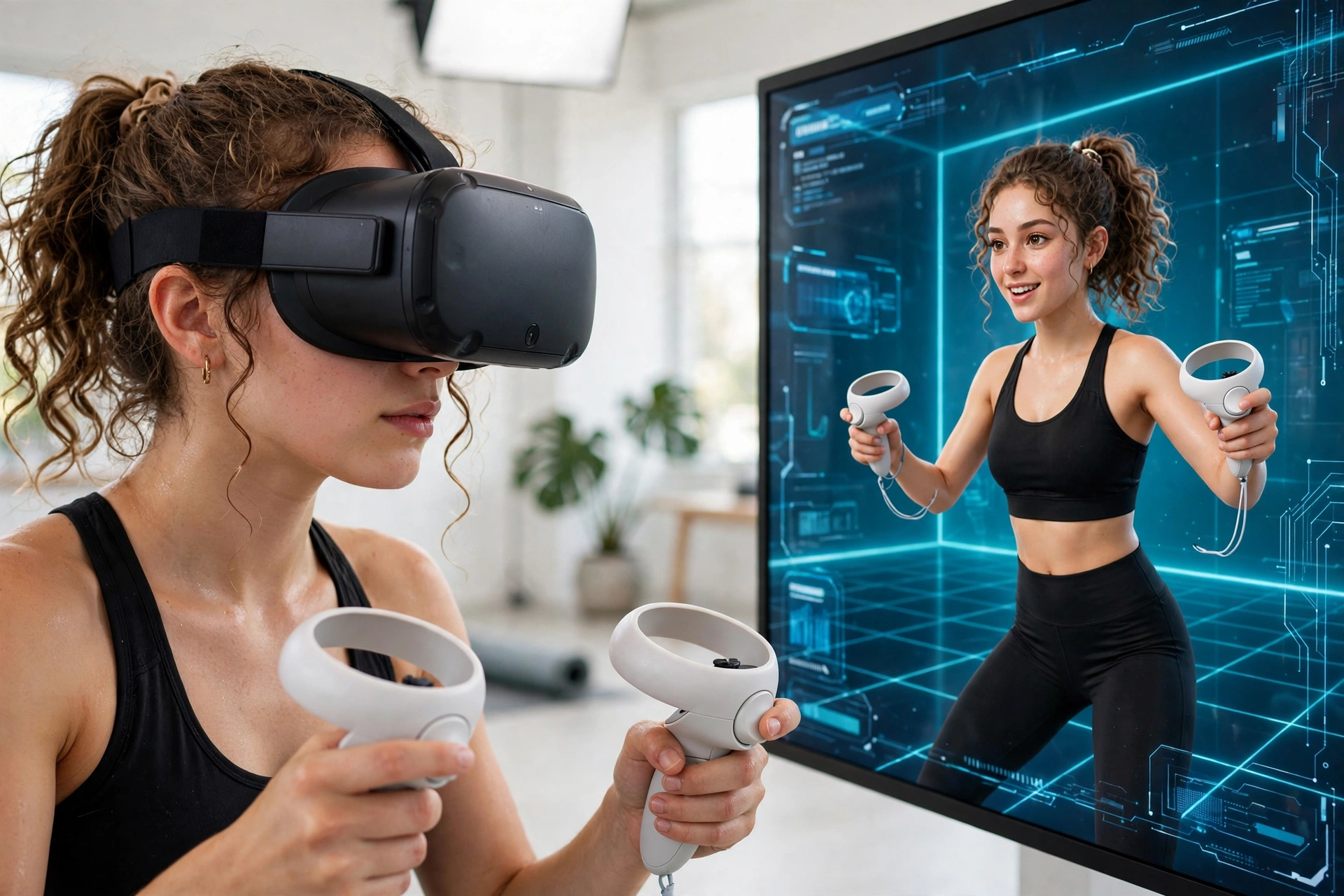
A virtual mirror shows your avatar next to the instructor, so you can compare posture, arm lines, and timing at a glance. Some lessons colour-code a movement when you are early or late, or show a simple score for staying on the beat. That instant check helps you fix a habit before it settles in.
It also helps with confidence. Plenty of beginners hold back because they worry about looking silly. Practising alone, with a mirror that does not judge, makes it easier to try bigger movements and actually enjoy the music. When the steps feel familiar, dancing in front of other people feels much less daunting.
What kinds of dance suit VR best?
Rhythm-based and solo styles tend to work best: social dance basics, line dancing, hip-hop foundations, Bollywood-style routines, and fitness dance. These styles reward timing, coordination, and repetition, all of which VR handles well.
Partner dances are harder. VR cannot yet give you the gentle push, pull, and weight-sharing that a real partner provides, and holding a controller is not the same as holding a hand. You can still learn the basic footwork and timing alone, then take that foundation to a partner class. Similarly, styles that depend on very fine footwork or floor contact will always need some real-world practice.
How do you set up a safe practice space?
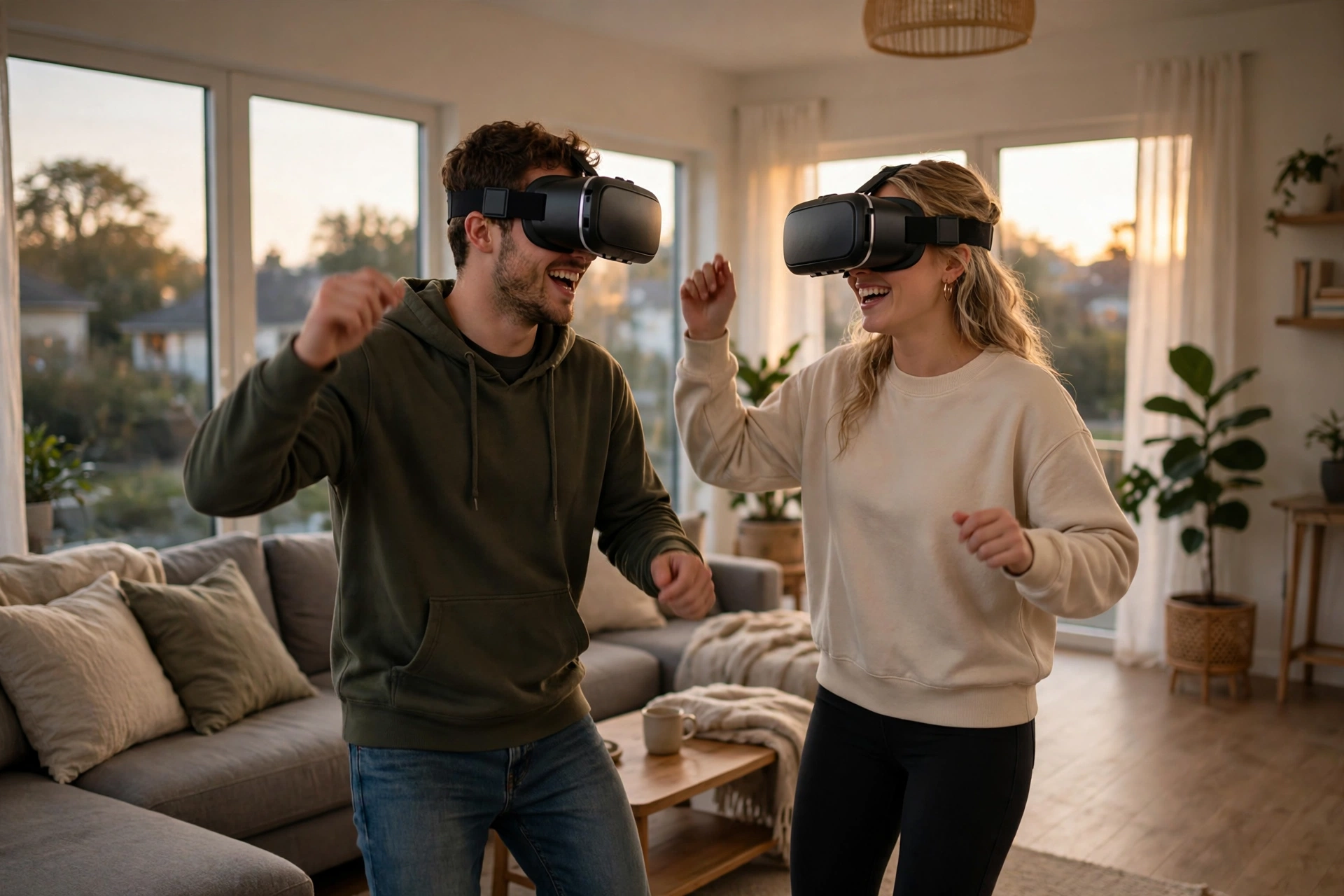
Start with a clear area, about the size of a small rug plus room to step in every direction. Move coffee tables, charging cables, and anything you could trip over. If your system maps the room, let it finish that scan before you start, and keep the boundary on. Good, even lighting helps tracking, while a very dark room or bright sunlight through a window can confuse the cameras.
Wear flat, supportive shoes that let you turn without sticking to the floor. Keep water nearby, take breaks, and stop if you feel dizzy or off balance. A short, focused session beats a long, tired one, especially when you are learning a new turn or a faster routine.
Can VR lessons replace a dance teacher?
Not completely, and that is fine. A teacher can see things a headset cannot: a stiff shoulder, a knee turning the wrong way, or a habit that might lead to a sore ankle. A teacher can also adapt a step on the spot for your height, flexibility, or experience.
The best approach for many learners is a mix. Use VR for regular, low-pressure practice between classes, or as a first step before joining a class at all. Use a teacher, even occasionally, to check your technique and answer questions. VR keeps the habit alive; a teacher keeps the technique honest.
How should beginners practise without getting overwhelmed?
Pick one routine and one skill at a time. If the footwork is new, keep the arms simple. If the arms are new, slow the music down. Count out loud at first, even if it feels silly — counting ties your feet to the beat and makes the pattern easier to remember.
Short daily practice usually beats one long weekend session. Try ten to twenty minutes, finish with a part you already enjoy, and note the one move to practise next time. That small routine builds muscle memory without turning dance into homework. Our guide to VR music lessons covers a similar idea: steady, bite-sized practice often helps more than rushing through a whole piece.
What gear do you actually need?
A standalone VR headset is enough for most dance lessons, plus controllers if the lesson uses them. You do not need a powerful gaming computer for beginner lessons, though some advanced apps do use one. Check the lesson’s requirements before buying anything, and start with free or short trial lessons to see whether you enjoy the style.
Controllers matter more than they might seem. They help the system follow your hands during arm movements, spins, and claps. If a lesson supports hand tracking instead, you can dance with empty hands, which feels more natural for some styles. Either way, keep the controllers’ straps on, and make sure you have room to swing your arms safely.
What are the limits to keep in mind?
VR dance lessons are great for timing, confidence, and fun, but they have limits. Foot tracking is estimated rather than exact, partner connection is missing, and a headset can feel warm during a long session. Battery life also sets a natural limit, which is actually useful: it encourages breaks.
Motion sickness is another point to watch. Fast spins, quick camera moves, and jumping can feel odd at first. Start with slower routines, keep sessions short, and sit down if you feel unwell. If dizziness keeps happening, try a different lesson style or talk to a teacher about in-person options.
How do you choose a good VR dance lesson?
Look for lessons that teach in small steps, show the movement from more than one angle, and let you slow the tempo. Clear counting, a visible beat, and simple feedback are more useful than flashy effects. A good lesson should also tell you what to practise next, rather than throwing a full routine at you in the first minute.
Read the lesson description carefully, too. Some apps focus on fitness and cardio, while others focus on technique and style. Both can be fun, but they are not the same goal. Choose the one that matches what you want: a workout, a new skill, or a bit of both.
FAQs
Do I need dance experience to start VR dance lessons?
No. Most beginner lessons assume no experience and start with basic steps, counting, and rhythm. Choose a beginner level, go slowly, and repeat sections until they feel comfortable.
Is VR dancing good exercise?
Yes, it can be. An active dance session raises your heart rate, improves coordination, and uses your legs, core, and arms. Treat it like any workout: warm up, stay hydrated, and build up gradually.
Will VR teach me to dance with a partner?
It can teach footwork, timing, and basic patterns, but not the feel of leading, following, or sharing weight with a partner. For partner dancing, combine VR practice with a real class or social dance session.
How much space do I need for VR dance lessons?
A clear area where you can step, turn, and stretch your arms without hitting furniture is enough for most lessons. Let your headset map the room, keep the safety boundary on, and move anything you could trip over.
Can children use VR dance lessons?
It depends on the headset’s age guidance and the lesson’s content, so check both before starting. Keep sessions short, supervise younger dancers, and make sure the play space is clear and safe.
Conclusion
VR dance lessons work best as a friendly, flexible way to learn steps, build rhythm, and practise without pressure. Set up a safe space, start slowly, use the virtual mirror and timing feedback, and mix in a human teacher when you want detailed technique or partner skills. Your next step is simple: pick one beginner routine, practise it for ten minutes, and repeat the trickiest eight counts until they feel natural.