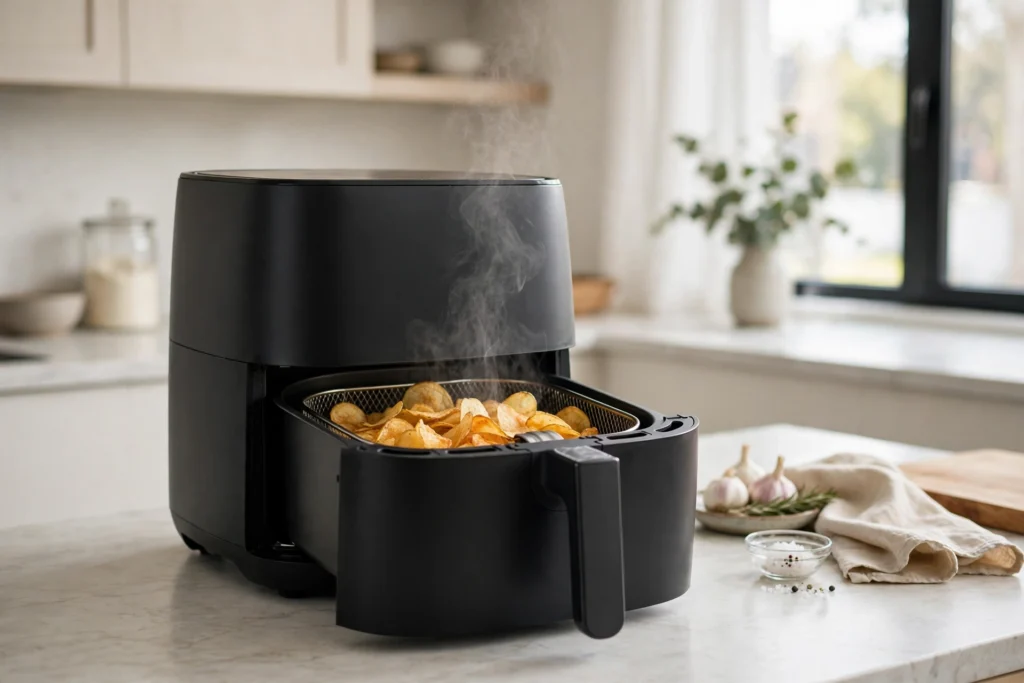
An air fryer works by blowing very hot air around food at high speed. A heating element warms the air, a fan circulates it, and the moving heat cooks the outside of the food quickly, giving it a crisp finish with far less oil than deep frying.
Key Takeaways
- An air fryer is a small convection oven: a heating element plus a powerful fan.
- Fast-moving hot air cooks food quickly and crisps the surface.
- A spoonful of oil is usually enough.
- Food needs space around it, or the air cannot circulate properly.
- It suits chips, chicken, vegetables, and reheated leftovers, but not wet batters.
What Is Inside an Air Fryer?
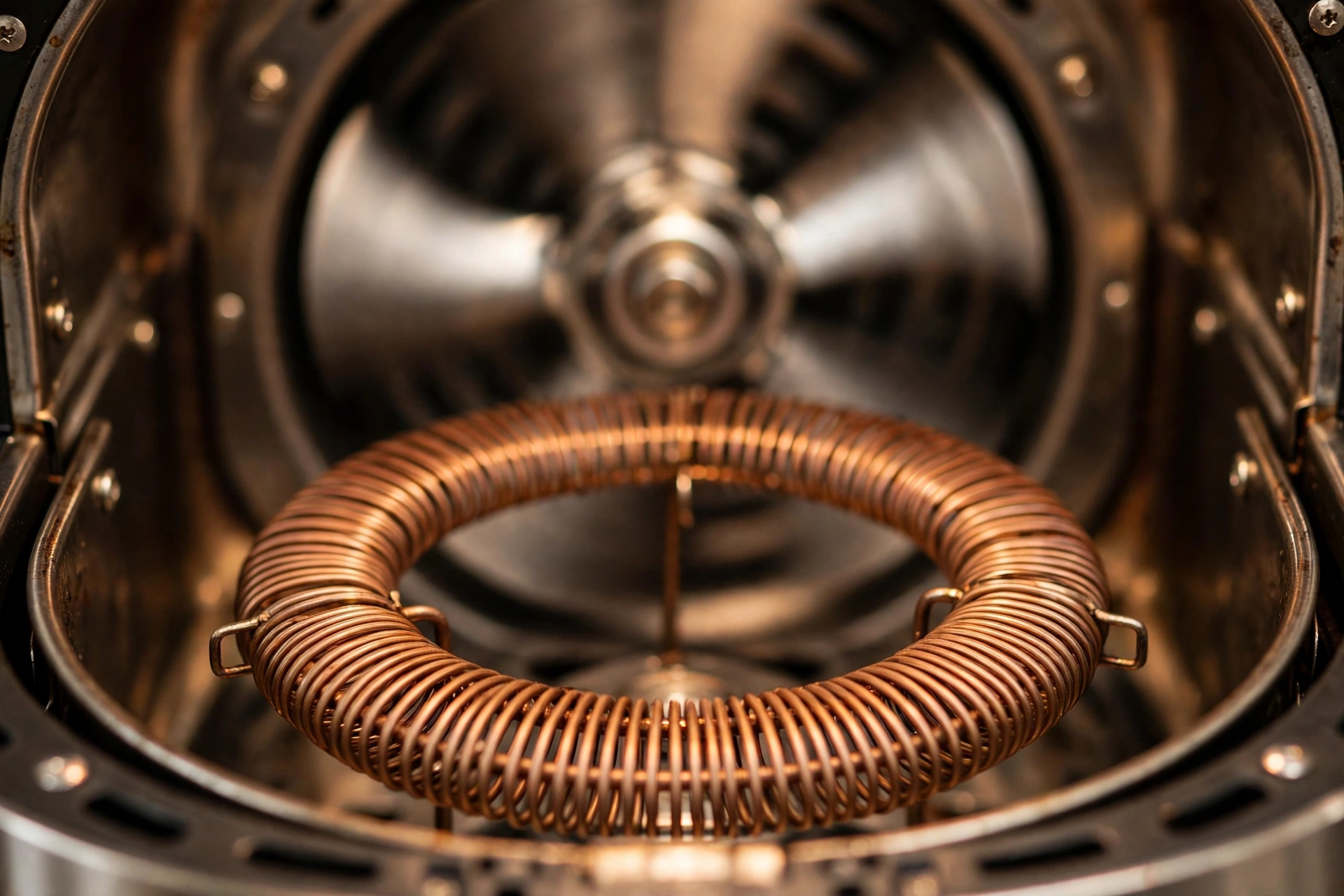
At the top sits a heating element, much like the one in a toaster or a grill. Beside it is a fan, and below that a basket or tray holds the food. A thermostat keeps the temperature steady, and a timer switches the heat off when the time is up. Like a washing machine, it runs a timed cycle while sensors keep the conditions steady. Many models use touch controls to set the temperature and timer. The heating element turns mains electricity into heat, the same household power that a wireless charging pad sends to a phone without a cable.
The basket matters more than it looks. It is perforated, so hot air can pass through and reach the food from below as well as above, keeping every piece in the path of the moving air.
How Does the Hot Air Actually Cook the Food?
The fan is what makes an air fryer different from a small oven. In a normal oven, hot air rises slowly and food cooks gradually. In an air fryer, the fan pushes heated air around the food constantly, carrying heat to its surface and sweeping away the cooler layer of air that forms around it.
Temperatures usually run between 160°C and 200°C, and the small chamber reaches them in a couple of minutes — one reason air fryers feel quicker than preheating a full oven.
Why Does Food Come Out Crisp With So Little Oil?
Crispness comes from drying the surface. As hot air rushes past, moisture evaporates and the surface gets hot enough to brown — the same reaction that turns toast golden — giving chips and chicken their crunch.
Oil still helps, but only a little is needed. A light brush or spray spreads heat evenly and helps the browning along. Deep frying surrounds food in oil to carry the heat; an air fryer replaces most of that oil with moving air, so the finished food carries far less fat yet still comes out crisp outside and soft inside.
How Is an Air Fryer Different From an Oven?
An air fryer and an oven share the same idea — hot air cooking food — but scale and airflow change the result. A fan oven also circulates air, yet its chamber is far larger, so air moves more slowly and food takes longer to crisp. An air fryer squeezes the same idea into a small space with a stronger fan, so it heats up faster and crisps sooner.
That makes it a good fit for small portions: chips for two, a couple of chicken breasts, or yesterday’s pizza. For a large roast, a normal oven still wins, because the basket cannot hold that much food at once.
What Foods Work Best — and Which Ones Don’t?
Foods with a dry or lightly oiled surface do best. Chips, roast potatoes, chicken wings, fish fingers, and vegetables such as carrots and courgettes all crisp nicely. Frozen oven foods usually work well too. Leftovers such as pizza and chips reheat far better in an air fryer than in a microwave oven, because the moving air dries the surface instead of steaming it.
Wet batters are the main exception. A batter that is still runny will drip through the basket before it sets, so foods such as beer-battered fish are better cooked another way. Leafy greens can also blow around in the fan’s airflow. Sauces and soups are best added after cooking, not during it.
How Do You Use an Air Fryer Well?
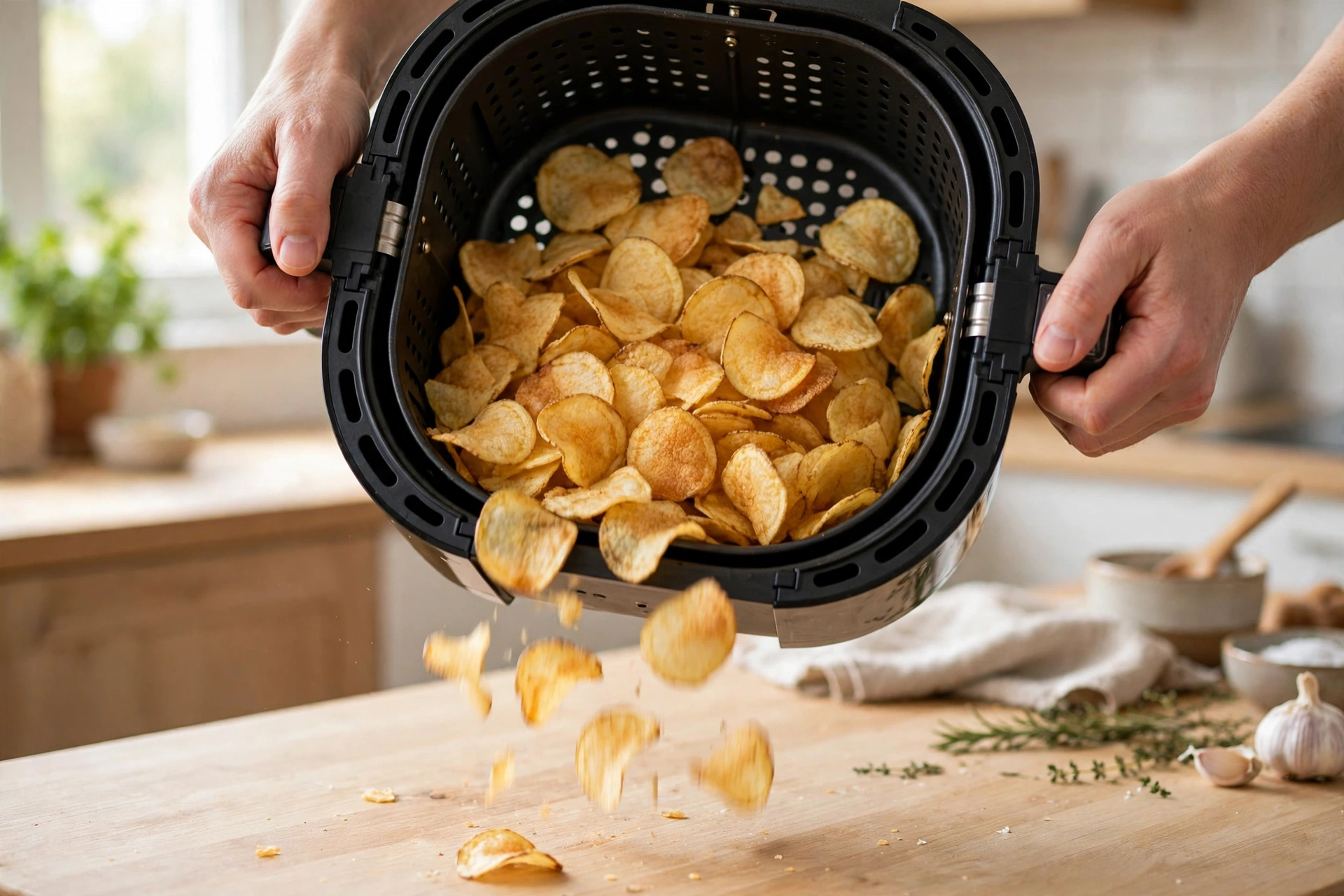
First, do not overfill the basket. Food needs gaps so air can move around each piece; a single layer cooks far more evenly than a piled-up heap. If you are cooking a lot, work in two batches.
Second, shake or turn the food halfway through, so the pieces at the bottom and top cook evenly. Third, preheat for two or three minutes when the recipe calls for a crisp finish. Finally, clean the basket and drawer after each use: grease left behind can smoke on the next cook, and a clean basket keeps the airflow open.
Are Air Fryers Safe to Use?
Used as directed, air fryers are generally safe, and they avoid one of the main risks of deep frying: a large quantity of very hot oil. The basket gets hot during cooking, so use oven gloves, and open the drawer away from your face so steam escapes safely.
Follow the maker’s instructions and keep the air vents clear. If the basket coating is scratched or peeling, check the manual — most makers advise replacing the basket rather than continuing to use it.
Frequently Asked Questions
Does an air fryer actually fry food?
Not in the traditional sense. It does not submerge food in hot oil. Instead, a heating element and fan circulate very hot air, which crisps the surface in a similar way while using much less oil.
Do you need oil in an air fryer?
A little oil helps most foods crisp and brown, but you do not need the large amounts used in deep frying. A teaspoon brushed or sprayed over the food is usually enough; fatty cuts of meat need none at all.
Is air-fried food healthier than deep-fried food?
Air-fried food usually contains less fat than the same food deep-fried, because far less oil is absorbed. How healthy the meal is still depends on the food itself — air-fried chips are still chips — but the method adds less fat than frying in oil.
Can you cook raw meat in an air fryer?
Yes. Raw chicken, fish, and other meats cook well, provided the pieces are not too thick and the meat reaches a safe internal temperature. A food thermometer is the surest way to check, especially for chicken.
Why is my food soggy instead of crisp?
The usual cause is overcrowding. When pieces are piled together, steam gets trapped and air cannot reach every surface. Cook in a single layer, shake halfway through, and dry the food before it goes in.
Conclusion
An air fryer is a small, fast convection oven: a heating element, a fan, and a perforated basket working together to crisp food with very little oil. It will not replace your oven, but for quick meals, small portions, and reheating leftovers, it earns its place on the counter. If you already own one, try a single layer of chips with a light spray of oil and a shake halfway through.