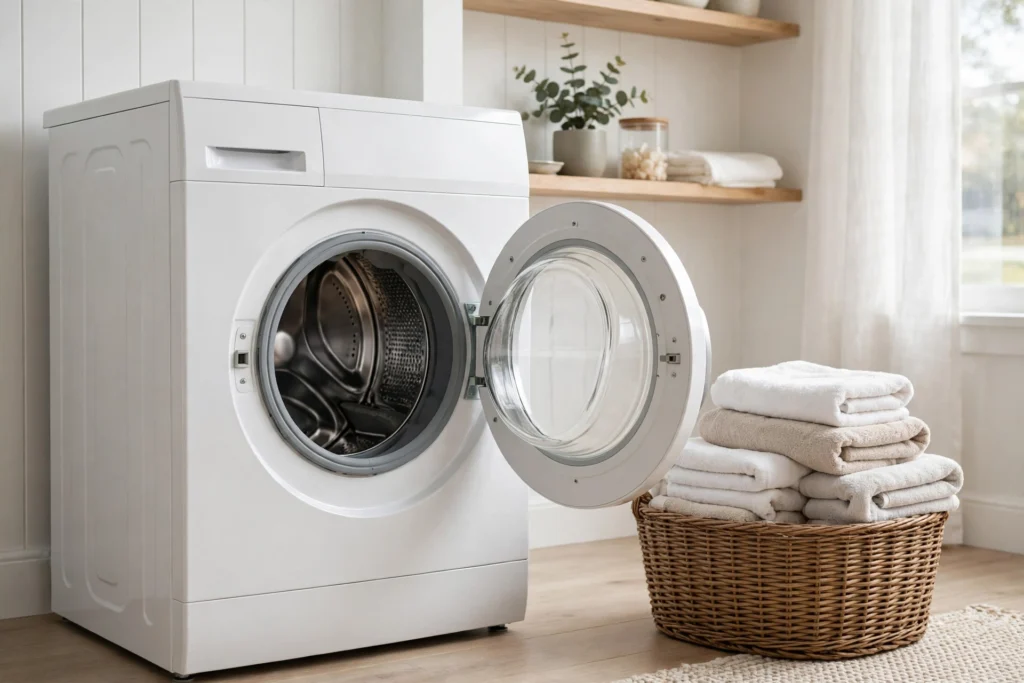
A washing machine works by filling a drum with water, mixing in detergent, tumbling your clothes through that soapy water, then rinsing and spinning the water out. Behind that simple routine sit a motor, a pump, a heater, valves, and a small computer that times each step.
Key Takeaways
- A wash cycle has four stages: fill, wash, rinse, and spin.
- The drum turns slowly to wash and fast to spin water out.
- Detergent loosens dirt; tumbling and water carry it away.
- Modern machines weigh the load and adjust water and time.
- The right cycle, the right detergent dose, and a clean machine matter most.
What parts are inside a washing machine?
The outer tub holds the water, while the inner drum — the perforated basket you load clothes into — spins inside it. Small holes let water flow in and out, and raised paddles, called lifters, catch the clothes and drop them back into the water.
Water arrives through inlet valves, and a pump pushes dirty water out through the drain hose at the end of the cycle. The motor drives the drum, turning it slowly during the wash and much faster during the spin. Many machines also have a heater for the water temperature you picked, and a control board — a small computer — that runs the whole sequence. Water also flushes through the detergent drawer at set points, carrying detergent in at the start and softener in near the end.
How does a wash cycle actually run?
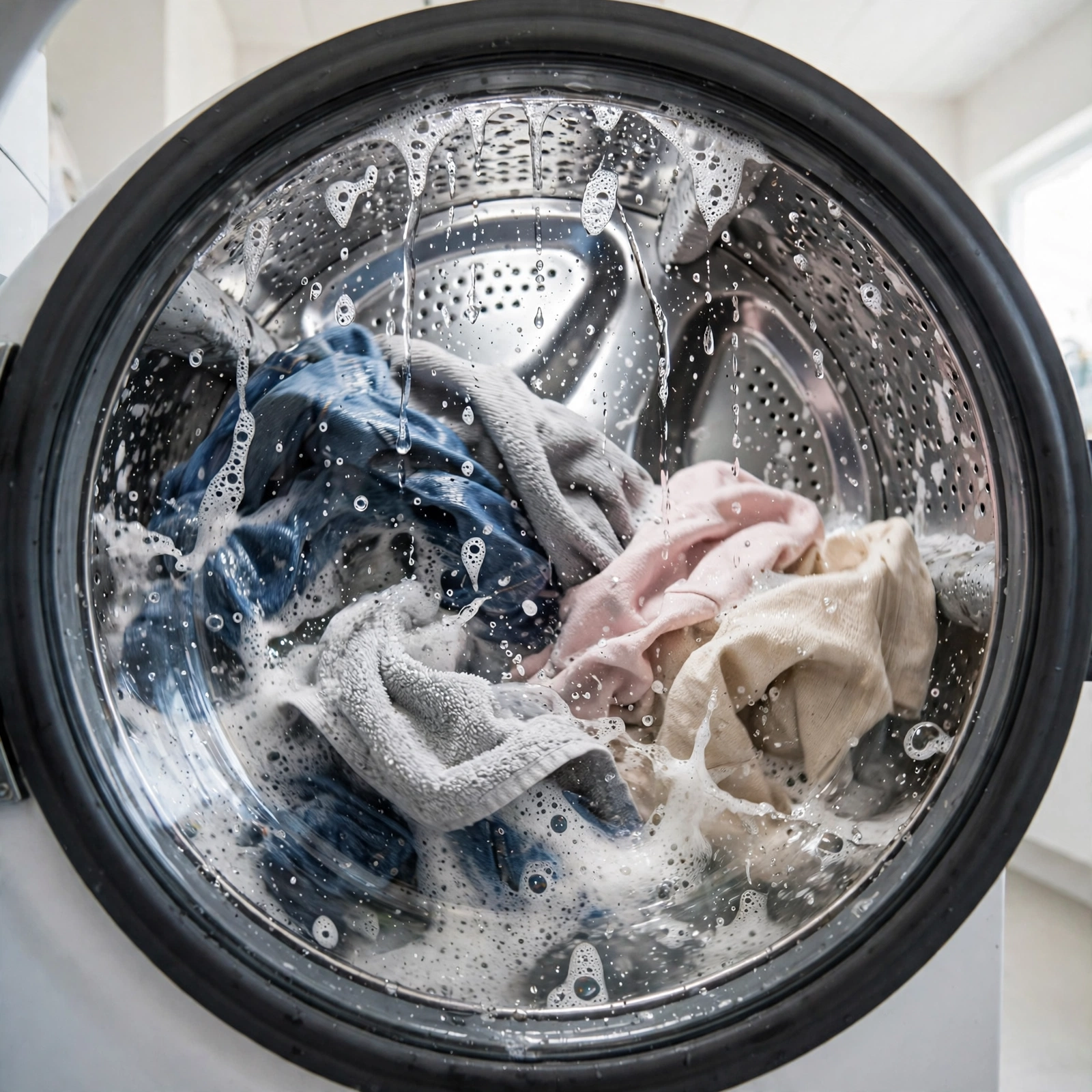
First comes the fill. The machine opens an inlet valve and lets water in to the right level. Some machines fill to a fixed level, while newer ones weigh the clothes first and add only as much water as needed.
Next is the wash. The drum turns back and forth, lifting clothes up and dropping them into the soapy water again and again. That tumbling does most of the cleaning: water and detergent loosen dirt and oils, and the movement carries them away. Warm water helps dissolve detergent and shift greasy marks; cold water is gentler on colours and uses less energy.
Then comes the rinse. The machine drains the dirty water, fills again with clean water, and tumbles the clothes once more to wash the detergent out. Many programmes rinse twice, which helps sensitive skin.
Finally, the spin. The drum whirls at high speed — often over 1,000 revolutions per minute — and centrifugal force pushes the water out through the drum’s holes, so clothes come out damp rather than dripping. Detergent left in the fabric makes clothes stiff and can irritate skin, which is why overdosing backfires. And if the machine shakes during the spin, the load is usually unbalanced — pause the cycle and spread the clothes out.
How do modern washing machines sense the load?
Newer machines do more than follow a fixed timer. Load sensors weigh the drum before the cycle starts and set the water level, wash time, and sometimes spin speed from that reading. A small load gets less water and a shorter cycle.
Some machines also check how dirty the water is: a sensor in the drain measures cloudiness, and if the water is still murky after the first rinse, the machine adds another one.
Smart models go further. A Wi-Fi connected washer can notify your phone when the cycle finishes, and some let you start a wash remotely. These washers join your home network much like a smart home hub connects the gadgets in your house, and a few pair over Bluetooth for quick setup. You can read how Wi-Fi works and how Bluetooth works to see the same ideas in a very different device.
What do the cycle settings really mean?
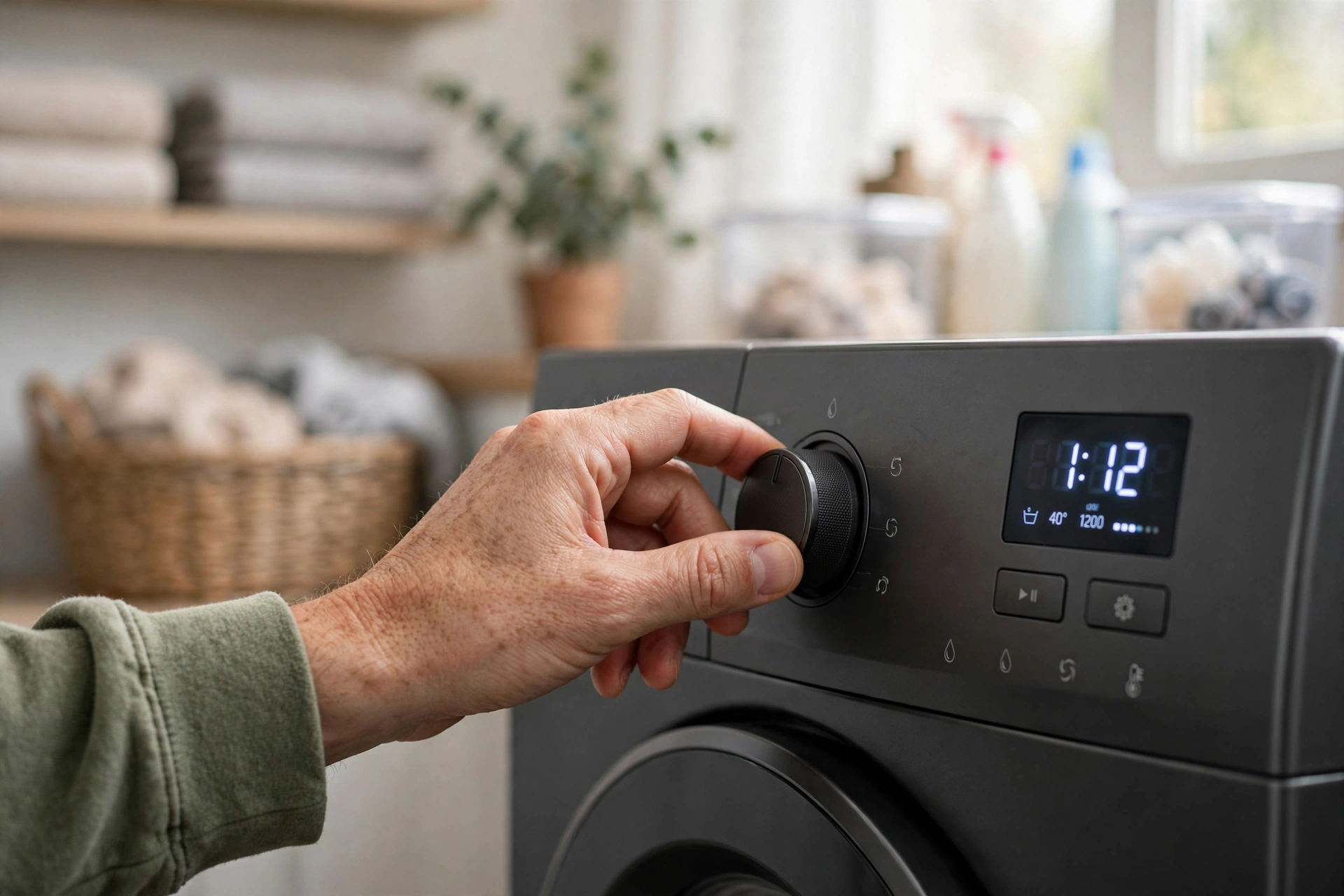
Each setting changes the temperature, the length of the wash, and how hard the drum works. Cottons is a long, thorough wash at higher temperatures, for towels, sheets, and everyday cotton clothes. Synthetics is shorter and gentler, for polyester and mixed fabrics that crease easily. Delicates uses slow tumbling and a gentle spin, for silk, lace, and anything labelled “hand wash only”. Wool is very gentle, to stop wool felting and shrinking. Quick wash is a short cycle for lightly soiled clothes. Eco runs longer at a lower temperature, using less water and energy.
Temperature is the other big choice. Cold suits dark colours and lightly soiled clothes, 30–40°C covers most everyday loads, and 60°C is better for bedding and towels. Hotter is not always better: it can shrink wool, fade colours, and set some stains instead of removing them.
How can you get cleaner laundry and a longer-lasting machine?
Good results come from a few simple habits. Sort clothes by colour and fabric, and do not overload the drum — leave a hand’s width of space at the top so clothes can move. Use the detergent dose the packet suggests for your load size and water hardness, not a heaped scoop “just in case”.
Clean the machine itself now and then. Run a hot empty cycle with a cup of white vinegar or a machine cleaner once a month, wipe the rubber door seal dry, and leave the door ajar so the drum can air out — that stops the musty smell of damp, sealed machines. Check the filter at the bottom every few months too: coins, hair, and lint collect there and can slow the drain. If the machine starts making new noises, check the manual or call a repairer. And if it shares a socket with other large appliances, a smart plug can help you keep an eye on when it runs and how much energy it uses.
FAQs
Why does my washing machine shake during the spin?
Usually the load is unbalanced or the machine is not level. Pause the cycle, spread the clothes out, and try again. If it keeps happening, check the feet are adjusted so the machine sits flat, and that the transit bolts from delivery were removed at installation.
How much detergent should I use?
Follow the packet amount for your load size and water hardness. Too little leaves clothes grey; too much leaves residue and extra foam. With soft water you can often use less. Liquid, powder, and pods all work — the dose matters, not the format.
Why do my clothes still smell after washing?
A damp, sealed drum breeds mildew. Leave the door open after each wash, wipe the rubber seal, and run a hot empty cleaning cycle monthly. Overloading and overdosing on detergent also leave clothes smelling stale, because the water cannot circulate properly.
Can I wash trainers in a washing machine?
Many trainers can be machine-washed, but check the label first — leather and suede should stay out. Remove the laces and insoles, put the trainers in a laundry bag, and use a cold, gentle cycle with a slow spin. Air-dry them afterwards; tumble dryer heat can warp the soles and glue.
How long should a washing machine last?
Most machines last around 10 years with normal use, though that varies by brand and build quality. Regular cleaning, sensible loads, and fixing small problems early — a blocked filter, a worn seal — help a machine reach the longer end of that range.
Conclusion
A washing machine is a simple idea executed by clever parts: water and detergent do the cleaning, the drum does the tumbling, and sensors and a control board time it all. Pick the right cycle for the fabric, measure your detergent, and keep the machine clean, and most laundry problems sort themselves out. Next time you load a wash, try the eco cycle on a normal load — for most everyday laundry you will not notice a difference.