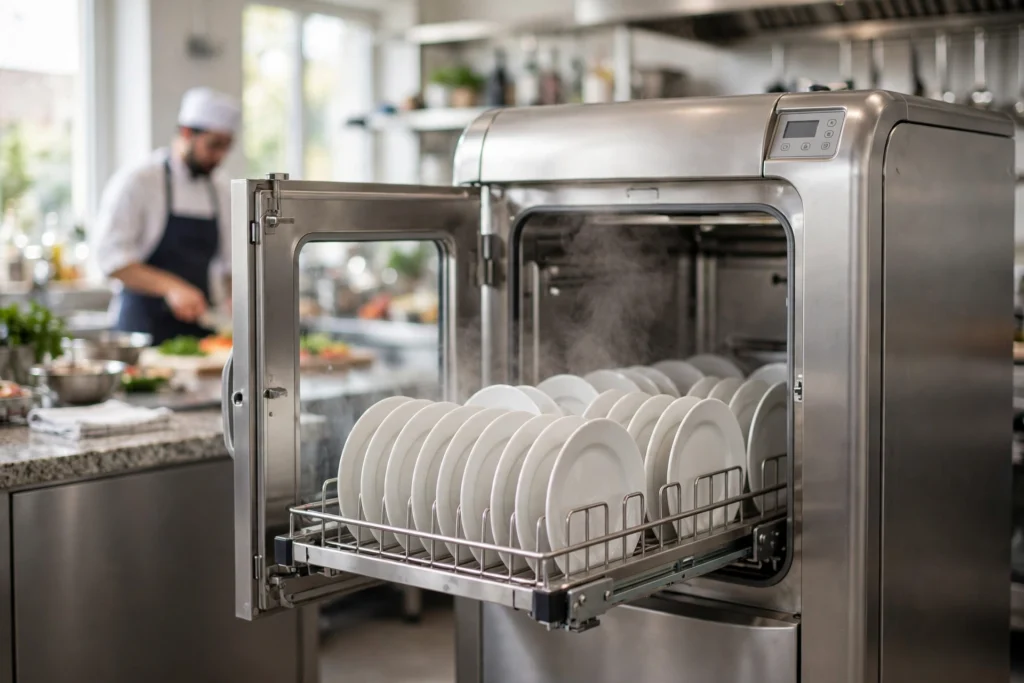
Dishwashing robots work by taking a rack of dirty plates, cups and cutlery into a wash chamber and spraying it with hot, soapy water from rotating jets. Sensors watch the water temperature and how dirty it is, then a rinse cycle and heated drying finish the job. A person still loads and unloads the racks, but the robot does the scrubbing.
Key Takeaways
- Dishwashing robots clean racks of crockery with hot water jets, detergent and a heated rinse.
- Sensors track water temperature, dirt levels and cycle time so each rack gets a full wash.
- Most machines are built for commercial kitchens, where speed and hygiene matter most.
- A person still loads, unloads and checks the racks; the robot handles the washing.
- Regular cleaning of filters and spray arms keeps a dishwashing robot working properly.
What counts as a dishwashing robot?
A dishwashing robot is a machine that washes dishes with little or no hand scrubbing. In most cases it looks like a sturdy box with a door, a rack inside and a set of spray arms. You slide a rack of dirty plates in, close the door and press a button. A few minutes later the rack comes out clean and hot.
That is different from a robot arm that happens to carry plates. A dishwashing robot’s job is the washing itself, and the washing chamber is its heart. It works much like a heavy-duty commercial dishwasher, only faster and more automated, which is why these machines get grouped with other kitchen machines such as cooking robots and bartender robots.
In a home, the closest thing is an ordinary dishwasher. The machines called dishwashing robots are usually bigger, tougher and built to run rack after rack without a break, which is why you find them in restaurants, hotels, hospitals and school canteens rather than in a flat.
How does a dishwashing robot clean a rack?
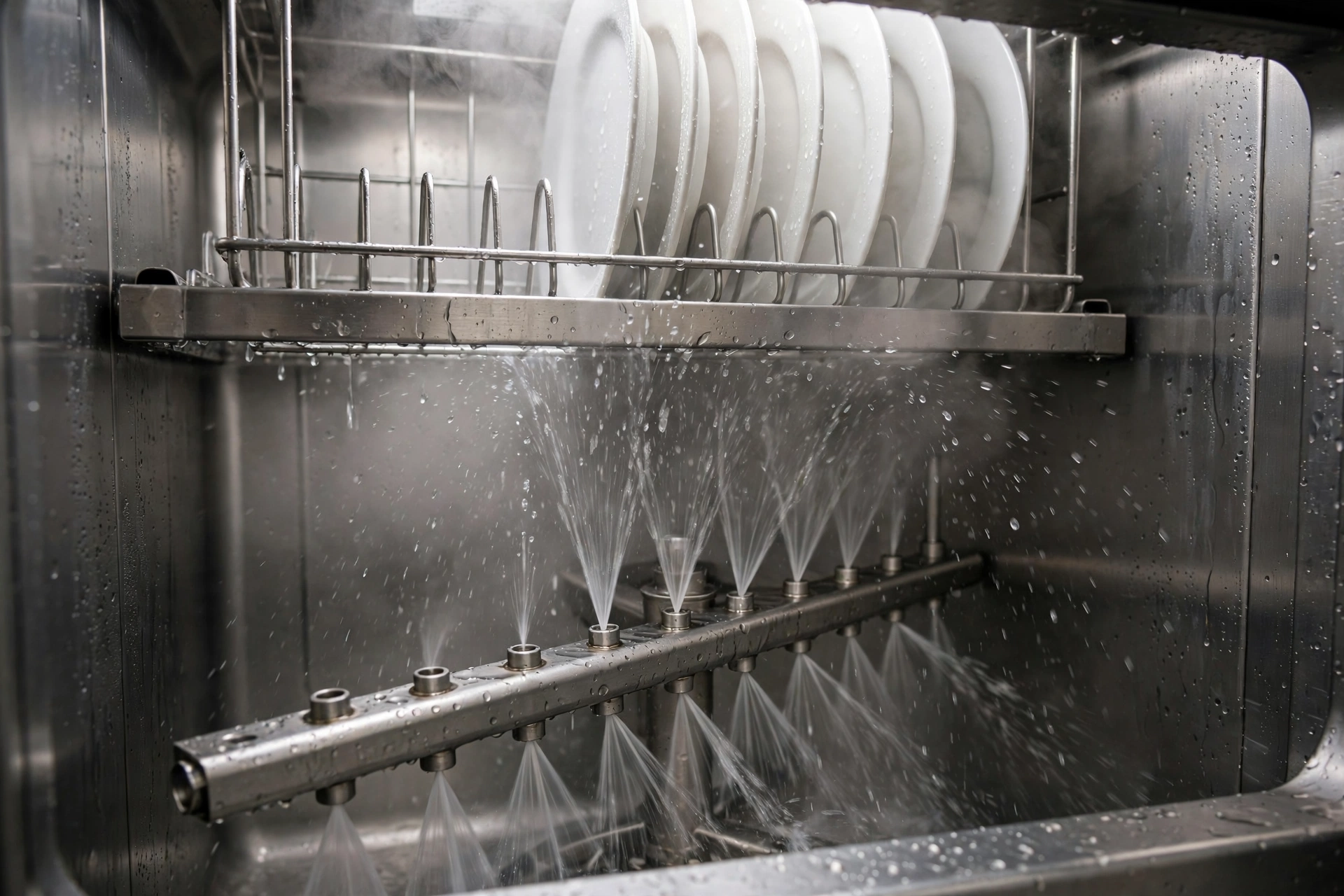
The wash follows a simple sequence. First, a pump pushes hot water mixed with detergent through rotating spray arms above and below the rack. The arms spin so the jets reach plates from several angles, including the inside of cups and bowls. The water is hot, usually around 60 to 65 degrees Celsius in the wash, which loosens grease and food far better than cold water would.
Next, the dirty water drains away through a filter that catches food scraps. The machine then runs a rinse with clean, hotter water, often with a small amount of rinse aid to help water run off the plates instead of drying in spots. Some machines add a short burst of steam at the end. A light load can take as little as 90 seconds; a heavy load with baked-on food takes longer.
The rack itself matters more than people expect. Plates are slotted upright so water can reach both sides, cups sit upside down so they drain, and cutlery goes in a basket with handles down. Load a rack badly and the jets cannot reach everything, which is the most common reason a rack comes out still dirty.
What do the sensors actually check?
A dishwashing robot relies on a handful of sensors to keep each cycle consistent. A temperature sensor makes sure the wash and rinse water are hot enough, because water that is too cool will not shift grease or meet hygiene rules. A turbidity sensor shines a light through the wash water and measures how cloudy it is; cloudy water means food and grease are still coming off, so the machine can extend the wash or change the water.
A small display usually shows the water temperature, the cycle stage and any fault, such as a blocked filter or an open door. If the door is opened mid-cycle, most machines pause the spray straight away for safety.
How do dishwashing robots handle drying?
Drying is mostly done with heat. After the final rinse, the plates are already very hot, so much of the water evaporates on its own when the rack is pulled out into cooler air. The rinse water is kept hotter than the wash water for exactly this reason: hot plates dry faster and stay hygienic.
Some machines add a drying stage inside the chamber. A fan blows warm air over the rack, or a short burst of heat from an element speeds up evaporation. Plastic items dry more slowly than ceramic or glass because plastic holds less heat, so a rack of plastic tubs may still need a quick wipe. That is normal and not a fault.
Where are dishwashing robots used today?
Commercial kitchens are the main home of dishwashing robots. A busy restaurant can send through dozens of racks in an hour, and a machine that washes a rack in two minutes keeps the kitchen moving during the dinner rush. Hotels use them for banqueting, where hundreds of plates need turning around between courses, and hospitals use them where hygiene rules are strict.
You also find them in staff canteens, schools and cruise-ship galleys. In each case the reason is the same: a lot of dishes, a short window to clean them, and a need for every rack to come out to the same standard. A person washing by hand cannot match that speed, and a person cannot keep water at 80 degrees either.
What are the limits of dishwashing robots?
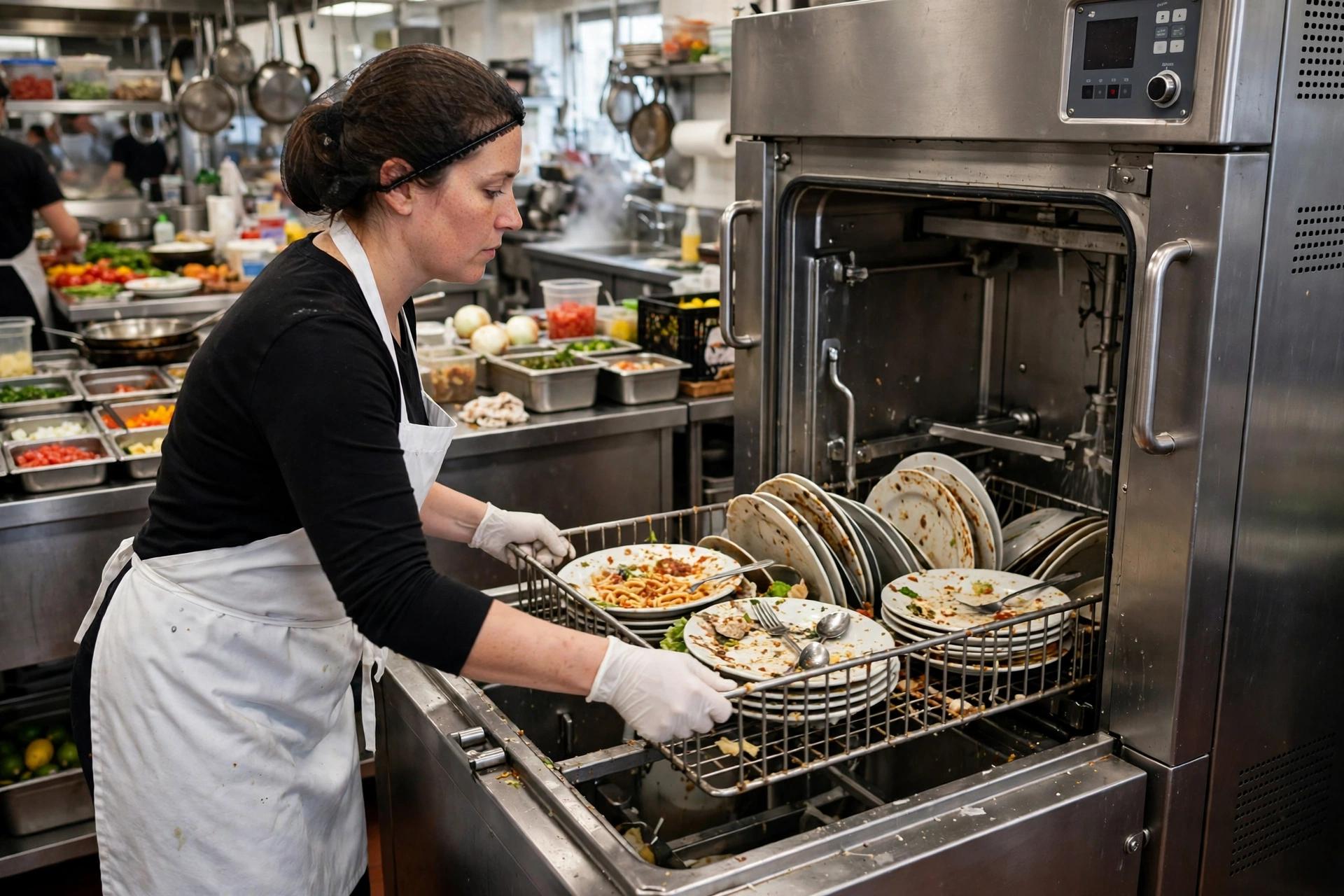
Dishwashing robots are good at washing, but they are not good at everything around washing. They cannot scrape a plate, sort cutlery or notice that a mug has a chip in it. Anything with burnt-on food usually needs a soak or a scrape first, and delicate items such as thin wine glasses or wooden boards should not go in at all.
They also need regular care. Filters must be emptied, spray arms checked for blockages and the inside wiped down, or the wash quality drops quickly. Limescale builds up in hard-water areas, so many kitchens fit a water softener or run a descaling cycle.
Cost is the other limit. A commercial machine costs far more than a home dishwasher, and it needs space, a hot-water supply and a drain. For a small cafe that washes a few racks a day, a person with a sink may still be the sensible choice.
Frequently Asked Questions
Do dishwashing robots wash better than a person?
For volume and consistency, yes. A machine holds water at a steady high temperature and sprays every rack the same way. For a single burnt pan, a person with a scourer still wins.
How long does a dishwashing robot take to wash a rack?
A light load can take around 90 seconds to two minutes. A heavy load, or a machine with a longer hygiene cycle, can take three to five minutes. Loading and unloading add time on top of that.
Can a dishwashing robot handle greasy pans?
It can handle ordinary grease well, thanks to hot water and detergent. Thick, burnt-on residue should be scraped or soaked first, or it may survive the cycle and need a second run.
Do dishwashing robots use a lot of water?
They reuse wash water through the cycle and only use fresh water for the final rinse, so they use less water per rack than washing the same plates by hand under a running tap.
Are dishwashing robots safe for all dishes?
No. Ceramic, glass and most metal items are fine. Thin crystal, hand-painted china, wooden boards and some plastics can be damaged by heat and strong detergent, so check the maker’s guidance first.
Conclusion
Dishwashing robots work by combining hot water, detergent, rotating jets and sensors in a wash chamber, then finishing with a hot rinse and heat drying. They are at their best in busy kitchens where racks arrive all day and hygiene matters. If you run a kitchen like that, the practical next step is to check your busiest hour, count the racks, and compare that with a machine’s cycle time; that one number tells you quickly whether a dishwashing robot would keep up or sit idle.
Related reading: How Do Warehouse Robots Work?
Further reading: Britannica on robotics and Wikipedia on dishwashers