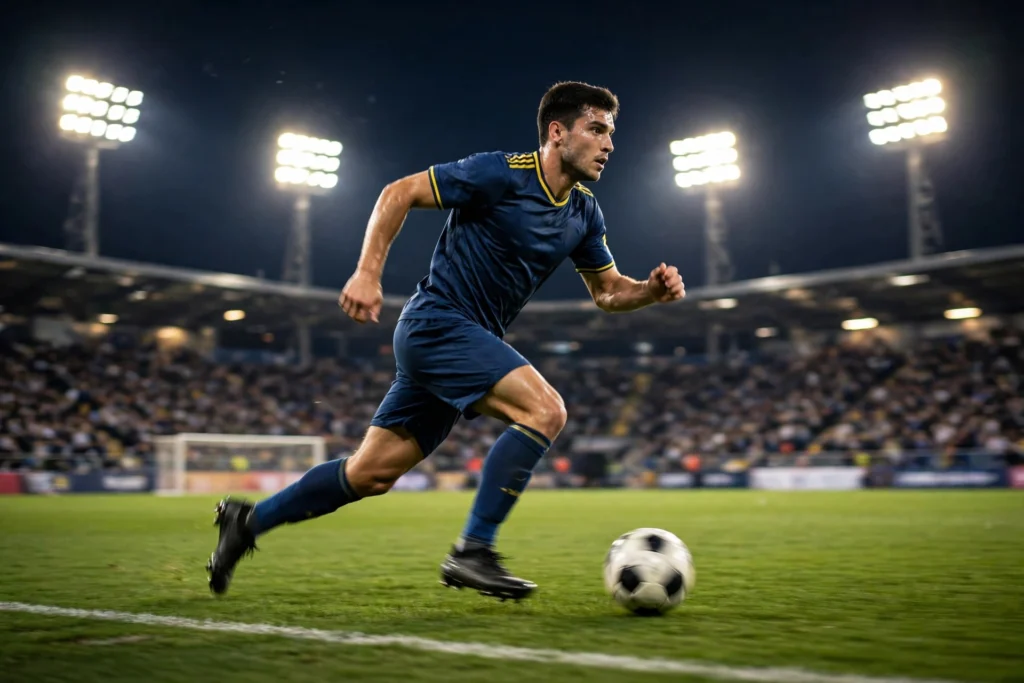
AI helps in sports by turning match footage, wearable sensors, and years of past results into useful guidance: it tracks how players move, flags injury risks before they become lay-offs, and gives referees a second look at tight calls. It does not replace coaches, doctors, or officials — it gives them better information, faster.
Key Takeaways
- AI tracks players through cameras and wearable sensors, turning movement into numbers coaches can actually use.
- Injury-risk models spot worrying patterns in workload and recovery, but they predict risk, not certainty.
- Tools like Hawk-Eye and VAR help referees check close calls, though the final decision still sits with the official.
- Scouts and analysts use AI to find talent and study opponents, while fans get smarter stats and broadcasts.
- The limits matter: biased training data, privacy questions, and over-trust in a model can all cause real problems.
How does AI track what players actually do?
Watch a modern football match and you will see players wearing small GPS vests under their shirts. Those vests, plus cameras around the stadium, record speed, distance, and sprint counts. Machine learning models then turn that tracking data into something a coach can read at half-time: who is tiring, which spaces are opening up, and whether the team’s shape is holding.
Computer vision handles the video side. It follows the ball and every player frame by frame, even when bodies cross and block the camera’s view. That is how broadcasters show a pass map seconds after a move ends, and how analysts measure things the eye would miss, like how quickly a defender closes down space.
None of this is magic. The systems learn from thousands of hours of labelled footage, and they are only as good as that training data — a model trained mostly on men’s football may read a women’s match less accurately.
Can AI really predict injuries?
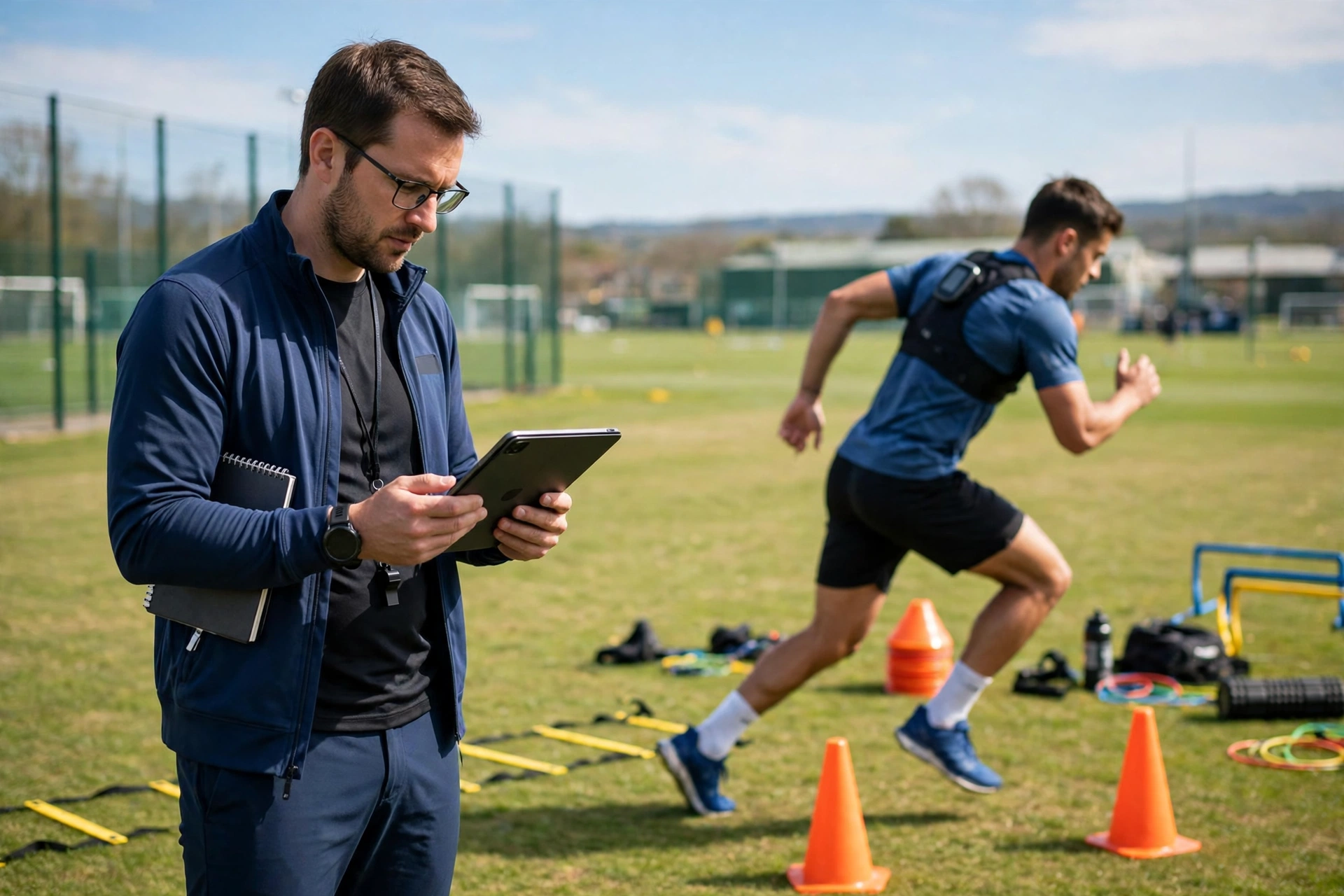
This is where AI in sport gets both exciting and easy to overstate. Teams feed models with training load, sleep, heart-rate data, and past injury records, and the model looks for patterns that came before earlier injuries — a sudden jump in sprint volume, or a player returning too quickly from a knock. When it spots a similar pattern, it raises a flag.
The key word is flag, not forecast. A model can say a player carries a higher risk this week; it cannot say that player will pull a hamstring on Saturday. Good medical teams treat the warning as a prompt to check in with the player or adjust training — not as a diagnosis. Used that way, it genuinely helps: fewer soft-tissue injuries and better-managed comebacks.
There is a health angle here too: the same kind of pattern-spotting that helps doctors in a clinic is now used on the training ground, which is why sports medicine teams work closely with data staff. This is general guidance for professionals, not medical advice, and it should never replace a clinician’s judgement.
How does AI help referees make fairer calls?
Hawk-Eye is the best-known example. Cameras track the ball in three dimensions and work out, within millimetres, whether it crossed the line — settling arguments that used to run for days, in under a second.
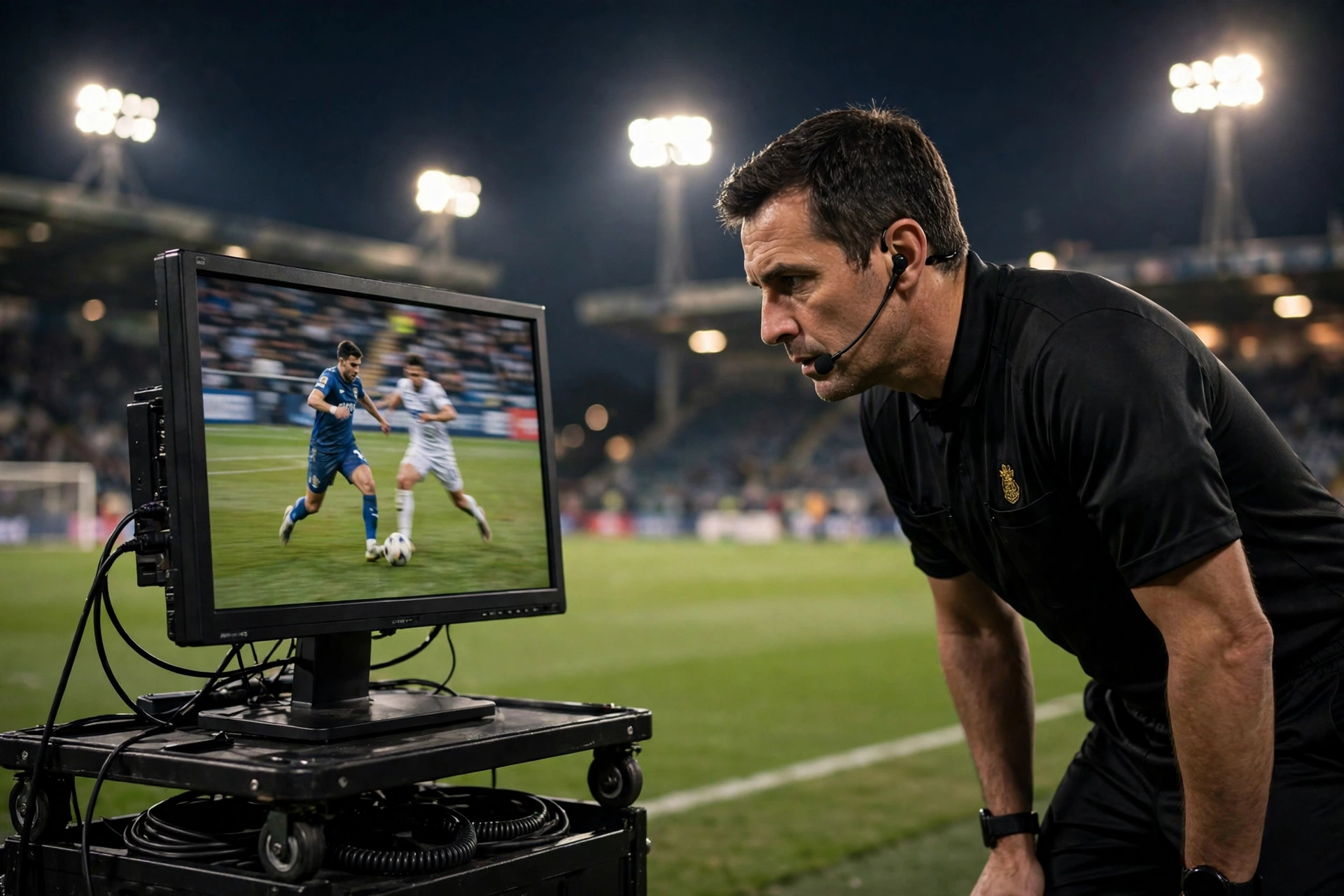
VAR works differently. It does not decide; it replays. An offside call, a possible handball, a foul in the build-up — the video assistant reviews the footage and the referee takes another look on a pitch-side screen. AI helps by picking the right camera angle quickly and drawing the offside lines, but the judgement call stays human. Fans argue about VAR plenty, yet the worst howlers — the goal that never was, the offside missed by metres — are rarer than they used to be.
There is a trade-off, though. Checks take time, and a long pause can drain the life out of a match. Leagues keep tweaking the balance between getting it right and keeping the game flowing. The Olympics show the same idea at the biggest scale: the IOC uses AI to support judging, protect athletes from online abuse, and give fans faster insights.
What does AI do for coaches and scouts?
Before a big match, analysts feed an opponent’s recent games into a model and get back tendencies: where their full-backs push up, which passing lanes they leave open, how they defend set pieces. Coaches still make the plan, but they start from evidence rather than gut feel.
Scouting has changed just as much. A club can now scan matches from leagues it could never afford to watch in person, and a model can flag a young player whose movement and decision-making match the club’s style. Smaller clubs benefit most — a wider net without a bigger budget. The human scout still matters: numbers cannot tell you how a teenager handles pressure, homesickness, or a dressing room full of strangers.
Where does AI in sport still fall short?
For all its promise, AI in sport has real limits. First, the data problem: models trained on elite men’s competitions may not transfer well to women’s sport, youth sport, or lower leagues, where the data is thinner. That can bake in unfairness — a scouting tool that underrates players it has rarely seen.
Second, privacy. Wearable sensors collect health data, sometimes from young athletes. Players and unions have rightly asked who owns it, who can see it, and how long it is kept.
Third, over-trust. A model is a pattern-finder, not an oracle. When a coach treats its output as fact, mistakes follow — a player dropped on a model’s say-so, a tactic changed for a phantom trend. The best teams keep a human in the loop and treat the AI as an adviser, not a boss.
Frequently Asked Questions
Does AI decide who wins a match?
No. AI can suggest tactics, flag risks, and review decisions, but the players on the pitch decide the result.
Is AI used in all sports?
Not equally. Football, basketball, baseball, tennis, and cricket use it heavily because they generate rich tracking data and have the money to invest. Smaller sports use it far less, though the tools are getting cheaper.
Can AI replace referees?
Not in any serious proposal. AI and video tools assist referees with line calls and replays, but judgement calls — intent, dangerous play, the flow of the game — remain human decisions.
How accurate is AI injury prediction?
It is useful but imperfect. Models are good at spotting elevated risk from workload and recovery patterns, yet many flagged players never get injured. It is a warning system, not a crystal ball.
Will AI make sport less fun to watch?
That is a fair worry, and it depends how it is used. Used well, it adds insight and settles arguments. Used badly, it slows the game down and drowns the drama in numbers.
Conclusion
AI helps in sports most when it stays in its lane: measuring what humans cannot easily measure, flagging risks early, and checking the calls that decide matches. The gains are real — fitter players, fairer decisions, smarter scouting — but so are the limits around bias and over-trust. The practical next step is simple: pick one sport you follow and look for the AI behind the broadcast — the tracking graphics, the VAR checks, the stats on screen.