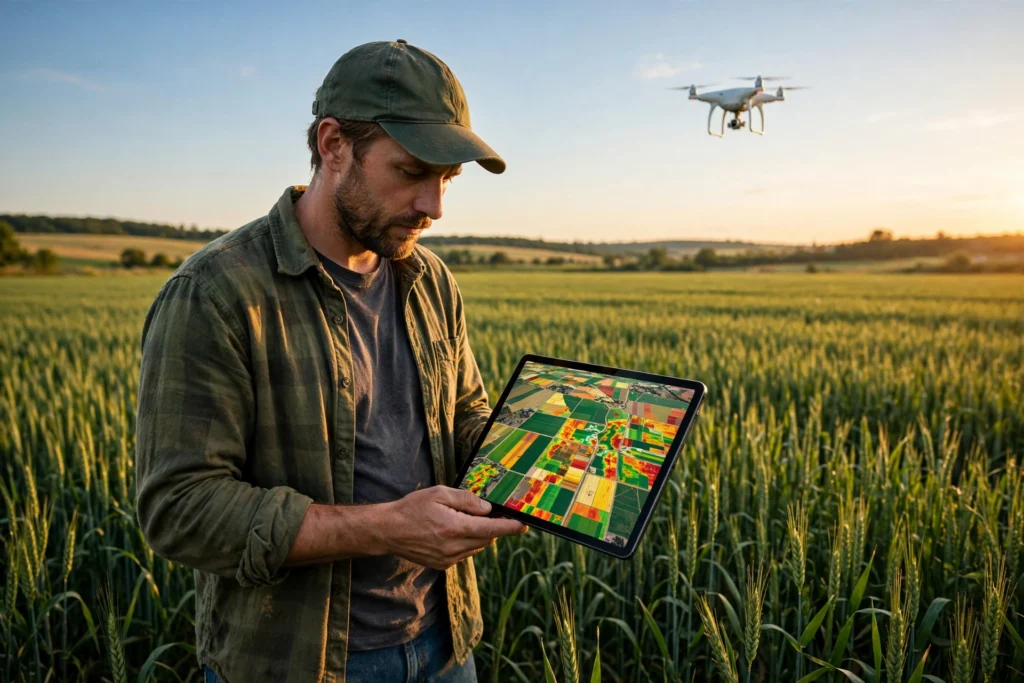
AI in farming means software that learns from farm data — satellite images, soil sensors, weather forecasts, drone photos — to help growers decide when to water, spray, or harvest. It doesn’t replace the farmer. It turns the walk around the field into a map, so problems are spotted days earlier and nothing is watered or sprayed needlessly.
Key Takeaways
- AI in farming reads data from drones, satellites, and soil sensors to flag crop stress before it is visible to the eye.
- The most common uses are crop monitoring, smart irrigation, pest and disease detection, and harvest timing.
- It works best as a second pair of eyes: the farmer still makes the final call.
- Costs vary widely, from free phone apps to drone services, so starting small is the sensible route.
- Patchy rural internet and uneven data remain the biggest limits.
How does AI actually see a crop problem?
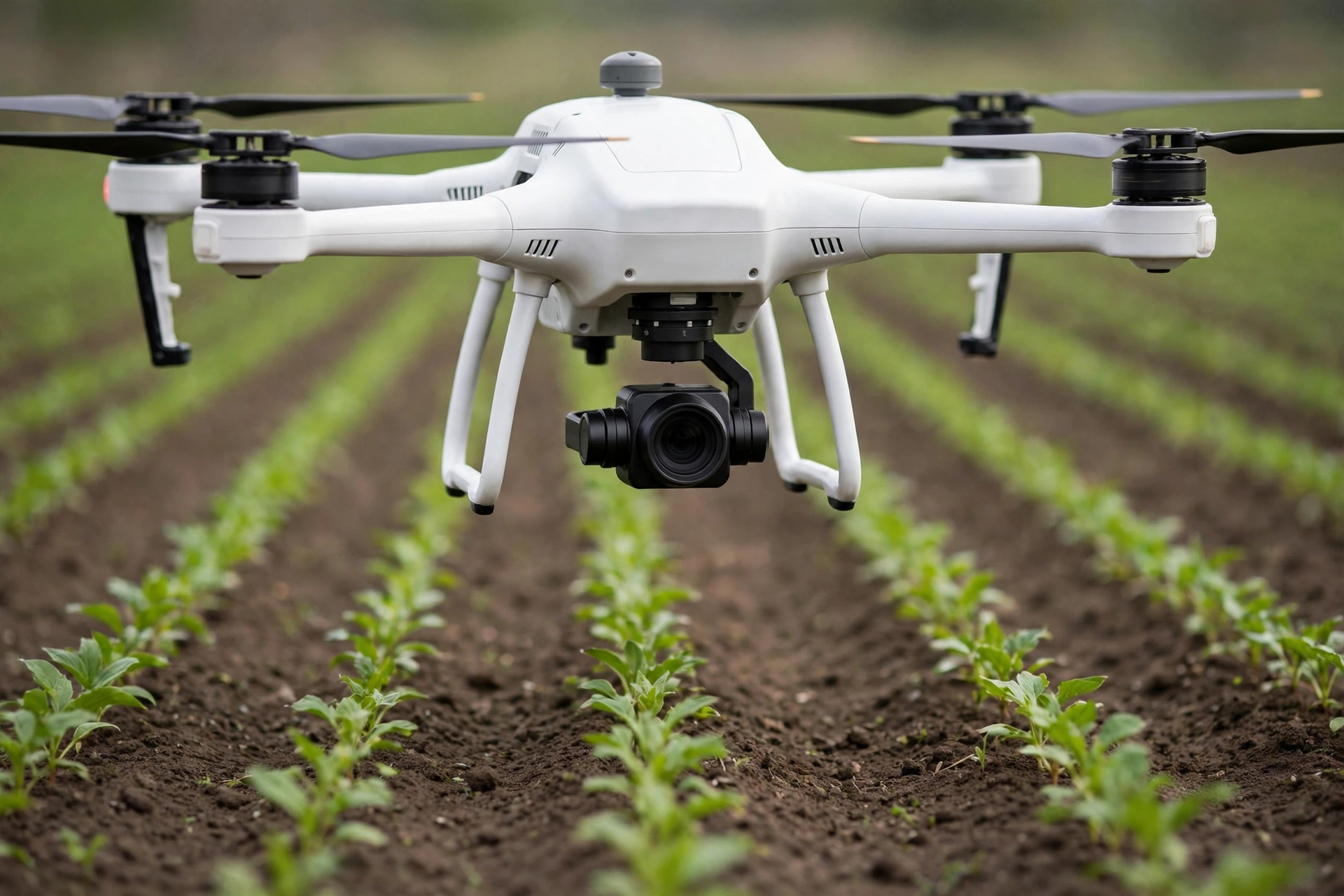
A healthy plant and a stressed plant can look identical from the ground, but they reflect light differently. Drones and satellites photograph in wavelengths our eyes can’t see, and software turns them into colour-coded maps. A patch that shows up yellow or red is where the crop is struggling — maybe from thirst, hunger, or early disease.
That is where machine learning comes in. The system has been shown thousands of labelled photos of healthy and sick plants, so it learns the patterns that separate the two. Photograph a suspicious leaf and the app compares it with what it has learned, then suggests what might be wrong. The same idea sits behind computer vision: cameras plus trained models, applied to a field instead of a face or a road. It is a guide, not a diagnosis — a good grower still walks out to the flagged spot and looks with their own eyes before acting.
How does AI decide when to water?
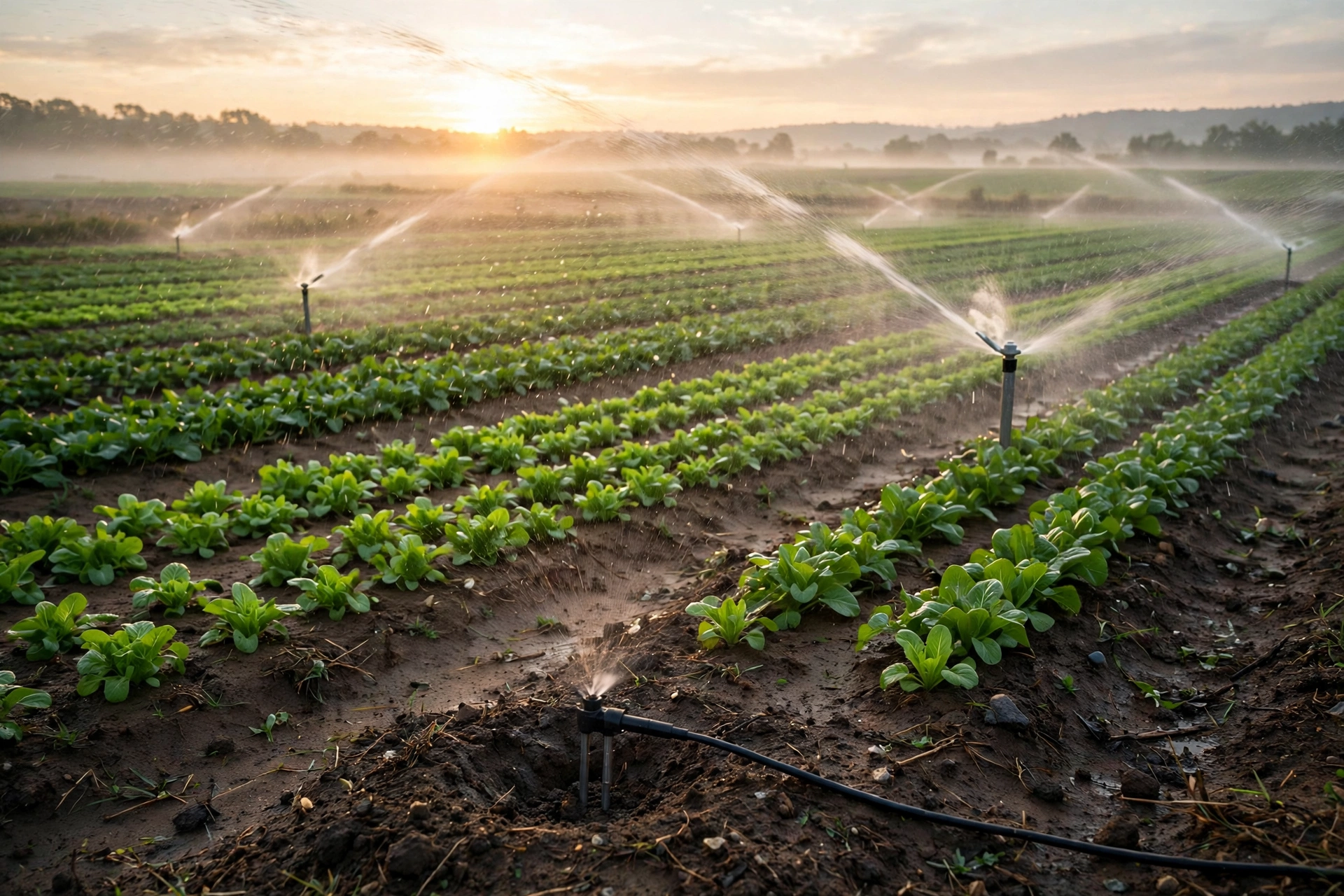
Too much water can drown roots; too little stresses the crop. AI irrigation tools pull together three things: moisture readings from probes in the soil, the weather forecast, and what the crop needs at its growth stage. From that mix, it suggests when to run the sprinklers and for how long, field by field.
Some setups go further and open the valves themselves, but many farmers start with advice only — a morning message saying which block needs water today. Smallholder projects have shown this works with modest kit: a portable soil sensor, a phone app, and a weather feed. IBM’s work with small farmers, for instance, pairs soil moisture data with weather information to tell growers whether to water now or hold off. The point isn’t fancy hardware. It’s watering the dry patch and leaving the damp one alone.
Can AI predict the best time to harvest?
Roughly, yes. Growth models track how far along a crop is, using planting dates, temperature, and satellite images. With a weather forecast, they can suggest the best window for cutting, picking, or digging, and flag when rain might spoil it.
Yield estimates work the same way. By comparing this season’s growth with previous seasons, the software estimates what a field is likely to produce. That helps decide how many workers to book, how much storage to prepare, and when to talk to buyers. These are estimates, though, not promises. A hailstorm or a pest outbreak late in the season can still change everything.
What does AI in farming cost, and who is it for?
At one end, a grower can download a free crop-photo app and start the same afternoon. At the other, a full setup — drones, sensors across every field, satellite subscriptions, and a dashboard — can cost far more than a small farm can justify.
That gap matters, because the farmers who could gain most from early warnings often have the least connectivity and the least cash. The FAO has pointed out that AI tools are increasingly guiding farm decisions, while warning that many smallholders still lack access to them. Shared services help: some growers hire a drone operator for a few flights a season, and co-operatives sometimes split a sensor network across their members. On larger farms, the physical work itself is increasingly done by machines — see how agricultural robots handle planting, picking, and field navigation. The sensible first step is the cheapest one — one field, one app, one season — then decide whether the advice earned its keep.
Where does AI in farming still fall short?
For all the promise, there are honest limits. First, the models are only as good as their training data: a disease detector trained on wheat in one region may misread a different variety in different soil. Second, many farms still have weak or patchy internet, and a cloud-based tool is little use in a field with no signal. Third, the advice is only as fresh as the data feeding it — a satellite image from last week won’t catch today’s problem.
Then there’s judgement. An algorithm can flag a yellow patch, but it can’t tell whether that patch is disease, a drainage problem, or simply a variety that ripens early. It can’t weigh whether spraying now is worth the cost. Farming is full of those calls, and they still belong to the person who knows the land. Think of AI on a farm as a keen-eyed apprentice: tireless, good at patterns, and worth listening to — but not in charge.
Frequently Asked Questions
Is AI in farming only for big farms?
No. The cheapest tools — phone apps that identify pests from a photo, or free weather-based watering advice — are aimed at small growers. The expensive end, like fleets of sensors, suits large farms better, but a small farm can often rent the service instead of buying the kit.
Do I need a drone to use AI on my farm?
Not to start. A smartphone camera and a free app cover pest identification and basic crop checks. Drones help on large or hard-to-walk farms, because they can photograph every field in an hour. Satellite images sit in between: wider coverage, less detail.
Can AI replace a farmer’s experience?
No, and it isn’t trying to. AI spots patterns across thousands of images or readings; a farmer brings context — the history of a field, the quirks of a variety, the smell of rain coming. The best results come when the two work together.
How accurate is AI crop disease detection?
It depends on the crop, the disease, and the quality of the photo. Well-trained tools can be genuinely useful at flagging likely problems, but they can also be wrong, especially with unfamiliar varieties or poor light. Treat any result as a prompt to go and look, not as a diagnosis.
What data does AI farming software need?
At minimum, photos of the crop and the location of the field. More advanced tools add soil moisture readings, weather forecasts, planting dates, and past yield records. The more data it has, the better its suggestions — but one clear photo is enough to start.
The practical next step
AI in farming is best tried, not bought in bulk. Pick one field and one problem — say, spotting disease early — and try a phone-based crop app for a season. Photograph anything suspicious, compare the app’s suggestions with what you see, and note where it helped and where it missed. If the advice saves a spray round or catches a problem a week early, it earned its place. If not, you’ve spent almost nothing finding out. Either way, the farmer stays in charge, and the technology has to prove itself one field at a time.