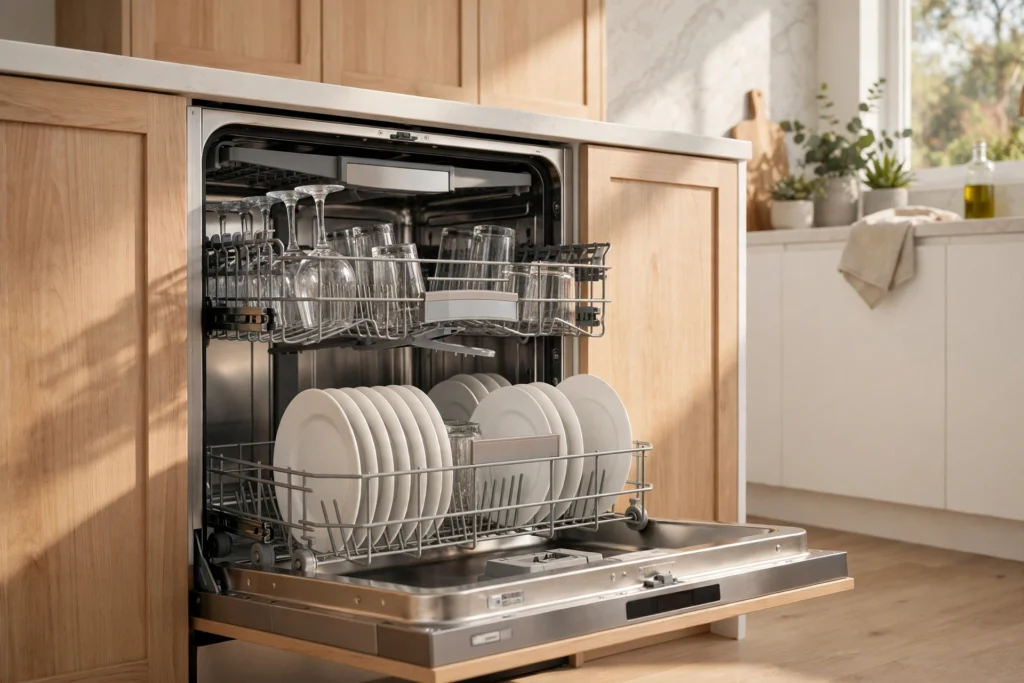
A dishwasher works by spraying hot, soapy water at your dirty dishes from spinning arms, then rinsing them with clean hot water and drying them with heat. You load the racks, add detergent, press start, and the machine handles the scrubbing, rinsing and drying on its own — no sponge needed.
Key Takeaways
- A dishwasher cleans with hot water pressure, not scrubbing: spinning spray arms blast water at every surface.
- The wash runs in stages — pre-rinse, main wash, rinse, then drying.
- Detergent breaks down grease; hot water and rinse aid stop spots.
- A full load usually uses less water than hand washing the same dishes.
- Loading matters: blocked spray arms and nested bowls are why dishes come out dirty.
What happens inside a dishwasher, step by step?
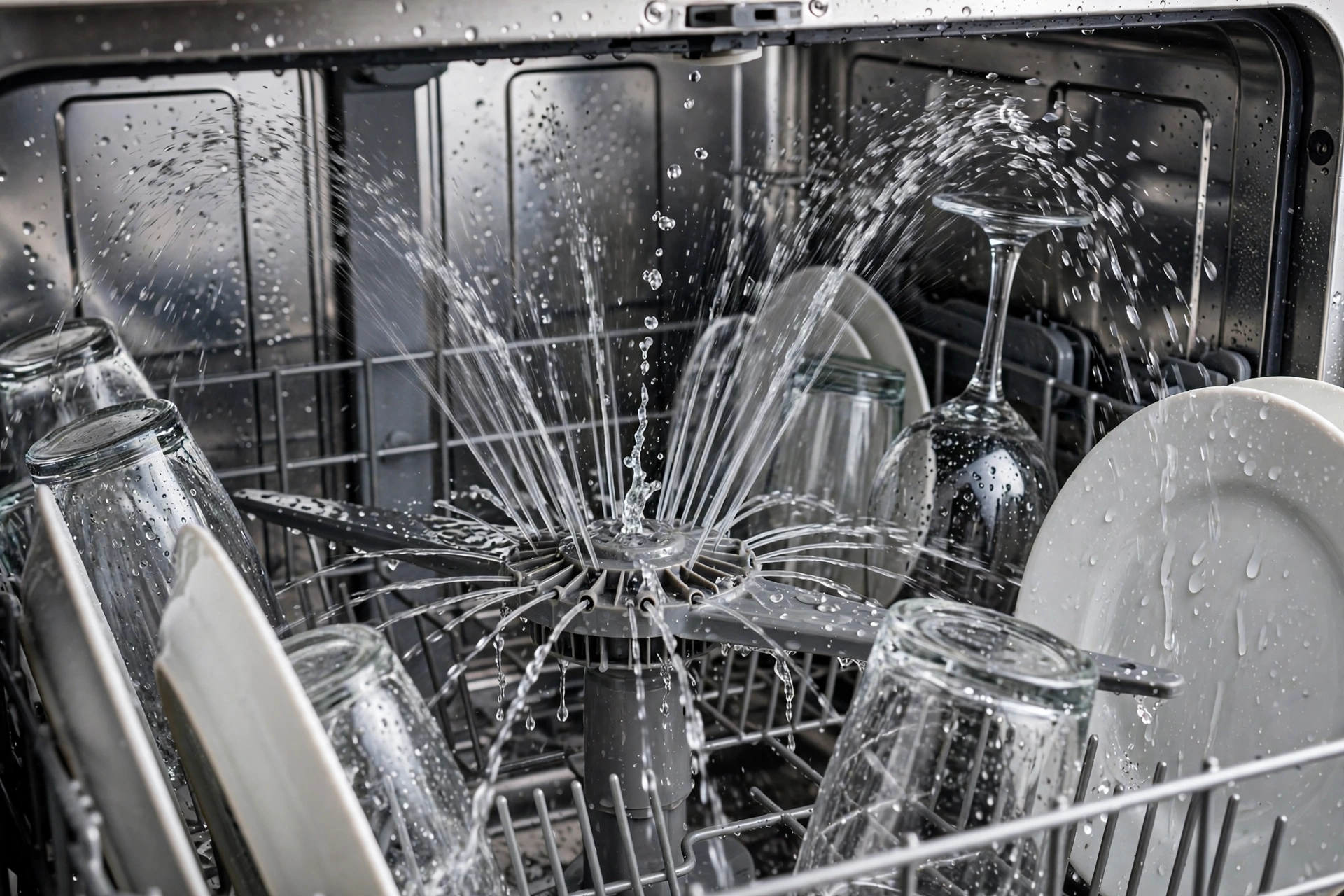
Once you press start, the dishwasher fills with a small amount of water — far less than a sinkful — and heats it to around 50 to 65 degrees Celsius. A pump pushes that hot water to the spray arms, which spin and throw jets over the racks. The water drains to the bottom, is filtered, and is pumped around again.
Most cycles follow the same pattern: a short pre-rinse loosens food, then the detergent dispenser opens and the main wash runs for 20 to 40 minutes. The dirty water drains away, fresh hot water rinses everything clean, and the machine dries the load with a heating element or the heat stored in the dishes. The whole cycle often takes two to three hours.
How do the spray arms reach every dish?
The spray arms are the heart of the machine. Most dishwashers have two or three — one under the lower rack, one under the upper rack, sometimes a smaller one at the top. Each arm is a hollow bar with angled nozzles. When the pump forces water through, the jets push the arm around like a lawn sprinkler, sweeping spray across the whole rack.
That is why loading matters. If a tall pan blocks an arm, it cannot spin, and the dishes behind it stay dirty. If bowls nest, water cannot reach the hidden surfaces. Leave gaps, face dirty sides towards the centre, and keep tall items clear of the arms. Spin each arm by hand before starting — it takes seconds.
What does the detergent actually do?
Detergent does three jobs at once. Its cleaners, called surfactants, break the grip grease and food have on plates and glasses. Its builders soften the water, so minerals do not leave chalky marks. And its enzymes chew through starches and proteins — the stuff that makes porridge bowls and egg plates so stubborn.
Modern tablets and pods combine all of this in one dose, made to dissolve at the right point in the cycle. That is why the dispenser door matters: it keeps detergent dry during the pre-rinse and releases it only for the main wash. Rinse aid is a separate helper — it lowers the water’s surface tension so the final rinse sheets off instead of beading into spots. Cloudy glasses often mean the rinse aid is simply empty.
How does a dishwasher dry the dishes?
Drying is where dishwashers differ most. Cheaper models use a heating element in the base of the tub, warming the air like a low oven. Many modern machines use the heat stored in the dishes themselves: after the final hot rinse, hot plates and glasses evaporate the water off their own surfaces, and the steam escapes through a vent.
That is why plastic items often come out damp while ceramic plates come out bone dry — plastic holds little heat, so the water on it has nothing to evaporate it. Opening the door a crack at the end of the cycle lets the steam out and helps everything finish drying.
How much water and energy does a dishwasher use?
A modern dishwasher typically uses around 10 to 13 litres of water per cycle, and much of that water is reused before it drains away. Washing the same load by hand, with the tap running, can easily use several times more. ENERGY STAR notes that a certified dishwasher can save around 8,400 gallons of water a year compared with hand washing.
Energy use comes mostly from heating the water, which is why eco cycles run longer at lower temperatures: they give detergent more time to work so the heater can do less. Running full loads and choosing eco when dishes are not heavily soiled are the easiest ways to keep costs down. The ENERGY STAR guide to dishwashers sets out the savings, and Wikipedia’s dishwasher article covers the history and designs.
How should you load a dishwasher?
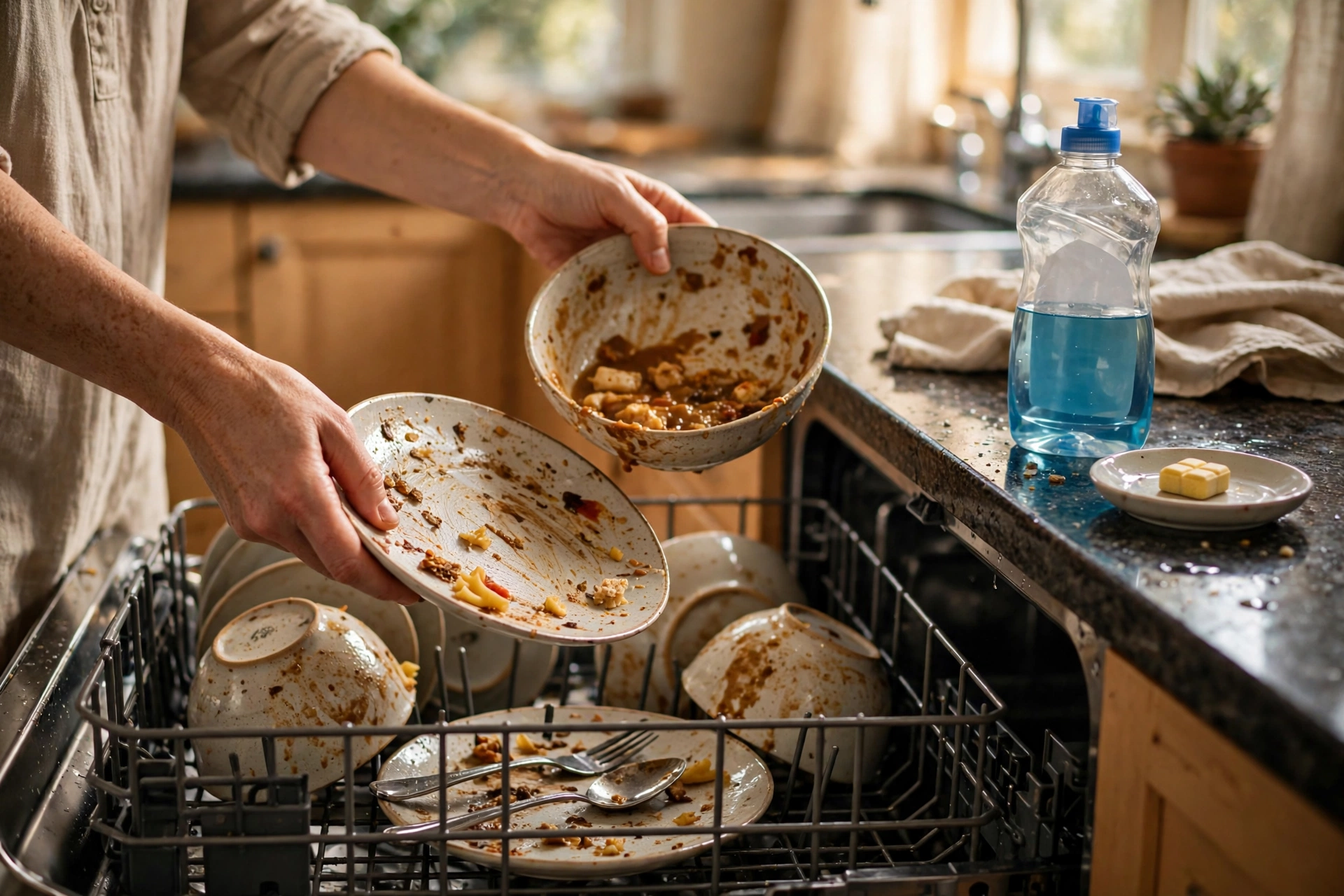
Good loading takes less than a minute once it becomes a habit. Scrape food off plates first — there is no need to rinse, since modern detergent and hot water handle the residue, and pre-rinsing wastes water. Put plates in the lower rack facing the centre, cups and glasses on the upper rack, and cutlery in the basket with handles down so the dirty ends get the spray. Sharp knives go handle up, for safety.
Bowls go at an angle so water runs off, and nothing should overlap. Large items like baking trays go at the sides or back of the lower rack, where they block the least spray. If you are short on space, run a second load rather than cramming everything in — an overloaded dishwasher cleans badly. Much like a washing machine, a dishwasher rewards a little care at loading time.
What should never go in a dishwasher?
Most everyday plates, glasses and cutlery are fine, but a few things should stay out. Wooden spoons and chopping boards can crack and warp in the heat. Cast iron pans will rust, non-stick coatings wear out faster under harsh detergent, and fine china, hand-painted items and crystal can chip or lose their finish.
Aluminium can discolour and copper can lose its shine. If you are unsure, check the base: most dishwasher-safe pieces say so. When in doubt, wash it by hand — one quick hand wash is cheaper than replacing a favourite pan. Other appliances have their own limits too: a microwave oven heats with waves, an electric kettle boils with a hidden element, and an air fryer should never be filled with water.
Frequently Asked Questions
Do you need to rinse dishes before putting them in the dishwasher?
No. Scrape off large food scraps, but do not rinse. Modern detergents are designed to work on dirty dishes, and the enzymes need something to grip. Pre-rinsing wastes water.
Why are my dishes still wet after the cycle?
Plastic holds little heat, so it dries slowly, and a cool kitchen makes it worse. Open the door slightly when the cycle ends, keep the rinse aid topped up, and choose heated dry for loads with lots of plastic.
Why do my glasses come out cloudy?
Cloudiness usually comes from hard water deposits or too much detergent. Check the rinse aid level, use the right dose for your water hardness, and run a cleaning cycle. Etched glass cannot be fixed.
Can you put pots and pans in a dishwasher?
Most stainless steel pots and pans are fine, but check the maker’s advice first. Cast iron, non-stick and copper pans should be washed by hand, and large pans can block the spray arms.
How often should you clean your dishwasher?
Clean the filter once a month, wipe the door seal, and run an empty hot cycle with a dishwasher cleaner every month or two. A clean filter keeps water flowing properly.
Conclusion
A dishwasher is a simple idea done well: hot water, sprayed from spinning arms, with detergent to lift grease and heat to finish the drying. Load it with gaps between items, keep the spray arms free, keep the rinse aid topped up, and clean the filter monthly. Next time you load it, take ten seconds to spin each spray arm by hand before pressing start — the easiest check there is.