
AI help with learning a language works by turning your phone or laptop into a patient tutor: it builds short lessons around your level, lets you practise speaking out loud, corrects your mistakes straight away, and tracks your progress so you can see yourself improving. It works best as a daily habit alongside real conversation.
Key Takeaways
- AI language tools give you lessons, speaking practice, and instant corrections in one place, whenever you have a few spare minutes.
- Speaking out loud to an AI tutor builds confidence because there is no audience and no embarrassment when you get a word wrong.
- Spaced repetition — revisiting words just before you would forget them — is one of the most useful things these tools do for your memory.
- AI can still misunderstand slang, regional accents, and cultural context, so real conversation with people remains essential.
- Short daily sessions beat occasional long ones, and a simple weekly goal keeps the habit going.
How does an AI language tutor actually work?
An AI language tutor is built on the same kind of technology that powers chatbots and translation tools. It has been trained on huge amounts of text and speech in many languages, so it can recognise what you type or say, work out what you meant, and reply in the language you are learning. When you speak, speech recognition turns your voice into text, the model checks your grammar and word choice, and answers — often with a correction and a gentler way to say the same thing.
That loop is the heart of it. In a classroom, you might wait minutes for the teacher to reach you; with an AI tutor, the feedback arrives in seconds. You can ask the same question five times, repeat a tricky sentence until it feels natural, or slow the audio down without feeling awkward. For a fuller picture of the technology underneath, see our guide to What Is Artificial Intelligence? The Complete Guide, and for how machines make sense of human language at all, our explainer on What Is Natural Language Processing?
What can AI help you practise?
Most AI language apps cover the same four skills, but they are not equally strong at all of them.
Vocabulary and grammar. This is where AI is strongest. Apps introduce new words in small sets, quiz you on them later, and bring back the ones you keep forgetting. Grammar explanations are short and tied to a sentence you just wrote, which makes them easier to remember than a rule in a textbook.
Listening and speaking. AI voices can read sentences aloud at different speeds, and many tools let you tap any word to hear it again. When you speak, the app scores your pronunciation and points out sounds you missed. It is not a perfect judge — background noise or a strong accent can confuse it — but it gives you far more speaking practice than reading alone ever will.
Writing. You can write a short paragraph or a diary entry and get corrections with explanations. This overlaps with the writing help covered in How Does AI Help With Writing?: read the correction, understand why, then write the sentence again yourself.
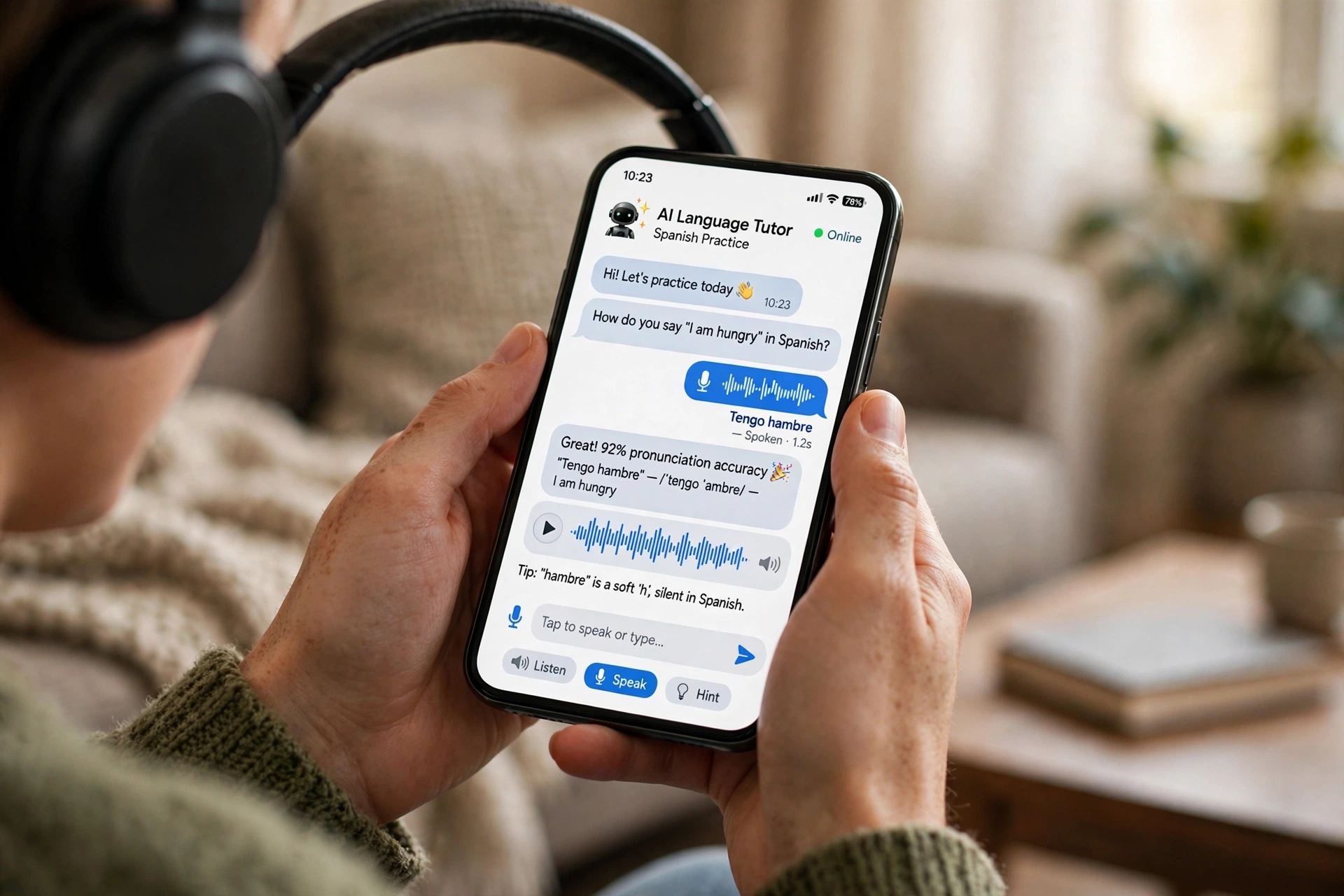
Why does speaking to AI feel easier than speaking to people?
For many learners, the hardest part of a new language is not the grammar — it is the fear of sounding foolish. An AI tutor removes that pressure completely. There is nobody waiting, nobody judging, and no conversation to derail if you pause to think.
That matters more than it sounds. When you are relaxed, you try longer sentences and experiment with words you are only half sure of, instead of staying silent. Confidence built in private practice often carries over into real conversations, because you have already said the words out loud dozens of times.
Still, the comfort has a limit. An AI tutor will patiently accept almost anything, while a real person might look confused or ask you to repeat yourself. That unpredictability is exactly what real conversation teaches, so treat AI speaking practice as rehearsal, not the performance itself.
How does AI remember what you forget?
One of the cleverest things AI language tools do is decide when to show you a word again. This is called spaced repetition, and it is based on a simple idea: if you review a word just before you are about to forget it, it sticks for longer each time.
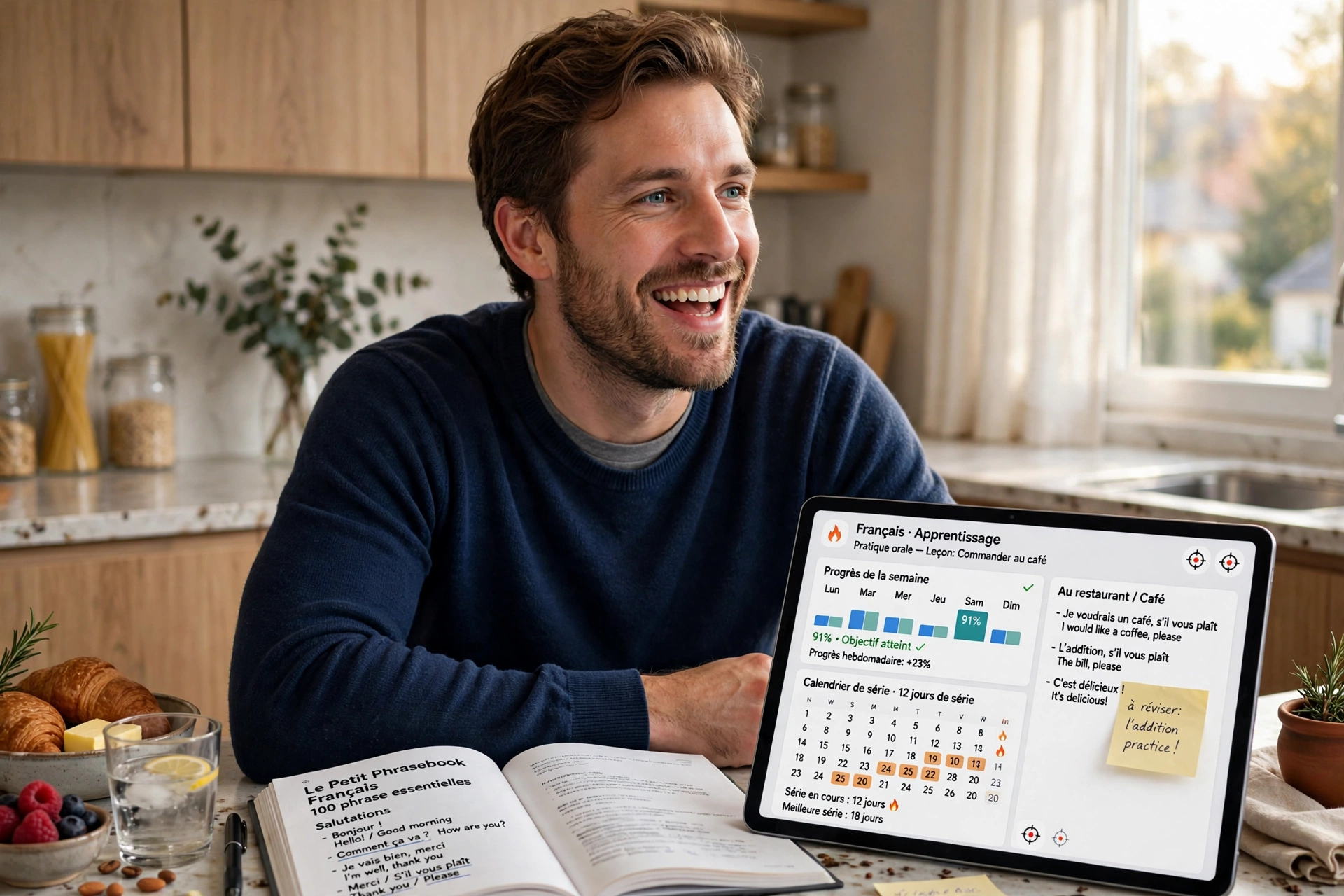
The app keeps a quiet record of every word you have seen — which ones you answered quickly, which ones you hesitated on, and which ones you got wrong twice. Words you know well come back rarely; words you struggle with come back often, sometimes in a different sentence so you learn the meaning rather than memorising one fixed phrase. Streaks and weekly goals work the same way, giving you a reason to open the app on a tired evening — just do not chase the streak instead of the learning.
Where does AI fall short?
AI is a strong practice partner, but it has blind spots worth knowing about.
First, it can be wrong. An AI tutor can suggest a sentence that is grammatically fine but sounds odd to a native speaker, or it can miss a mistake in something you wrote. If a correction surprises you, check it against a dictionary rather than accepting it blindly.
Second, it struggles with the messy parts of language: slang, jokes, regional accents, and the unspoken rules of politeness. A phrase that is perfectly correct in a textbook might sound too formal — or too blunt — in a real conversation. The Duolingo blog often covers these quirks of real language use, and it is a good reminder that languages live in people, not just in apps.
Third, AI cannot give you the experience of a real conversation: reading someone’s face, coping when you do not understand, or finding another way to say something when the word escapes you. Those are skills, and they only grow by talking to people.
How can you get the most out of it?
A few habits make a real difference, and none of them need extra money or extra time.
Pick one goal, not five. “Order food in Spanish on holiday” beats “learn Spanish” because you know exactly what to practise: food words, numbers, and polite requests.
Practise a little, every day. Ten to fifteen minutes daily builds stronger habits than a two-hour session on Sunday, and short sessions fit spaced repetition better, because the app can spread your reviews across the week.
Speak out loud, even when the app lets you type. Typing is comfortable, but it does not train your mouth or your ear. Say the sentence before you tap the answer, and repeat the correction out loud after it appears.
Use the language outside the app. Label things in your kitchen, listen to a song in the language, or plan a trip using the phrases you have learned — our guide to How Does AI Help With Trip Planning? shows how AI can help you prepare for exactly that kind of real-world practice.
FAQs
Can AI teach me a language on its own?
It can take you a long way, especially to a basic conversational level, but most learners reach a point where they need real people. AI is excellent for vocabulary, grammar, pronunciation practice, and confidence; human conversation is still the best way to learn slang, cultural context, and how to cope when you do not understand.
How long does it take to see progress?
With short daily practice, most people notice a difference within a few weeks: familiar words come faster, and simple sentences start to feel natural. Reaching comfortable conversation usually takes months of steady practice.
Is AI pronunciation feedback reliable?
It is a useful guide, but not perfect. It catches clear mistakes — a wrong sound, a missing syllable — well, but it can also flag correct speech if your accent is unusual or the microphone picks up noise. Treat low scores as a prompt to listen and try again, not as a final judgement.
Should beginners start with AI or with a class?
Either works, and many learners combine both. AI is a good place to start because it is cheap, always available, and lets you learn at your own pace. A class adds structure and classmates to practise with. If you can only pick one, start with the one you will actually use every day.
Can AI help with languages that have a different alphabet?
Yes, and this is one of its more useful features. Most tools teach the new script step by step — letters first, then simple words — and let you hear each character as you learn it. Background reading on how languages are learned in general is available on Wikipedia’s language learning page.
Conclusion
AI help with learning a language gives you something learners never had before: a tutor that is always available, never impatient, and able to shape every lesson around your mistakes. It is at its best for daily vocabulary, speaking practice, and steady progress tracking — and at its weakest where language gets human: slang, humour, and real conversation.
The practical next step is simple. Pick one language and one small goal, set aside ten minutes tomorrow, and spend most of it speaking out loud rather than tapping through exercises. Then book a short real conversation — with a tutor, a language partner, or a friend — for later in the week, and use it to try out what the app taught you. That mix of AI practice and human conversation is where real progress happens.