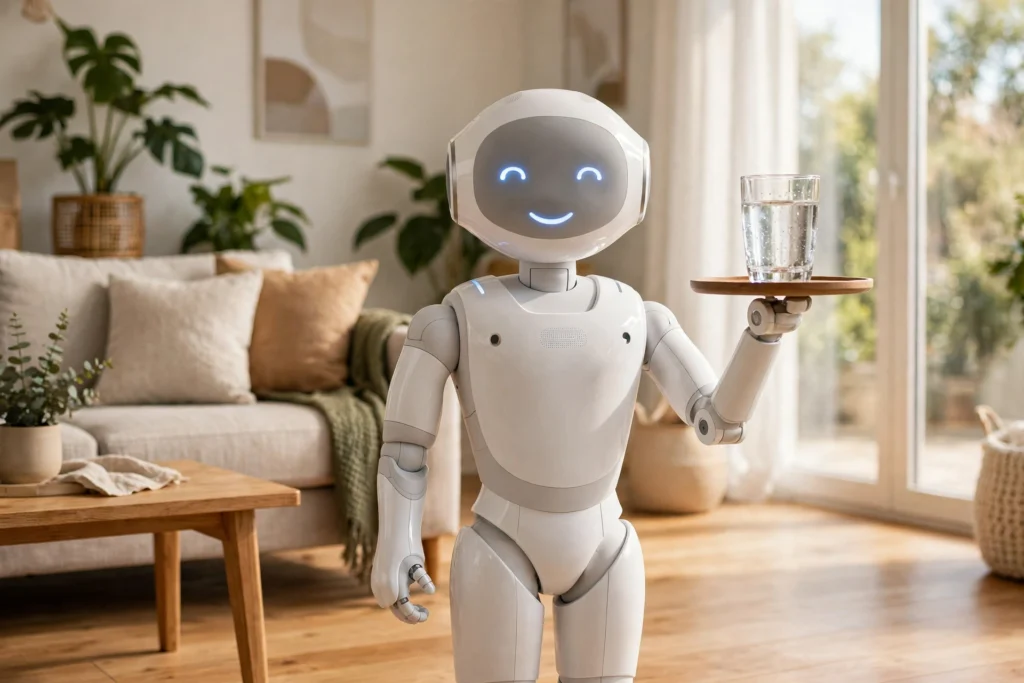
A robot butler is a home robot built to fetch things, tidy rooms, greet visitors, and keep an eye on the house. The idea is an old one, but the reality is only just arriving: a few models you can actually buy, several more you can only pre-order, and demo videos that show more than the robots can yet do.
Key Takeaways
- A robot butler is a general-purpose home helper, not a single-task cleaner like a robot vacuum.
- Today’s models fetch small items, patrol rooms, answer the door, and remind you about routines.
- They navigate with cameras, depth sensors, and a saved map.
- Soft grippers hold a mug without crushing it, but payloads are still small.
- Most are expensive or invite-only, so waiting is usually sensible.
What exactly is a robot butler?
Think of a butler as the opposite of a specialist. A robot vacuum does one job, floor cleaning, and does it well. A robot butler is meant to do a little bit of everything: bring you a glass of water, pick up a fallen cushion, meet a delivery at the door, and remind you the washing has finished.
Today’s robot butlers come in three shapes: a wheeled companion like Amazon’s Astro, which carries small items and shows video calls on its screen; a small rolling ball like Samsung’s Ballie, which follows you around; and a full humanoid like the 1X NEO, with two arms and hands.
What can a robot butler actually do today?
The honest answer is less than the adverts suggest, but more than nothing. The jobs that work best need moving and watching, not clever hands.
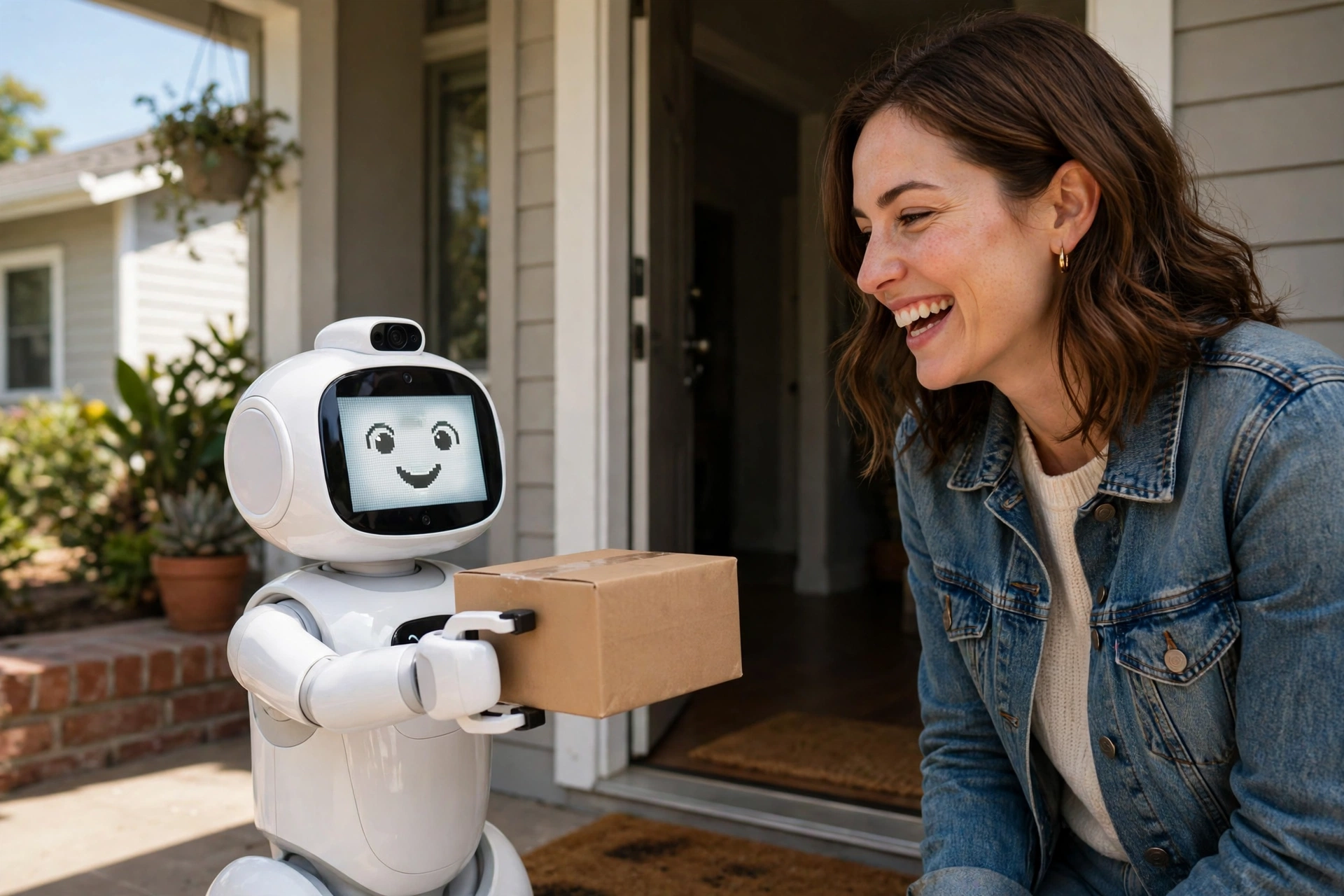
Fetching is the headline job. You ask for a drink, a book, or your glasses, and the robot drives to where they were left, picks them up, and brings them back. Labrador’s Retriever does this for people who find walking to the kitchen hard. Greeting is another real job: a robot can roll to the door, show you who is there on its screen, and take a parcel from a courier. Hotel robots already do a version of this job in corridors and lobbies. Reminders are the easiest of all — medication at eight, bins out on Tuesday — because they need no arms at all. Tidying is patchier: it can carry a plate to the sink, but it cannot fold laundry.
How does it find its way around your home?
A robot butler starts by learning the layout. On its first run it drives slowly around the house, scanning walls and furniture, and builds a map it stores for later. Next time, it plans a route across that map instead of wandering.
It also learns where things live, so it checks the bedside table for your glasses first. Cameras and depth sensing watch for what the map does not know about — a bag left on the floor, a dog asleep in the hallway — and the robot slows down or stops rather than pushing through.
How does it pick things up without breaking them?
This is the hardest part of the whole idea, and the reason robot butlers have taken so long to arrive. A human hand judges pressure without thinking; a robot has to be taught.
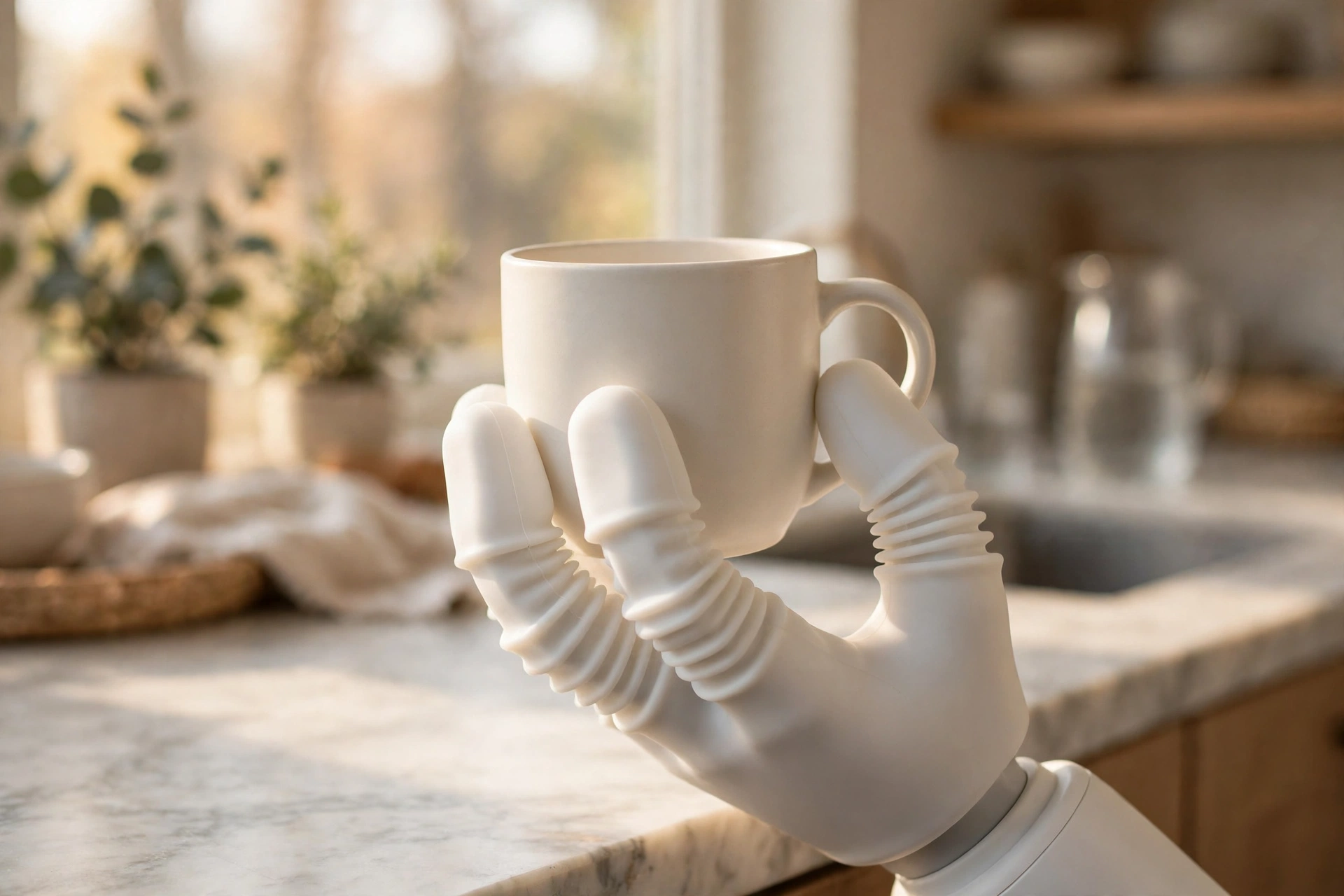
Modern grippers use soft, bendy fingers and force sensors. Sensors report the resistance, and the hand stops squeezing at the right moment. The trade-off is strength: most can only lift a few kilos, so a full shopping bag is still beyond them. One glass of water is a fair test; a tray of full plates is not, yet.
A worked example: the evening routine
Picture the scene at seven in the evening. You are on the sofa, and you ask the robot to bring you a glass of water. It rolls to the kitchen, finds the glass on the counter, and lifts it. On the way back it pauses for the dog, then sets the glass on the coffee table and returns to its dock.
Each step is a small problem the robot has to solve in order. When one step fails, the whole errand fails, which is why owners still find their robots stuck behind a chair leg. The routine works best in a tidy, predictable home, and it gets harder the messier the house is.
Robot butler vs robot vacuum vs human helper
| Robot butler | Robot vacuum | Human helper | |
|---|---|---|---|
| Main jobs | Fetching, greeting, reminders, light tidying | Floor cleaning only | Any household task |
| Can it climb stairs? | No, not yet | No | Yes |
| Can it pick things up? | Yes, light items | No | Yes |
| Price today | High, often invite-only | Affordable | Ongoing cost |
| Best for | People happy to wait | Anyone wanting clean floors | Homes needing flexible help |
A robot vacuum does one thing well; a robot butler does several things adequately; a person still wins on flexibility. Robots are best seen as helpers for specific jobs rather than replacements for a person.
What can’t a robot butler do yet?
Quite a lot, and the companies selling them are usually honest about it if you read past the headlines. Stairs are still a hard limit: almost no home robot can climb them. Cooking is mostly out of reach: it needs heat, sharp tools, and judgement. Folding laundry is still unreliable outside a laboratory — which is why dedicated laundry robots have had their own slow road to market.
Some early models rely on a remote human operator for tricky jobs, so the robot may not be fully independent at first. Privacy matters too: check what it records and where that footage goes.
Should you buy one now?
For most people, the sensible answer is to wait — or to start small. Try the jobs that already work well in cheaper form: a robot vacuum for the floors, a smart speaker for reminders, and a video doorbell for greeting visitors.
If you do want to be an early owner, go in with your eyes open. Astro is still sold by invitation, Ballie has missed its planned launch window, and the 1X NEO is taking pre-orders for 2026 delivery. An early purchase is a bet on the future as much as a tool for today.
FAQs
How much does a robot butler cost?
Most are still expensive: Amazon’s Astro has been listed at around $1,599 behind an invitation, and the 1X NEO at $20,000 outright or $499 a month.
Can a robot butler climb stairs?
Not yet — almost every home robot works on a single floor, so you would need one per floor or carry it yourself.
Is a robot butler the same as a companion robot?
They overlap but differ: a companion robot is built mainly for company and conversation, while a robot butler is built to do useful jobs around the house.
Does a robot butler need Wi-Fi?
Yes, for most features: voice commands, updates, remote check-ins, and video calls all run through your home network.
Will a robot butler replace a cleaner or a carer?
No, not in the near future. It can help with fetching, reminders, and light tidying, but it cannot match a person for judgement or care.
Conclusion
Robot butlers are finally moving out of the demo video and into real homes, but slowly and expensively. Fetching, greeting, and reminding already work; picking up and tidying are improving; stairs, cooking, and laundry are still waiting. If the idea appeals to you, check what the shipping models can actually do, and try the cheaper single-task robots first.
Further reading: Wikipedia’s overview of domestic robots (https://en.wikipedia.org/wiki/Domestic_robot) and The Gadgeteer’s roundup of which home robots are actually shipping in 2026 (https://the-gadgeteer.com/2026/05/20/home-robots-available-2026/).