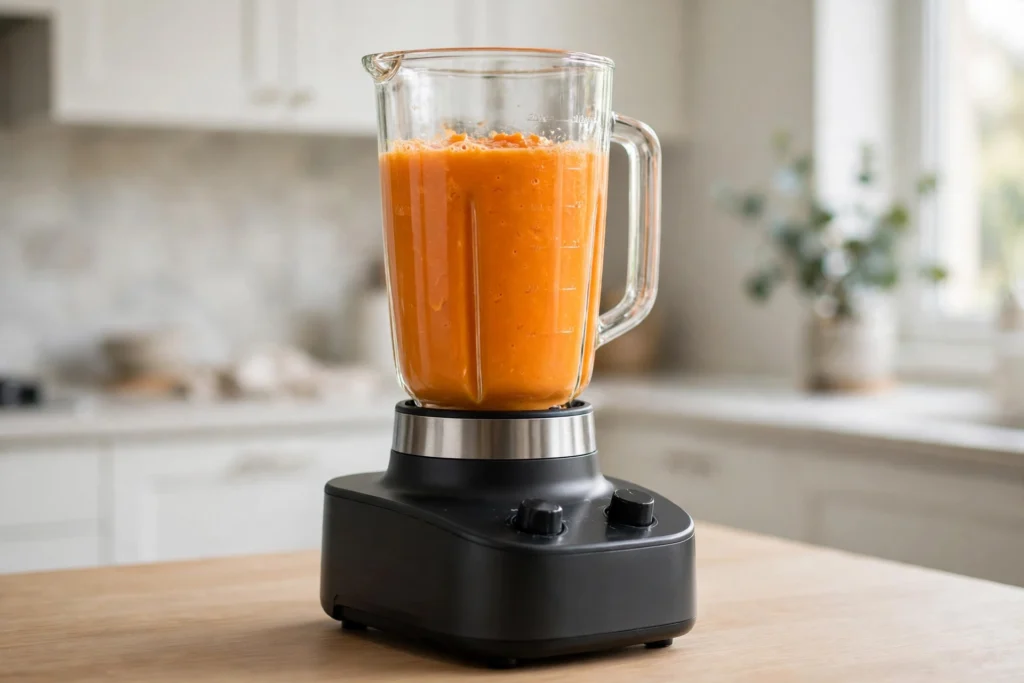
A blender works by spinning sharp steel blades at high speed inside a jug, pulling food down into the blades and throwing it back up in a swirling vortex. An electric motor in the base drives the blades, and speed settings control how fine the mixture becomes. The result is a smooth blend in under a minute.
Key Takeaways
- A blender works when a motor spins steel blades fast enough to cut food and whip it into a vortex.
- The jug’s shape matters as much as the blades: it pulls food down through the cutting zone.
- Low speeds stir and chop, while high speeds puree, crush ice, and smooth out fibre.
- Liquid is the helper ingredient — without enough of it, food stalls above the blades.
- Short pulses and the right ingredient order fix most lumpy blends.
What are the main parts of a blender?
A countertop blender has four main parts. The base holds the motor, the controls, and the cooling vents. The jug, usually glass or tough plastic, holds the food and guides it back down towards the blades. The blade assembly sits at the bottom, and the lid keeps everything inside while it spins.
The motor is the heart of the machine. Most home blenders use a universal motor rated between 300 and 1,000 watts, and that power lets the blades keep spinning through frozen fruit or ice. A rubber coupling joins the motor shaft to the blade assembly, so the jug lifts off for washing while the base stays dry. The first blenders appeared in the early 1900s, built to make malted milk drinks — read a fuller history on Wikipedia.
How do the blades cut food so fast?
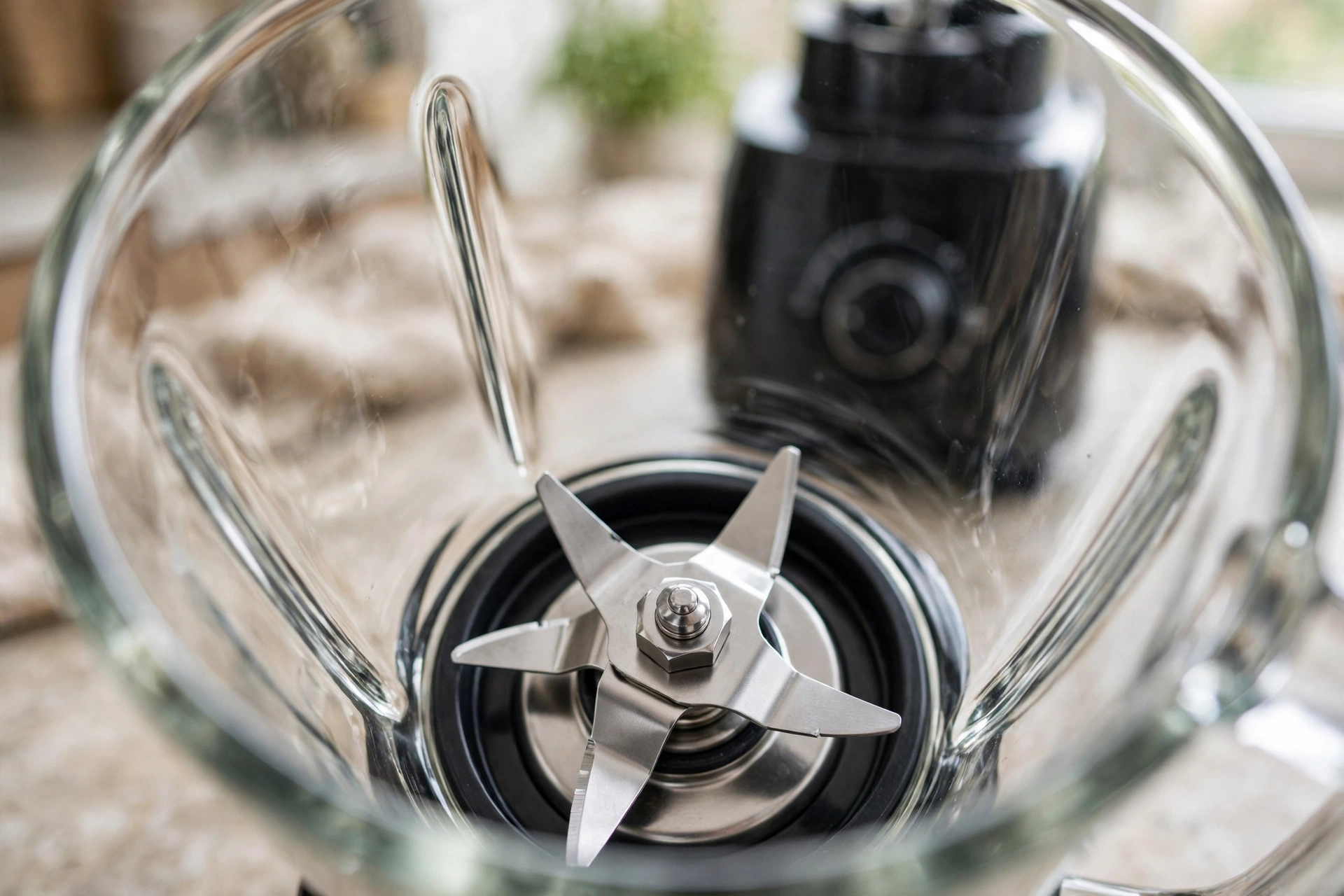
The blades do not really chop like a knife. They spin so fast — often well over 10,000 revolutions per minute — that their edges shear through food on contact, thousands of times a second. Most blades have two, four, or six points set at different angles, so some edges cut downwards while others lift food upwards.
That angled design is deliberate. Flat blades would just push food around in a circle, but angled blades create lift, dragging chunks down into the cutting zone again and again. That is why a good blender purees strawberries in thirty seconds, while a weak one leaves bits floating. Sharpness matters less than people think: speed does the cutting, not a razor edge.
What does the motor actually do?
The motor turns electricity into spin. Press a speed button, power flows to the motor windings, the shaft turns, and the coupling carries that spin up into the blades. Higher speeds draw more power, which is why a blender sounds louder and works harder on ice than on soft banana.
Like a hair dryer, a blender relies on a small electric motor doing a lot of work in a compact body, so cooling matters. Vents in the base let air flow over the motor, and most blenders have a thermal cut-out that switches it off if it overheats. If yours ever stops mid-blend and smells hot, let it cool for ten minutes.
Why do blenders have different speeds?
Speed settings change how hard the blades hit the food. Low speeds suit gentle jobs: stirring soup, folding in yoghurt, or chopping vegetables into rough pieces. Medium speeds suit smoothies and sauces. High speeds are for the tough jobs — crushing ice, milling seeds, and turning fibrous greens into a drink you can sip through a straw.
The pulse button is the most useful control most people ignore. It runs the motor in short bursts, so you can chop without turning everything into soup. Pulse a few times for salsa, hold it down for a puree, and stop the moment the texture looks right. A few premium models add Wi-Fi and an app for timed programmes, but the blending still comes down to blades, motor, and jug shape.
What is the vortex, and why does it matter?
Watch a blender at work and you will see the mixture form a swirling dip in the middle — the vortex. The blades fling food outwards and upwards, the jug walls push it back in, and gravity pulls it down into the blades again. That loop blends evenly, instead of leaving a smooth layer at the bottom and whole chunks at the top.
The vortex only forms when the mixture is the right thickness. Too thick, and the blades carve a hole in the middle while the food above barely moves — the dreaded air pocket. Fix it with a splash of liquid or a push from a tamper.
Why do some blends turn out lumpy?
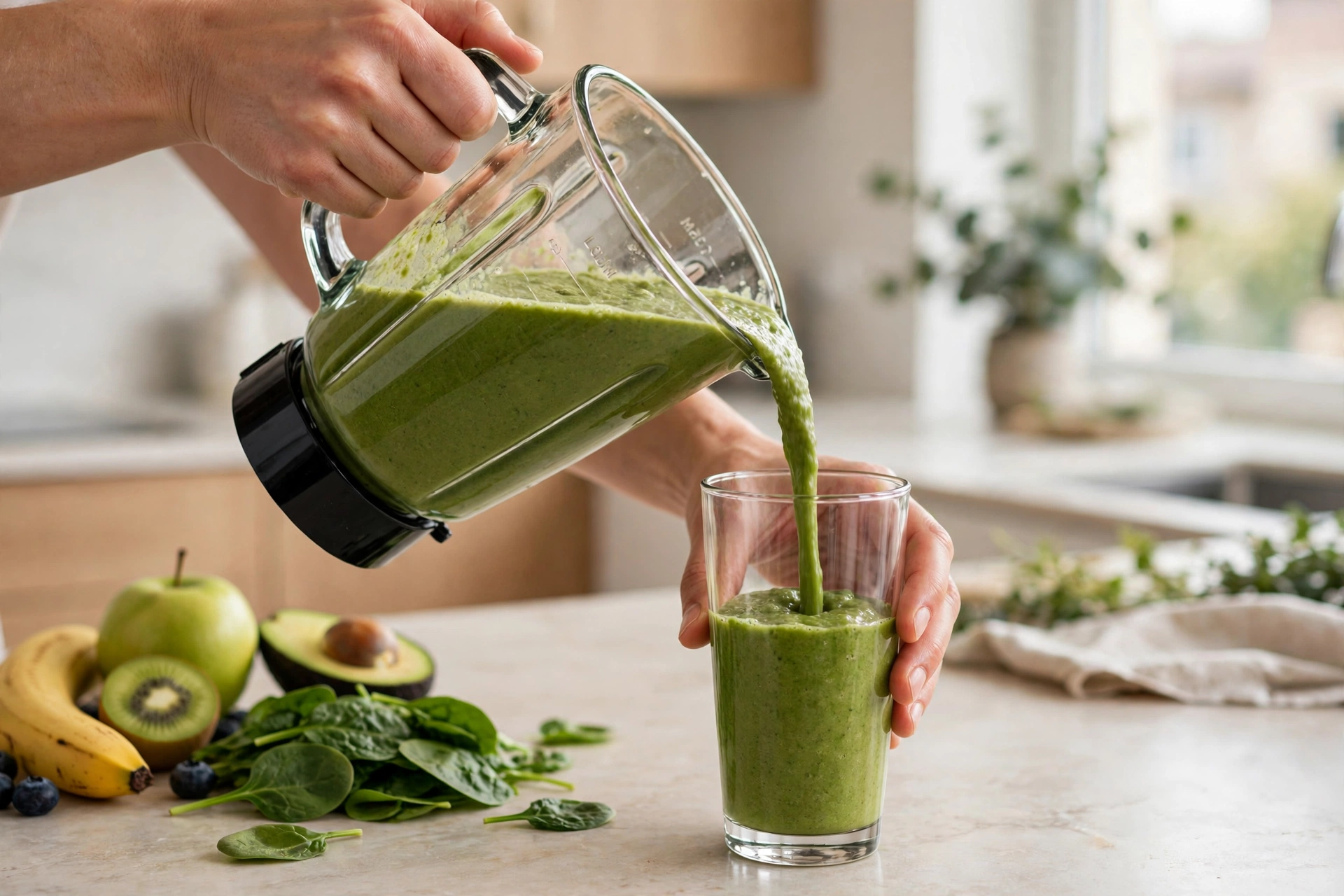
Lumps usually come from four mistakes. Not enough liquid: dry food cannot flow, so it sits above the blades — add liquid first, then soft ingredients, then frozen items on top. Overfilling: a brim-full jug leaves no room for the vortex, so fill to two-thirds and blend in batches. Starting on high: a sudden blast flings food up the sides, so start low and build up. Too little time: kale and raw carrot need a full minute at high speed, not a ten-second burst.
How do you clean a blender safely?
Fill the jug halfway with warm water and a drop of washing-up liquid, put the lid on, and run the blender for thirty seconds. Rinse, and most of the time that is all it needs. Never put your hand near the blades to scrub them — even a switched-off blender can cut, because the blades stay sharp and the jug is slippery when wet.
For dried-on residue, soak the jug in warm soapy water for ten minutes before blending clean. The blade assembly on many models unscrews for a deeper clean, but check the manual first: some seals must sit exactly right, or the jug will leak.
Frequently Asked Questions
Can a blender crush ice?
Yes, but use small cubes and add a little liquid first. Large cubes can jam the blades, and running a weak motor on dry ice can overheat it. If your blender struggles, pulse in short bursts rather than holding it on high.
Is a blender the same as a food processor?
No. A blender is built for liquids and soft foods, using a tall jug and a vortex to mix evenly. A food processor has a wide, flat bowl and is better at chopping, grating, and kneading dough.
Why does my blender leak from the bottom?
A leak usually means the seal between the jug and the blade assembly is worn, loose, or fitted the wrong way round. Check the rubber gasket for cracks and reseat it flat; a cheap replacement from the manufacturer usually fixes it.
How long should I blend a smoothie?
Most smoothies need 30 to 60 seconds at high speed. Soft fruit blends fast, while frozen fruit, raw carrot, and leafy greens need the full minute. Stop when the mixture looks uniform — blending much longer heats the drink and thins it out.
Conclusion
A blender is a simple machine doing a clever job: a motor spins angled steel blades fast enough to shear food apart, while the jug’s shape keeps everything circling back through the cutting zone. Speed, liquid, and ingredient order do the rest. If your blends come out lumpy, start with liquid at the bottom, fill the jug only two-thirds full, and build speed up gradually instead of blasting it on high.
Try it with your next smoothie: liquid first, soft fruit next, frozen items on top, then thirty seconds on high. The same idea shows up across the kitchen, from an induction cooktop, which heats pans with magnetic fields, to cordless gadgets that charge on a base, a little like wireless charging for a phone. For a deeper look at the mechanics, see HowStuffWorks on how blenders work.