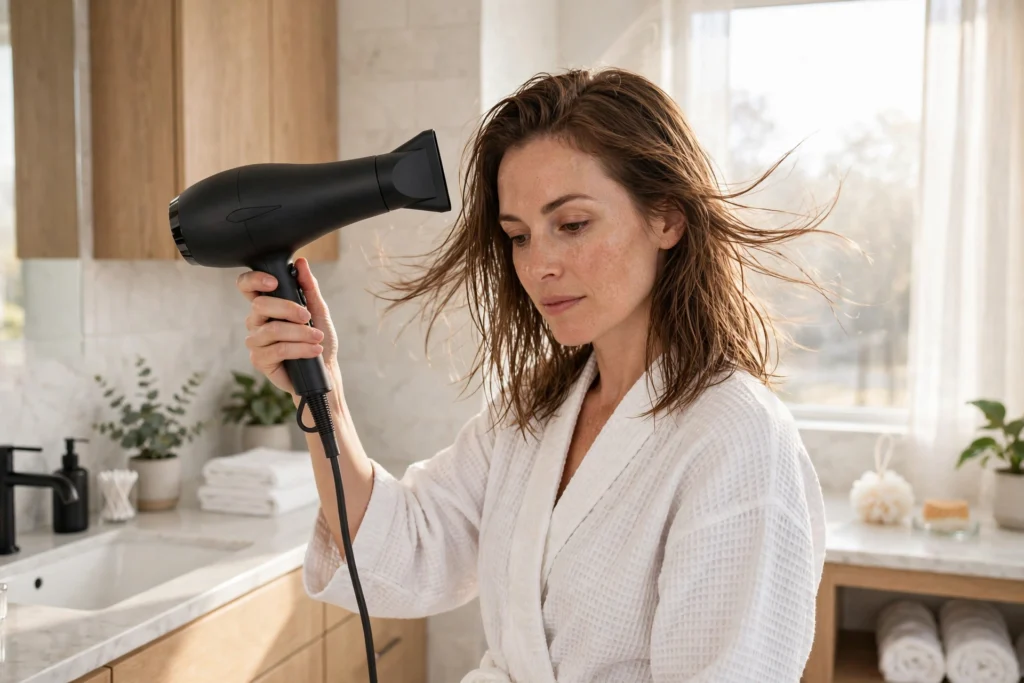
A hair dryer works by pulling in room air with a small fan, passing it over a hot heating element, and blowing the warmed air through a nozzle onto wet hair. The heat loosens water from the hair’s surface, while the fast-moving air carries the moisture away, so hair dries far faster than on its own.
Key Takeaways
- A fan draws in cool air, a heating element warms it, and a nozzle directs it onto your hair.
- Most dryers use a nichrome wire coil, which heats up quickly and stands up to repeated use.
- Airflow matters as much as heat: moving air carries moisture away, which dries hair.
- Heat settings and a cool-shot button let you dry fast without baking your hair.
- A blocked intake is the most common cause of overheating, so keep the rear filter clean.
How does a hair dryer turn electricity into hot air?
Inside every hair dryer, three main parts work together: a motor, a fan, and a heating element. When you switch it on, mains electricity powers the motor, which spins the fan. The fan pulls room-temperature air in through the grille at the back and pushes it forward through the barrel. The motor runs on low-voltage direct current, converted by a small rectifier inside the dryer.
On its way through, the air passes over the heating element. In most dryers this is a coil of nichrome wire — an alloy of nickel and chromium — wrapped around a heat-resistant mica frame. When current flows through the coil, its electrical resistance turns energy into heat, and the coil can glow red-hot within seconds. The moving air picks up that heat and leaves the nozzle as warm air, often reaching 60 to 80 degrees Celsius on high.
What do the heat and speed settings actually change?
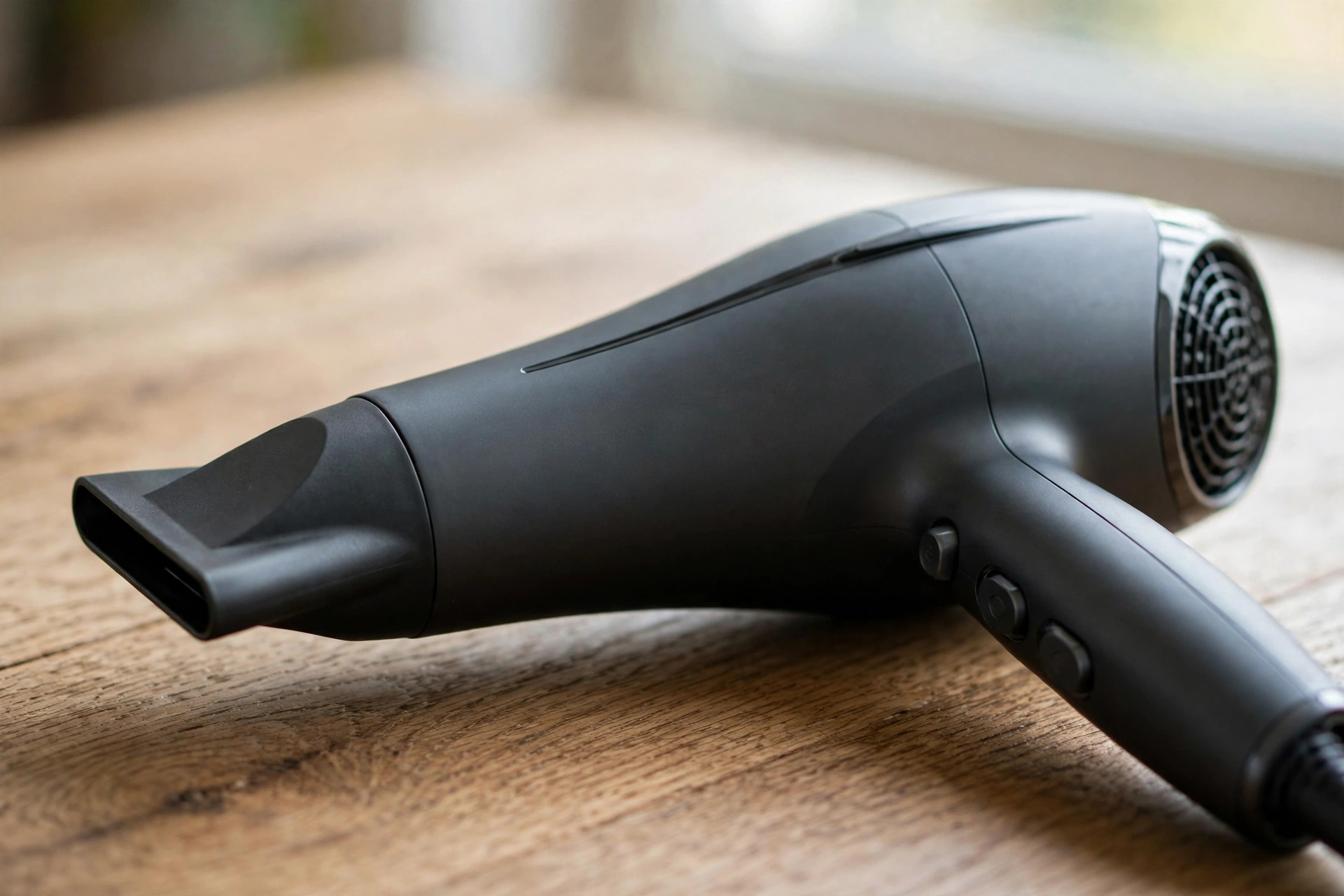
The switches control two things: how hot the air gets, and how fast it moves. The heat switch changes how much current flows through the heating element. Low heat sends less current, so the coil runs cooler; high heat sends more.
The speed switch changes how fast the motor spins the fan. More speed means more air per second, which dries hair faster even at a lower temperature, because the moving air sweeps moisture away. Medium heat with high airflow is often the best balance: most of the drying speed, far less risk of heat damage.
Many dryers also have a cool-shot button. Hold it down and it cuts power to the heating element while the fan keeps running, giving you a blast of room-temperature air to set a style in place.
Why does the nozzle shape matter?
The nozzle, sometimes called a concentrator, narrows the airflow into a flat, focused stream. A narrow nozzle gives you more control — you can aim the air at one section of hair at a time, which is useful for straightening or smoothing with a brush. A wider nozzle or a diffuser spreads the air out. Diffusers suit curly hair because they dry more gently and help curls keep their shape.
Why do hair dryers overheat, and what stops them?
A hair dryer that cannot breathe will overheat. The most common cause is a blocked rear intake: dust, lint, and loose hairs collect on the filter grille and choke the airflow. With less air moving through, the heating coil gets hotter than intended.
That is why modern dryers include a thermal fuse or thermostat. If the temperature inside the barrel climbs past a safe limit, the cut-out trips and shuts off the heating element until it cools down. If your dryer keeps cutting out, clean the filter first, and if the problem continues, stop using it and have it checked or replaced.
Very hot air can also damage hair, stripping moisture from the shaft and making it brittle over time. Keep the nozzle at least 15 centimetres from your hair and move it constantly. For background on dryer design and hair health, see the overviews of hair dryers and hair care.
How can you dry your hair safely and well?
Start by towel-drying gently — press and squeeze rather than rubbing hard. Then dry in sections, starting at the roots and working towards the ends, keeping the dryer moving. Use the lowest heat setting that still gets the job done, and finish with a cool shot.
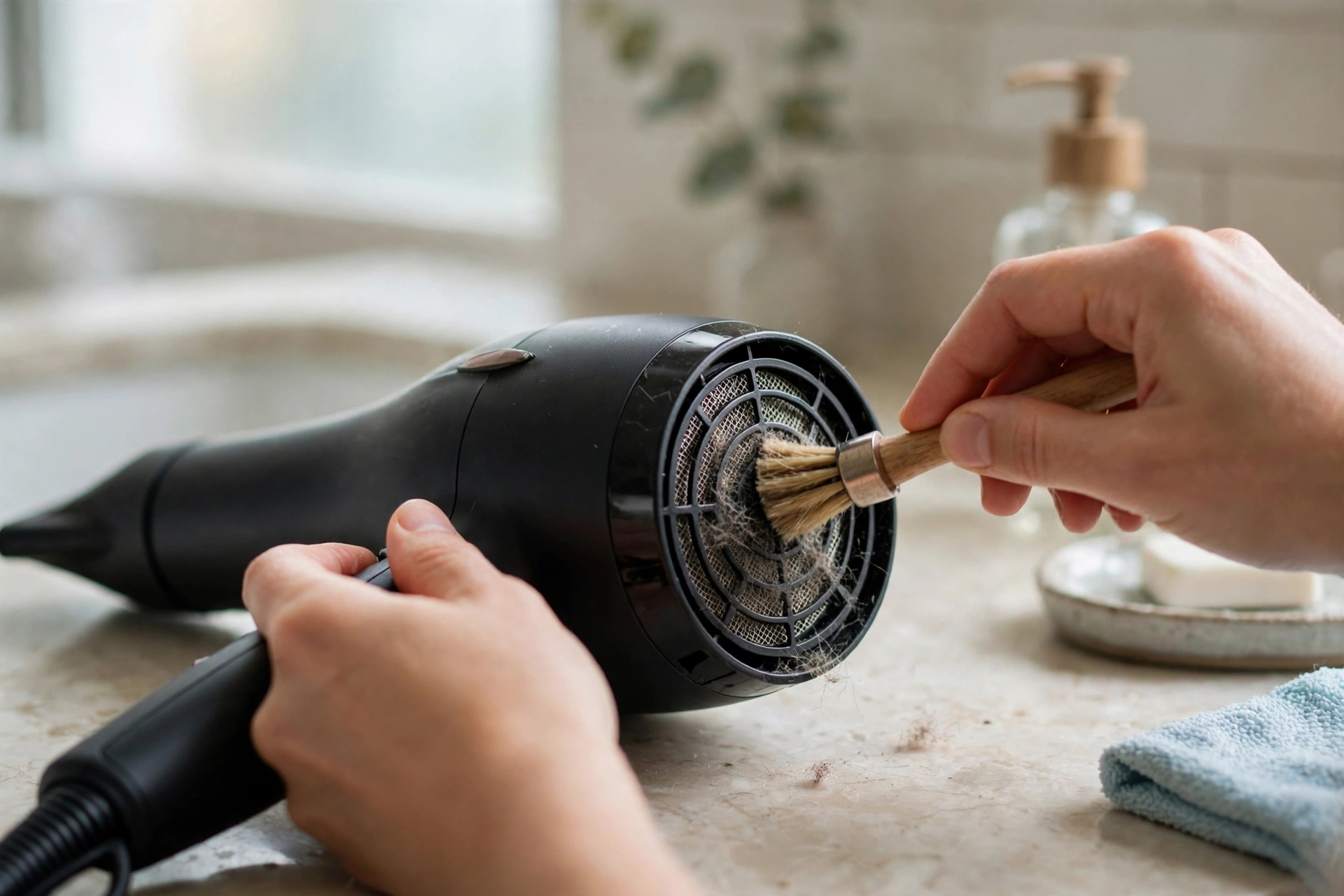
Clean the rear filter regularly. Most dryers have a grille that twists or pops off; a quick brush or a rinse under the tap, dried fully before use, is usually enough. A clean filter keeps airflow strong and the dryer running cooler for longer.
Never use a hair dryer with wet hands near a filled bath or sink, and never block the air intake or outlet while it is running. If the cord or plug is damaged, or the dryer smells of burning, unplug it and do not use it again until it has been repaired or replaced.
How do hair dryers compare with other drying methods?
Air-drying is the gentlest option because it involves no heat at all, but it is slow. The same idea of turning electricity into heat shows up in the kitchen too: a microwave oven heats food with microwaves, while an electric kettle uses a heating element in water.
FAQs
Is it bad to use a hair dryer every day?
Not necessarily. Daily use is fine if you keep the heat moderate, hold the dryer at a distance, and keep it moving. Damage mostly comes from very high heat held close to one spot.
Why does my hair dryer smell like burning?
A burning smell usually means dust or hair has built up on the heating element or blocked the intake filter. Switch it off, unplug it, and clean the filter. If the smell persists, stop using the dryer — the element or wiring may be damaged.
What is the cool shot button for?
It turns off the heating element while the fan keeps running, giving you a blast of cool air. It helps set a style in place and can make hair look smoother.
Do ionic hair dryers really work?
They can help reduce frizz and static, and may dry hair slightly faster, but the difference is modest. Airflow and temperature control matter far more when you are choosing a dryer.
How long should a hair dryer last?
A well-made dryer used at home typically lasts several years. The most common reason for early failure is a blocked filter causing repeated overheating, so regular cleaning is the simplest way to extend its life.
Conclusion
A hair dryer is a simple machine doing a neat trick: a fan, a heating coil, and a nozzle turn room air into a controlled stream of warm air that dries hair in minutes. Use it with a little care — moderate heat, plenty of airflow, a clean filter, and a sensible distance — and it will dry your hair quickly without damage. If your dryer keeps cutting out or smells of burning, clean the filter first; if that does not fix it, replace it. To see how other everyday appliances work, read our guide to how an air fryer works, or how a washing machine uses sensors to manage its cycles.