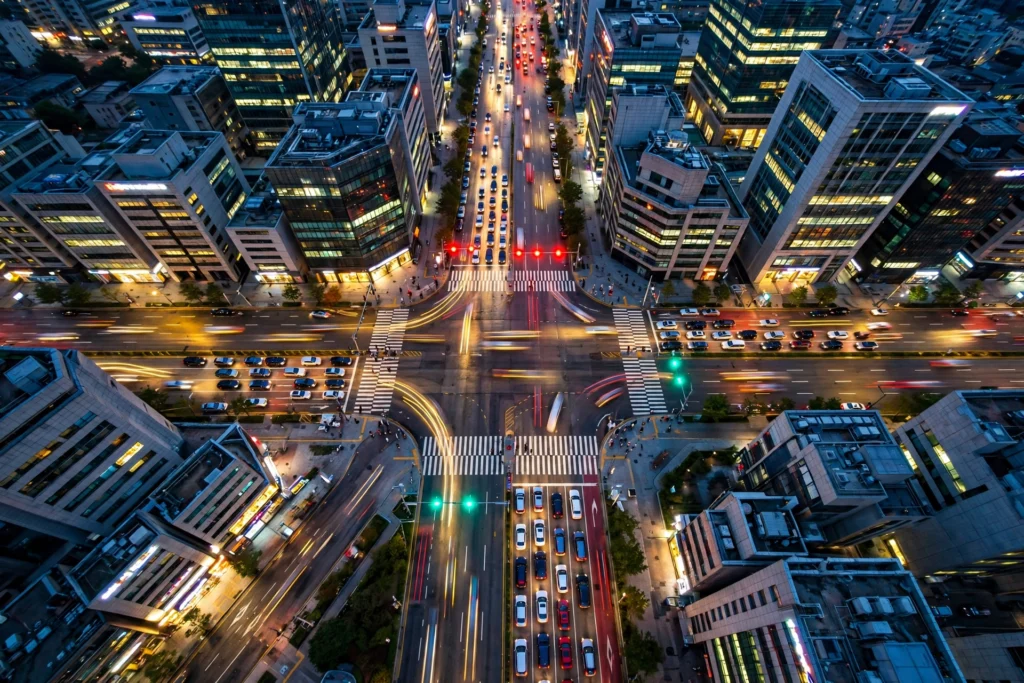
AI traffic management uses cameras, sensors, and live data to watch how vehicles move through a city, then adjusts signal timings, speed limits, and lane use in real time. Instead of fixed timers repeating the same pattern all day, it responds to what is actually happening on the road.
Key Takeaways
- AI traffic management reads live road data and retimes signals to match real demand, not a fixed timetable.
- Cameras, in-road sensors, and GPS data from vehicles feed one shared picture of how traffic is moving.
- The system spots incidents such as crashes and stalled cars far faster than a human watching a screen could.
- It can ease congestion and prioritise buses, but it cannot fix roads that are simply too full.
- Cameras raise privacy questions, so most systems count vehicles rather than identify drivers.
What does AI traffic management actually do?
At its simplest, it replaces guesswork with measurement. Old-style lights run on timers set months ago: thirty seconds of green at 3 a.m., when nobody is there, and the same thirty seconds at rush hour, when a queue stretches around the block. An AI system watches the road instead and hands green time to whichever direction needs it most.
The same data can adjust variable speed limits and overhead sign messages, and signals along a main road can be coordinated so cars catch green light after green light. The field behind this is artificial intelligence applied to transport, part of the wider family known as intelligent transport systems. Engineers still set the rules and safety limits; the AI makes the small adjustments inside them.
How do cameras and sensors feed the system?
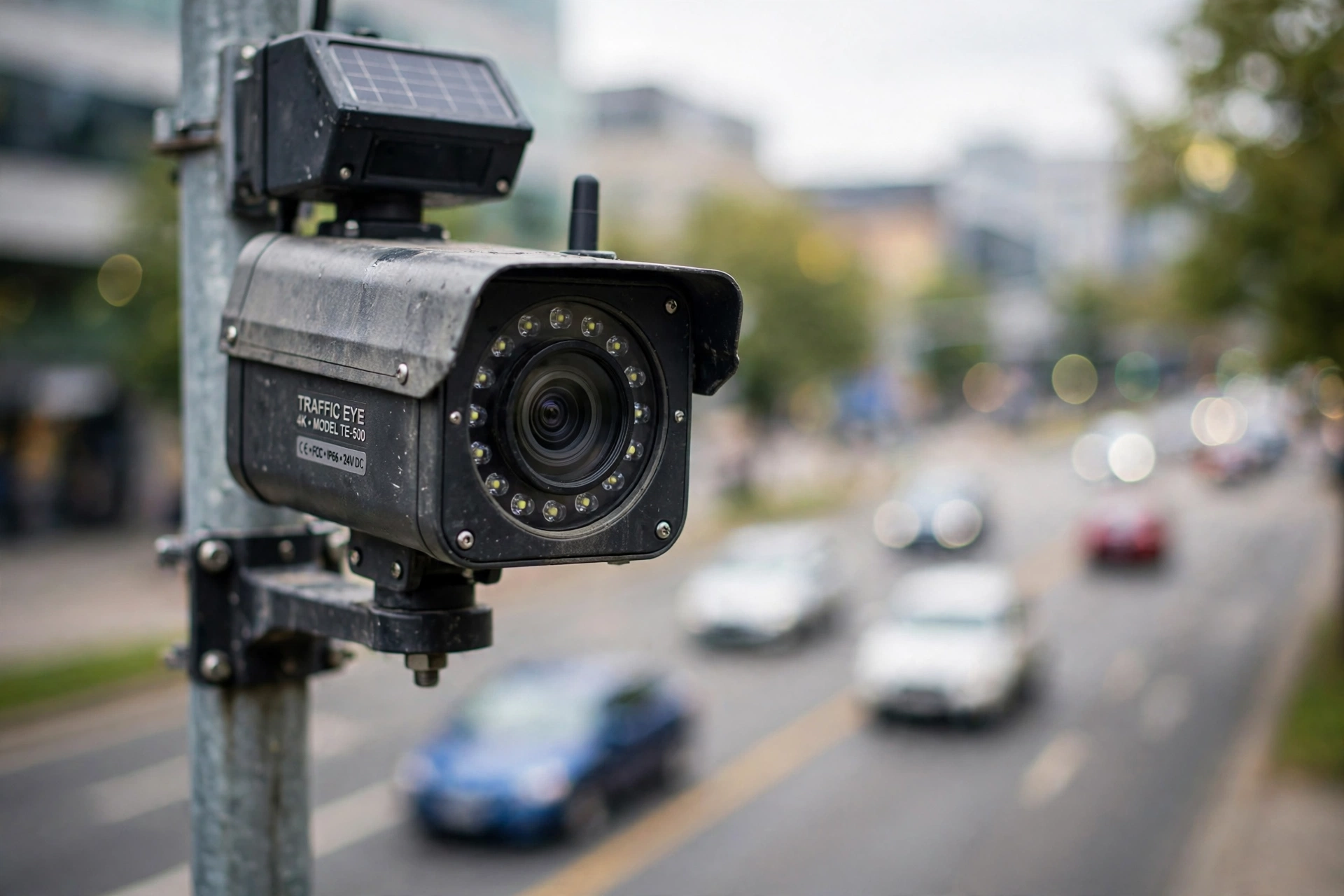
A traffic system is only as good as its data, and modern junctions collect a lot of it. Cameras above junctions count vehicles, spot queues, and notice when a car has stopped where it should not have. Computer vision software turns the video into simple measurements — how many cars, how fast, which lane — without a person watching every feed.
In-road sensors are loops of wire buried in the road that detect passing cars, and they have counted traffic for decades. Roadside radar measures speed and can spot a stopped vehicle at night, while phones and sat-navs share anonymous speed and position data — which is how navigation apps know a road has slowed down before any camera sees it. Buses report their position too, so a late bus can be given a longer green.
How does AI decide when to change a light?
The decisions are usually made by machine learning models trained on past traffic patterns. They can predict how a queue at one junction will affect the next one five minutes later. That prediction is what makes the system useful: it does not just react to the jam in front of it, it tries to stop the jam forming further down the road.
The process runs in a loop, several times a minute: read the latest counts, compare them with what was expected, pick new timings, then read the result and adjust again. Some systems learn by trial and error, keeping the timings that work best — much like recommendation systems learn what to suggest next. Strict safety rules still apply: a light will never skip a pedestrian phase or show green to two directions at once.
What happens when something goes wrong on the road?
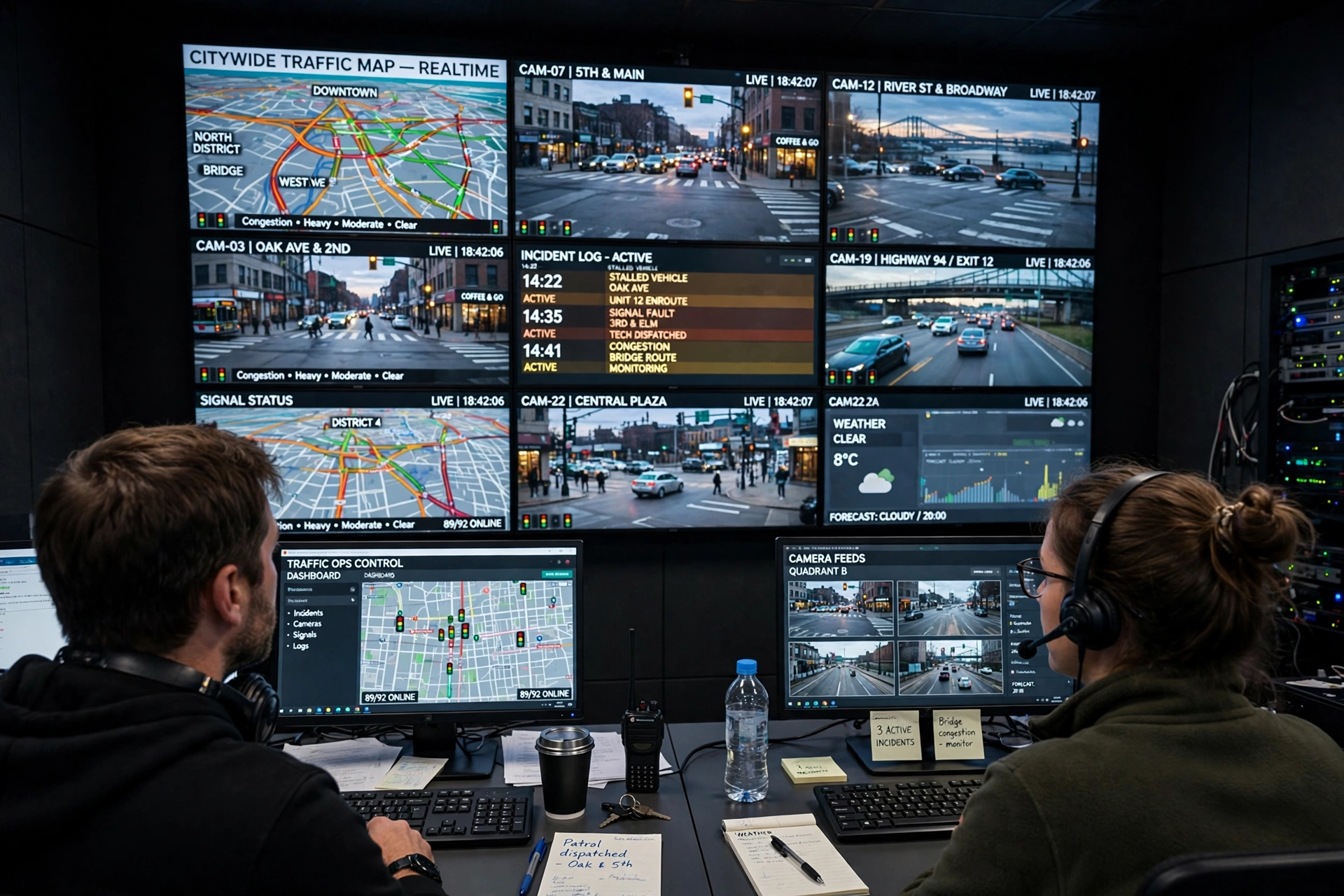
This is where AI earns its keep. A crash or a broken-down lorry changes traffic in seconds, and the first sign is often a camera noticing vehicles have stopped in a lane. The system can flag it to the control room within moments, long before the first phone call comes in.
Once an incident is confirmed, the response is automatic: signals upstream slow the flow in, signs warn drivers to merge early, and an ambulance can be given a green route. It cannot magic the cars away, but it keeps the disruption from spreading and gets help to the scene sooner.
Can AI traffic management really cut congestion?
The honest answer is: it helps, but only up to a point. Adaptive signals move traffic more smoothly than fixed timers, so drivers spend less time waiting at empty junctions and queues clear faster after a rush-hour peak. Variable speed limits can also smooth out the stop-start waves behind phantom jams, where traffic slows for no visible reason.
What it cannot do is create road space that does not exist: if more cars want a road than it can carry, no signalling will fit them all through. That is why planners treat AI traffic management as one tool among several, alongside better public transport and safer walking and cycling routes. A city that only retimes its lights should expect modest gains, not a traffic miracle.
What are the limits and privacy worries?
The biggest worry most people have is the cameras. A camera that counts cars can also see number plates and faces. The usual answer is to design the system so it does not need that detail: video is processed on the spot, turned into counts and speeds, and then discarded. Cities need to be clear about which kind they are running.
Other limits are more technical. Cameras struggle in heavy rain, fog, and low sun. In-road sensors wear out and need digging up to replace. Traffic controls also need solid cybersecurity — the US Department of Transportation’s ITS programme publishes guidance on exactly this, because a compromised signal network is a safety risk. And if the system always favours the busiest road, side streets wait longer, so good systems balance drivers, bus passengers, cyclists, and people on foot.
Frequently Asked Questions
Does AI control every traffic light in a city?
No. Most cities roll it out junction by junction, starting with the busiest corridors. Many lights still run on fixed timers, and AI-controlled junctions fall back to a safe fixed pattern if the system goes offline.
Do AI traffic cameras record drivers?
It depends on the system. Traffic-flow cameras usually count vehicles and measure speed, and many process the video locally and delete it straight away. Enforcement cameras for speeding or red lights are separate, and they do store evidence.
What happens if the AI system goes offline?
Junctions revert to their pre-programmed timings, so traffic keeps moving, just less efficiently. Engineers can run the network manually until the system is back.
Can AI traffic management help buses and emergency vehicles?
Yes — this is one of its clearest wins. The system can hold a green light for a late bus or clear a route for an ambulance, cutting journey times for the vehicles that matter most.
Will AI replace traffic engineers?
No. Engineers design the network, set the safety rules and priorities, and step in when the system gets something wrong. AI handles the second-by-second adjustments; people handle the judgement calls.
Conclusion
AI traffic management is not about handing the roads over to a machine. It is about using live data to make small, constant adjustments that fixed timers cannot — giving green time where it is needed, spotting trouble early, and keeping traffic moving more smoothly. The gains are real but modest, and they depend on good data, honest limits, and systems designed with privacy in mind.
If your city is introducing smart signals, watch how your own commute changes over a few weeks, and report junctions where the timing feels wrong. Engineers tune these systems from real-world feedback, and a driver who notices a light that stays red for an empty road is giving them exactly the data they need.