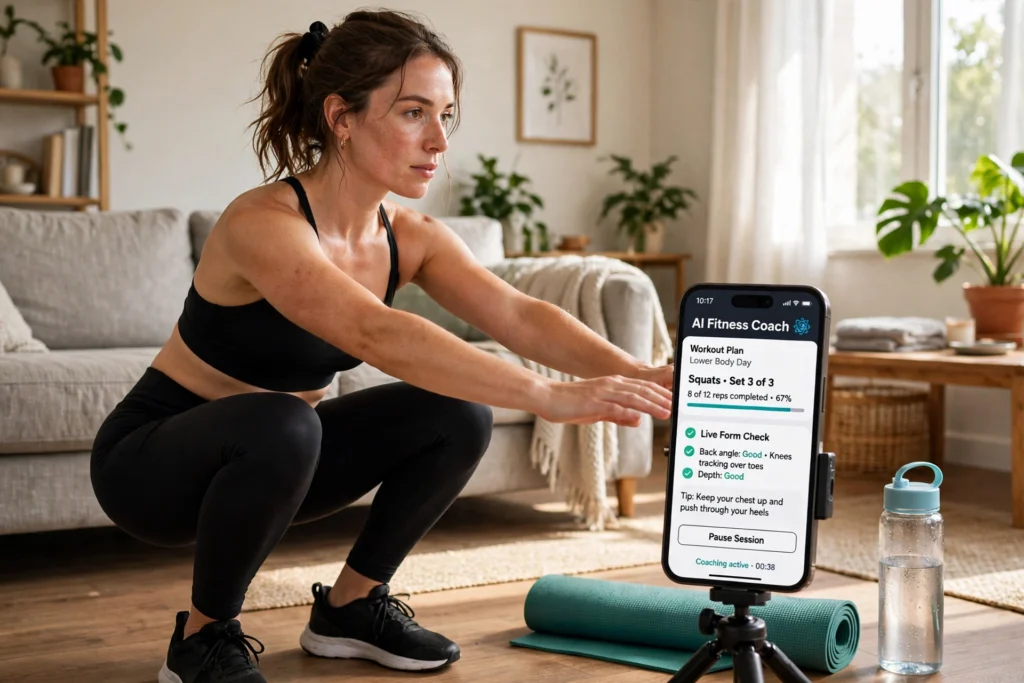
AI help with fitness turns your phone into a personal trainer that never sleeps: it builds workout plans around your goals, watches your form through your camera, and tracks how well you recover between sessions. It is a strong training partner for most people — as long as you know where its advice ends and a human coach begins.
This article is general information about fitness technology, not medical advice. If you have a health condition, an injury, or you are starting exercise after a long break, check with a doctor or a qualified trainer first.
Key Takeaways
- AI fitness apps build workout plans from your goals, your available time, and the equipment you have.
- Camera-based form checks can spot common mistakes, such as knees caving in during a squat, in real time.
- Recovery tracking uses sleep and heart rate to suggest when to push and when to rest.
- AI is good at consistency, but it cannot see pain, fatigue, or an old injury the way a person can.
How does AI build a workout plan for you?
It starts with a few questions. How many days a week can you train? Do you have dumbbells, a gym membership, or just a living-room floor? What are you training for — general fitness, strength, or running? From those answers, artificial intelligence puts together a plan, choosing exercises that match your level and spacing harder and easier days across the week.
The plan then adapts. Finish every set comfortably and the app adds weight or reps next time; struggle through a session and it eases off. This steady adjustment is the heart of good training: progress comes from gradually doing a little more, not from one heroic workout.
It also fits around your life. Miss a session because work ran late? The app reshuffles the week instead of just marking it failed. Only have twenty minutes today? It builds a short session from the exercises that matter most. That flexibility is one reason people stick with AI plans longer than with a fixed programme on a sheet of paper.
How does AI check your exercise form?
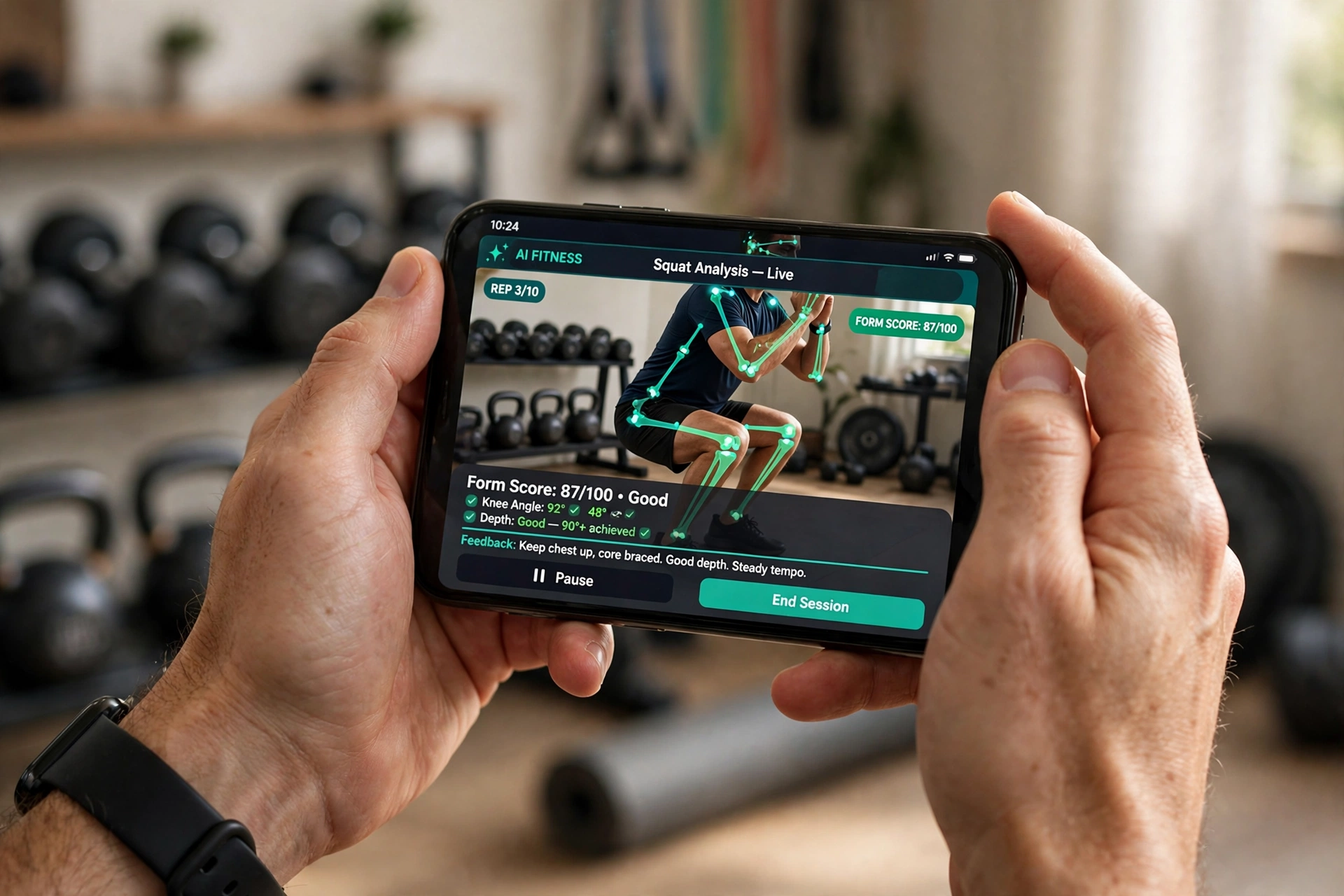
Point your phone camera at yourself, start a squat or a press, and the app watches your joints move. Using computer vision — the same kind of technology that lets a phone recognise a face — it tracks your knees, hips, shoulders, and back, then compares their positions with what good form looks like. When something is off, it tells you straight away: knees drifting inward, back rounding, or not going deep enough. Some apps show the feedback while you move; others give you a score and a short replay after the set.
It is not perfect, though. A phone camera sees you from one angle, and it can be fooled by baggy clothes, poor lighting, or a cluttered room. It also judges shapes, not feelings — it cannot tell that your shoulder aches, or that a movement feels wrong even when it looks right. Treat form feedback as a useful second pair of eyes, not as a medical diagnosis. If something hurts, stop and get advice from a person.
Can AI track your recovery and rest?
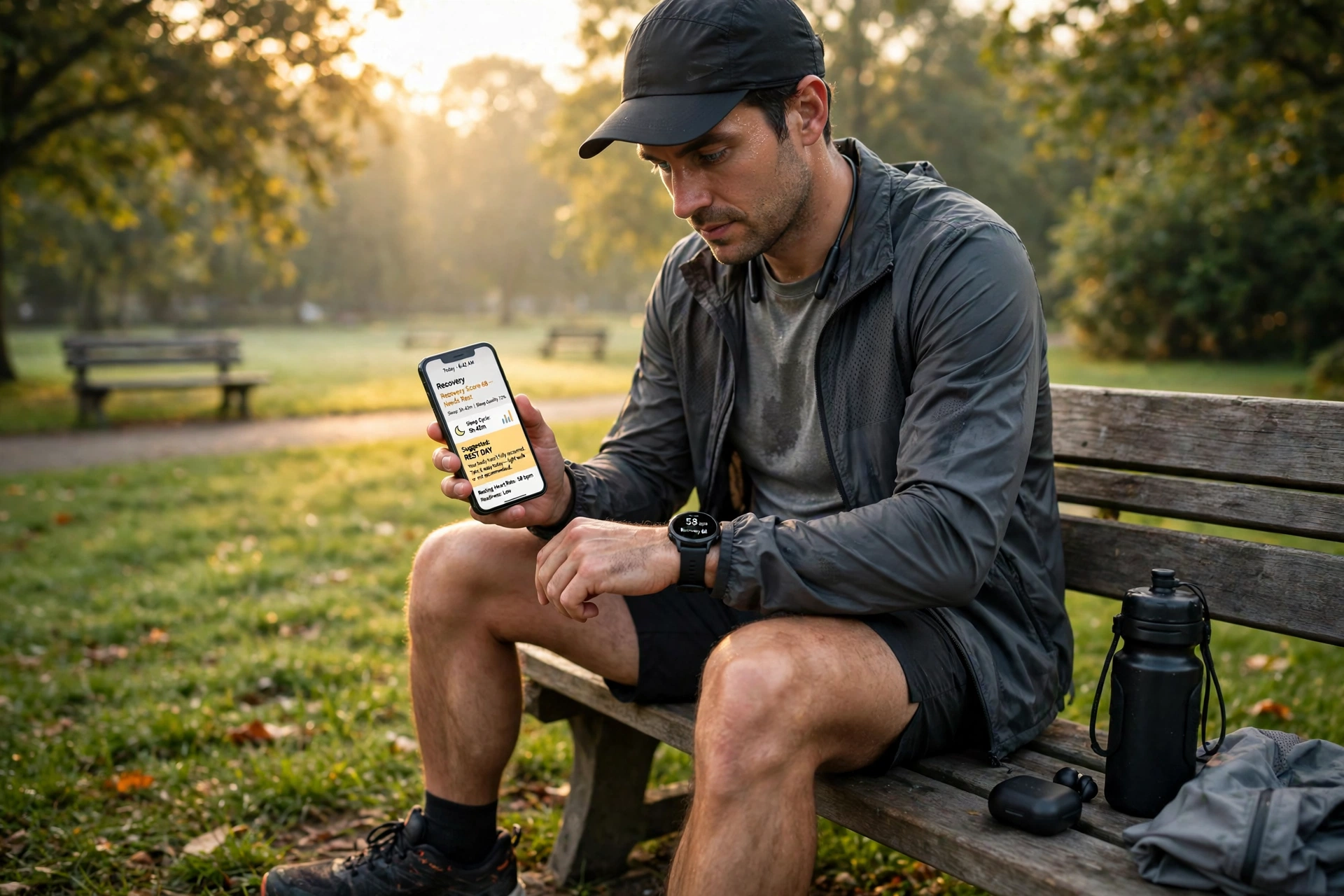
Yes, and for many people this is where AI quietly does its best work. Training is only half the story; the other half is recovery. AI apps pull together data from your fitness tracker — resting heart rate, sleep length and quality, how much you moved yesterday — and turn it into a simple readiness score.
A high score means your body has bounced back and you can train hard; a low score suggests an easier day, a walk, or full rest. Over time, the app learns your patterns. It notices, for example, that your sleep suffers after late evening workouts, or that your resting heart rate climbs when you string together too many hard days in a row.
That pattern-spotting is genuinely useful, because most people are bad at judging their own recovery. We either push through tiredness because the plan says so, or skip sessions we could have handled. An honest readiness score takes some of the guesswork out of that decision — as long as you listen to it. Everyday movement matters too: the World Health Organization’s guidance on physical activity notes that regular movement, not just gym sessions, is what protects long-term health.
Where does AI fitness coaching fall short?
The limits are worth knowing before you rely on an app completely. First, AI cannot see the whole picture. It knows your workouts and your sleep, but not that you spent the weekend moving house, or that your knee has been stiff since Tuesday. Context like that changes what a sensible workout looks like, and only you — or a coach you tell — can supply it.
Second, motivation is personal. Streaks and badges work for some people and leave others cold. An app can remind you to train, but it cannot find your reason for training — keeping up with your kids, finishing a 5K, feeling stronger. The app is a tool for getting there, not the reason itself.
Third, AI coaching is general by design. It works from patterns in large groups of people, so its advice fits the average person well and the unusual person less well. Older adults, people returning from injury, and people with medical conditions often need advice tailored in ways an app cannot safely offer — the point where a human coach or physiotherapist earns their fee.
How to get the most out of an AI fitness app
Start by being honest in the setup questions: your real fitness level, your real schedule, and the equipment you really have. A plan built on wishful thinking will feel either too easy or impossibly hard, and either way you will stop using it.
Log honestly, too. Skipped sessions, bad sleep, and sore muscles are data, not failures — the app can only adapt to what it knows. The same steady habit-building that works for study works here as well, as we covered in our look at how AI help with studying builds lasting routines. And pair the app with activity you actually enjoy: a weekend walk, a game of badminton, or a VR fitness session that makes exercise feel like play. The plan keeps you consistent; the fun keeps you coming back.
Frequently Asked Questions
Can AI replace a personal trainer?
For many beginners, an AI coach covers the basics well: a structured plan, form feedback, and progress tracking. A human trainer is still better for complex goals, injury recovery, and the accountability of having someone waiting for you at the gym.
Is AI form checking accurate?
It is good at spotting common, visible mistakes such as knees caving in or a rounded back, especially with a clear camera view. It is less reliable in poor light, from a bad angle, or for exercises where the important detail is a feeling rather than a shape.
How much does AI fitness coaching cost?
Many apps offer a free tier with basic plans and tracking, with paid versions adding personalised coaching and advanced recovery scores. Try the free version for two or three weeks first; if you are still training regularly, the paid features are more likely to be worth it.
Do I need a smartwatch or fitness tracker?
Not necessarily — a phone alone can run most AI fitness apps — but a tracker adds the sleep and heart-rate data that makes recovery scores meaningful. If you already own one, connect it; if you do not, start with the phone and see whether you miss the extra data.
Can AI help me lose weight?
It can help with the exercise and habit side: regular workouts, daily movement, and consistent tracking all support weight loss. But weight is mostly about food, and no workout app can out-train a diet that does not fit your goal. For a general overview of what fitness actually covers, see Wikipedia’s page on physical fitness.
Conclusion
AI help with fitness works best as a steady, always-available training partner: it plans your workouts, checks your form, watches your recovery, and keeps you consistent. Its limits are real — it cannot feel pain, understand your week, or replace a human coach when things get complicated — but for most people getting started or getting back into shape, it removes the two biggest obstacles: not knowing what to do next, and doing it alone. If you want to try it, pick one app, answer the setup questions honestly, and commit to three short sessions this week. Then pay attention to how you feel after each one — that feedback, yours and the app’s together, is what turns a plan into progress.