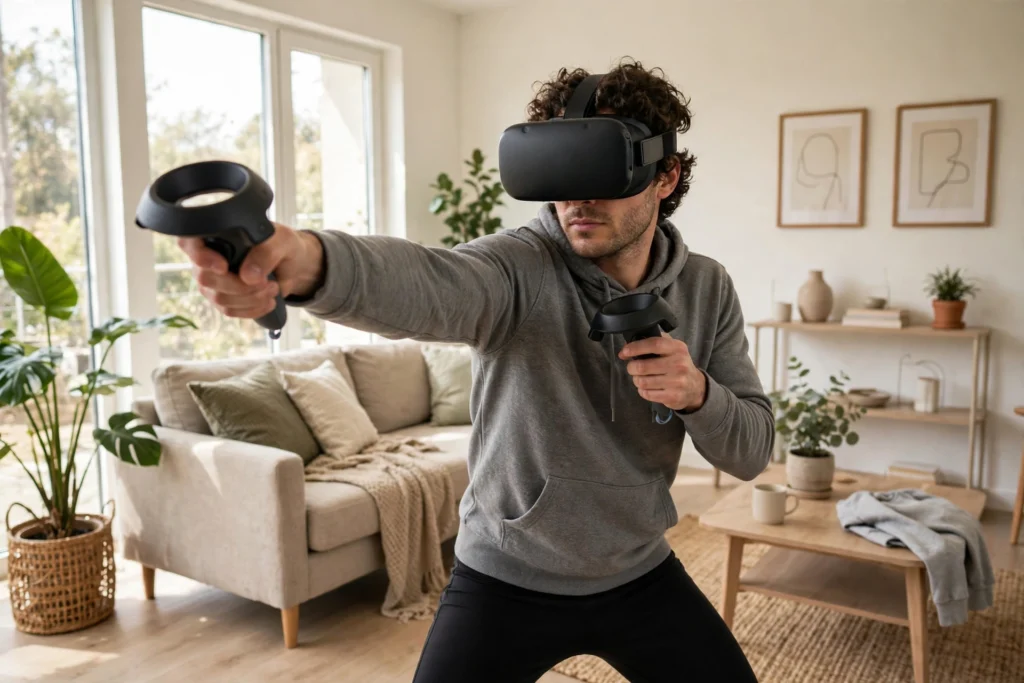
VR fitness turns a headset and two controllers into a workout space. You punch targets, dance to a beat, or pedal through a virtual landscape, while the headset tracks your head and hands and turns those movements into a game or class. It is still exercise, just one you actually want to repeat.
This article is general information only, not medical advice. If you have a health condition, an injury, or you are unsure whether a new exercise routine suits you, check with a clinician before you start.
Key Takeaways
- VR fitness uses headset and controller tracking to turn real movements — punching, squatting, stepping, reaching — into gameplay or guided workouts.
- It can raise your heart rate and work your coordination, balance, and legs, though it does not replace heavy strength training on its own.
- A clear play space, a charged headset, and short first sessions matter more than fancy equipment.
- Motion sickness, sore muscles, and bumping into furniture are the most common problems, and all three are largely avoidable.
- The best VR workout is the one you will repeat, so pick an activity you enjoy rather than the hardest one on the store page.
What exactly counts as VR fitness?
VR fitness is any workout done while wearing a virtual reality headset, where your physical movement drives what happens on screen. That covers a lot of ground. Rhythm games ask you to slash blocks or punch targets in time with music. Boxing apps have you ducking, weaving, and throwing combinations at a virtual opponent. Dance and cardio apps guide you through routines. Cycling apps pair the headset with a stationary bike, so pedalling moves you through a virtual course.
What they share is a simple loop: you move, the headset notices, the software reacts, and you move again. That loop is why a session can feel more like playing than training, even when you are breathing hard by the end of it. It is also why VR fitness suits people who find treadmills dull but still want to move — the distraction is part of the point.
How does the headset track your workout?
A modern standalone headset, the kind explained in our guide to How Do VR Headsets Work?, watches the room with small cameras on its front. Those cameras track your controllers and, on some headsets, your bare hands. When you punch, the controller’s position and speed are read many times a second, so the software knows whether you hit a target squarely or just grazed it. When you squat or step sideways, the headset’s position changes too, and the game registers the movement.
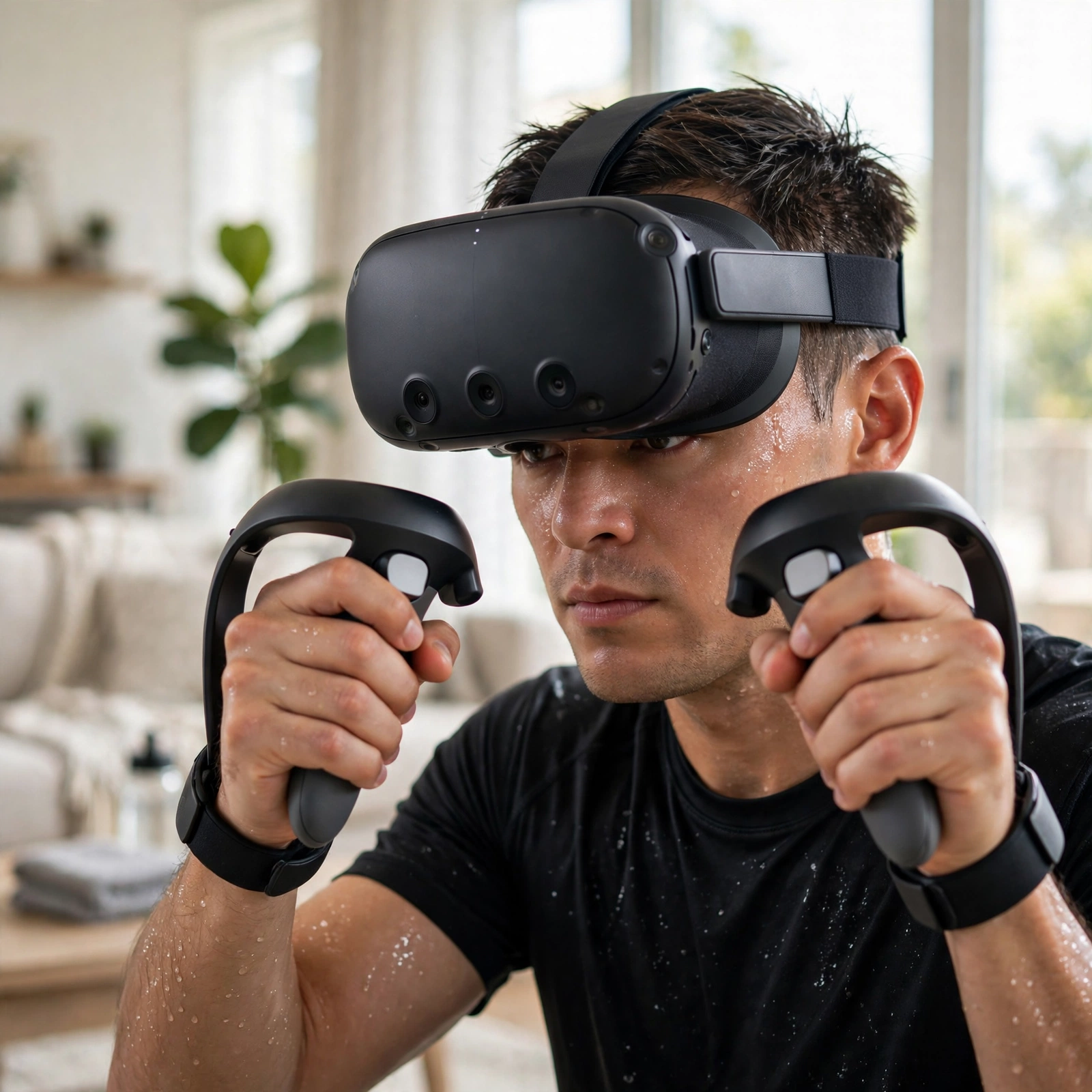
Some apps add heart-rate data from a watch or chest strap, and some estimate calories from how much and how fast you move. Those estimates are rough guides, not laboratory measurements, so treat them as a way to compare your own sessions rather than as exact figures. What the tracking does reliably is keep score: streaks, targets hit, rounds completed, and personal bests. That feedback is a big reason people come back the next day.
What kinds of workouts can you do in VR?
Boxing and rhythm games are the most popular starting points because they need little learning and get your heart rate up quickly. A ten-minute boxing session with constant punching, ducking, and footwork is a genuine cardio workout, and your shoulders will tell you so the next morning.
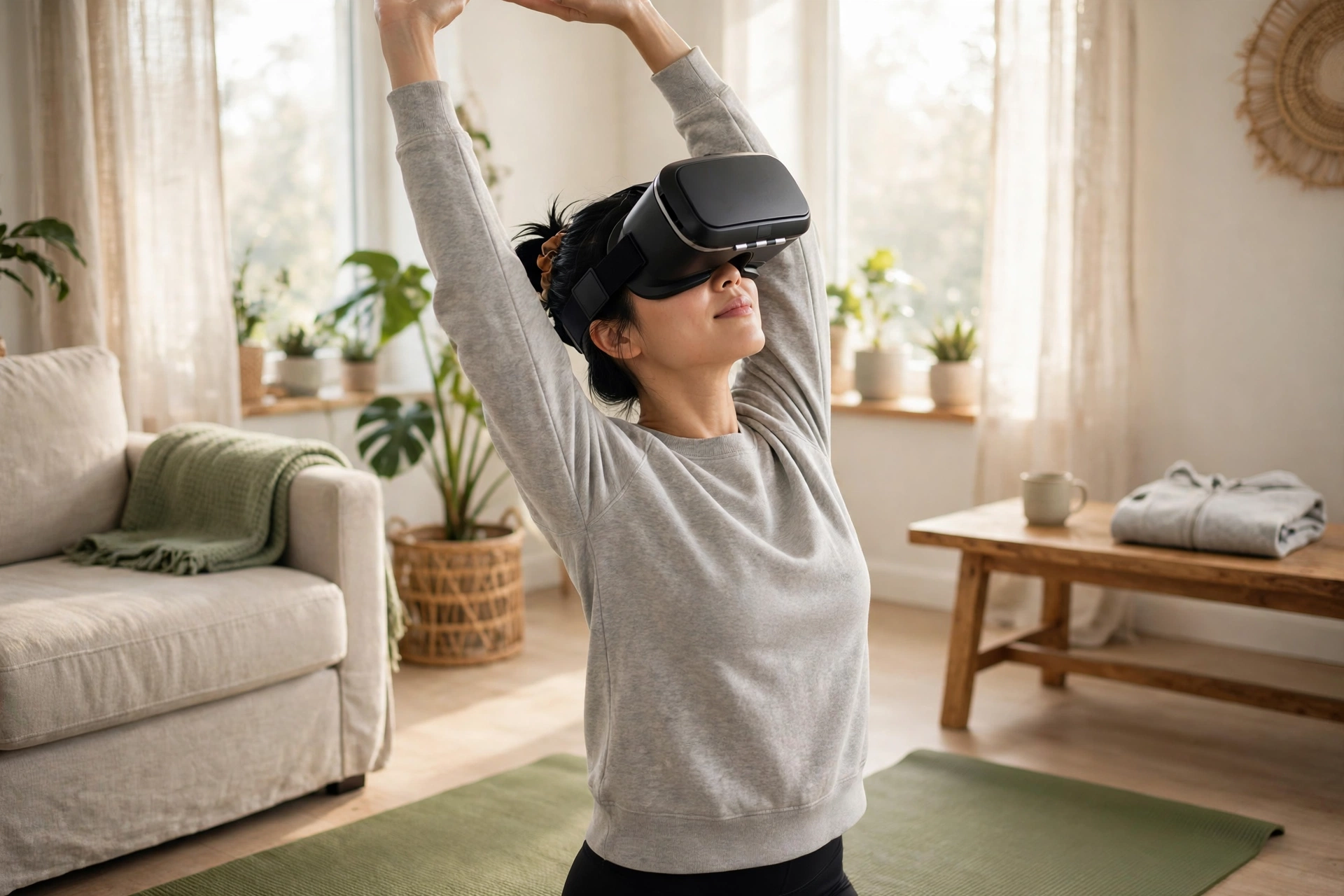
Dance and aerobics apps lean more on coordination and leg work, with steps, squats, and side-to-side movement set to music. Cycling apps suit anyone who prefers seated exercise or wants a lower-impact option. There are also stretching, yoga-style, and balance sessions, which trade intensity for flexibility and control — a useful counterweight if your main sessions are all high-energy.
For a sense of how the controls feel in practice, our guide to How Do VR Controllers Work? covers buttons, tracking, and vibration feedback. And if you like company while you train, multiplayer sessions and virtual classes connect to the same social side of VR covered in What Is Social VR?.
Is VR fitness a real workout?
Short answer: yes, for cardio, coordination, and general movement — with limits. Punching, dancing, and stepping routines raise your heart rate, work your legs and core, and improve balance and reaction time. A small controlled study of VR cycling in college students found improvements in motivation, mood, and cardiovascular fitness after four weeks of regular sessions, which lines up with what many users report: they exercise longer because they enjoy it more.
That said, VR fitness is not a complete gym replacement. Most apps cannot load your muscles the way weights or resistance bands can, so strength gains will be modest unless you add other training. It is best thought of as one strong part of an active week: great for cardio and movement, better still alongside walking, stretching, or a couple of strength sessions.
How do you set up a safe space for VR workouts?
Clear the floor before you put the headset on. Move coffee tables, rugs that slide, and anything at shin height out of the way, and set the headset’s play boundary — the virtual fence it draws around your space — honestly, not wider than the clear area you actually have. Wear shoes with grip if you are doing fast footwork, and keep a towel and water bottle just outside the boundary so you can grab them without fumbling blind.
Start short. Ten to fifteen minutes is plenty for a first session, especially for boxing or dance apps that use muscles in new ways. Build up gradually, the way you would with any new sport, and stop if you feel dizzy, nauseous, or unusually sore. Our guide to How Does VR Motion Sickness Happen? explains why that queasy feeling happens and what helps, including shorter sessions and steadier virtual movement.
What problems should you watch out for?
Motion sickness tops the list, particularly in apps where the virtual world moves while your body stays still. If it hits, take the headset off, rest, and try a gentler app next time. Sore shoulders and calves are common after the first few sessions — a sign you worked muscles you do not normally use, not a sign something is broken, though sharp or lasting pain is a reason to stop and get advice.
Overheating is another quiet problem. A headset traps warmth, and a hard workout adds sweat, which can fog the lenses. Wipe them with a soft cloth, take breaks, and keep the room cool. Finally, watch your surroundings: the most common VR fitness injury is not dramatic, it is a bruised shin from a table you forgot was there. A tidy room is safety equipment.
How do you pick a VR fitness app that suits you?
Start with the movement you already like. If you enjoy music, try a rhythm or dance app. If you want something competitive, boxing or racket games may hold your attention longer. If impact on your knees is a concern, look for seated cycling or low-impact routines, and read the app’s description for intensity levels before buying.
Try free trials or demos where they exist, and check whether an app tracks progress over weeks rather than just scoring single sessions. Long-term streaks, difficulty levels that grow with you, and classes that vary from day to day are what turn a novelty into a habit. And remember the headset itself matters less than the routine: a mid-range standalone headset and one app you love will beat an expensive setup you never switch on.
FAQs
Do I need a powerful PC for VR fitness?
Not necessarily. Most popular fitness apps run on standalone headsets that need no PC at all. A PC-connected headset can offer fancier graphics, but for boxing, dance, and cycling workouts, a standalone headset is usually enough.
How many calories does VR fitness burn?
It varies a lot with the app and your effort, and in-headset estimates are approximate. Vigorous boxing or dance sessions can feel comparable to a brisk cardio workout, while gentle stretching sessions burn far less. Use the numbers to track your own trend, not as a precise count.
Can VR fitness help with weight loss?
It can help as part of an overall active lifestyle, since regular cardio sessions burn energy and build a habit. On its own, though, no single workout guarantees weight change — food, sleep, and overall activity matter too.
Is VR fitness safe for beginners?
Generally yes, if you start with short, low-intensity sessions, clear your space, and stop when you feel unwell. People with balance problems, epilepsy, or a condition affected by vigorous exercise should get medical advice first, and everyone should follow the headset maker’s safety guidance.
Can I do VR fitness in a small flat?
Yes, with the right app. Many routines need only enough room to stand, step, and punch without hitting anything — roughly an arm’s length in each direction. Seated cycling and stretching apps need even less, so check the app’s space requirements before you buy.
Conclusion
VR fitness works because it hides exercise inside something enjoyable: a headset tracks your real movements, software turns them into a game or a class, and you end up moving more than you planned. It is strongest for cardio, coordination, and building a habit you will stick with, and weakest as a sole strength programme. Clear a safe space, start with short sessions, pick an activity you genuinely enjoy, and add other movement through the week for balance. Your next step is simple: try one ten-minute session in an app that matches how you like to move, and see whether you want to do it again tomorrow.