
Edge AI is artificial intelligence that runs directly on a device — a phone, camera, watch, or sensor — instead of sending every request to a distant cloud server first. The model works where the data is created, so apps can respond faster and keep working when the connection drops.
Key Takeaways
- Edge AI runs AI models on local devices, not only in the cloud.
- Its main advantages are faster responses, less data sent away, and better offline use.
- It works best for well-defined jobs, such as recognising a face, spotting a sound, or reading a sensor.
- Smaller, optimised models make edge AI possible on phones, cameras, and wearables.
- Edge AI does not replace the cloud; the two often work as a team.
How does edge AI work?
A large model is usually trained in a data centre, then a smaller version is sent to a device. That device uses its own processor — often a specialised AI chip — to run the model on new data. This local step is called inference: using a trained model, rather than training one.
Take a phone camera: an on-device model can recognise faces, adjust focus, or improve a photo in a fraction of a second, without uploading every frame. A smart speaker can listen for a wake word locally, and only send audio onward once it hears it.
Why run AI on the device instead of in the cloud?
Speed is the clearest reason. Every trip to a server adds delay, which barely matters for a photo filter but matters a lot for a car spotting an obstacle or a live translation tool. Running the model locally cuts out the round trip.
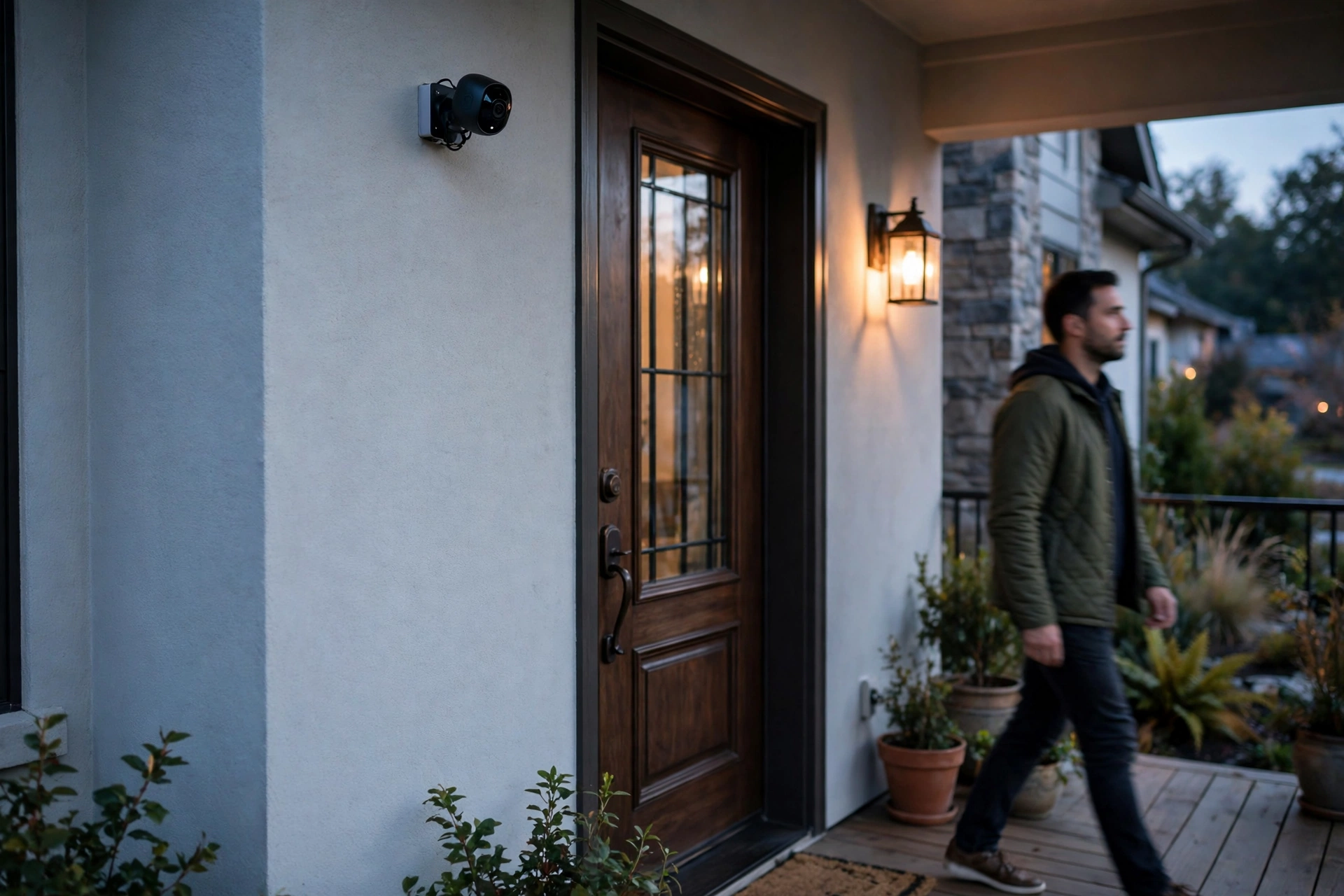
Privacy is another reason. If a camera can tell the difference between a person, a pet, and a passing car on the device itself, it may not need to send hours of video to a server. That does not make a device private by default — settings, storage, and the maker’s policies still matter — but keeping more processing local can reduce how much raw data leaves your home or workplace.
Reliability matters too. A phone in a rural area, a sensor in a warehouse with patchy Wi-Fi, or a wearable on a run cannot always count on a strong connection. An on-device model keeps basic features working, and it can sync results later, once the connection returns.
Where do you already meet edge AI?
You probably use edge AI more often than you realise. Face unlock, portrait-mode photos, live captions, and on-device voice typing all lean on models that run on your phone. They feel instant precisely because they do not wait for a server for every step.
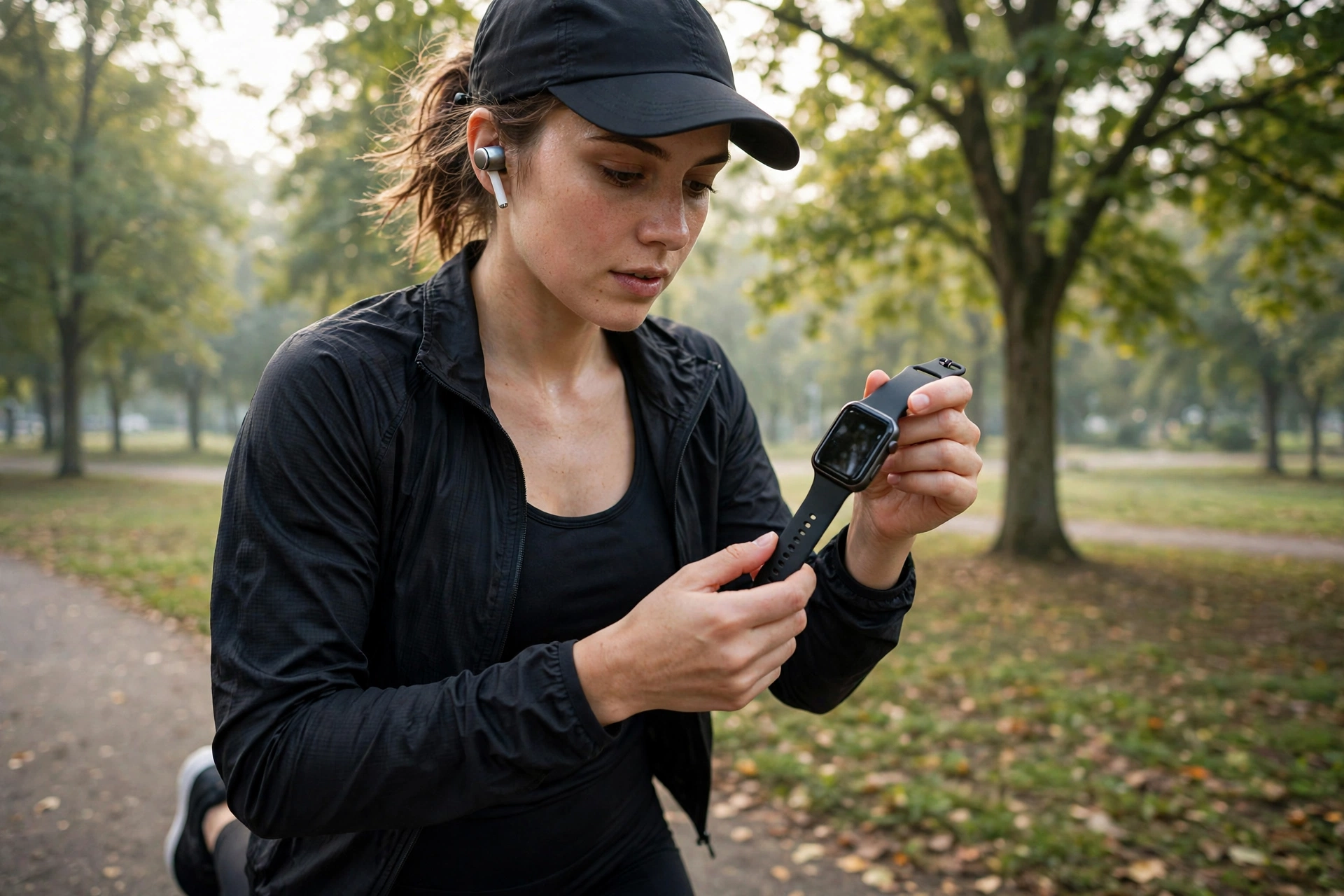
A smartwatch can track steps, estimate heart-rate patterns, and spot a fall using sensor data processed on the watch. It may later sync a summary to your phone, but the moment-to-moment sensing happens on your wrist.
At home, a video doorbell may recognise a person at the door and send a useful alert, rather than a generic “something moved” message. In a factory, a small camera can check products on a line without sending every image to a central system. The cloud still handles storage, long-term analysis, and model updates.
How does a model get small enough for the edge?
A model built for a data centre is often too large and power-hungry for a phone or sensor, so developers shrink it. Quantization uses simpler numbers to represent the model, making it smaller and faster. Pruning removes parts that contribute little to its answers. Distillation lets a large “teacher” model help train a smaller “student” model that keeps much of the skill in a lighter package.
Hardware helps too. Many modern phones include a neural processing unit, a chip built for the kind of maths AI models use, so a device can run a model efficiently without draining the battery as quickly. There is always a trade-off: a smaller model may be a little less accurate, or handle fewer tasks. Good edge design picks the right balance for the job, within the device’s limits for speed, memory, and power.
What are the limits of edge AI?
Edge AI is not right for everything. A tiny sensor cannot run the largest language models, and it cannot hold a huge library of knowledge. Jobs that need up-to-date information from across the web, complex reasoning over long documents, or the very latest model version will usually still need the cloud.
Updates are another challenge. A cloud model can be improved in one place and everyone benefits at once, while an edge model must be updated on each device. If updates lag, different devices may run different versions and give slightly different answers.
Security needs attention as well. A device in the field is easier to lose or leave unpatched than a server in a data centre, so makers need a plan for secure updates and safe storage. Edge AI can also still make mistakes — a camera can misread a scene in bad light, or a voice model can misunderstand an accent — so important medical, safety, or financial decisions should still involve a human check.
Frequently Asked Questions
What is edge AI in simple terms?
Edge AI is AI that runs on the device itself, such as a phone, camera, or sensor, instead of sending all data to a cloud server. It is called “edge” because the device sits at the edge of the network, close to where data is created.
Is edge AI the same as edge computing?
Not quite. Edge computing is the broader idea of processing data near its source, rather than in a distant data centre. Edge AI is a specific use of it: running AI models on those local devices.
Does edge AI work without the internet?
Often, yes, for tasks built into the device. A phone can still recognise a face or transcribe speech offline if those models are stored locally. Features needing live web data, account syncing, or a brand-new model will still need a connection.
Is edge AI more private than cloud AI?
It can be, because less raw data may need to leave the device. But privacy still depends on the product: what it stores, uploads, keeps, and what its settings allow. Check those details rather than assuming a device is private just because it uses edge AI.
Will edge AI replace cloud AI?
No, and it is not meant to. Edge AI suits fast, local, repeated tasks, while cloud AI handles training, large-scale analysis, and jobs needing up-to-date information. Most modern systems combine the two.
Conclusion
Edge AI is already in your phone, watch, and door camera. By moving some AI work onto the device, it can respond faster, keep working when the connection falters, and send less raw data away. Its limits are real, but so is its usefulness.
A practical next step: try one offline feature on your phone this week, check the privacy settings on one smart device, and ask what data it sends and why. That small check will tell you more than any marketing label.
Further Reading
- What Is Artificial Intelligence? The Complete Guide
- What Is Machine Learning? A Beginner-Friendly Guide to How Machines Learn from Data
- What Is Deep Learning? How Neural Networks Learn from Data
- What Is Quantization? How AI Models Get Smaller and Faster
- IBM: What Is Edge AI?
- IBM: Edge AI vs. Cloud AI