Disclaimer: This article is for general information only and is not medical advice. Always talk to a qualified healthcare professional about personal health questions or treatment decisions.
Artificial intelligence is being used in healthcare to help read medical scans, estimate patient risk, document clinical notes, and speed up research. It can surface patterns humans might miss and reduce paperwork — but it cannot replace clinical judgment, and questions about accuracy, fairness, privacy, and regulation are still being worked through.
Key Takeaways
- AI is already at work in imaging, risk prediction, documentation, and research — usually as an assistant to clinicians, not a replacement for them.
- Potential benefits include faster workflows, earlier warning signs, and wider access to specialist-level analysis.
- Real limits include uneven accuracy, biased training data, privacy concerns, and regulations that are still catching up.
- The safest way to think about medical AI: a second opinion to discuss with a clinician, not a final answer.
How Is AI Being Used in Healthcare Today?
Most healthcare AI works behind the scenes, inside tools that clinicians already use. Rather than one big breakthrough, the story is a collection of practical applications — each with its own evidence, limits, and oversight. The main areas of use are medical imaging, risk prediction, clinical documentation, and research.
Reading Medical Images
One of the most established uses of artificial intelligence in medicine is image analysis. Machine learning models trained on large sets of labeled scans can highlight possible abnormalities in X-rays, mammograms, CT scans, and retinal photos — helping radiologists prioritize urgent cases and double-check subtle findings.
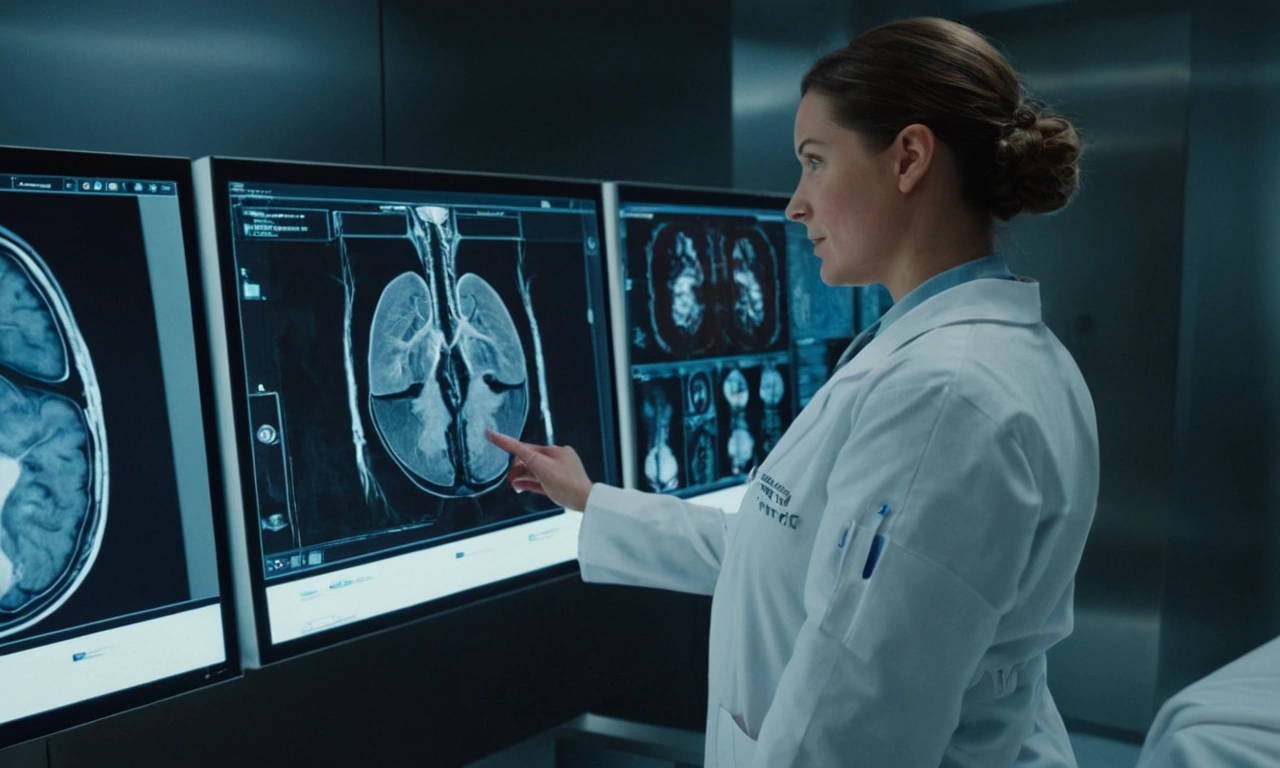
These systems are typically approved as decision-support tools: they flag areas of interest, and a qualified specialist makes the final call. Accuracy varies by task and dataset, which is why independent validation matters more than headline claims.
Predicting Risk and Supporting Clinical Decisions
Hospitals hold enormous amounts of data — vital signs, lab results, medication histories. AI models can sift through these records to estimate which patients may be at higher risk of deterioration, readmission, or complications, giving care teams a chance to intervene earlier. Used well, these alerts act like an extra set of eyes on the chart.
The catch is that predictions are probabilities, not certainties. A model trained mostly on one population may perform worse on another, so clinicians are advised to treat risk scores as one input among many rather than a verdict.
Documentation and Administrative Work
A large share of clinicians’ time goes to paperwork: visit notes, discharge summaries, billing codes. Speech recognition and language models are increasingly used to draft clinical notes from conversations, summarize records, and pre-fill forms. This kind of intelligent automation can give clinicians more time with patients — provided a human reviews every word before it enters the record.

Research, Drug Discovery, and Clinical Trials
In research, AI helps screen millions of molecular structures for promising drug candidates, match patients to clinical trials, and analyze trial data faster. It can also summarize the ever-growing medical literature for researchers. These uses are accelerating the early, data-heavy stages of science — though every candidate still has to pass the same rigorous clinical testing as before.
Emerging tools are also reaching training and therapy: mixed reality simulations let students practice procedures, while virtual reality therapy programs are being explored for rehabilitation and mental health support under professional supervision.
What Are the Benefits of AI in Healthcare?
- Speed: Scans can be triaged faster, urgent cases flagged sooner, and documentation finished in less time.
- Pattern recognition at scale: AI can compare a single case against vast collections of prior cases, surfacing correlations no individual could spot.
- Access: Specialist-level image analysis could reach clinics that have no specialist on staff, narrowing geographic gaps in care.
- Consistency: A model does not get tired at the end of a long shift — though its errors are different from human ones, which is why oversight stays essential.
What Are the Limits and Risks?
- Accuracy varies: Performance on one dataset does not guarantee performance on another. Tools need testing in real clinical settings, not just in the lab.
- Bias: If training data underrepresents certain groups, the model may serve those groups worse — a serious concern in medicine.
- Privacy: Health data is among the most sensitive data there is. Strong safeguards, clear consent, and reputable providers are non-negotiable.
- Opacity: Some models cannot easily explain their reasoning, which makes it hard for clinicians to interrogate a recommendation.
- Evolving regulation: Oversight frameworks are still developing. In the US, the FDA’s list of AI-enabled medical devices shows which products have been reviewed — a useful reality check against marketing claims.
- Over-reliance: If clinicians or patients defer too readily to automated suggestions, important human judgment can erode over time.
Global health authorities, including the World Health Organization, continue to publish guidance on using AI in health responsibly — a good reminder that this field is still writing its rulebook.
Frequently Asked Questions
Can AI diagnose me better than a doctor?
No. AI can assist with analysis, but a diagnosis requires a qualified clinician who knows your history, can examine you, and takes responsibility for the decision. Treat AI health tools as starting points for conversation, not conclusions.
Is my health data safe when AI tools are involved?
It depends on the tool. Use services from reputable providers, read their privacy policies, and avoid typing sensitive personal health details into general-purpose chatbots that are not designed for medical use.
Will AI replace doctors and nurses?
Not in any foreseeable scenario. The physical exam, the patient relationship, and accountability for decisions remain human. AI is best understood as a set of instruments that skilled clinicians may choose to use.
Are AI medical devices regulated?
In the United States, many AI-enabled medical devices go through FDA review, and the agency publishes a public list of authorized products. Other countries have their own frameworks, all still evolving.
How should I evaluate a health claim made by an AI chatbot?
Ask where the information comes from, check it against reputable sources such as national health agencies, and discuss it with a clinician before acting on it — especially for anything involving symptoms, medication, or treatment.
Conclusion: A Practical Next Step
AI in healthcare is real and growing: it reads scans, flags risks, trims paperwork, and accelerates research. Its benefits are genuine, and so are its limits — accuracy that varies, data that can be biased, privacy that must be protected, and rules that are still being written.
A practical next step: the next time you encounter an AI health tool or claim, run it through three questions — who built it, what evidence supports it, and has it been independently reviewed? Write down the answers and bring them to your next appointment. Staying curious and keeping a qualified professional in the loop is the best way to benefit from medical AI without being misled by it.