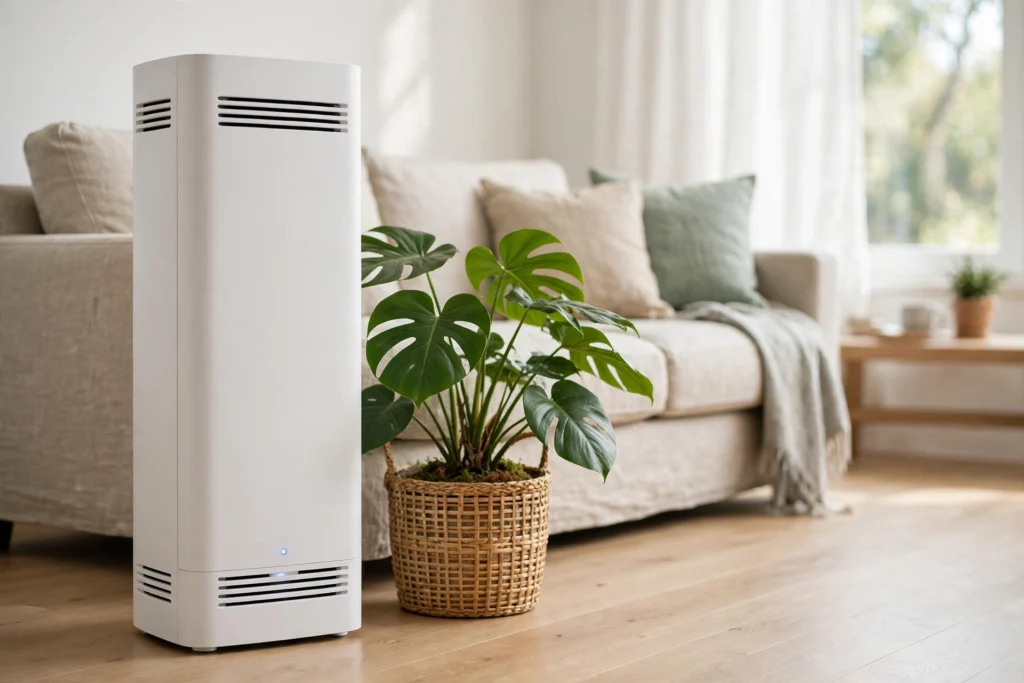
Air purifiers work by pulling room air through filters that trap dust, pollen, pet dander, and smoke, then blowing the cleaner air back into the room. A fan sets the pace, sensors watch the air quality, and the filters do the actual catching — so the whole device is really a fan, a filter, and a bit of measuring kit working together.
Key Takeaways
- An air purifier is a fan plus filters: dirty air goes in, trapped particles stay in the filter, cleaner air comes out.
- A HEPA filter is the workhorse, rated to capture at least 99.97% of particles 0.3 microns across.
- Sensors measure tiny particles in the air and tell the fan when to speed up or slow down.
- Purifiers help with particles and some smells, but they don’t replace fresh air or remove carbon dioxide.
- Size matters more than brand.
What sits inside an air purifier?
Open one up and you’ll find the same few parts in nearly every model. First there’s a pre-filter, usually a fine mesh screen, which catches the big stuff — hair, lint, and visible dust — before it can clog the finer layers behind it. You can often wash this one, which is why makers tell you to rinse it every few weeks.
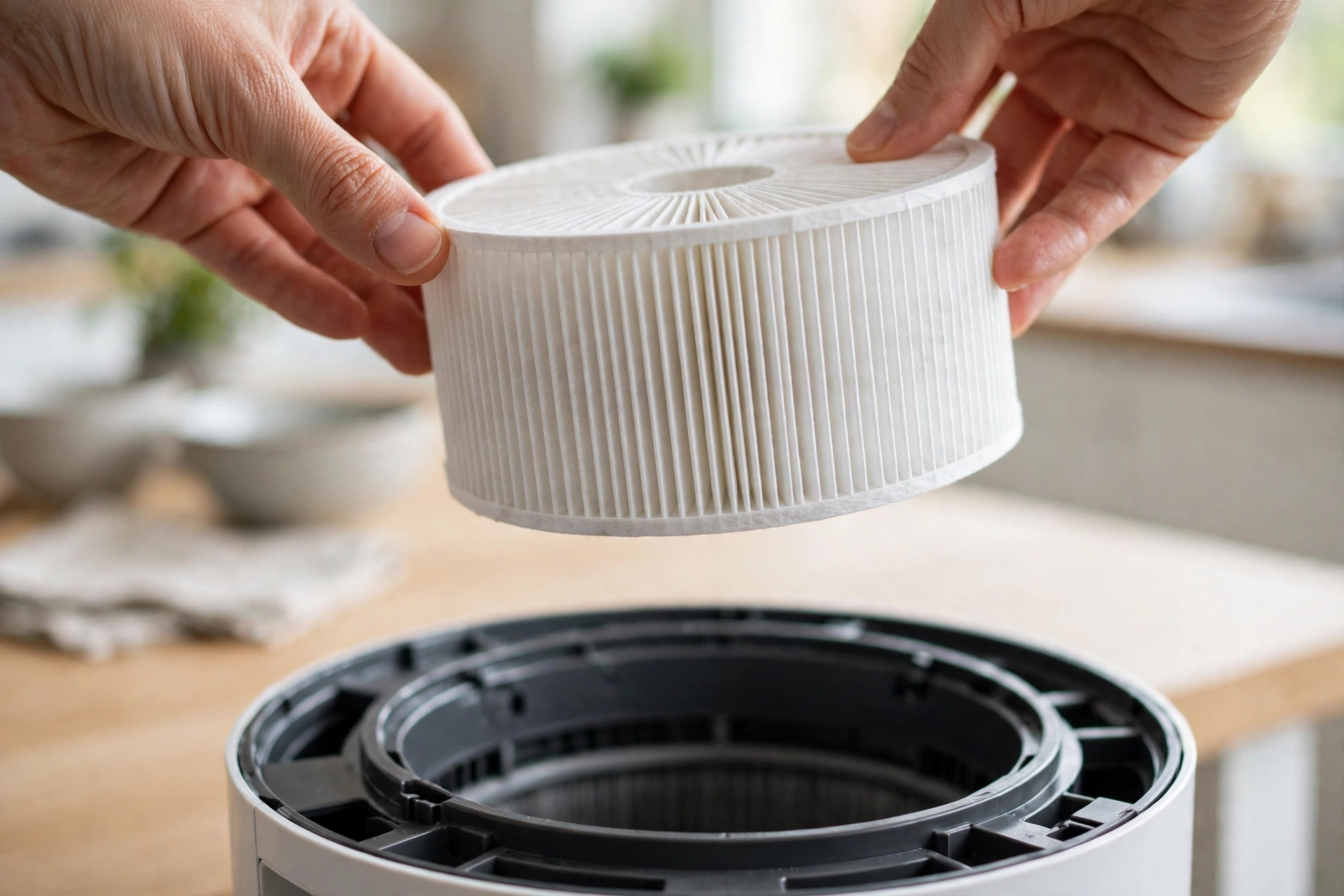
Behind it sits the main filter, and in most home purifiers that’s a HEPA filter. HEPA stands for high-efficiency particulate air, and the material looks like tightly pleated paper or fibreglass. Air is forced through those pleats, and particles get caught in the fibres as they pass.
Many purifiers add a layer of activated carbon as well. Carbon is full of tiny pores that trap gases and smells on their surface — cooking odours and paint fumes, for example. The catch is that carbon fills up, so once it’s saturated it stops helping until you replace it. Then there’s the fan and motor, which pull air in through the filters and push it out again.
How do the filters actually catch particles?
A purifier works by cycling the same room air through itself again and again. Each pass removes a share of what’s floating about, so the air gets steadily cleaner while the machine runs — which is why running it for an hour or two makes a real difference, and why switching it off lets particle levels climb back up as dust settles and outside air leaks in.
That cycling is also why room size matters. Makers rate purifiers with a figure called CADR, or clean air delivery rate — how much clean air the machine pushes out each minute. Match the rating to the room, or buy slightly above it.
How do the sensors and smart controls work?
The sensor is the purifier’s eyes. A laser particle sensor draws in a small sample of air, and each particle that crosses the beam scatters a flash of light. The sensor counts those flashes and reports a PM2.5 reading — the concentration of particles smaller than 2.5 microns.
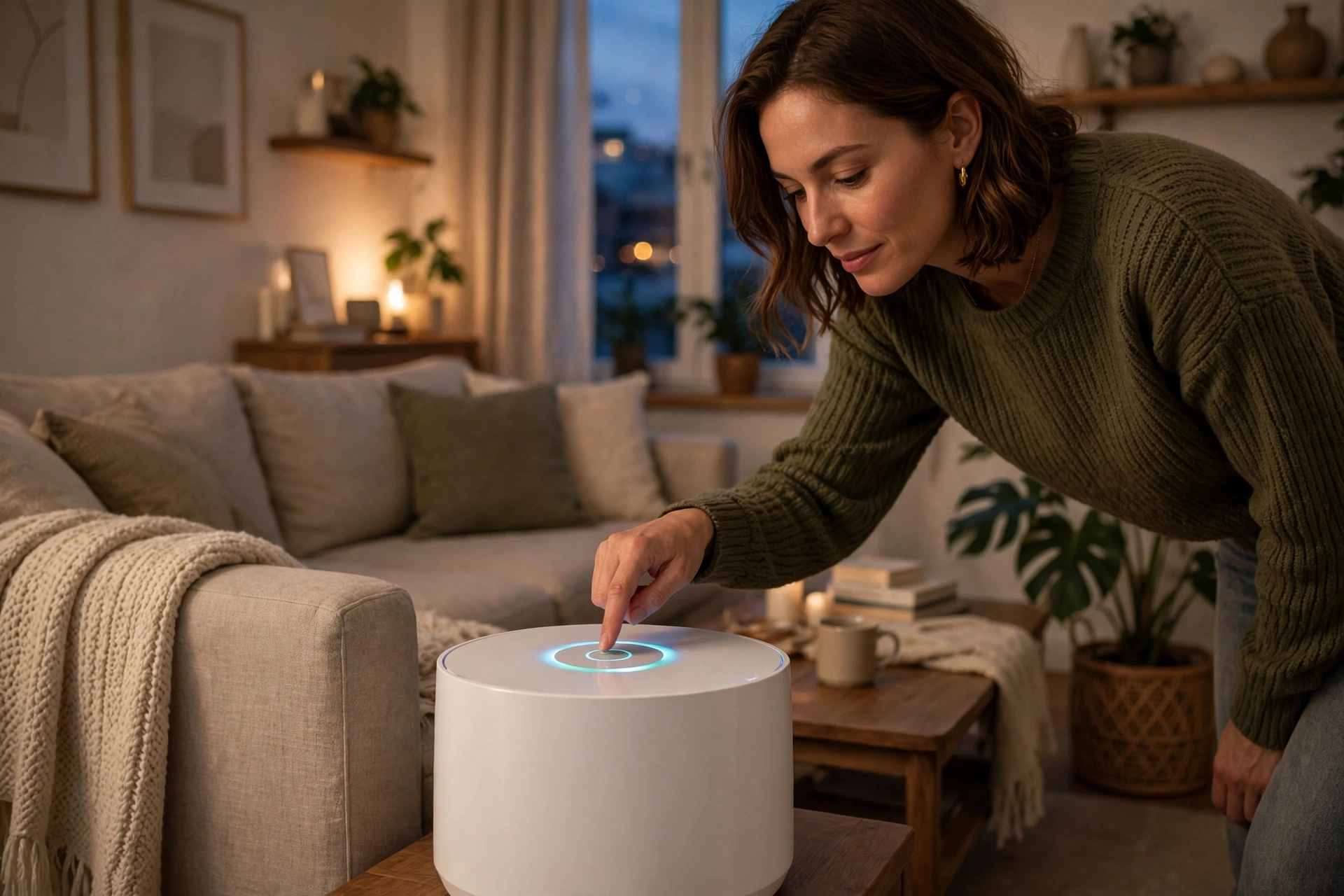
On automatic mode, the purifier reads that number every few seconds and adjusts the fan to match. Cook dinner and the reading climbs, so the fan speeds up; leave the room quiet overnight and it drops back to a near-silent hum. Some models show the reading on a small screen, others send it to a phone app over Wi-Fi or Bluetooth, and a few will even answer a voice command through a smart speaker.
The sensors have limits: a laser counter can’t tell you which particles it counted, so a high reading might be pollen, dust, or cooking smoke, and it only measures the air right next to the machine. It’s a guide, not a laboratory result.
Where should you put one?
Put the purifier in the room where you spend the most time, usually the bedroom or the living room, with a bit of clear space around the air intake — at least a hand’s width from the wall — so air can actually reach it. Don’t hide it behind a curtain or tuck it into a corner behind furniture, because the fan will just recycle the same pocket of air.
Near a bedroom door works well for sleep, and near the kitchen helps after cooking. If your home already has a smart thermostat, a purifier slots in alongside it — the thermostat looks after temperature, the purifier looks after particles. Keep the windows closed while it runs if you can, since an open window lets in a steady stream of outdoor particles.
What can’t an air purifier do?
This is where expectations usually go wrong, so it’s worth being plain about it. An air purifier doesn’t make oxygen, remove carbon dioxide, or replace ventilation. If a room feels stuffy, that’s a fresh-air problem, and only opening a window or running proper ventilation fixes it. Purifiers also don’t kill germs outright — trapping particles isn’t the same as disinfecting.
They’re also limited on gases. Activated carbon helps with smells and some household chemicals, but it saturates, and it does little for carbon monoxide or radon. For those, the US Environmental Protection Agency‘s indoor air guidance is a better starting point than any gadget, since the fix is usually ventilation or a detector rather than a filter. And they don’t help with dust that’s already settled — a purifier only cleans what’s floating in the air. If anyone in the house has a breathing condition, this is general information about how the technology works, not medical advice; a clinician is the right person to ask whether a purifier would help them.
How do you keep one working well?
Maintenance is mostly about the filters. The pre-filter needs a rinse or a vacuum every few weeks, and the HEPA and carbon filters need replacing on the maker’s schedule — usually every six to twelve months, though a smoky home or a house full of pets will wear them out faster. Most purifiers have a filter light that counts down, but it’s only a timer — a grey, clogged filter is done even if the light says otherwise.
A clogged filter chokes the airflow, so the fan works harder and the machine cleans less air per minute. If your purifier sounds louder than it used to, or the air coming out feels weak, check the filter first. Genuine replacements cost more, but third-party ones sometimes fit badly and let air slip around the edges. Running costs are modest — about as much electricity as a light bulb on low — so the bigger ongoing cost is the filters themselves. Check the replacement price before you buy, not after.
FAQs
How long should I run an air purifier each day?
As long as you’re in the room, ideally. Air purifiers clean by cycling air again and again, so the benefit fades once you switch the machine off. Running it on automatic mode all day is the usual advice, with a higher speed for an hour after cooking or cleaning.
Do air purifiers help with allergies?
They can help reduce airborne allergens like pollen, dust mite waste, and pet dander, especially in the bedroom. They don’t remove allergens that have settled on bedding or carpets, so washing bedding and vacuuming still matter, and they aren’t a substitute for medical treatment.
Is a HEPA filter the same as a HEPA-type filter?
No, and the wording matters. A true HEPA filter meets a set standard for particle capture, while “HEPA-type” or “HEPA-like” usually means a similar-looking filter that hasn’t been tested to the same standard. If the label carries a qualifier, treat it as a weaker filter.
Can I leave an air purifier on overnight?
Yes — that’s one of the best times to run it, since you spend hours breathing the same bedroom air. Use the quiet or sleep mode so the fan noise doesn’t disturb you, and keep the machine a little way from the bed.
Conclusion
An air purifier is a simple idea done well: a fan pulls room air through filters that trap particles and soak up smells, sensors watch the air and set the pace, and the same air keeps cycling through until it’s noticeably cleaner. Pick one rated for your room size, put it where you actually spend time, and change the filters when they’re due — that’s most of the job. If you’re shopping for one, check the room-size rating and the replacement filter price before you fall for the design.