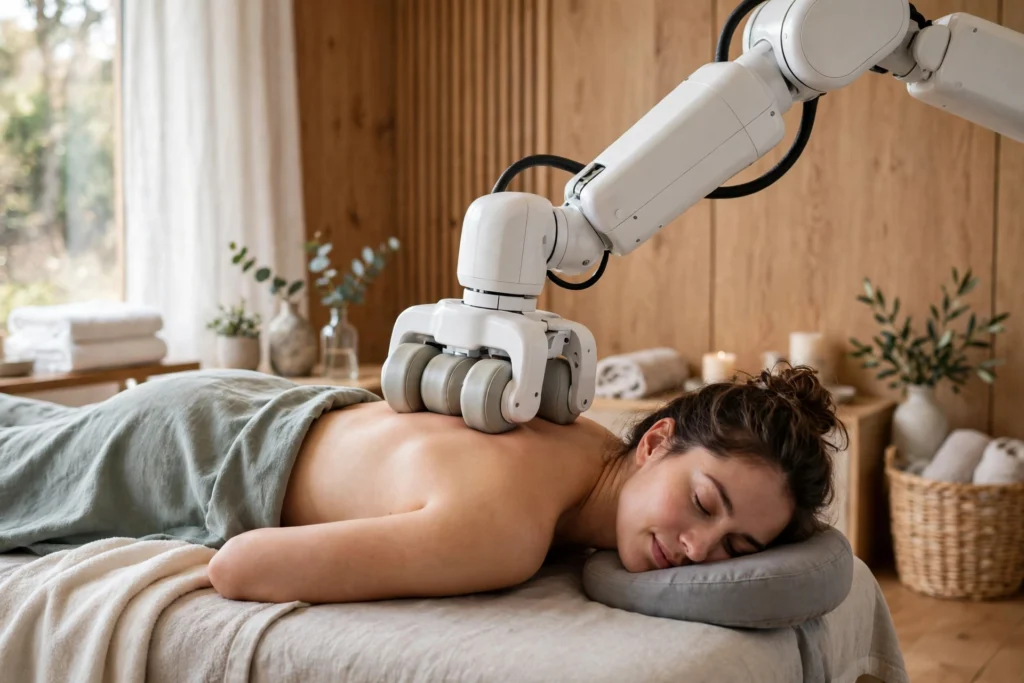
Massage robots work by combining a robotic arm or a small mobile unit with pressure sensors, soft rollers, and software that maps the shape of your body. The robot scans the area, plans a path, and then presses, kneads, or rolls along the muscles at a pressure you set, stopping or easing off when its sensors detect too much resistance.
This article is general information about the technology, not medical advice. It does not replace guidance from a doctor or a qualified massage therapist, especially if you have an injury, a health condition, or are pregnant.
Key Takeaways
- A massage robot maps your back and shoulders with sensors before it starts, so it presses muscle rather than bone.
- You choose the pressure, and force limits stop the robot if it pushes too hard.
- Most robots copy a few classic techniques — kneading, rolling, and gentle tapping — rather than improvising like a human therapist.
- They are already used in spas, gyms, and some clinics, usually for short, repeatable sessions.
What exactly is a massage robot?
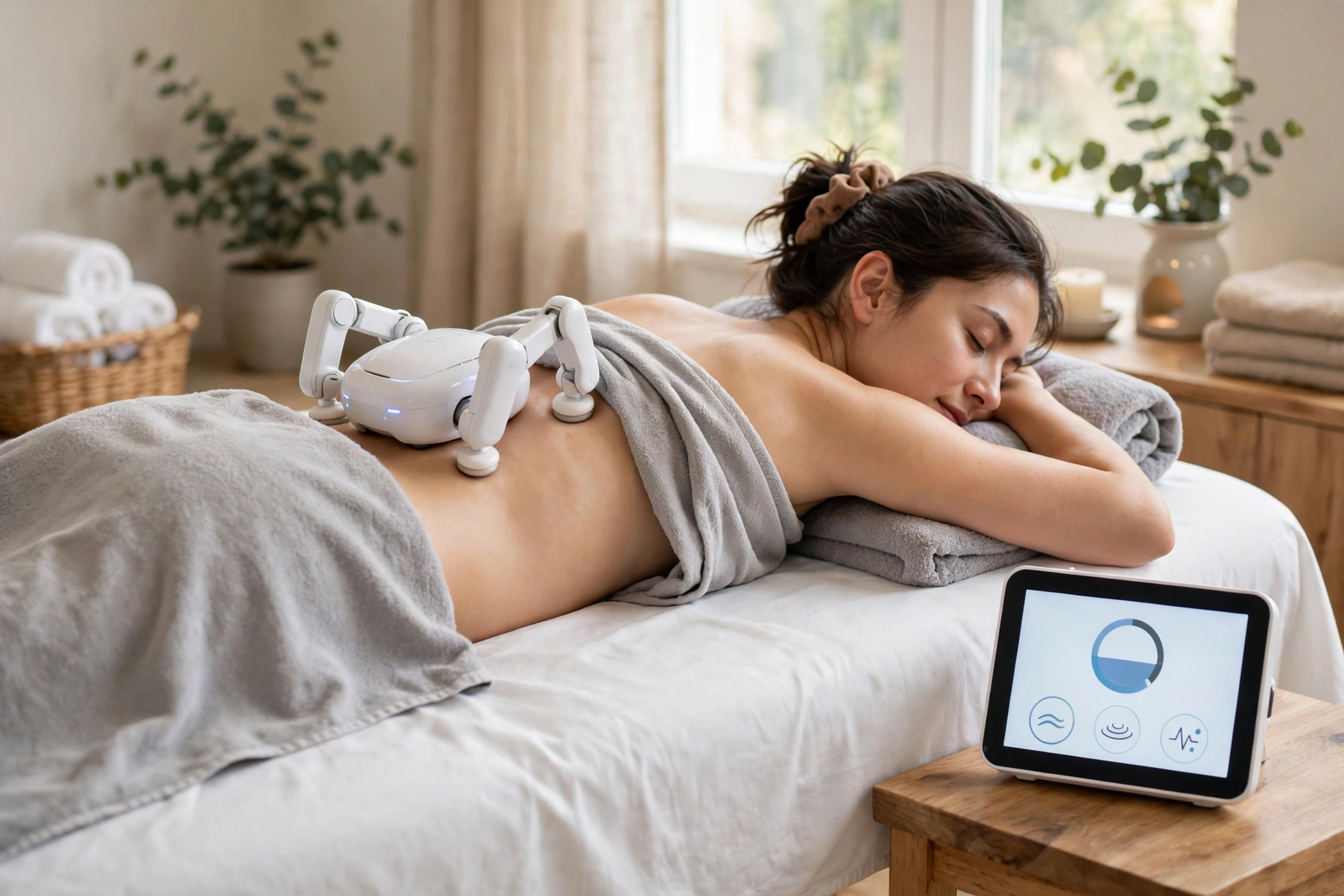
A massage robot is a machine built to give a massage without a human therapist doing the work. The most common design is a robotic arm mounted beside a massage table, with a soft, padded head holding rollers or small massage nodes. Some newer models are small units that sit on the body and move on their own.
Under the casing it is close to other service robots: motors to move, joints to reach different angles, and a control unit that runs the session. What makes it different is the contact — it has to touch a person firmly enough to be useful, yet gently enough to be safe.
How does a massage robot sense your body?
Before the massage starts, the robot needs a map. Many models ask you to lie still for a short scan while depth cameras or pressure sensors trace the curve of your back and neck, so the rollers stay on muscle and off bone.
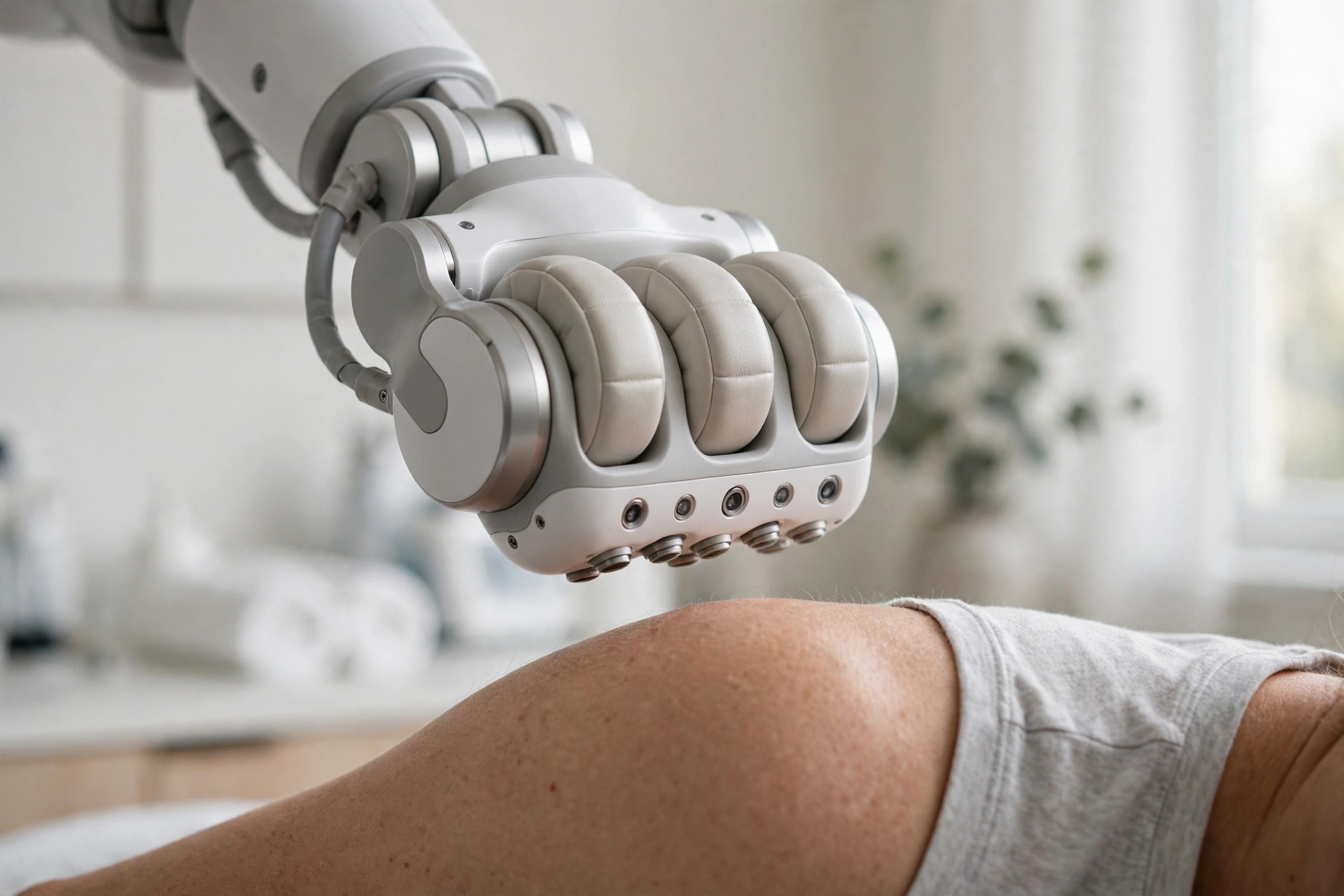
During the session, force sensors in the massage head measure how hard the rollers press. If resistance rises suddenly — the roller reaches a bony spot, or you tense up — the robot eases off or shifts its path. Some models also give you a stop button or a handheld control to ask for more or less pressure mid-session. That sensing is what separates a massage robot from a vibrating chair, which repeats the same motion no matter who sits in it.
How does it choose the right pressure?
Pressure starts with your choice. On the control screen or app, you pick a programme — gentle, medium, or firm — and a target area, such as the neck or lower back. The robot then works inside a preset force range, and a firm programme still stays under a safety limit.
The software also changes pressure as it moves, pressing harder over large muscles like the upper back and lighter near the neck or spine, where the tissue is thinner. If the sensors report unexpected resistance, the robot backs off.
You stay in charge, too: a pause or stop button, often on a remote or the touchscreen, halts the rollers at once.
What kinds of massage can a robot do?
Most massage robots copy a small set of classic techniques. Kneading is the most common: the rollers press and lift the muscle in slow circles. Rolling moves them up and down along the back, like a long stroke. Some models add tapping, a quick, light percussive motion, or a steady hold on one spot for a few seconds.
What they do not do well is improvise. A human therapist notices a knot, works around it, and asks how it feels. A robot follows its programme, so it can miss the exact spot that is bothering you.
Robots are also limited to the back, neck, shoulders, and sometimes the legs. They cannot safely work on the front of the body, the face, or joints that need careful handling.
Where are massage robots used today?
You are most likely to meet one in a spa, a gym, or a hotel wellness room, where it offers short sessions between appointments or after a workout. Some offices have tried them as a perk for staff, and a few clinics use them for simple, repeatable treatments under supervision.
For businesses the appeal is clear: a robot does not get tired, and it can work outside normal hours. For customers, the draw is often privacy and price — a short session can cost less than a full appointment.
What are the limits and safety risks?
A massage robot cannot feel pain, so it cannot know when something hurts unless you tell it or its sensors catch the change. That is why pressure limits, emergency stops, and clear instructions matter. If a session hurts, stop it — do not wait for the programme to finish.
Some people should be cautious. If you have a recent injury, a spine condition, a blood-clotting disorder, or you are pregnant, check with a doctor before using one. The same goes for anyone with reduced feeling in their skin, since they may not notice pressure that is too strong.
There are practical limits, too. The robot needs a clear, flat surface and a person who can lie still, and it cannot help with problems that need diagnosis.
Should you try one?
If you are curious, a short session at a spa or gym is a low-risk way to find out. Choose a gentle programme first, keep the stop button within reach, and see how your body responds. If it feels wrong, or you have a health concern, a qualified therapist is the better call.
Frequently Asked Questions
Do massage robots hurt?
They should not. A well-set-up robot works inside a safe pressure range and eases off when its sensors detect too much resistance. If it hurts, stop the session or lower the pressure.
Can a massage robot replace a human massage therapist?
Not really. A robot is good at repeating the same strokes, but it cannot diagnose pain or adapt to a knot on the spot the way a trained therapist can.
How long does a robot massage session last?
Most sessions run for 10 to 30 minutes, depending on the programme and the venue. Home models may run longer programmes.
Are massage robots safe for everyone?
Most healthy adults can use them, but people with injuries, spine problems, clotting disorders, or pregnancy should check with a doctor first.
How much does a massage robot session cost?
It varies by place and session length, but a short robot session is often cheaper than a full appointment with a human therapist. Home models are a large one-off purchase.
Conclusion
Massage robots work by scanning your body, following a planned path, and adjusting pressure through sensors and software. They are at their best for short, repeatable relaxation sessions. They are not a replacement for a trained therapist, and they are not a medical treatment — so book a short, gentle session first and see how your body responds.