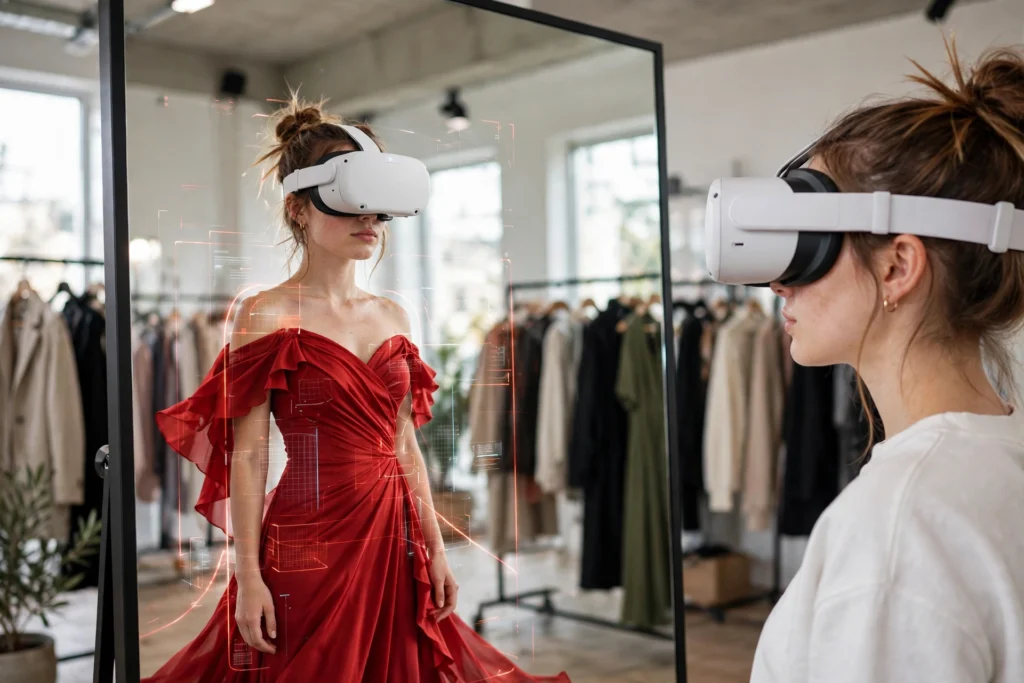
VR fashion lets you try on clothes and watch runway shows without a shop visit or a front-row seat. A VR headset places you inside a store or show venue, where digital garments are fitted to an avatar built from your measurements. You can change colours, sizes and styles with your controllers, though it cannot tell you how fabric feels.
Key Takeaways
- VR fashion covers two main uses: virtual try-ons in digital stores and virtual runway shows.
- A headset, controllers and an avatar built from your measurements do most of the work.
- Digital fittings help with style, colour and rough size, but fabric feel and exact fit still need a real garment.
- Virtual shows let anyone sit in the front row, yet they suit watching more than buying.
What does VR fashion actually mean?
VR fashion means using virtual reality to shop for clothes and experience fashion shows. Instead of scrolling through flat photos, you put on a headset and step into a three-dimensional space: a replica of a real shop, a fantasy boutique, or a hall with a glowing catwalk. The clothes there are digital files, built to look and move like the real garments.
Brands use it to show off a new collection, let customers try outfits they could not try on in person, and reach people far from any flagship store. It builds on the same ideas as virtual stores, so VR shoppers will find the controls familiar. For shoppers, the appeal is simple: browse a whole collection and see clothes from every angle, better than any photo.
How does a virtual try-on work?
A virtual try-on starts with your measurements. Some apps ask for your height, weight and usual sizes. Others guide you through a quick scan, using the headset’s cameras or your phone to build a rough body shape. That shape becomes your avatar, a digital stand-in that wears the clothes for you.
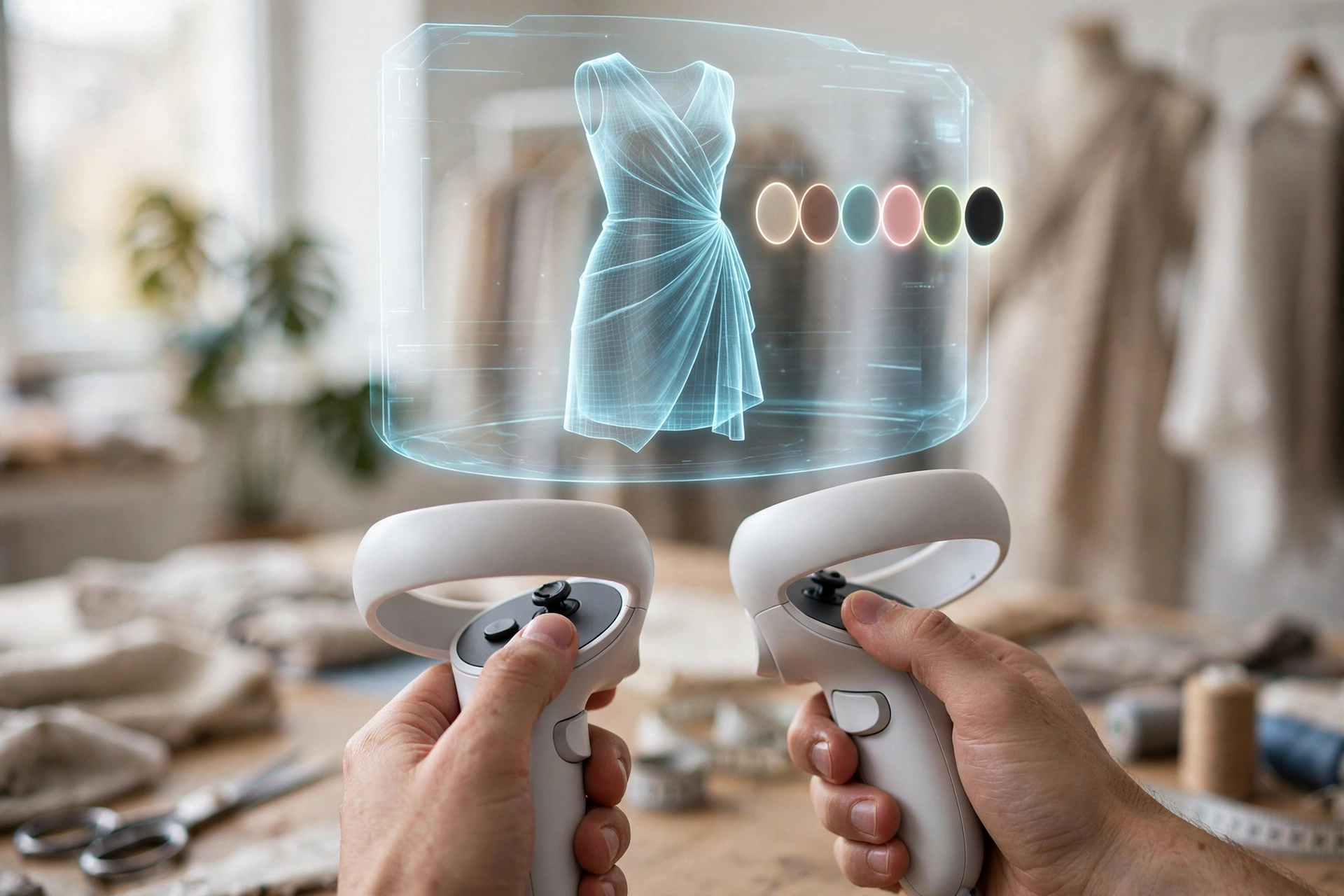
Once the avatar is ready, pick a garment from a rack or a menu. The software drapes a 3D model of that item onto your avatar, adjusted to your proportions. Turn the avatar around, zoom in on a seam or a pocket, and swap colours with a click of a controller.
Useful, but limited. A digital fitting can show how a coat falls and whether a colour suits you, yet it cannot show how stiff or warm the fabric is, or how it moves when you sit down. Sizes are approximate too, because brands cut differently and a scan is never as precise as a tape measure. Treat it as a shortlist, and check the size guide and returns policy first.
What happens at a virtual runway show?
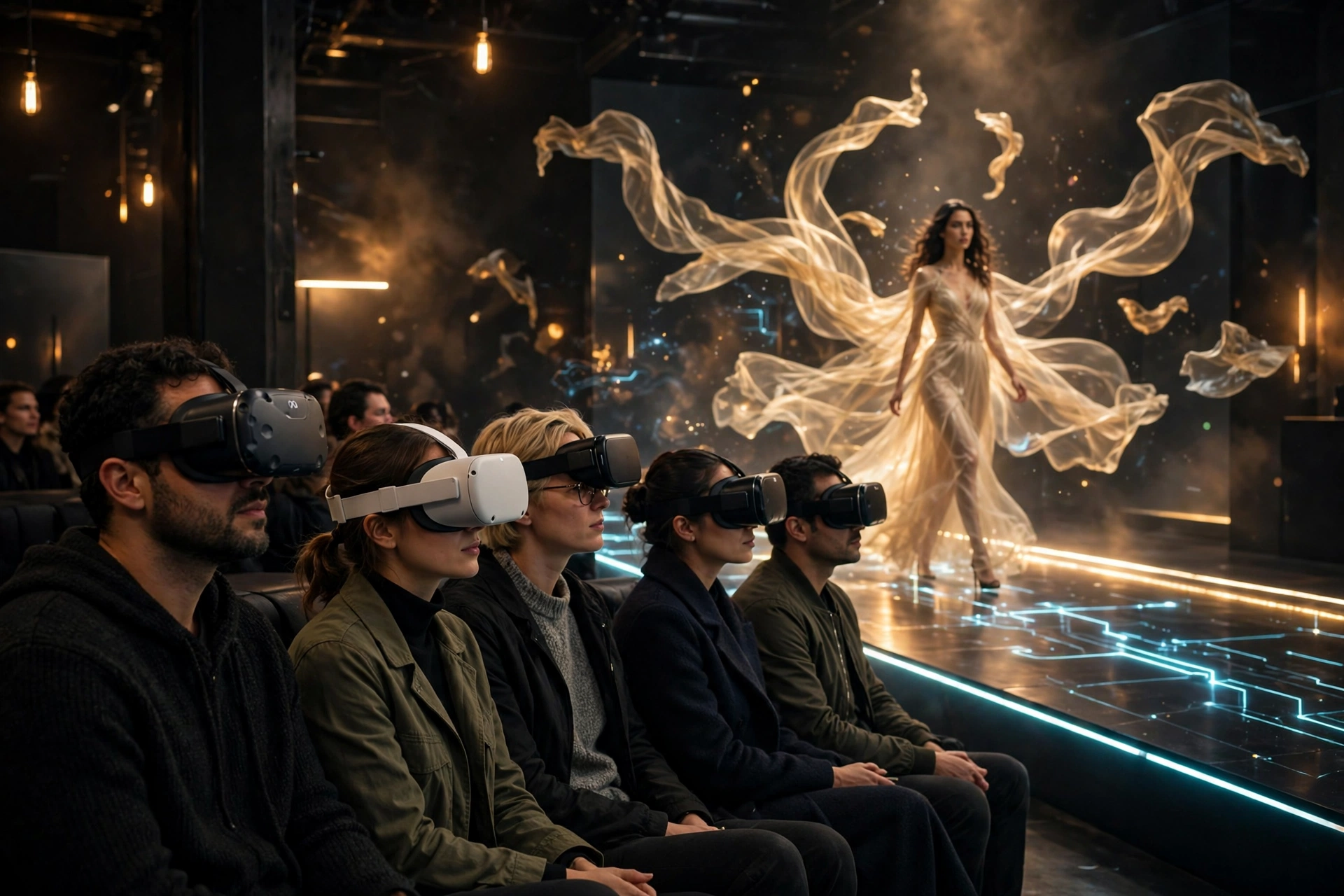
A virtual runway show works much like a streamed concert or other live events in VR, except the stage is a catwalk. You choose a seat, put on your headset, and the show begins around you. Models walk past in digital outfits, sometimes in settings a real venue could never build.
The best part is the viewpoint. In a real show, only a handful of people sit close enough to see the stitching. In VR, you can watch from the front row, then switch to a side angle or a close-up. Some shows let you tap an outfit to see its price.
A virtual show is still a performance to watch, not a shop to buy from. The clothes are digital versions of real pieces, and buying usually means ordering the physical item afterwards. It is a brilliant way to discover a collection, but it does not replace the buzz of being in the room.
What do designers and shops gain from it?
For designers, VR fashion shows work that would be too costly, too fragile, or too strange to stage in real life. A young label can present a full collection without a venue, models flown in, or samples shipped around the world. Digital fashion pieces can be tried on, photographed and shared without a single garment being sewn, cutting waste from samples that never sell.
Shops gain a different kind of reach. A customer in another country can walk through a virtual version of the store, try on the new season, and order with delivery, without the brand opening a new branch. It is the same logic that took VR beyond gaming into training, travel and shopping.
Where does VR fashion fall short?
The biggest gap is touch. Fabric is a huge part of choosing clothes, and no headset can reproduce the weight of wool, the slip of silk, or the stretch of denim. A coat that looks perfect on an avatar can still feel wrong on your body, which is why returns stay common.
Fit is the second problem: bodies vary in ways a quick scan misses, and fit depends on cut, lining and how fabric hangs. VR can get you close, but it cannot promise a perfect fit. Cost is a third barrier: a decent headset is still a serious purchase, and few shoppers will buy one just to try on clothes. Until headsets are as common as phones, VR fashion stays a bonus, not the normal way to buy a shirt.
FAQs
Do I need an expensive headset for VR fashion?
No. A mid-range standalone headset is enough for most fashion apps and virtual shows. Pricier headsets add sharper displays and better tracking, but the basic idea is the same: look around a virtual store, pick clothes, and see them on an avatar.
Can a virtual try-on get my size right?
It can get close, usually close enough to pick between two sizes, but it is not exact. Scans estimate your shape and brands cut sizes differently, so compare the app’s suggestion with the brand’s size chart. Between sizes, order the larger one and check the returns policy.
Are digital clothes real clothes I can buy?
Sometimes. Most virtual try-ons show digital versions of real garments you can order in physical form. A few items exist only as digital fashion, made for your avatar or photos, with no physical version. Check the product page first.
Do virtual runway shows replace real fashion weeks?
No, and most brands do not present them that way. Real shows are trade events where buyers, press and designers meet in person. Virtual shows are an extra audience: anyone with a headset can watch, which is great for fans, but the main calendar still runs in physical venues.
Is VR fashion only for big brands?
Big brands were first, because they could afford the 3D modelling, but smaller labels are catching up. Cheaper scanning tools and ready-made virtual store platforms let an independent designer show a collection online without a venue. Expect more small brands in VR as tools get cheaper.
Conclusion
VR fashion is at its best when it does what photos cannot: letting you walk around clothes, see them from every side, and watch a show from the front row. It falls short where touch and exact fit matter, so use it to shortlist styles and discover collections, not to replace trying clothes on. Start with a free virtual show or a try-on demo, set up your avatar with care, and buy one item first to test the fit.