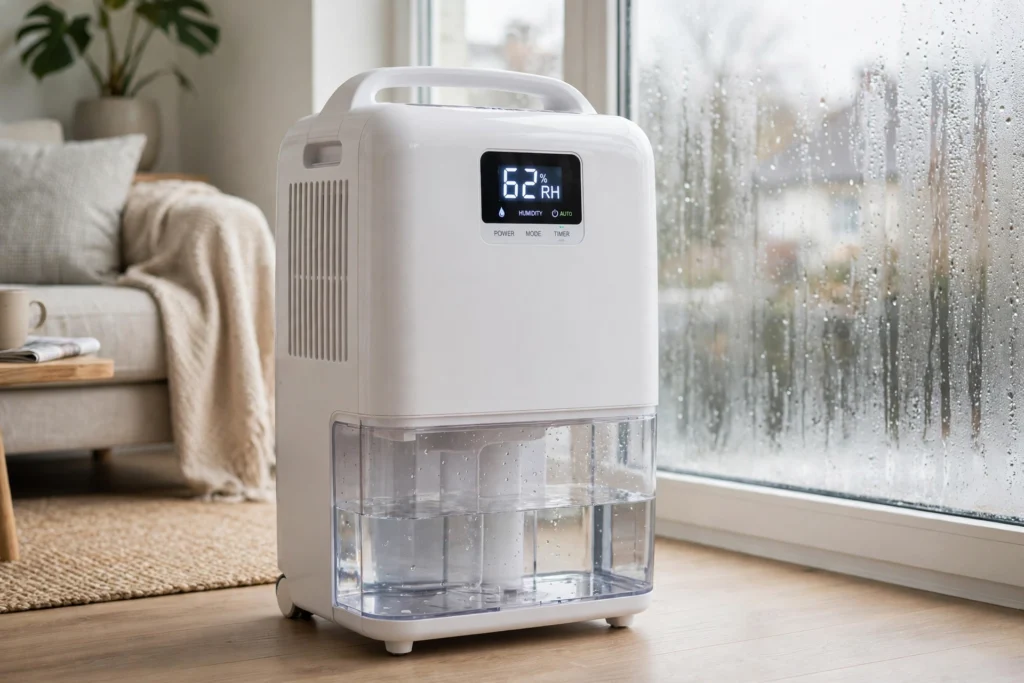
A dehumidifier works by pulling damp air across a cold surface, turning the invisible water vapour in that air back into liquid, and collecting the water in a tank or drain hose. The air that comes back out is drier and slightly warmer, and the machine keeps cycling until the room reaches the humidity level you set.
Key Takeaways
- A dehumidifier cools damp air until the vapour condenses, like droplets on a cold glass.
- Most home models are refrigerant dehumidifiers; desiccant models use a drying material and suit colder rooms.
- Indoors, relative humidity of roughly 30 to 60 percent feels comfortable and keeps mould and musty smells away.
- The water goes into a tank you empty, or out through a hose to a drain.
- Size is measured in pints removed per day, and a unit that is too small will run constantly without catching up.
What does a dehumidifier actually do?
Think of the air in your home as a sponge. Warm air holds more water vapour than cold air, and when that sponge gets full, the extra moisture lands on windows and seeps into walls. A dehumidifier wrings the sponge out.
It does not filter dust or add moisture. Adding moisture is the opposite job, and it belongs to a humidifier. Nor is it an air purifier: purifiers trap particles, while a dehumidifier deals only with water vapour.
How does a refrigerant dehumidifier work?
Most home dehumidifiers use refrigeration, and the trick is one you have already seen: a cold drink on a warm day soon beads with water on the outside of the glass. That is condensation, water vapour turning back into liquid on a cold surface. A refrigerant dehumidifier builds a machine around that moment.
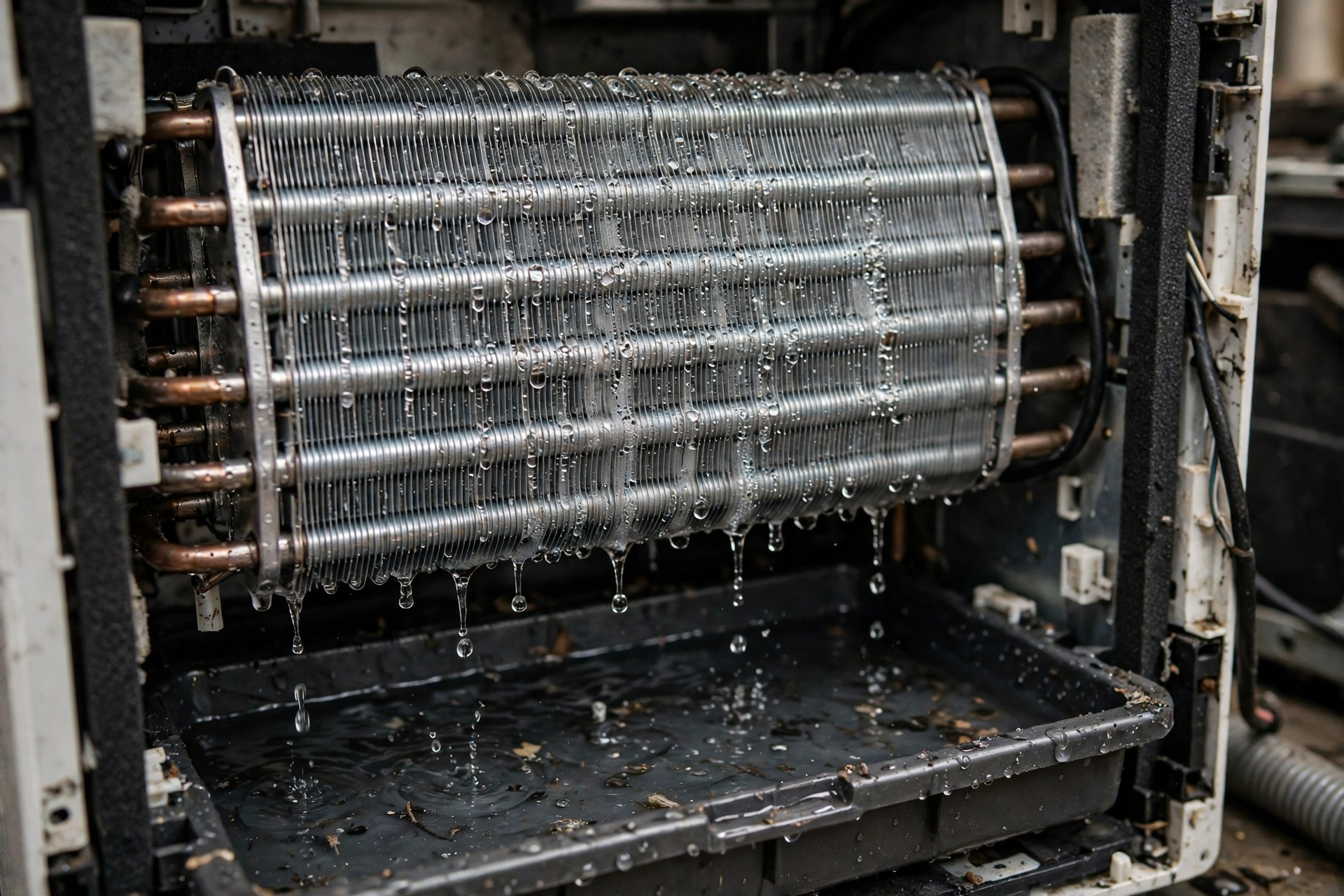
First, a fan draws damp room air in through a filter that catches dust and fluff. Then the air passes over the evaporator coils, cold metal tubes filled with refrigerant. The vapour condenses on them, just like on the cold glass, and the droplets run down into a collection tank.
Next, the drier air passes over a second, warm set of coils, the condenser, which reheats it to roughly room temperature. That is why the air coming out feels slightly warm. The dry air blows back into the room, and the cycle repeats until the built-in humidistat decides the room has reached the level you set.
The refrigerant runs in a sealed loop, squeezed by a compressor into a hot liquid, then expanded into a cold gas in the evaporator coils. It is the same basic idea as a fridge or an air conditioner, except an air conditioner vents its heat outside to cool a room, while a dehumidifier keeps the heat in, so the room ends up drier but not colder.
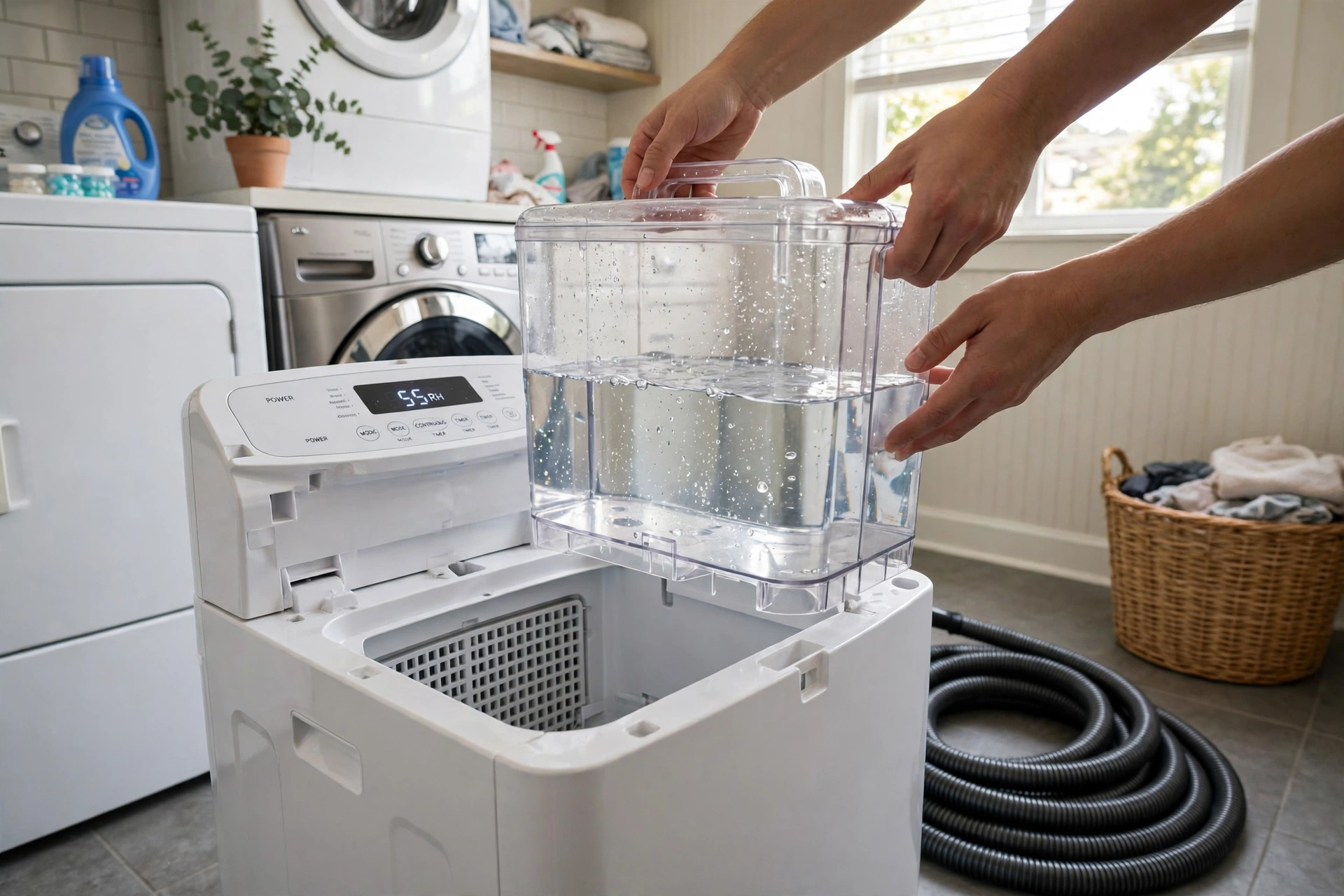
When the tank fills, a small float rises and trips a switch that stops the fan and lights an indicator. Slide the tank out, pour the water away, and slide it back in. Many models also have a hose fitting for a floor drain, so you never empty a tank at all.
What about desiccant dehumidifiers?
Not every dehumidifier uses cold coils. Desiccant models pass damp air over a slowly turning wheel coated in silica gel, the same stuff in those little packets tucked into shoe boxes. The wheel soaks up the moisture, a heater dries the wheel out again, and the damp air is vented away.
| Feature | Refrigerant | Desiccant |
|---|---|---|
| How it removes water | Cold coils condense vapour | Absorbent wheel soaks up moisture |
| Best room temperature | Warmer rooms, above about 18°C | Cold rooms, garages, basements |
| Running cost | Usually lower in warm conditions | Heater uses more energy |
| Noise | Fan and compressor hum | Quieter, mostly just the fan |
| Typical use | Living rooms, bedrooms, flats | Unheated spaces, caravans, boats |
Below about 18°C, a refrigerant model’s coils can frost over and the machine spends its time defrosting instead of drying. For a cold garage or unheated basement, a desiccant model is usually the better pick.
What size dehumidifier do you need?
Dehumidifiers are sized by how much water they remove in a day, measured in pints. The right size depends on how big the space is and how damp it feels. ENERGY STAR’s buying guide suggests roughly 20 to 30 pints a day for a slightly damp small to medium room, and more as the dampness gets worse.
It is better to oversize slightly than undersize. A unit that is too small will run all day and still leave the room feeling damp, because it cannot keep up with the moisture coming in. A bigger unit reaches the target, switches off, and rests.
Where should you put a dehumidifier?
Place it in the middle of the damp problem, not tucked behind furniture. It needs clear space around its intake and outlet, ideally 15 to 30 centimetres on each side, and a level floor. Close the doors and windows while it runs: leaving a window open is like bailing out a boat with a hole in it.
Basements are the classic spot, but bathrooms, laundry rooms and bedrooms with condensation on the windows all benefit. If your home has a smart thermostat that reports humidity, watch its reading fall over a few days of running the dehumidifier.
Why does my dehumidifier freeze up?
Ice on the coils usually means the room is too cold for a refrigerant model: below about 18°C, moisture freezes on the evaporator coils instead of dripping away. Switch the unit off, let it defrost, and either move it somewhere warmer or consider a desiccant model. A clogged filter can cause the same trouble, so clean it every few weeks.
Frequently Asked Questions
Does a dehumidifier cool the room?
No. The air it blows out is about room temperature or slightly warm, because the heat removed during cooling is returned to the room.
How long should I run a dehumidifier each day?
Run it until the room reaches the humidity you set, then let the humidistat take over. In a damp room that may mean most of the day at first, then shorter bursts once the room is dry.
Can I drink the water from a dehumidifier?
No. The water collects dust, bacteria and traces of metal as it passes through the machine. Pour it away, but do not drink it.
Do dehumidifiers use a lot of electricity?
A typical portable model uses a few hundred watts. A unit that reaches its target and switches off costs less than a small one running all day.
Will a dehumidifier stop mould?
It helps a great deal, because mould needs moisture to grow. But a dehumidifier cannot fix the cause of the damp. If water is coming in through a leak, that needs fixing too, or the mould will return.
Conclusion
A dehumidifier is a simple idea executed well: cool damp air until its water drops out, collect the water, and send the dry air back. Pick the type that suits your room’s temperature, size it generously, give it space to breathe, and keep its filter clean. If condensation is misting your windows, check the humidity with a cheap meter. Above 60 percent, a dehumidifier is very likely the fix, and the first tank of water you pour away is proof that it is working.
Further reading: Explain That Stuff explains how dehumidifiers work in detail, and ENERGY STAR’s dehumidifier buying guide covers sizing, draining options and energy efficiency.