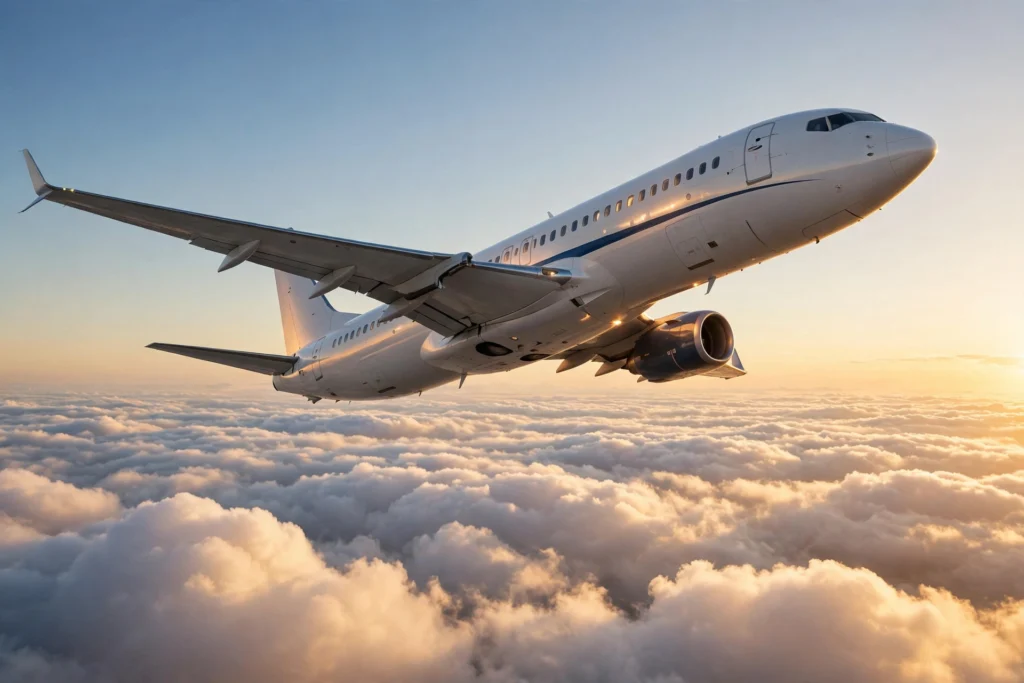
AI in aviation works mostly behind the scenes. It plans routes around bad weather, flags engine wear before it becomes a fault, and answers passenger questions at midnight. Pilots still fly the plane and make the safety calls. Think of AI as a tireless colleague that crunches far more data than any human team could, then hands people better options.
Key Takeaways
- AI in aviation mostly supports people: it plans, predicts, and suggests, while pilots and engineers keep the final say.
- The biggest wins are smoother routes, earlier maintenance warnings, and faster recovery from delays.
- Airlines use AI on the ground far more than in the cockpit, where certification is stricter.
- Regulators are bringing AI in step by step, and passengers mostly meet it through chatbots and rebooking help.
How does AI plan a flight before it leaves the ground?
Long before you board, an airline has made hundreds of small decisions about your flight: which route to take, how much fuel to carry, and which crew will work it. Each choice depends on weather, winds, air traffic, and airport congestion — exactly the kind of puzzle AI is good at.
A route-planning system can weigh thousands of possible paths in seconds, looking for the one that burns the least fuel while steering clear of storms. It can also spot knock-on effects a human planner might miss — for example, that a slightly longer route now will stop three later flights from running late.
Take Alaska Airlines, which has used AI to plan more efficient routes, describing the tool as a kind of Google Maps for the sky. Reports credited the system with saving around 41,000 minutes of flight time and half a million gallons of fuel in a single year.
How does AI spot engine trouble before it happens?
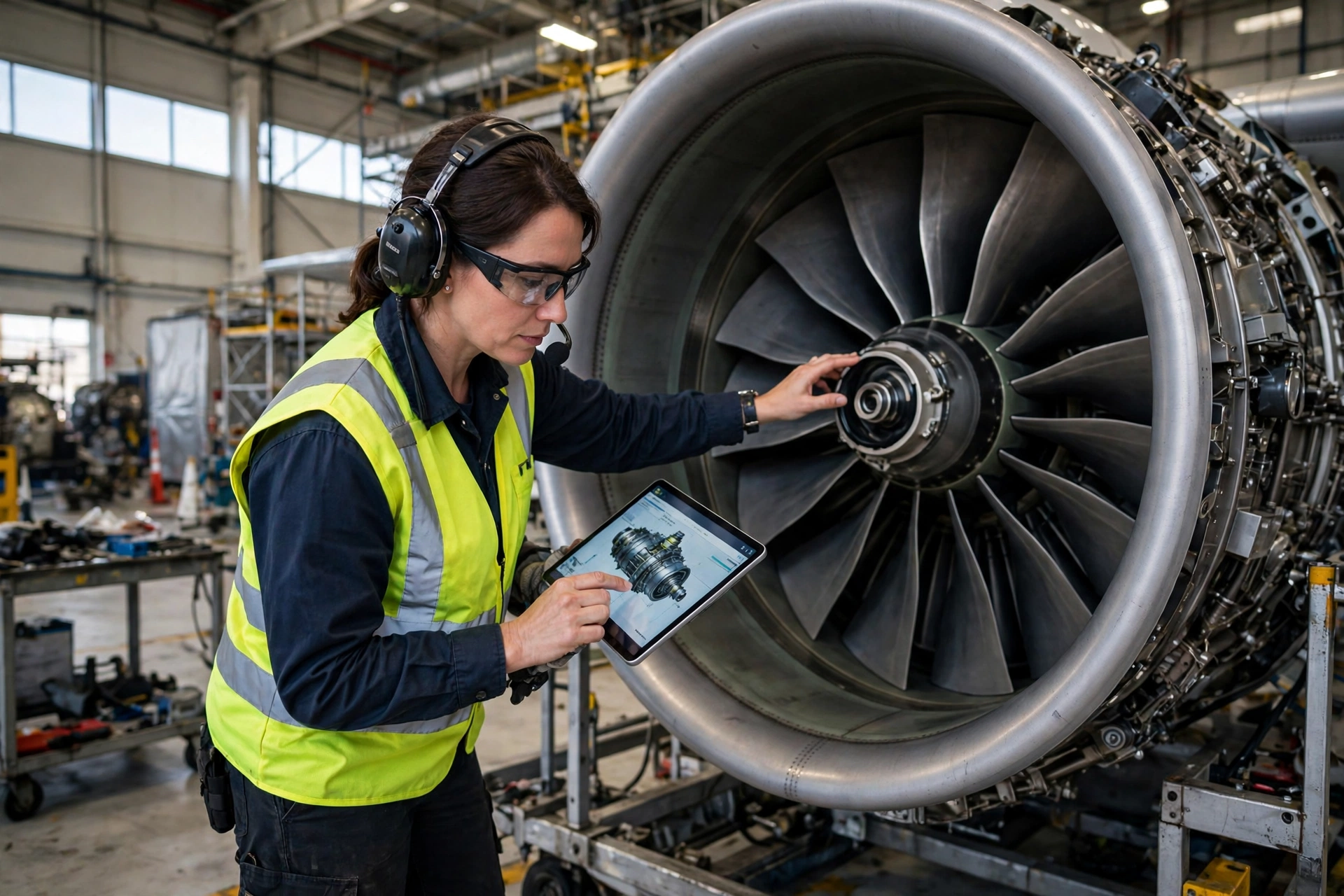
A modern jet engine is covered in sensors that measure temperature, vibration, and pressure every second of a flight. No engineer could watch all of that by hand, but a machine-learning model can learn what “healthy” looks like for each engine, then flag tiny changes that suggest a part is wearing out.
This is called predictive maintenance. Instead of replacing parts on a fixed schedule — sometimes too early, sometimes too late — airlines can service a part when the data says it needs attention. Lufthansa has experimented with AI to spot problems early and cut the time aircraft spend out of service. Engineers still inspect the aircraft and sign off the work; the AI only points them towards the right place at the right time.
What does AI do while the plane is in the air?
Once a flight is airborne, AI keeps working on the ground. Operations teams watch weather, traffic, and airport conditions, and the software suggests tweaks: a different altitude to catch a better wind, a new arrival slot when a storm closes a runway, or a different gate so connecting passengers can still make their next flight.
American Airlines has used AI to cut the time its planes spend taxiing, with company reports putting the saving at around 17 fewer hours a day and roughly 1.4 million fewer gallons of fuel a year. The same kind of system makes thousands of gate decisions daily. None of this replaces air traffic control, which stays firmly in human hands. The AI proposes; controllers and pilots dispose.
How does AI change things for passengers?
Most travellers meet aviation AI without realising it. The chatbot that answers your baggage question at 2am, the automatic rebooking offered minutes after a cancellation, the fare that moved overnight — all of these can involve AI. KLM’s chatbot handles a large share of the airline’s social media queries, freeing human staff for the trickier cases.
Personalisation is the next frontier. Airlines are testing systems that tailor in-flight entertainment to your flight length and past choices, and some have tried translating cabin announcements into several languages using a cloned version of the captain’s voice.
Fares deserve a word of caution. AI helps airlines set prices by weighing demand, timing, and competition, which has raised fair questions about how personalised pricing could become. One US carrier’s plans drew a swift backlash, and regulators have made clear they are watching. Cheaper operations do not automatically mean cheaper tickets.
AI vs the old way: what actually changes?
| Job | The old way | With AI helping |
|---|---|---|
| Picking a route | A few options weighed by hand | Thousands compared in seconds |
| Engine checks | Parts replaced on a fixed schedule | Parts serviced when data shows wear |
| Gate assignments | Staff juggled gates on screens | Software protects the most connections |
| Customer questions | Queues for phone agents | Chatbots answer any time, humans take the rest |
| Delay recovery | Passengers rebooked one by one | New itineraries proposed for many at once |

What are the limits of AI in aviation?
Aviation is one of the most safety-conscious industries on earth, and that shapes how fast AI can move. Europe’s aviation safety agency, EASA, sorts AI into levels: assistance for humans, teamwork between humans and AI, and eventually advanced automation. Each step needs evidence that the system is trustworthy before it is allowed near anything safety-critical.
That is why most aviation AI today lives in planning, maintenance, and customer service rather than in the cockpit. Autopilot has existed for decades, but it follows set instructions; it does not learn or improvise. Fully AI-flown passenger planes are not on any serious near-term roadmap. The same debate plays out on the road — see how AI works in self-driving cars.
Data quality is another limit. An AI model is only as good as the records it learned from, and aviation data is messy: different aircraft, different sensors, different airports. A model that works well for one fleet may need retraining for another.
Frequently Asked Questions
Does AI fly the plane?
No. Autopilot keeps a plane steady on a set course, but it follows fixed rules rather than learning. Pilots handle takeoffs, landings, and every decision that matters, and they can take over at any moment.
Will AI replace pilots?
Not in any realistic timeframe. Regulators require qualified humans in charge of passenger flights, and safety rules are built around human judgement. AI is far more likely to change what happens on the ground than who sits in the cockpit.
Is AI used in air traffic control?
Cautiously, and mostly as an assistant. Trials have tested AI tools that help controllers spot conflicts or manage busy airspace, but the final decisions stay with trained controllers.
Does AI make tickets cheaper?
Sometimes, indirectly. When AI cuts fuel burn and delays, an airline’s costs fall — and competition can push some of that saving into fares. But fares also depend on demand and fuel prices, so there is no guarantee.
Is my data safe when airlines use AI?
Airlines hold a lot of personal data, from passport details to meal preferences. Reputable carriers follow data-protection law, and you can usually limit what you share in your booking profile. If a message asks for details the airline should already have, treat it with suspicion.
Conclusion
AI in aviation is less about robot pilots and more about quiet competence: better routes, earlier warnings, smarter gates, and quicker help when plans fall apart. Next time your flight lands on time after a stormy forecast, some of the credit may belong to a system you never saw. New to the topic? Start with our complete guide to artificial intelligence.