
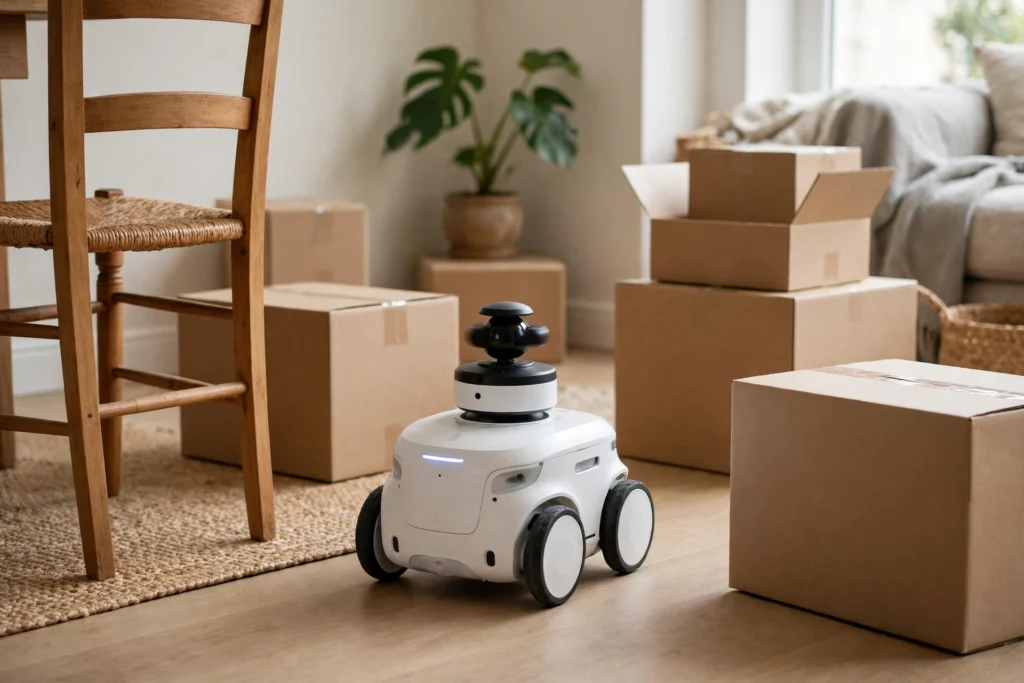
Robots avoid obstacles by sensing what is around them, building a map of the space, and choosing a path that steers clear of anything in the way. Lidar, cameras, and ultrasonic sensors feed distance data to the robot’s control system, which plans a safe route and slows or stops when something moves into its path.
Key Takeaways
- Robots avoid obstacles in three steps: sense, decide, and act.
- Different sensors — lidar, cameras, ultrasonic, bump — cover different blind spots.
- A robot builds a map as it moves and plans around furniture and people.
- With no safe path, a good robot stops and waits.
- It still struggles with glass, dark surfaces, cables, and fast-moving pets.
How do robots sense obstacles?
A robot cannot avoid what it cannot see, so sensing comes first — and most mobile robots carry more than one type of sensor, a basic rule of robotics, because no single one works well everywhere.
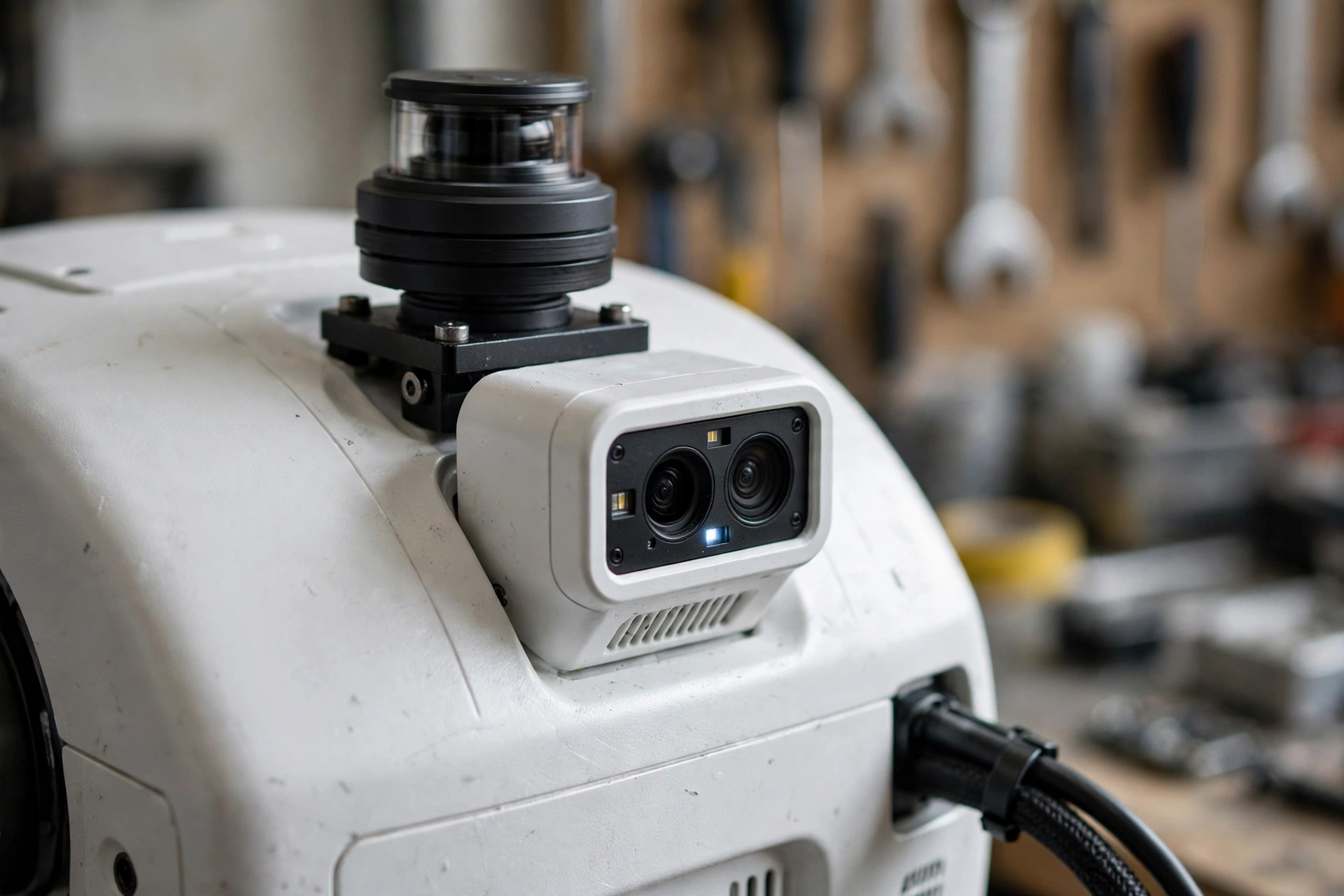
Lidar is the workhorse: a spinning unit fires laser pulses in every direction and times the echoes, giving the robot an updated picture of distances, accurate to a few centimetres, even in the dark. Depth cameras add shape and texture, so the robot can tell a flat rug from a step. Ultrasonic sensors cover close range with sound waves, catching low objects below a camera’s view. Bump sensors are the last resort — touch something, and the bumper tells the robot to stop and reverse.
None is perfect alone: lidar is fooled by mirrors and glass, cameras struggle in poor light, and ultrasonic sensors can miss soft fabrics. So designers layer them — when one sensor is unsure, another fills the gap.
How do robots plan a safe path?
Sensing tells the robot what is nearby; planning decides what to do about it. The robot keeps a map — built in advance or drawn as it explores — and marks every detected object on it.
The routine is simple: pick a destination, draw the shortest route, and check for blocks. A chair in the way means recalculating around it; a person stepping into the path means slowing down or choosing a new route. These checks run many times a second, so the robot reacts almost as things change.
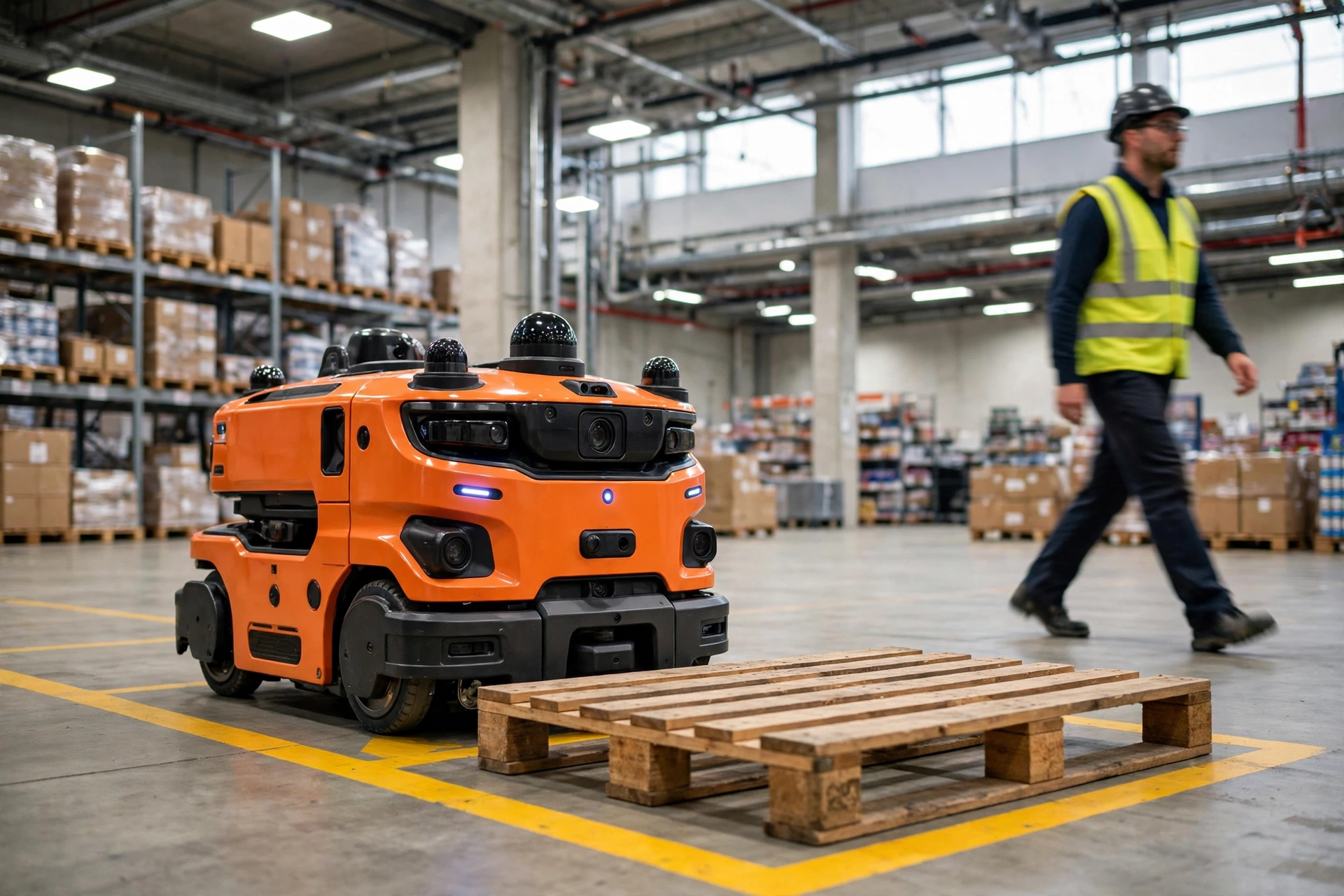
Better robots look further ahead, predicting where a moving person will walk next. In a warehouse the same idea scales up: dozens of robots share one map and coordinate routes, so they never pile into one aisle. Mapping also gives the robot memory: a vacuum that has mapped your flat does not rediscover the sofa each time, and when something new appears — a bag, a child’s toy — the sensors catch it and the map updates.
What happens when a robot cannot find a way around?
Sometimes there is no clear route: a corridor is blocked, a door is shut, or a crowd fills the pavement. A well-designed robot does not force its way through — it stops and waits.
That is a deliberate safety choice. Early robots would keep pushing and bump into things — fine for a toy, not for a machine working beside people. Modern systems treat “I cannot see a safe path” as a valid answer: the robot pauses, re-scans, and tries another route, or asks a human operator for help.
Slow speed helps too: a slow robot has more time to react, and any bump is gentler — which is why delivery robots move at walking pace.
Where do robots avoid obstacles in everyday life?
You have probably seen obstacle avoidance at work without noticing it: a robot vacuum changes direction at a chair leg, a warehouse robot pauses when a worker crosses its lane, a delivery robot waits at a kerb until the way is clear.
The same ideas show up in bigger machines: self-driving cars use lidar, radar, and cameras to spot other vehicles, cyclists, and pedestrians; farm robots steer between crop rows without crushing plants; hospital robots slow down in busy corridors and give way to staff. In each case the job is the same — sense, decide, act — just scaled to the machine. That is the everyday reality of robotics.
What are the limits of obstacle avoidance?
Obstacle avoidance has improved a lot, yet it still has weak spots. Glass doors and mirrors confuse lidar, because the laser passes through or bounces away. Dark, shiny, or very thin objects — black cables, chair legs, a glass table edge — can be hard for cameras and lidar to pick up, and low obstacles below sensor height, like a charger cable, remain a classic problem for robot vacuums.
Fast movement is another challenge: a child running across a room or a dog darting in front of the robot leaves the sensors little time to react, so robots slow down in busy areas and keep a wider margin around anything that moves. Weather adds trouble outdoors, since rain, fog, and bright sunlight can weaken readings; delivery robots combine several sensor types and slow down when conditions are poor. None of this means the technology is unreliable — it means the robot is built to be cautious when unsure, which is exactly what you want from a machine sharing space with people.
FAQs
How do robots avoid obstacles at night?
Most robots do not need daylight: lidar and ultrasonic sensors work in complete darkness, and many depth cameras use infrared light the human eye cannot see. A robot vacuum cleans a dark room just as well as a bright one.
Can robots avoid moving people?
Yes, up to a point. The robot tracks people, predicts where they are heading, and adjusts its route to keep a safe distance. It works well at walking pace, but very fast or sudden movement can still catch it off guard.
Do all robots use lidar?
No. Small, cheap robots often rely on simpler sensors such as ultrasonic and infrared sensors and bumpers. Lidar is common on larger robots — warehouse machines, delivery robots, self-driving cars — because it builds an accurate map quickly. Many combine lidar with cameras.
Is obstacle avoidance the same as self-driving?
Not quite: obstacle avoidance is one part of self-driving — it keeps the vehicle from hitting things. Self-driving also needs route planning, traffic rules, and traffic lights. A robot that avoids obstacles well still needs those skills first.
Conclusion
Robots avoid obstacles by combining sensors, maps, and careful planning. Lidar and cameras spot what is nearby, the map remembers where things are, and the control system picks a safe route — or stops when none exists. The technology is not flawless: glass, cables, and fast-moving pets can still fool it. But slowing down and stopping when unsure is what makes today’s robots safe enough to share our homes, warehouses, and pavements.
If you are choosing a robot for your home, look past the marketing and check the sensors: lidar plus a depth camera is a good sign, and a robot that slows down near people is doing its job properly. To see these ideas in real machines, start with a robot vacuum, then look at warehouse and delivery robots.