
AI help with cooking sounds futuristic, but it is already in ordinary kitchens. Today’s cooking apps and chatbots can suggest a recipe from the ingredients you have, plan a week’s meals around your budget, and build a shopping list in seconds. They do not replace a cook’s judgement, yet they take over the dullest part of cooking: deciding what to make.
Key Takeaways
- AI cooking tools suggest recipes from ingredients you already have, which cuts food waste and last-minute takeaway orders.
- Meal-planning features can build a week of dinners around your diet, budget, and cooking time.
- The best results come from specific prompts: mention portions, allergies, and the equipment you own.
- AI still makes mistakes with quantities, cooking times, and food safety, so check anything risky before you serve it.
How Does AI Suggest Recipes?
Most recipe tools start with a simple idea: tell them what you have, and they tell you what to cook. Type in a few ingredients — chicken thighs, rice, and a tin of tomatoes — and the tool searches its recipe database for matches. Newer tools go further. Some use a chatbot that understands a plain request like “something quick and spicy for two, no dairy,” then writes a recipe around it.
Under the surface, these tools lean on the same kind of language models that power general chatbots. If you want a sense of how that technology works, our guide to What Is Artificial Intelligence? The Complete Guide explains the basics in plain language. The model has read thousands of recipes, so it knows which flavours tend to work together and how a dish is usually put together.
That is also where the limits show up. A model can invent a combination that sounds plausible but tastes odd, or suggest a cooking time that does not match your oven. Treat its first draft as a starting point, not a tested recipe.
What Can AI Meal Planning Do?
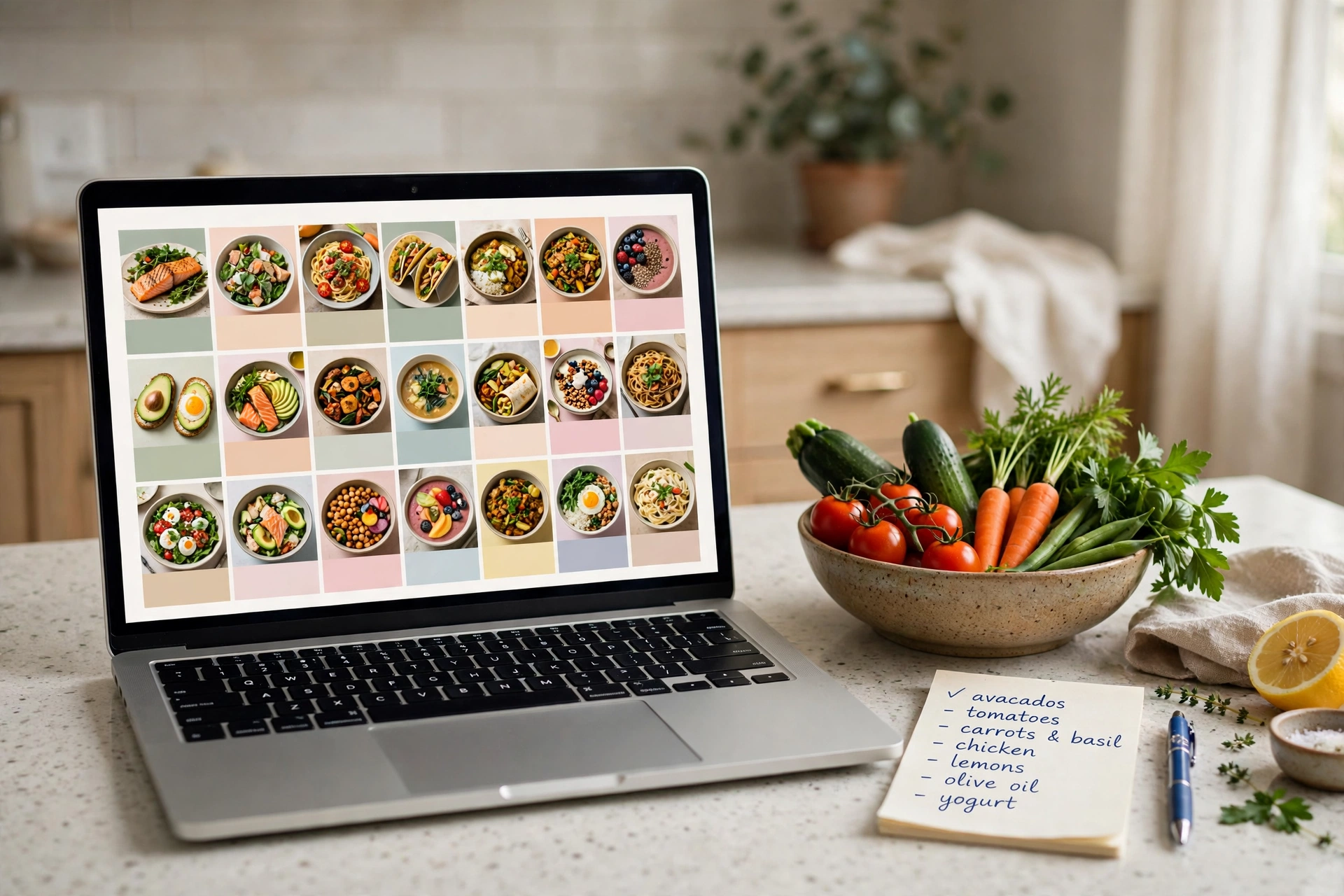
Meal planning is where AI earns its keep for busy households. Instead of staring at the fridge every evening, you can ask for a week of dinners that fits your rules: vegetarian on weekdays, under 30 minutes, no more than a set amount per shop.
A good meal-planning tool will spread variety across the week, reuse ingredients across meals — half a bag of spinach in Tuesday’s pasta and Wednesday’s soup — adjust portions for your household size, and build a shopping list grouped by shop section.
Some apps learn from your feedback. Mark a dish as a favourite and it shows up more often; mark one as a miss and it fades away. Recipe platforms such as Yummly have built their meal-planning features around exactly this idea, matching recipes to the ingredients and tastes you tell them about. That is the same pattern you see in other everyday AI helpers — for example, the way How Does AI Help With Writing? describes tools that adapt to your style over time.
Can AI Cook From a Photo of Your Fridge?
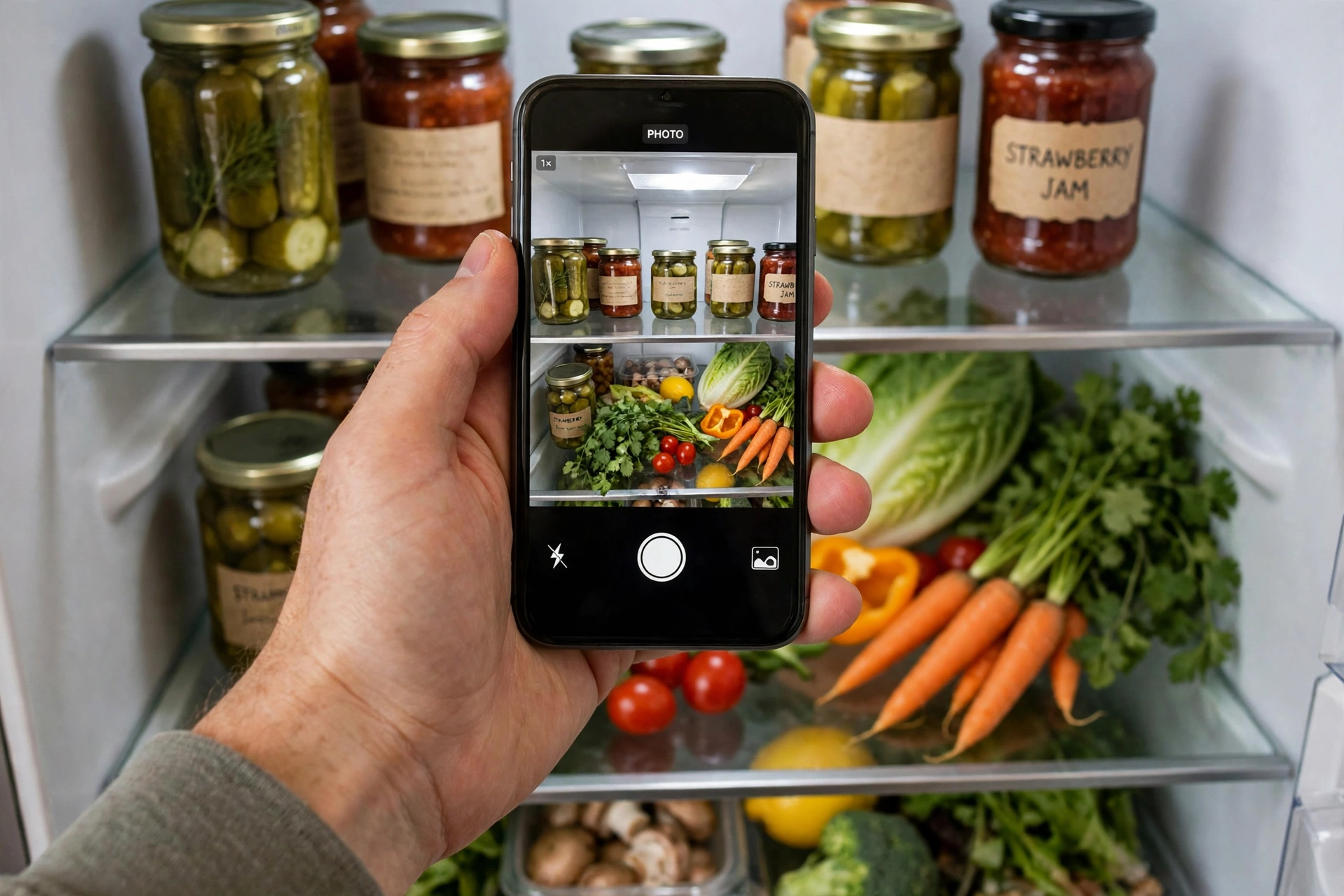
Yes, in a limited way — and this is the feature that surprises people most. Several apps now let you photograph the inside of your fridge or pantry. Image recognition picks out the items it can see, and the recipe engine suggests dishes that use them.
It works best with clear, distinct items: a bag of carrots, a block of cheese, a jar of sauce. It struggles with small or half-hidden things, and it cannot tell whether that milk is still fresh. So use the photo as a shortcut for listing ingredients, not as a final check. You still need to open the carton and sniff.
The same caution applies when you are cooking away from home. If you are planning meals for a trip, How Does AI Help With Trip Planning? shows how AI can organise routes and budgets — and a packed lunch is just one more thing it can help you plan.
How Do You Get Better Results From an AI Cooking Tool?
Like any chatbot, a cooking assistant is only as good as the prompt you give it. “Give me a recipe” will get you something vague. A specific request will get you something usable.
Try this instead: “I have salmon fillets, new potatoes, and asparagus for two people. No cream. I have an oven and a hob, and 40 minutes.” That one sentence gives the tool the ingredients, the portions, the restrictions, the equipment, and the time. The result will be far closer to what you actually need.
Our guide to What Is Prompt Engineering? covers this skill in more depth, and it applies to cooking just as much as to writing or research. State allergies and diets every time, ask for weights in grams as well as cups, and if a recipe looks wrong, say so and ask for a fix.
What Should You Not Trust AI With in the Kitchen?
AI is a helpful assistant, not a food-safety expert. A few areas always deserve a double-check.
First, cooking times and temperatures. A model may suggest roasting chicken at a temperature that leaves the middle undercooked. Use a meat thermometer for poultry and pork, and follow trusted food-safety guidance for minimum internal temperatures.
Second, allergies. AI can miss a hidden ingredient — soy sauce in a marinade, nuts in a pesto — so read every ingredient yourself if someone at the table has an allergy. Never rely on a chatbot as your only allergy check.
Third, nutrition claims. A tool may describe a dish as low-calorie or high-protein without checking the numbers properly. If you are managing a health condition, treat AI nutrition estimates as rough guides and check with a qualified professional. IBM’s overview of artificial intelligence is a useful reminder that these systems predict likely text — they do not verify facts the way a dietitian would.
Finally, preserving and canning. Recipes for pickles, jams, and fermented foods need exact acidity and processing times to be safe, so do not follow an AI-generated canning recipe without checking it against a tested source.
Frequently Asked Questions
Can AI create a recipe from ingredients I already have?
Yes. Most AI cooking tools accept a list of ingredients and return recipes that use them. Give exact items and quantities for the best matches, and always check the quantities and timings before cooking.
Is AI meal planning free?
Many tools offer a free tier with basic recipe suggestions and a weekly plan, while shopping-list syncing and pantry tracking often sit behind a paid plan. Try the free version for a week before paying.
Can AI help with special diets like gluten-free or vegan cooking?
Yes, if you state the diet clearly in every request. The tool can filter recipes and suggest swaps, but you should still check labels and ingredients yourself, especially for allergies.
Does AI know how long food takes to cook?
It can estimate, but estimates vary. Ovens differ, and so do the size of your cuts of meat or vegetables. Use the suggested time as a guide and check doneness with a thermometer or a visual test.
Will AI replace cookbooks?
Not really. Cookbooks are tested, edited, and written by people who cooked the dish many times. AI is best for everyday decisions — what to cook tonight, how to use leftovers — while a trusted cookbook still wins for a special occasion.
Conclusion
AI help with cooking works best as a planning partner: it suggests recipes from what you have, builds a week of meals, and writes the shopping list. It saves time and cuts waste, but it cannot taste your food or judge whether the chicken is done. So use it for the decisions, and keep your own senses in charge of the cooking.
Your next step is a small one. Tonight, open a cooking app or chatbot, list five things already in your fridge, and ask for one dinner recipe that uses at least three of them. Cook it, note what worked and what did not, and you will know within a single meal whether AI cooking earns a place in your kitchen.