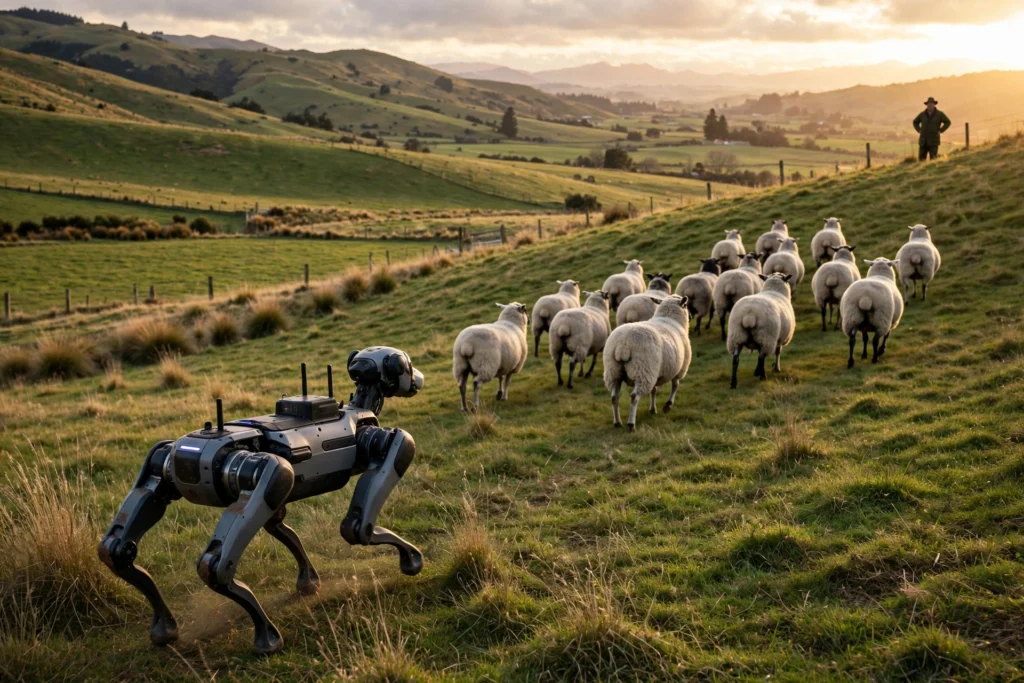
Robot shepherds are machines that move sheep and cattle the way a sheepdog does — by holding the right position and applying gentle pressure, not by barking or chasing. Cameras, GPS and laser sensors track the flock, and the robot steps into the gap that steers the animals where the farmer wants them. They are mostly trials, not farm staples.
Key Takeaways
- Robot shepherds steer livestock with position and pressure, the same trick a sheepdog uses.
- Cameras, GPS, LiDAR and heat sensors let the robot watch the flock and the ground together.
- The best-known trials are Spot herding sheep in New Zealand and SwagBot moving cattle in Australia.
- A robot works long hours, but it is slower than a good dog and still needs a human watching.
How does a robot move a flock without a bark?
Sheep keep a bubble of space around anything unfamiliar: step into it and they drift away; step back and they settle. A sheepdog reads that bubble all day, pressing on one side so the animals flow the other way. A robot shepherd does the same job with maths instead of instinct: cameras watch the flock, software finds the edge of the group, and the robot moves into the spot that nudges the animals the right way. Too close and the flock scatters; too far back and nothing happens.
The first trials looked almost boring, which was the point. When Spot, Boston Dynamics’ four-legged robot, worked sheep on a New Zealand station in 2020, the sheep simply moved away from it as they would from a dog, and the farm dogs treated it like another farm bike. The sheep needed no training.
What does a robot shepherd actually see?
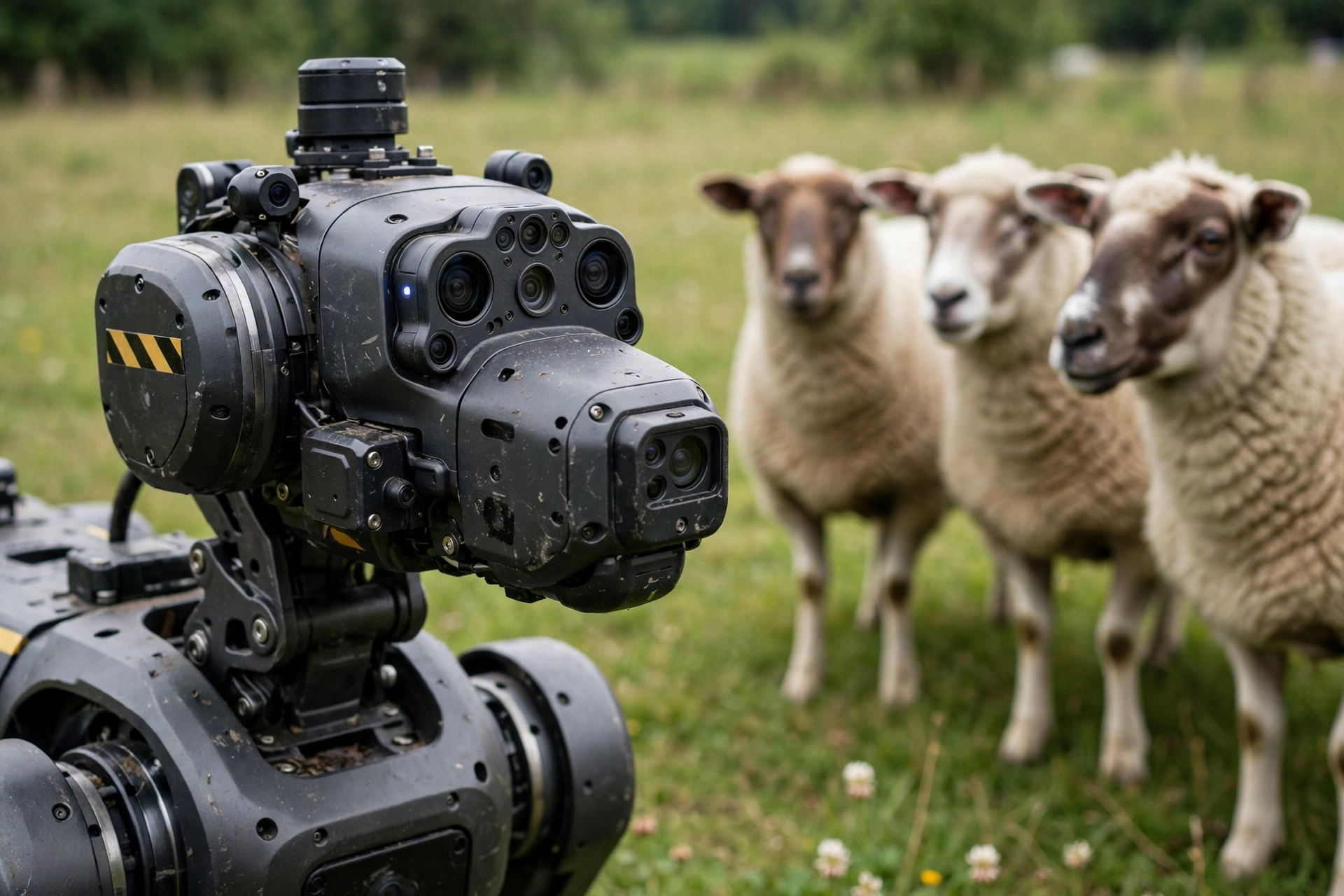
A robot shepherd is a set of sensors on legs or wheels. Cameras do the close work: picking out individual animals, spotting stragglers, watching the shape of the flock. A heat camera helps at dawn and dusk, when wool blends into grass. LiDAR builds the map, picturing ditches, fences, slopes and gates with laser pulses — vital on hill country, where a wheeled machine can get stuck. GPS handles the big picture: paddock edges, gates, and the field the flock should reach.
On the New Zealand trial, Spot’s sensors also collected crop and pasture data as it moved. A herding robot that surveys the farm does two jobs for one trip — much like inspection robots that check hard-to-reach places as they travel.
Two real robot shepherds: Spot and SwagBot
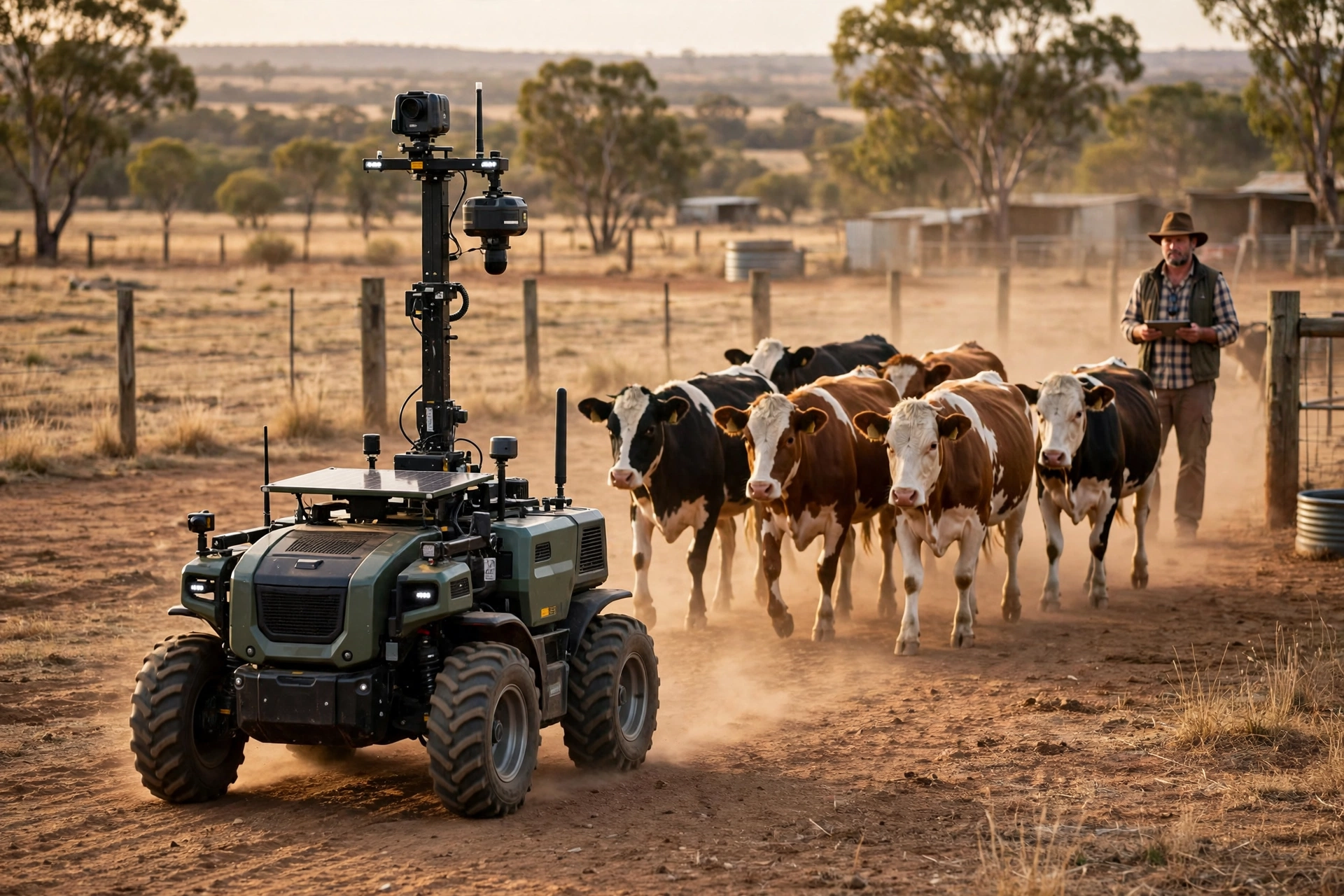
SwagBot came first. Built by the University of Sydney, it was field-tested in 2016: a silver box on four long legs with wheels for feet, battery powered, with a camera up front and a hook for pulling trailers. Early trials drove it remotely, sometimes with a drone overhead, moving cattle between paddocks like a stockman on a quad bike.
Spot’s turn came in May 2020, when New Zealand firm Rocos took the four-legged robot to a sheep and beef station. It was a proof of concept, not a product launch: could a robot built for industrial sites cope with mud, hills and live animals? It could, climbing slopes and crossing shallow creeks while a human operator watched from elsewhere. Together they proved the two shapes a robot shepherd can take: a walking dog-like machine for steep ground, and a rolling platform for open paddocks. The walking kind builds on the same four-legged design as other robot dogs, adapted for farm work.
Robot shepherd vs sheepdog vs farmer on foot
| Robot shepherd | Sheepdog | Farmer on foot | |
|---|---|---|---|
| How it moves the flock | Position and pressure, guided by cameras | Instinct, eye contact, bursts of speed | Walking behind, waving and calling |
| Best ground | Open paddocks; struggles in deep mud | Almost anywhere, even steep and boggy | Anywhere, but slowly |
| Working hours | Long stretches, if the battery lasts | Needs rest, food, days off | Limited by daylight |
| Extra jobs while herding | Maps terrain, checks fences, records data | None — herding only | Notices problems only |
| Weakness | Slow, expensive, needs supervision | Needs years of training | Slowest over a big flock |
A dog is still the fastest, cheapest way to move sheep across rough country. A robot’s advantage is stamina, data, and the ability to repeat a route without tiring.
What still goes wrong?
Plenty, which is why you cannot buy a robot shepherd off the shelf today. Speed comes first: a robot moves at a steady walking pace, and a flock that decides to run will leave it behind. Cost comes second: these are research and industrial machines, priced for companies, not family farms. Then there is judgement: a good sheepdog reads a nervous ewe or a flock about to bolt and adjusts in a heartbeat, while a robot only follows rules. That is why every trial has kept a human in the loop, watching on a screen. Rain on a lens, dust in a sensor, GPS lost under tree cover — any of these can leave a robot guessing.
Could a robot shepherd work on a small farm?
Not as a herding machine, not yet. But the pieces of it already can: a camera on a post, a drone checking fences, or a GPS tracker on the flock all watch animals from a distance, without the cost of a walking robot. Farm robots already handle other daily jobs: milking robots work through the night in dairy sheds, and agricultural robots plant and pick in the fields. If you run a small holding, start with monitoring — a trail camera at the gate, or a drone flight over the far paddock once a week — and keep the dog for the actual moving.
Frequently Asked Questions
Can a robot really herd sheep?
Yes, in trials. Spot herded sheep in New Zealand in 2020, and SwagBot moved cattle in Australia in 2016 — supervised tests, but the sheep responded as they would to a dog.
How does a robot shepherd know where to stand?
Cameras track the flock, LiDAR maps the ground, and GPS marks the paddock. Software picks the spot that applies gentle pressure to one side, steering the animals toward the gate.
Will robot shepherds replace sheepdogs?
Not soon. A trained sheepdog is faster, cheaper and better at reading animals. Robots are more likely to help with monitoring on very large farms, working alongside dogs.
How much does a robot shepherd cost?
There is no standard price, because none is sold as a finished farm product yet. The trial machines are research robots, out of reach for most farms.
What else can a herding robot do?
While moving stock it can map terrain, check fences and record pasture data. On the New Zealand trial, Spot gathered yield information as it worked.
Conclusion
Robot shepherds work because they copy the oldest trick in herding: stand in the right place and the flock moves itself. Cameras, LiDAR and GPS give the robot the awareness a sheepdog gets from instinct, and the trials show sheep accept the machine without fuss. Speed, cost and judgement still hold the idea back, so the sheepdog’s job is safe — but the technology is real. If you farm, start with monitoring: a camera or a drone over your far paddock will tell you more about your flock this week than any robot could.
Further reading: ScienceAlert: Spot the robot dog herding sheep in New Zealand and Digital Trends: Boston Dynamics’ Spot robot gives New Zealand sheepdogs a run for their money