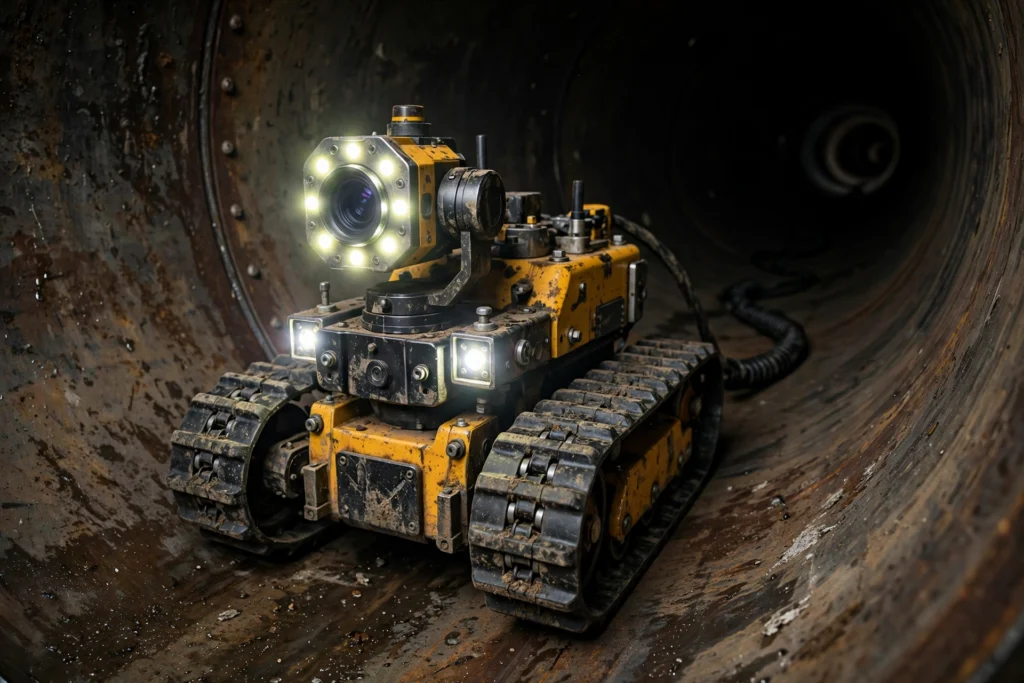
Inspection robots are machines that go where people cannot go easily or safely, look closely at pipes, tanks, bridges, and other structures, and send back pictures and measurements. They do not replace every human inspector, but they can reach tight, high, hot, or underwater spaces and record what they find in a clear, repeatable way.
Key Takeaways
- Inspection robots use cameras, lights, and sensors to examine structures from inside, above, or below.
- Crawlers, drones, climbers, and underwater vehicles suit different places and jobs.
- An operator usually guides the robot live, while software records video, location, and sensor readings.
- The inspection report matters as much as the footage: it shows where a fault was found and how serious it looks.
- Safety is the main benefit in hazardous places, but weather, battery life, and signal range still limit what a robot can do.
What is an inspection robot?
An inspection robot is a mobile machine built to examine something without taking it apart or sending a person into danger. Think of a small tracked vehicle driving through a large pipe, a drone flying close to a bridge cable, or a wheeled robot rolling along a tank floor. The robot carries the tools an inspector would want: a camera, a light, and often a sensor that measures thickness, temperature, or cracks.
The idea is simple. Instead of shutting down a whole plant, building scaffolding, or draining a tank for a first look, a team can send in a robot and get a close-up view first. If the robot finds a problem, people can then plan a targeted repair. If it finds nothing worrying, the structure can often keep running with a documented check on file.
How does an inspection robot move?
Movement depends on the place it must inspect. Pipe crawlers use wheels or tracks that grip the inside of a pipe and can climb gentle slopes, pass bends, and keep the camera centred. Some are tethered by a cable, which supplies power and carries video back without delay. Others run on batteries for shorter runs in places where a cable would snag.
Climbing robots use magnets on steel surfaces or suction and grippers on smoother walls. They move slowly and steadily, because a sharp jolt can blur the camera or knock a sensor out of place. Flying inspection drones use propellers and stabilisation software to hover near a structure, even in light wind. Underwater inspection vehicles use thrusters to hold position against a current while a camera records the surface below.
In every case, slow and steady beats fast. The robot’s job is not to cover ground quickly, but to look carefully and return usable evidence.
What cameras and sensors do they carry?
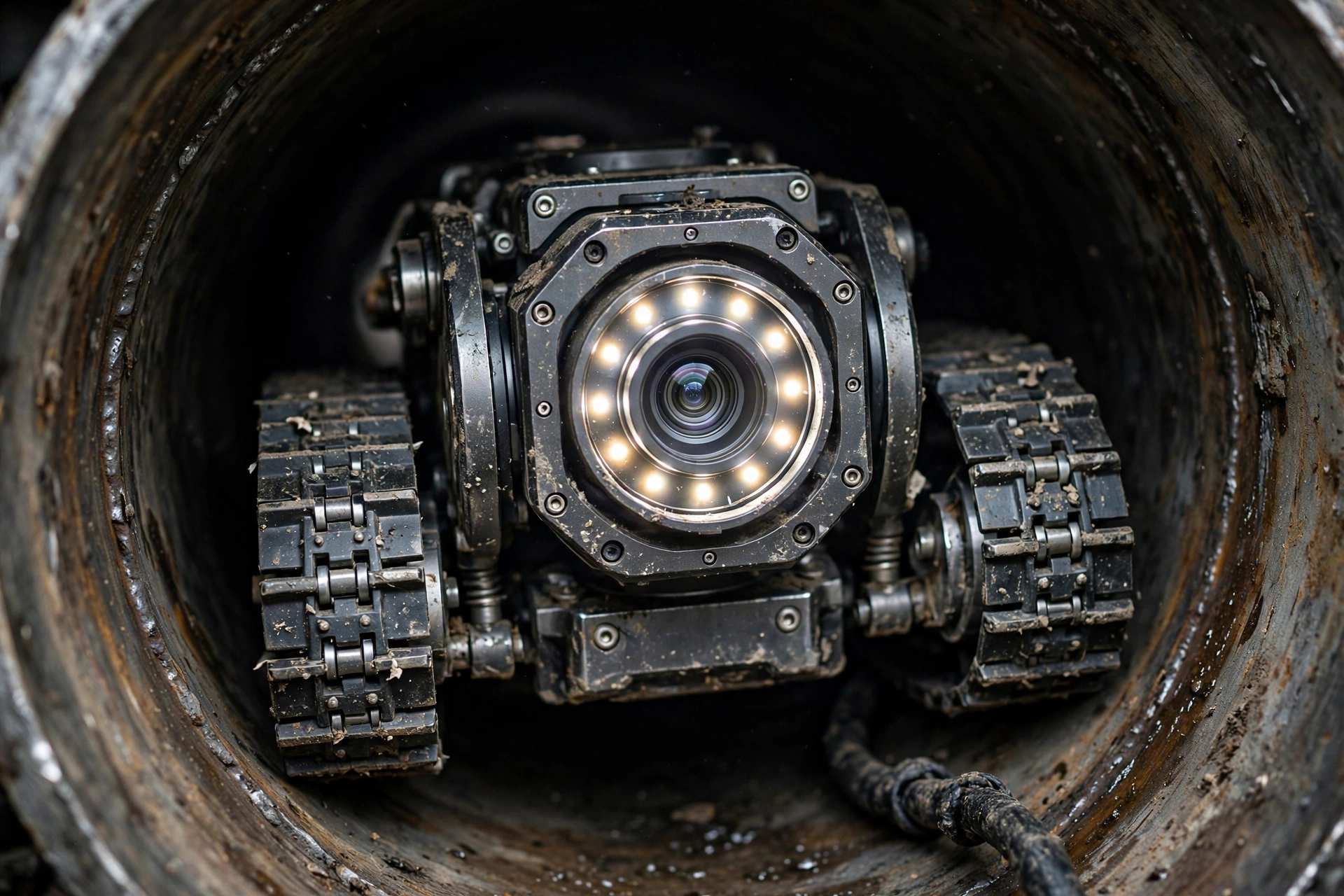
The camera is the heart of most inspection robots. A good inspection camera gives a bright, steady, close-up view, often with pan, tilt, and zoom so the operator can look around a joint or into a crack without moving the whole robot. Lights matter just as much: inside a pipe or tank, there is no daylight, so built-in LEDs must light the surface evenly without washing out detail.
Many robots add other sensors. Ultrasonic sensors can measure wall thickness and hint at corrosion hidden under a surface. Thermal cameras can show hot spots on electrical equipment or leaks in insulation. Gas sensors can warn about a hazardous atmosphere before a person enters. Laser scanners and sonar can map a space and help the operator know exactly where a fault sits.
No single sensor tells the whole story. A camera may show a stain, a thickness reading may show metal loss, and a location tag ties both to the same spot. Together, they give an inspector a much stronger case for repair — or for leaving a structure in service.
How is an inspection robot controlled?
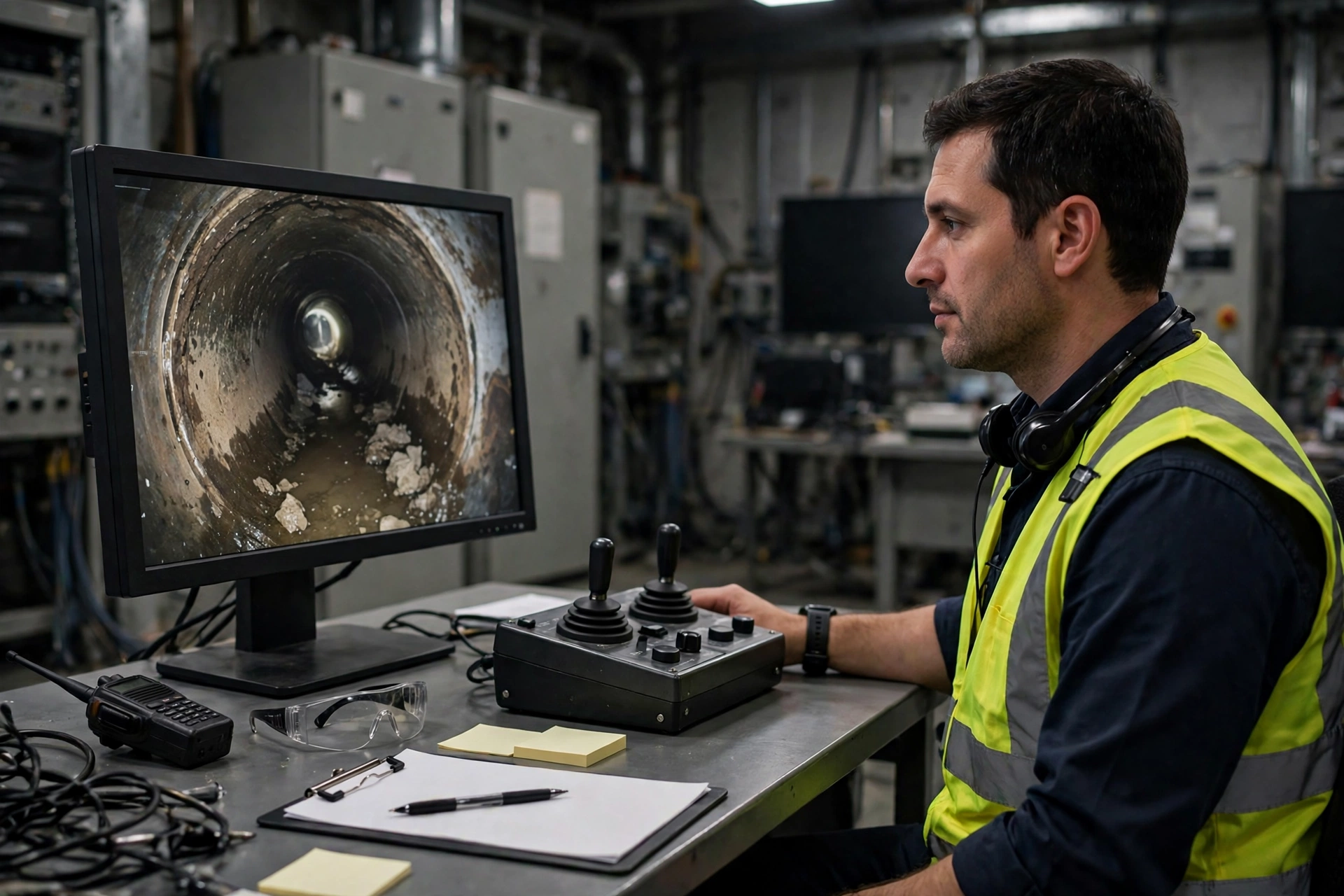
Most inspection robots are still guided by a person, not left to wander alone. The operator watches a live video feed on a screen and steers with a joystick or a controller, much like playing a slow, careful video game. The cable or radio link sends commands one way and video and sensor data back the other.
Some robots can follow a planned route on their own, hold a set distance from a wall, or return to a starting point if the signal drops. That autonomy helps in long pipes or large tanks, where steering by hand for hours would be tiring and uneven. Even then, a person usually reviews the footage, marks faults, and writes the final judgement. The robot collects evidence; the inspector decides what it means.
That division matters. A robot can miss context — a stain that looks like rust in one photo may be harmless residue once you know the history of the pipe. Human review keeps the report honest and practical.
Where are inspection robots used?
You will find them in places that are awkward, costly, or risky to inspect by hand. Inside water, sewer, and industrial pipes, crawlers check for cracks, blockages, and corrosion. On bridges, dams, and wind turbines, drones and climbers look at cables, blades, and concrete without closing a road or hiring a large crane for a first check.
Storage tanks and pressure vessels are another common job. A crawler can enter through a small opening and survey the floor and walls, cutting down the time a tank must stay out of service. Power stations use inspection robots around boilers and cooling systems, and offshore teams use underwater vehicles to survey pipelines, cables, and platform legs without sending divers into strong currents for every routine check.
They are also useful after storms or incidents, when a structure may be unsafe to approach. A robot can give a first, cautious look and help teams decide whether it is safe for people to go in next.
What are the limits of inspection robots?
Inspection robots are helpful, but they are not magic. Battery life limits how far an untethered robot can go, and a tether limits range in the other direction, since cables tangle and drag. Radio signals weaken inside metal pipes and underwater, which is why many pipe and underwater robots stay wired.
Weather affects drones, dust and steam can fog a camera lens, and a robot that is too big for an opening simply cannot enter. Cleaning matters too: a lens smeared with sludge gives a useless picture, so teams often clean and check the robot before and during a run.
Cost is another limit. A capable inspection robot, with its cameras, sensors, and software, is an investment, and it still needs trained operators and maintenance. For a small, easy-to-reach job, a person with a torch and a camera may still be the sensible choice. Robots earn their keep where access is hard, downtime is expensive, or risk is high.
How do inspection results turn into repairs?
A good inspection ends with a report, not just a video file. The operator notes the date, the route, and the location of each finding, often with a distance marker along a pipe or a GPS point on a bridge. Photos and short clips are attached to each note, so a maintenance team can see the fault without re-running the whole inspection.
Engineers then rank the findings. A hairline surface mark may only need watching at the next scheduled check. A deep crack, a thin wall reading, or a leaking joint moves to the top of the repair list. Because the robot’s route and readings are recorded, the next inspection can revisit the same spots and show whether a fault is growing, stable, or fixed.
That repeatability is a quiet strength. Two inspections a year apart, using the same route and the same markers, give a clearer picture than two one-off visits by different people with different notes.
FAQs
Can an inspection robot work inside a live pipe?
Sometimes, yes, but it depends on the pipe, the fluid, and safety rules. Some crawlers are built for water pipes and sewers, while others need the line drained or isolated first. The operator must check chemical, pressure, and temperature limits before any run.
Do inspection robots replace human inspectors?
No. They change where inspectors stand, not whether judgement is needed. Robots gather close-up evidence from hard places, but trained people review it, weigh the structure’s history, and sign off on repairs.
How far can a pipe crawler travel?
It varies a lot. Short battery crawlers may cover tens of metres, while tethered systems can run much farther, as long as the cable can be managed and the camera feed stays clear. Bends, debris, and diameter changes all shorten the practical range.
Are inspection drones safe near bridges and turbines?
They can be, with planning. Operators keep a safe distance, check wind and airspace rules, and use stabilised flight modes. A drone still cannot touch or measure a surface the way a crawler can, so teams often pair the two.
What should a buyer check before choosing an inspection robot?
Start with the job: pipe size, surface type, distance, and hazard. Then check camera quality, lighting, sensor options, tether or battery range, ease of cleaning, and whether the software exports a clear, location-tagged report.
Conclusion
Inspection robots work by taking a camera and useful sensors into places people should not, or cannot, easily reach, then turning that look into a located, dated record. Crawlers suit pipes and tanks, climbers suit steel structures, drones suit high and open faces, and underwater vehicles suit submerged work. None of them removes the need for human judgement, but each can make an inspection safer, better documented, and easier to repeat.
If you manage a facility or a structure, a practical next step is to list your hardest-to-reach inspection points and ask which robot type fits each one. That short list will tell you far more than a general search for the “best” robot, and it will help you brief an inspection team with a clear job, a clear route, and a clear report to expect in return.
Related reading
For more on related robot types, see How Do Robot Arms Work?, How Do Warehouse Robots Work?, How Do Underwater Robots Work?, and How Do Rescue Robots Work?. For wider background, see Britannica’s overview of robotics and ScienceDaily’s report on a pipe-inspection robot.