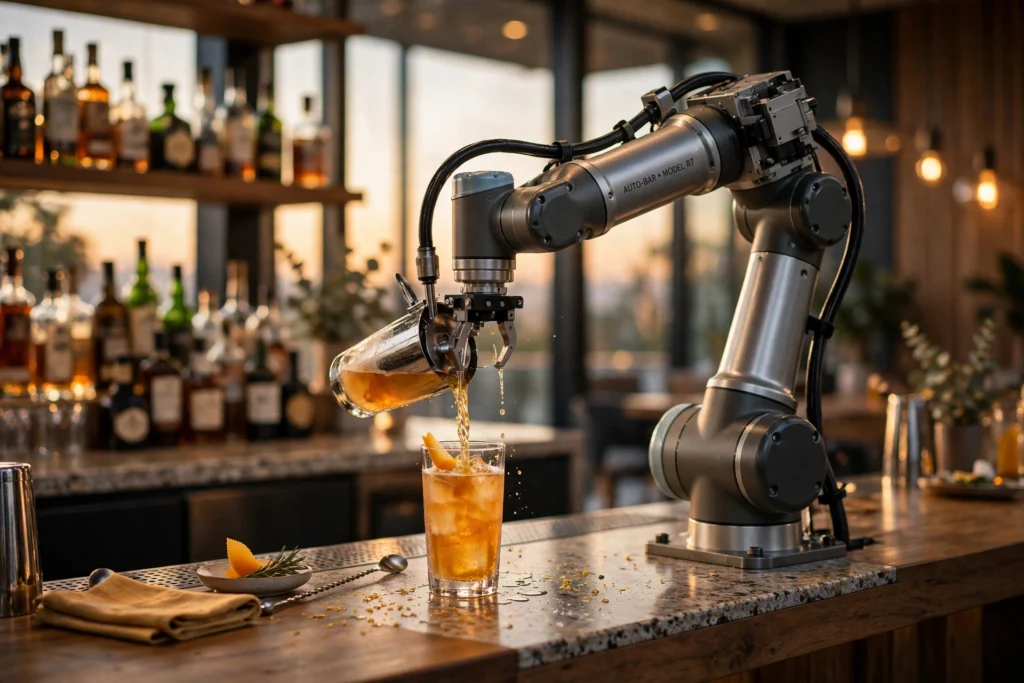
A bartender robot is a machine that mixes and serves drinks by following a recipe step by step. It measures each ingredient, shakes or stirs when the recipe calls for it, pours the drink into a glass, and hands it over — all with the same movements, in the same order, every time.
Key Takeaways
- A bartender robot follows a saved recipe, measuring ingredients instead of guessing.
- Robot arms do the mixing and pouring; pumps and dispensers supply the liquids.
- Sensors, scales, and cameras help the robot check levels, avoid spills, and stop if something is wrong.
- These robots suit busy, repeatable orders, but they do not replace human judgement about guests, safety, or taste.
- Cleaning, maintenance, and responsible service rules matter as much as the robot’s speed.
What exactly is a bartender robot?
Think of it as a small automated bar station. At its centre is usually a robot arm, much like the arms used in factories, fitted with a gripper that can hold a shaker, a glass, or a bottle. Around it are bottles, pumps, and dispensers, plus a place to set glasses and add ice or garnish. A screen or app lets a guest pick a drink, and the system turns that choice into a list of actions.
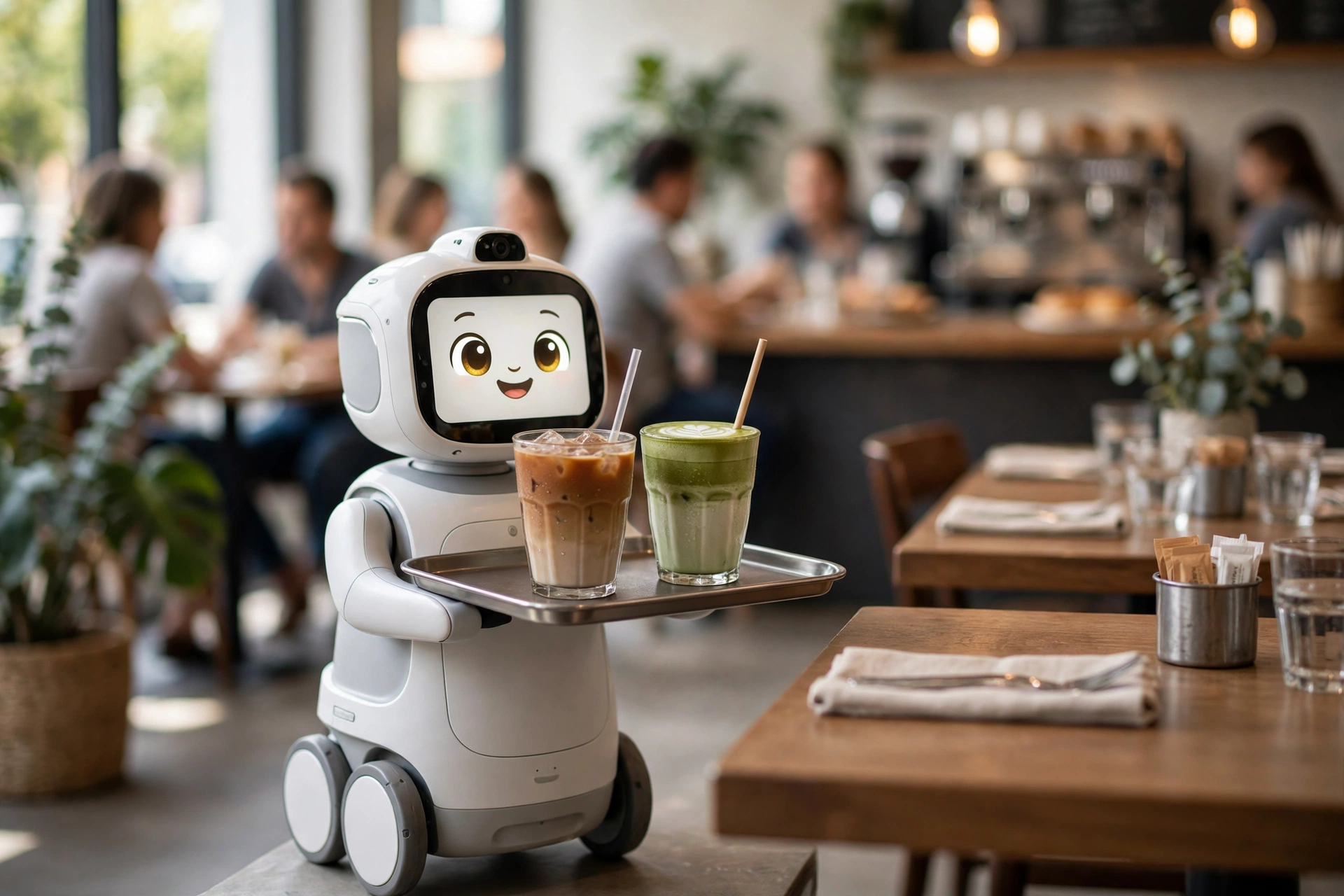
Some bartender robots are fixed behind a counter and never move. Others include a mobile base that carries finished drinks to a table. The fixed type is more common, because mixing needs steady, precise movement, while serving is a separate job that suits a simpler delivery robot. Both types share the same basic idea: repeat a known recipe carefully, rather than invent a new drink on the spot.
How does a bartender robot follow a recipe?
A recipe is stored as measurements and steps, not as a vague description. For a simple mixed drink, the steps might be: take a glass, add ice, pour a measured amount of each liquid, shake for a set time, strain into the glass, and add a garnish. The robot works through that list in order, using timed pumps or weighing scales to control each pour.
That precision is the main appeal. A human bartender can be very consistent too, but tiredness, noise, and a long queue can change a pour. A robot does not get tired in the same way, and it records what it poured. If a drink tastes wrong, staff can check the recipe and the measurements rather than guessing what happened. The trade-off is flexibility: a robot is good at drinks it already knows, and less good at a guest’s unusual request or a last-minute change.
How does it measure and pour without spilling?
Pouring looks simple, but it needs careful control. Pumps push liquid through tubes at a known rate, so the system can stop after a set time or weight. Scales under a glass can check the total as it fills. Sensors can also watch liquid levels in bottles, so the robot knows when a bottle is running low and should be changed.
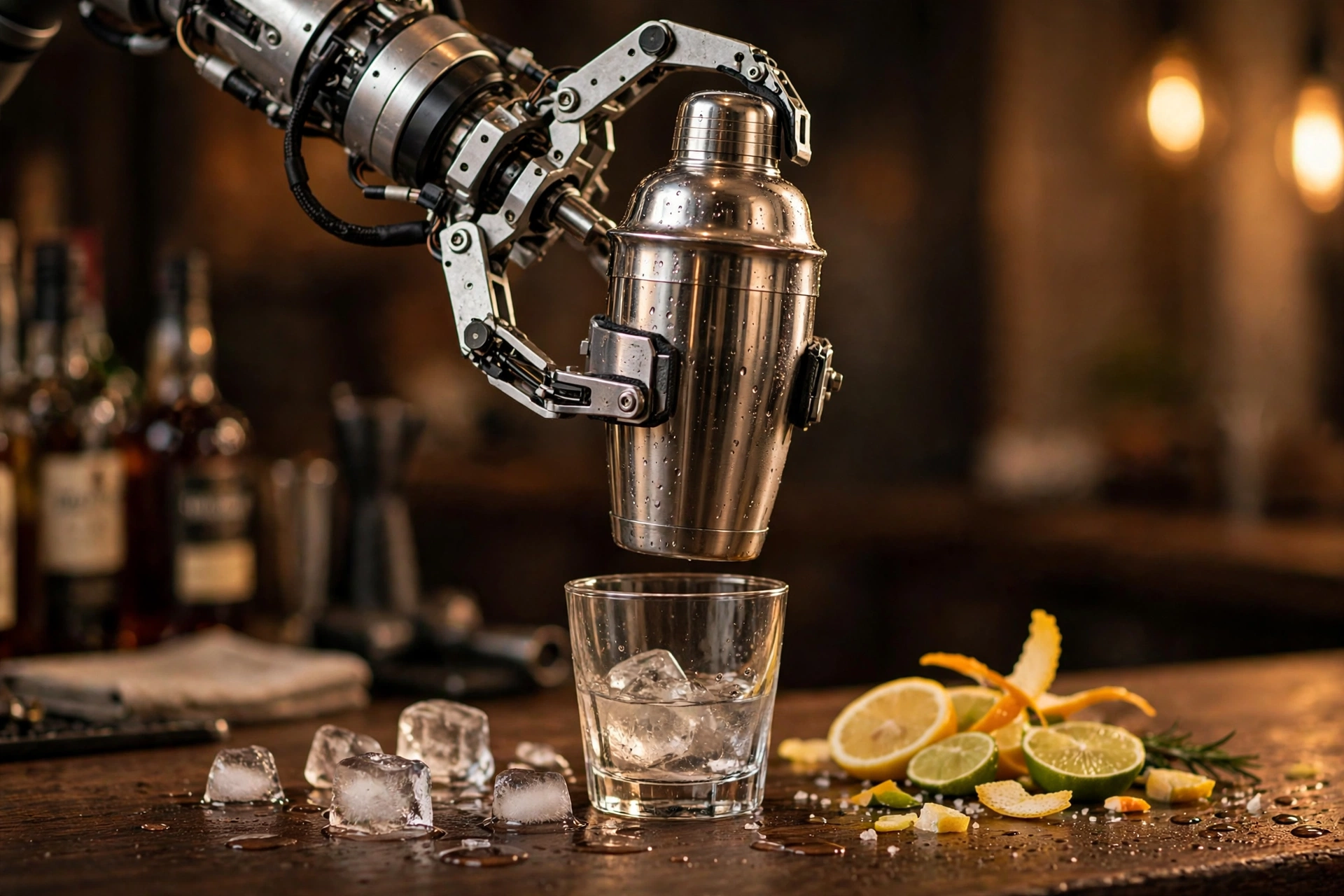
Speed is kept modest on purpose. A fast, jerky pour would splash, foam, or miss the glass. Smooth, steady movement, plus a gripper that holds the glass firmly, keeps most of the drink where it belongs. If a glass is missing, tilted, or the wrong size, a well-designed system should pause instead of pouring onto the counter. That pause, and a clear message to staff, is part of safe design, not a fault.
How do bartender robots handle ice, shaking, and garnish?
Ice is usually added by a dispenser or placed in the glass before pouring. Shaking is done by gripping a sealed shaker and moving it in a set pattern for a set time — vigorous enough to chill and mix, but controlled so the shaker stays closed. Stirring uses a similar idea, with a bar spoon or a rotating tool.
Garnish is harder. A robot can place a simple, pre-cut slice or a stirrer, but delicate garnishes and creative presentation are still easier for a person. That is why many robot bars keep a human nearby for finishing touches, or limit the menu to drinks that do not need fiddly garnish work. It is a good example of playing to the robot’s strengths instead of forcing it to copy every human skill.
How does a bartender robot serve the finished drink?
In a fixed bar setup, the drink is placed on the counter for the guest or for staff to collect. In a mobile setup, a serving robot carries it on a tray to a table, using sensors to avoid people and furniture, much like other service robots. Robot arms provide the precise mixing movement, while hotel robots show how similar machines already move around guests in hospitality settings, and delivery robots handle the short trip from counter to customer.
Serving also raises a practical question: who checks the guest? A robot can read an order, but it cannot judge age, wellbeing, or whether someone has already had enough. Responsible venues therefore keep human staff in charge of service decisions, even when a robot does the pouring. The robot is a tool for making drinks, not a replacement for the person responsible for the bar.
Are bartender robots safe?
They are designed with safety in mind, but they still need rules. Moving arms should slow or stop if a person reaches into their working area, and hot, sharp, or glass items need guards and clear boundaries. Electrical parts, liquids, and cleaning chemicals must be kept apart, and staff need training on how to stop the machine quickly.
Hygiene matters too. Tubes, shakers, and dispensers must be cleaned on a schedule, and ingredients must be stored properly. A robot that is not cleaned is no better than a dirty manual bar — in fact, hidden tubes can be worse, because a problem is harder to spot. Regular cleaning logs and checks should be part of any robot bar, not an afterthought.
What can bartender robots not do well?
Bartender robots struggle with the social side of a bar. They do not chat, read a room, suggest a drink based on a guest’s mood, or notice when someone needs help. They also struggle with new recipes, unusual glasses, and ingredients that are not in their system. A guest who asks for “something light, not too sweet, with what you have open” will usually get a better answer from a person.
They also need a suitable menu. A bar with a short list of popular drinks is a good fit. A cocktail bar built on rare ingredients, fresh herbs, and drinks made to order for each guest is a harder fit, at least for now. That does not make the robot useless — it just means it suits some venues better than others.
Where are bartender robots used?
You are most likely to meet one at an event, a hotel bar, a cruise ship, an airport lounge, or a themed venue where speed, novelty, and consistency matter. They can help during a rush, keep popular drinks identical from one order to the next, and free human staff to talk with guests, manage the room, and handle anything unusual.
For background on the wider field, see Britannica’s robotics overview and Britannica’s automation overview. Both explain, in general terms, how machines like robot arms are used to repeat precise tasks — which is exactly what a bartender robot does behind the bar.
FAQs
How fast can a bartender robot make a drink?
It depends on the recipe, but a simple mixed drink usually takes a minute or two, including measuring, shaking, and pouring. Complex drinks take longer, and the robot may still need a person for garnish or serving.
Can a bartender robot make any cocktail?
No, only drinks in its stored menu, using ingredients it has connected. A new recipe needs to be added and tested first, and some drinks are too delicate or unusual for the robot to handle well.
Does a bartender robot check a guest’s age?
No. Age checks and responsible service decisions must stay with trained human staff. The robot should only pour when staff and the venue’s rules allow it.
Do bartender robots replace human bartenders?
In most venues, no. They take over repeatable pouring and mixing, while people handle guests, taste, presentation, safety decisions, and anything unexpected.
Are drinks from a robot bartender consistent?
Generally, yes, for drinks on its menu. Measured pumps and a fixed recipe give very similar results each time, as long as the machine is cleaned, stocked, and maintained properly.
Conclusion: try one for a simple order first
If you meet a bartender robot, the practical next step is to try a simple drink from its menu and watch how it works. Notice the measuring, the steady pour, and where a person steps in for serving or garnish. That short visit will show you what these robots do well — consistent, repeatable drinks at a busy bar — and what they cannot do, which is the human part of hospitality that still matters most.