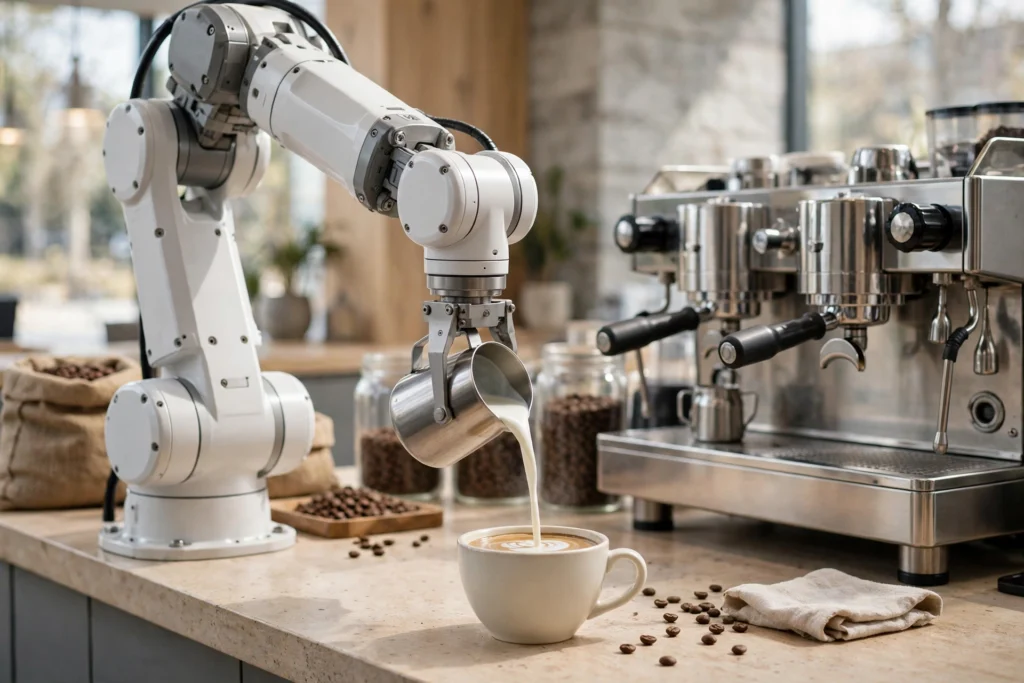
A robot barista is a machine that takes your coffee order, grinds the beans, pulls the shot, steams the milk and hands you the cup — all without a person behind the counter. A robotic arm or a built-in brewing unit does the physical work, while software handles the order, the recipe and the timing.
Key Takeaways
- A robot barista combines an ordering screen, a coffee machine, a robotic arm and software that times every step.
- It grinds fresh beans, tamps the grounds, pulls the espresso shot and steams the milk to a set temperature.
- Sensors and cameras check the cup is in place and nothing spills.
- Robot baristas suit busy, high-volume spots such as airports, offices and stations, where speed and consistency matter most.
- They struggle with the parts of coffee that need judgement — a new bean, a fussy customer or a chat about the day.
What exactly is a robot barista?
A robot barista is a self-contained coffee station that makes drinks with little or no human help. Some versions look like a normal coffee machine with a touchscreen on the front. Others are more theatrical: a six-axis robotic arm, the same kind of arm used on factory lines, moves cups between a grinder, an espresso machine and a milk frother, all inside a glass case you can watch.
Either way, the idea is the same. The machine stores recipes for each drink — how many grams of coffee, how much water, how hot the milk should be — and repeats them exactly. A human barista might make a slightly different flat white every time. A robot barista makes the same one at 8 in the morning and at 8 in the evening.
Most robot baristas sit where people want coffee fast and staff are expensive or hard to find: airports, train stations, office lobbies and shopping centres.
How does a robot barista take your order?
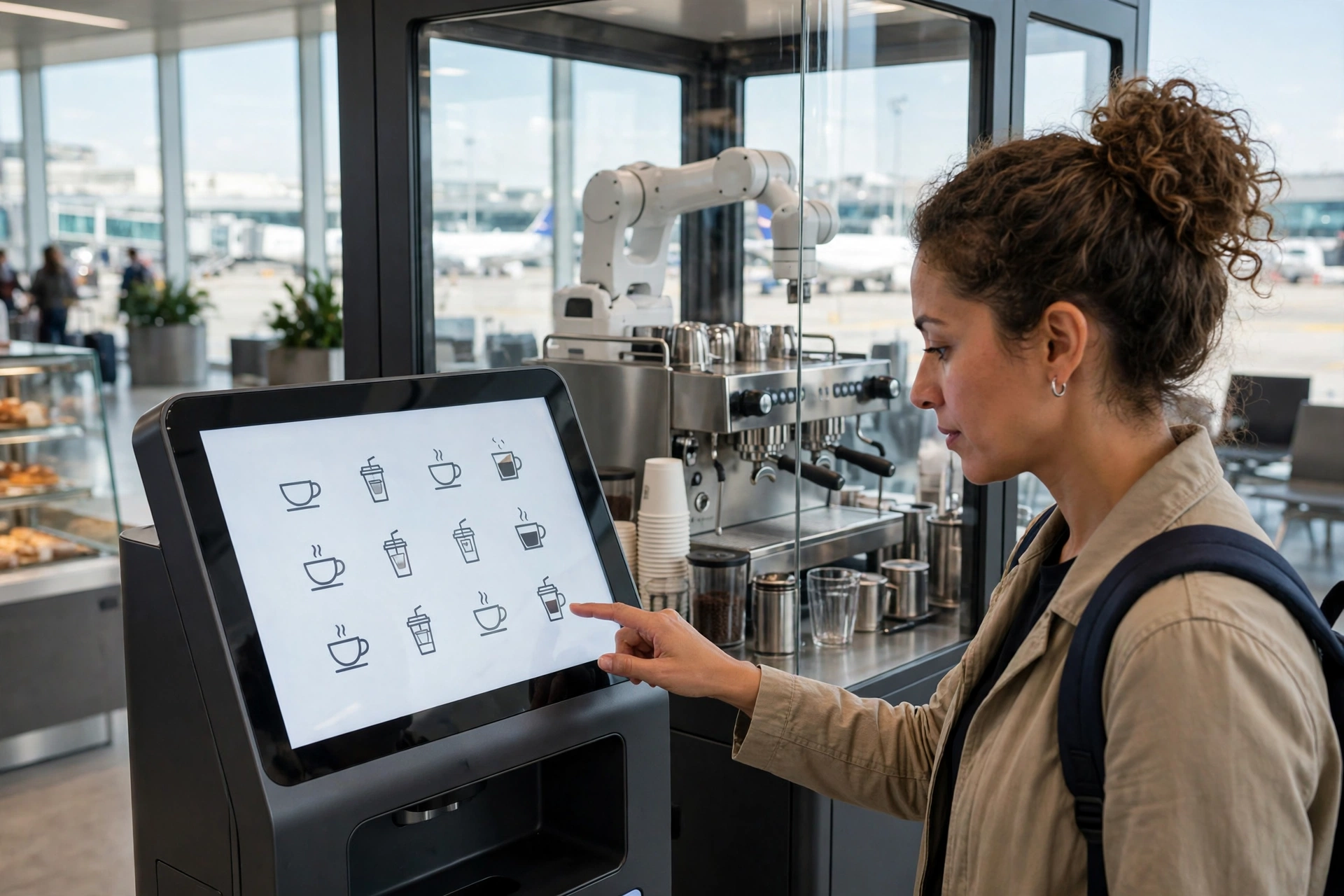
It starts with the screen. You tap your drink on a touchscreen, or order ahead on your phone and scan a code when you arrive. The software checks the order against what the machine can actually make — if it is out of oat milk, that option greys out instead of letting you order a drink it cannot finish. Payment happens on the same screen, by card or phone, and the order joins a queue.
Behind the screen, the software does the quiet work. It tracks how many beans are left in the hopper, how much milk is in the fridge and when the machine needs a clean, and it can alert staff when stocks run low. That is why a robot barista can run for hours with nobody watching it, though it still needs someone nearby to refill it and fix the occasional jam.
How does it make the coffee?
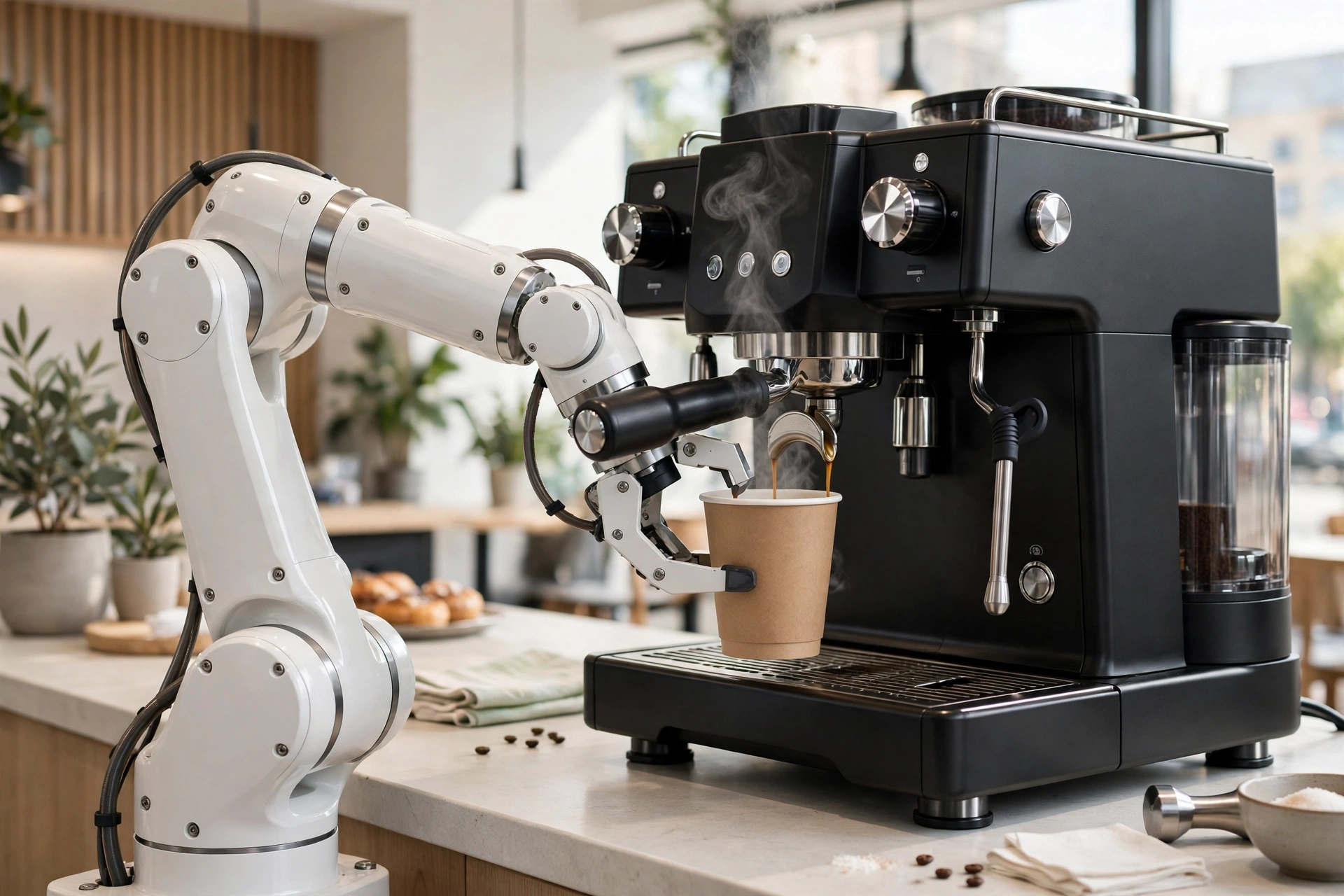
Once your order is in, the machine starts with fresh beans. A grinder doses the right weight of beans and grinds them to the fineness the recipe calls for — finer for espresso, coarser for a longer black coffee. The grounds drop into a portafilter or a brewing chamber, and a tamper presses them down evenly so water flows through at the right speed.
Then the espresso machine pushes hot water through the grounds at high pressure, usually around nine bars, for about 25 to 30 seconds. Sensors watch the flow and the temperature. If the shot runs too fast, the coffee comes out thin and sour; too slow, and it turns bitter. For a black coffee or an Americano, hot water is added and the cup is ready. For milk drinks, the machine moves on to the next step.
How does it steam milk and pour latte art?
Steaming milk is the fiddliest part of making coffee. The simplest machines froth milk in a sealed jug: steam heats the milk to a set temperature, usually around 60 to 65 degrees, and a whisk or a steam wand spins it into a smooth foam. It works well, but it produces one texture for every drink.
Fancier setups use the robotic arm. The arm picks up a jug of cold milk, holds it under a steam wand at just the right angle, and watches a temperature probe. When the milk hits the target, the arm lifts the jug away and pours. A few high-end machines can even pour simple latte art — a heart, a tulip or a rosetta — by moving the jug in a programmed pattern. It is not as varied as a skilled human barista’s work, but it is remarkably consistent.
Cameras and sensors keep the whole dance on track. A camera above the counter checks that the cup is under the spout before anything pours, and weight sensors under the cup confirm the drink reached the right amount.
How does it stay clean and safe?
Coffee machines get dirty fast, and a robot barista has to clean itself far more often than a person would bother to. Most machines run a short rinse between drinks and a deeper clean at set times — flushing the group head, purging the steam wand and running cleaning solution through the milk lines. Milk is the big hygiene risk, so the milk system is usually kept chilled and cleaned on a strict schedule.
Food safety rules still apply. A robot barista in a public place is a food business like any other, and the company running it is responsible for keeping it clean and for the freshness of its milk and beans.
Where do robot baristas work best — and where do they struggle?
Robot baristas shine where the order is simple, the volume is high and the customer is in a hurry. An airport at 6 in the morning is the classic example: hundreds of travellers want the same few drinks, and a machine that never gets tired and never mishears an order is genuinely useful. Offices are another good fit, where the same staff order the same drinks every day.
They struggle wherever coffee is about more than the drink. A neighbourhood café sells conversation, atmosphere and a barista who remembers that you take oat milk and no sugar. A robot can remember your order from your app, but it cannot ask about your weekend. A human barista also adapts in seconds to the unexpected — a bean behaving oddly in humid weather, an off-menu request — while a robot either copes within its programming or stops and calls for help.
Will robot baristas replace human baristas?
Probably not — at least not the good ones. Robot baristas are more likely to take over the repetitive, high-volume work in places where there was never a skilled barista in the first place: the motorway services, the office lobby, the airport gate. Instant coffee did not kill cafés, and pod machines did not kill baristas. Robot baristas look like the next step in that same pattern.
FAQs
How long does a robot barista take to make a coffee?
Most take between 60 and 90 seconds from order to finished drink. A black coffee is fastest; a milky drink with latte art takes longer.
Can a robot barista make latte art?
Some can. The more advanced machines pour simple patterns such as hearts and rosettas using a programmed jug movement — more limited than a skilled human barista’s, but identical every time.
How much does a robot barista cost?
Prices vary from a few thousand pounds for a compact self-service unit to tens of thousands for a full robotic-arm setup, plus ongoing costs for beans, milk, cleaning supplies and servicing.
Do robot baristas need a person nearby?
Not constantly, but they need regular human attention: refilling beans and milk, emptying waste, running deep cleans and fixing jams. Most operators keep a member of staff on call.
Can a robot barista remember my usual order?
If you order through its app, yes — it can save your usual drink and suggest it next time. But it remembers the order, not the person.
Conclusion
A robot barista works by turning a coffee recipe into a repeatable routine: take the order on a screen, grind and tamp fresh beans, pull the shot under pressure, steam the milk to an exact temperature, and check every step with sensors before handing you the cup. It is fast, consistent and tireless, and it suits busy places where the same drinks are ordered again and again. If you spot one on your next trip through an airport or station, try it and judge the coffee on its own merits.