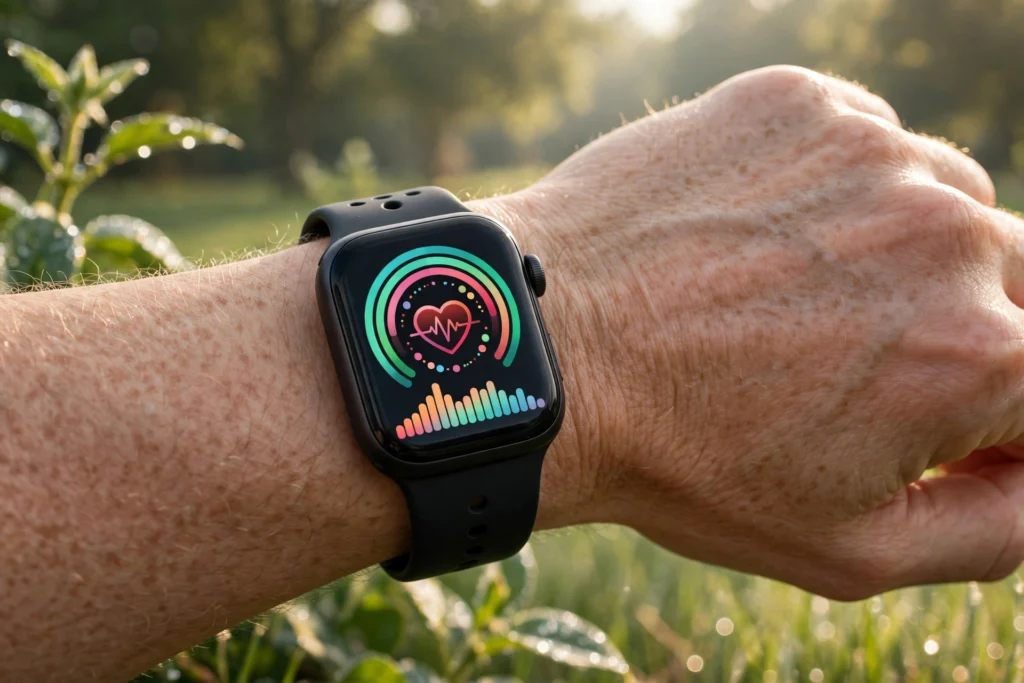
A smartwatch is a small computer for your wrist. It senses your movement and pulse, runs apps on a tiny chip, and talks to your phone over Bluetooth or Wi-Fi, so it can show notifications, track workouts, and keep time without being a phone itself.
Note: This article is general information only. A smartwatch is a wellness and convenience device, not a medical device, so treat its health readings as estimates and talk to a clinician about any health concern.
Key Takeaways
- A smartwatch combines sensors, a small processor, a display, a battery, and wireless radios in one wrist-worn device.
- Most heart-rate readings come from light-based sensors that watch blood flow change under the skin.
- Steps, workouts, and sleep are estimates made by combining motion, heart-rate, and time patterns.
- Bluetooth usually links the watch to your phone, while Wi-Fi, GPS, and cellular add independence on some models.
- Battery life depends on the display, sensors, GPS use, and how often the watch wakes up.
How does a smartwatch sense your heart rate?
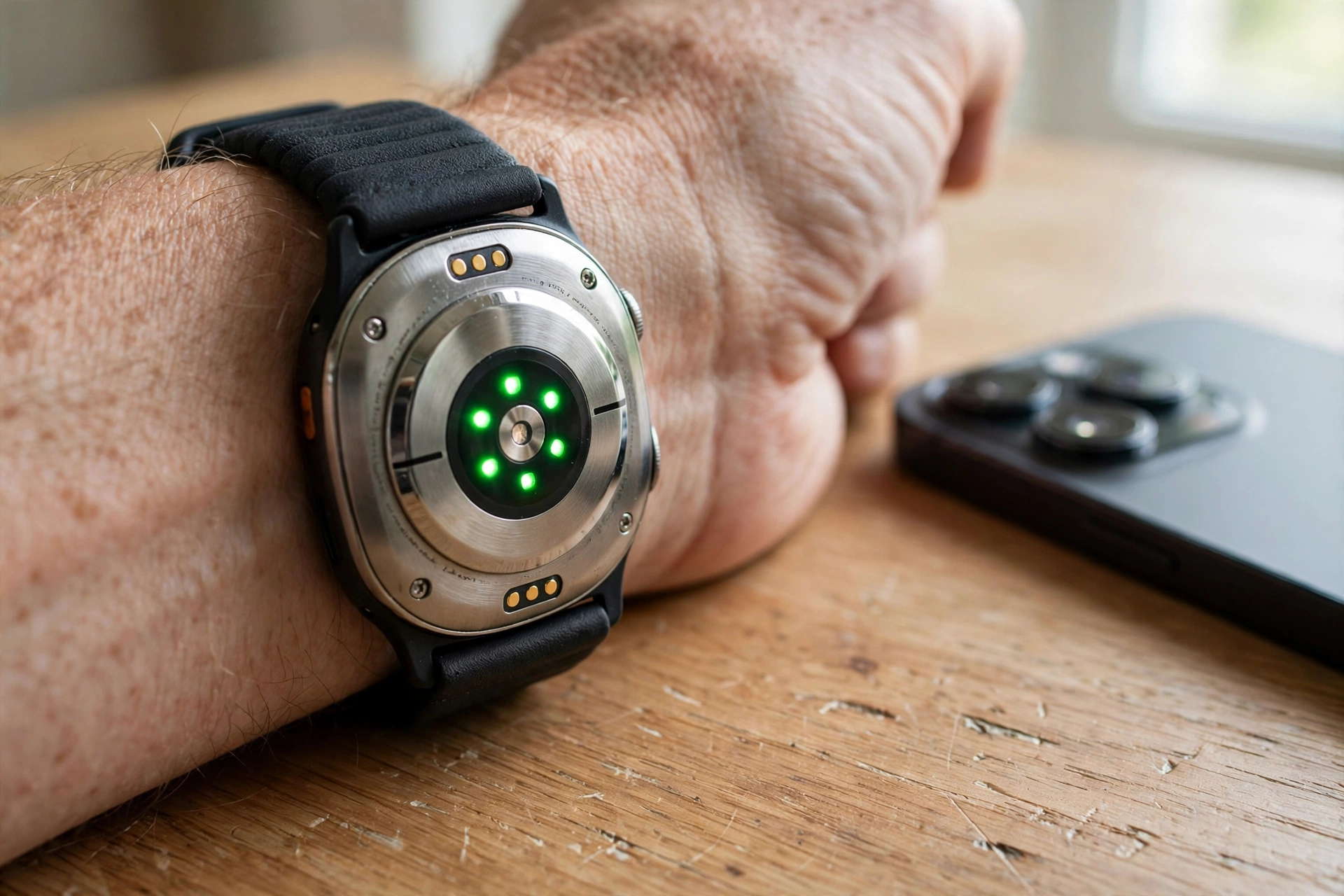
Most watches use a method called photoplethysmography, usually shortened to PPG. Green LEDs on the back of the watch shine light into the skin, and a light sensor measures how much light comes back. Blood absorbs some of that light, and the amount changes slightly with each heartbeat, so the watch can count those changes as a pulse.
Red and infrared light are often used for blood-oxygen estimates. The idea is similar: oxygen-rich and oxygen-poor blood absorb those colours differently. The watch compares the returning light and turns that pattern into an estimate, not a laboratory measurement.
Fit matters more than most people expect. If the strap is loose, light can leak in and motion can blur the signal. A snug but comfortable fit, with the sensor flat against the skin, usually gives steadier readings. Tattoos, cold skin, and hard arm movement during exercise can also make the signal noisier.
How does it count steps and recognise workouts?
An accelerometer measures changes in speed and direction, while a gyroscope measures rotation. Together, they can spot the repeated swing of a walk, the steadier rhythm of a run, or the stillness of sitting at a desk. The watch’s software compares those patterns with known activity patterns and labels them as walking, running, cycling, or something else.
That is also why a watch can sometimes get it wrong. Waving your arms while talking, pushing a shopping trolley, or riding over a bumpy road can look a bit like steps. Newer watches use heart rate, GPS speed, and time of day to check the guess, which helps, but the result is still an estimate.
For outdoor runs and rides, GPS adds location and pace. The watch listens to satellite signals and works out where it is, then measures how far and how fast you move. That is handy for route maps and pace, but GPS also uses more power, so many watches let you turn it off for indoor workouts.
How does sleep tracking work?
A smartwatch does not read your mind while you sleep, and it does not measure brain waves the way a sleep lab does. Instead, it looks for clues: long periods of stillness, a slower and steadier heart rate, and the time you usually go to bed. From those clues, it estimates when you fell asleep, when you woke, and roughly how much time was spent in lighter or deeper sleep stages.
That estimate can help spot patterns, such as late bedtimes, but it is not a diagnosis. If you regularly wake up tired or snore loudly, speak to a clinician rather than relying on a watch graph.
How does it stay connected to your phone?
Bluetooth Low Energy is the usual link. After you pair the watch through its companion app, the phone and watch exchange small amounts of data in the background: notifications, calendar alerts, health summaries, and settings. Bluetooth Low Energy is designed for short bursts of data, which helps save battery.
Wi-Fi can handle larger jobs, such as app updates or music downloads, when the watch is near a known network. Some watches also have cellular radios and an embedded SIM, so they can make calls, send messages, and stream music even when the phone is at home. Those models usually cost more to run and use battery faster.
NFC is another small radio found in many watches. It is the same short-range technology used for tap-to-pay cards, and it lets you pay at a terminal by holding your wrist near it, where supported.

What powers it, and why does battery life vary so much?
Inside the watch is a small rechargeable lithium-ion battery, a system-on-a-chip that runs the operating system and apps, memory, and a display. The display is often the biggest power draw, especially if it stays on all day or runs at high brightness.
Sensor use matters too. Continuous heart-rate tracking, GPS during a long run, and cellular data all drain the battery faster than simple time and notifications. That is why one watch can last a day with heavy use and several days with light use, even though the battery itself has not changed.
Charging is usually wireless, using a small magnetic puck or pad. A full charge often takes an hour or two, and many people charge while getting ready in the morning.
How do you choose one that fits your life?
Start with your phone, because most watches work best with one phone family. Then think about what you will actually use: daily tracking, serious run training with GPS, swimming, or calls without a phone. Check water resistance if you swim, and whether the health features you want need a subscription. If you hate charging every night, look for multi-day battery life; if you want the brightest screen and every sensor running, accept nightly charging.
FAQs
Can a smartwatch work without a phone nearby?
Yes, partly. Most watches can still tell the time, track a workout, and store health data without a phone. Notifications, calls, and app updates usually need Bluetooth, Wi-Fi, or cellular, so full features return once the watch reconnects.
Is a smartwatch heart-rate reading accurate?
For resting heart rate and steady exercise, it is often close enough to be useful. During fast, jerky movement, accuracy can drop. Think of it as a good trend tracker, not a replacement for a medical heart monitor.
Does a smartwatch need the internet all the time?
No. The watch stores recent data and syncs when it can. It needs a connection for live notifications, maps, streaming, and updates, but basic tracking works offline.
Can you swim with a smartwatch?
It depends on the model and its water-resistance rating. Many watches are made for swimming, but ratings, depth limits, and care instructions differ, so check the maker’s guidance for your exact model before getting in the water.
Why does my smartwatch battery drain so fast sometimes?
Common causes are always-on display, frequent GPS workouts, cellular use, many notifications waking the screen, and an older battery that no longer holds a full charge. Turning off always-on display and limiting GPS to workouts usually helps.
Conclusion: a practical next step
A smartwatch works by turning small signals — light, motion, location, and wireless data — into useful summaries on your wrist. If you are thinking of buying one, start with a simple test: list the three things you would check on it every day, then choose a watch that does those three well, fits your phone, and has a battery routine you can live with.