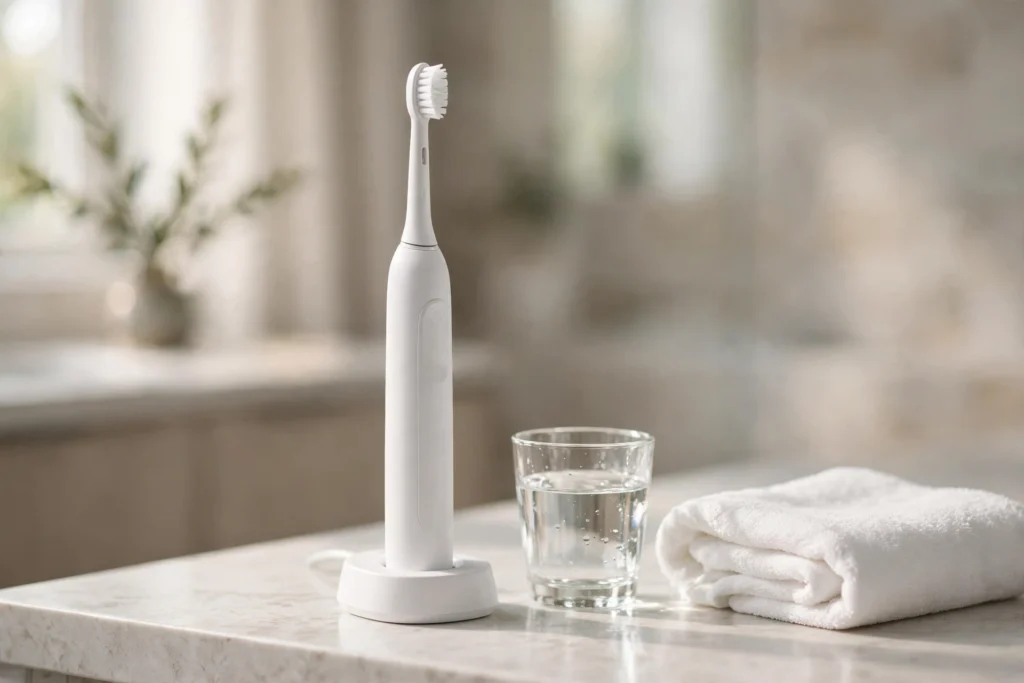
An electric toothbrush works by moving its brush head faster than a hand can manage, so plaque is swept away with less scrubbing from you. A small motor in the handle drives the head in rotating or vibrating movements, while a timer keeps you brushing for two minutes and a pressure sensor warns you if you press too hard.
This article shares general information about how electric toothbrushes work. It is not dental advice — if you have gum pain, bleeding, or a dental condition, ask your dentist.
Key Takeaways
- A small motor in the handle moves the brush head thousands of times a minute.
- Oscillating heads rotate back and forth; sonic heads vibrate side to side.
- A pressure sensor slows or stops the brush when you press too hard.
- A two-minute timer, split into four parts, helps you cover every section of your mouth.
- The brush charges on a base or by USB, and the head needs replacing every few months.
What moves the brush head?
Inside the handle sits a small electric motor, a rechargeable battery, and a simple circuit board. Press the power button and the motor turns that energy into movement, passing it up a metal shaft to the brush head. Instead of scrubbing, you guide the brush slowly from tooth to tooth and let the head do the work.
Most brushes run on a lithium-ion battery, the same kind found in phones, and a full charge usually lasts about two weeks of twice-daily brushing. The head clips or twists onto the shaft, so it can be swapped when the bristles wear out. Wikipedia’s electric toothbrush page has a fuller overview of the designs.
Oscillating, rotating, or sonic — what’s the difference?
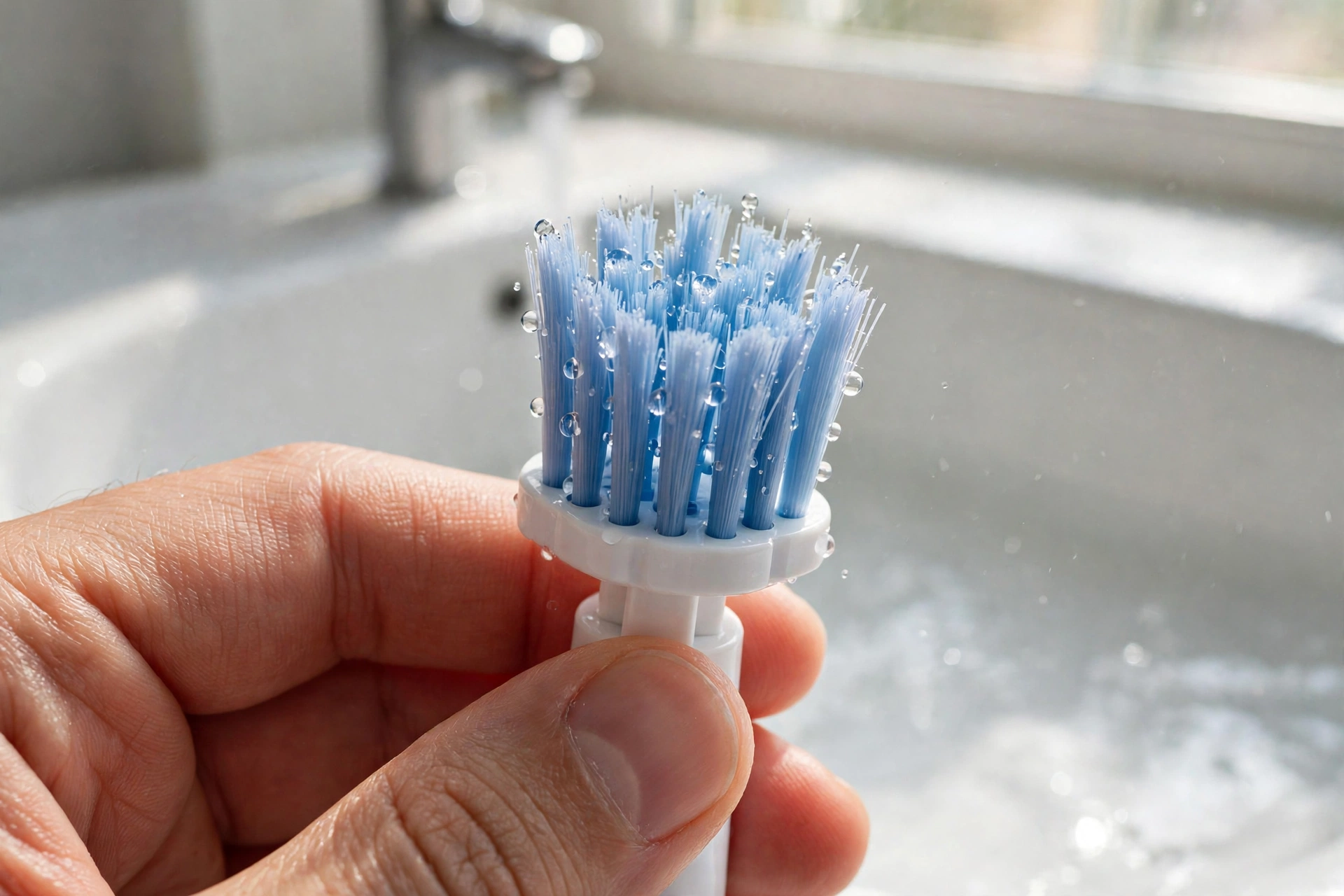
Oscillating-rotating brushes have a small round head that spins a short distance one way, then back the other way, many times a second. The round shape wraps around each tooth, and the quick back-and-forth motion scrubs plaque off the surface and along the gum line.
Sonic brushes look more like an ordinary manual brush, with a longer rectangular head. Instead of rotating, the head vibrates side to side at very high speed — fast enough that you can barely see it. The vibration helps clean between teeth and just below the gum line. Neither type is clearly best: a brush you actually use twice a day beats a fancier one left in a drawer.
What does the pressure sensor actually do?
Pressing too hard is one of the easiest mistakes to make, especially if you are used to scrubbing with a manual brush. Hard pressure can wear enamel and irritate gums, and it flattens bristles so they clean less well.
A pressure sensor watches how hard you are pushing. When the force passes a set level, some models slow the head down, some pause the vibration, and some flash a red light or buzz briefly. When the warning kicks in, ease off and let the head float across the tooth surface. It works like the sensors in a fitness tracker — see our guide to how a fitness tracker works.
How does the two-minute timer help?
Dentists suggest brushing for two minutes, twice a day, and the timer makes that easy to judge. Without it, most people stop after 30 or 45 seconds without realising it. The brush keeps count so you do not have to.
Almost every electric brush splits the two minutes into four 30-second blocks, one for each quarter of your mouth. Every 30 seconds the brush pauses or buzzes briefly, and that is your cue to move on. Some add a phone app over Bluetooth — see our explainer on how Bluetooth works.
How does the brush charge, and how long does the battery last?
Most electric toothbrushes charge by sitting on a small base that plugs into the wall. The base has no exposed metal contacts: power passes through the plastic by induction, the same trick used by charging pads for phones. We explained that process in our guide to how wireless charging works.
Newer models often charge by USB instead, which is handy for travel. Battery life depends on the mode: a gentle daily mode sips power, while a deep-clean mode runs the motor harder and drains the battery faster. Check the battery life in the manual before you buy.
How do you use one properly?
First, wet the head and add a pea-sized amount of toothpaste. Switch it on only once it is in your mouth, or toothpaste will spray across the mirror. Hold the head against one tooth at a time, angled slightly towards the gum line, and move slowly along the row. Let the head do the moving — you just guide it.
Work through the four sections the timer marks out, spending about 30 seconds on each. Cover the outside of the teeth, the inside, and the chewing surfaces, then finish with a gentle pass along the gum line. Rinse the head under the tap afterwards and leave the brush standing upright to dry.

When should you replace the brush head?
Brush heads wear out. The bristles splay, fray, and lose their shape, and a worn head cleans less well and can feel rough on your gums. Most dentists suggest replacing the head every three to four months, or sooner if the bristles look bent or faded. The American Dental Association’s guidance on toothbrushes covers the same replacement advice.
Replacement heads are sold in packs, and they are specific to the brand and sometimes to the model, so check the packaging before you buy. Some heads have bristles that fade as a reminder that the head is wearing out.
Frequently Asked Questions
Do electric toothbrushes clean better than manual ones?
For most people, yes, a little. The head moves far faster than a hand can, and the timer encourages a full two minutes of brushing. A manual brush used carefully for two minutes still cleans well, though.
Can an electric toothbrush damage your gums?
It can if you press too hard, which is why the pressure sensor exists. Used gently, with the head guided rather than scrubbed, an electric brush is generally kind to gums. If your gums bleed often, ask your dentist.
How long should I brush with an electric toothbrush?
Two minutes, twice a day. The built-in timer handles the counting: four 30-second sections, one for each quarter of your mouth.
Can children use electric toothbrushes?
Yes, and many children find them easier and more fun than manual brushes. Choose a smaller head made for children, use a pea-sized amount of toothpaste, and supervise younger children until they can brush on their own.
Do I still need to floss if I use an electric toothbrush?
Yes. A toothbrush cannot fully reach between your teeth, so cleaning between them once a day with floss or interdental brushes is still part of a complete routine.
Conclusion
An electric toothbrush is a small motor, a battery, and a few clever helpers — a pressure sensor and a timer — wrapped in a handle you hold for two minutes twice a day. The motor does the scrubbing, the sensor keeps you gentle, and the timer keeps you honest about the time.
If you are switching, start simple: pick a brush that feels comfortable, check that replacement heads are easy to find, and give yourself a week to get used to it. The best brush is the one you will actually use, twice a day, every day — much like the reminders on a smartwatch, which we covered in our guide to how a smartwatch works.