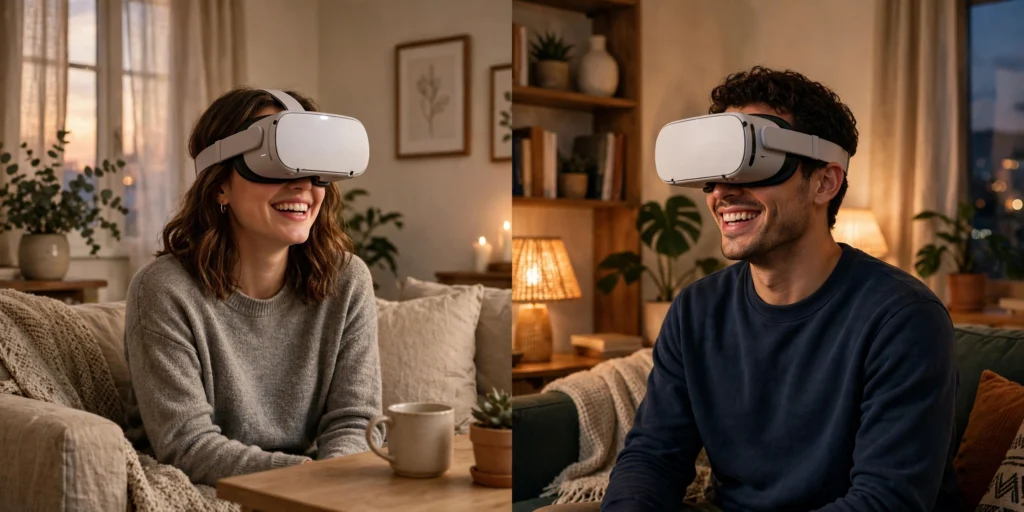
VR dating lets two people meet inside a shared virtual space instead of swapping messages on a phone screen. You put on a headset, appear as an avatar, and talk in a virtual café, on a beach, or at a concert. It feels closer to a real date than texting does, even though you’re both sitting at home.
Key Takeaways
- VR dating means meeting someone in a shared 3D world using a headset and an avatar.
- A date usually involves talking and doing something together, like watching a film or playing a game.
- Avatars, voice chat, and body language do the work that photos and text do on a normal dating app.
- Keep personal details private, use the app’s blocking tools, and meet in public if you move offline.
- It works best as a way to get to know someone before meeting in person.
What exactly is VR dating?
VR dating is dating that happens inside virtual reality. Instead of looking at a profile and sending messages, you meet the other person in a virtual place. Both of you wear a headset and control an avatar — a digital version of yourself that moves, gestures, and talks as you do.
Some VR dating apps are built for this from the start. Others are social VR platforms where people happen to meet and hit it off. Either way, the date takes place in a shared space, in real time, with voices and movement instead of typed messages. It is still early days, and VR dating is nowhere near as common as phone-based dating apps, but as headsets get cheaper and lighter, more people are trying it.
How does a VR date actually work?
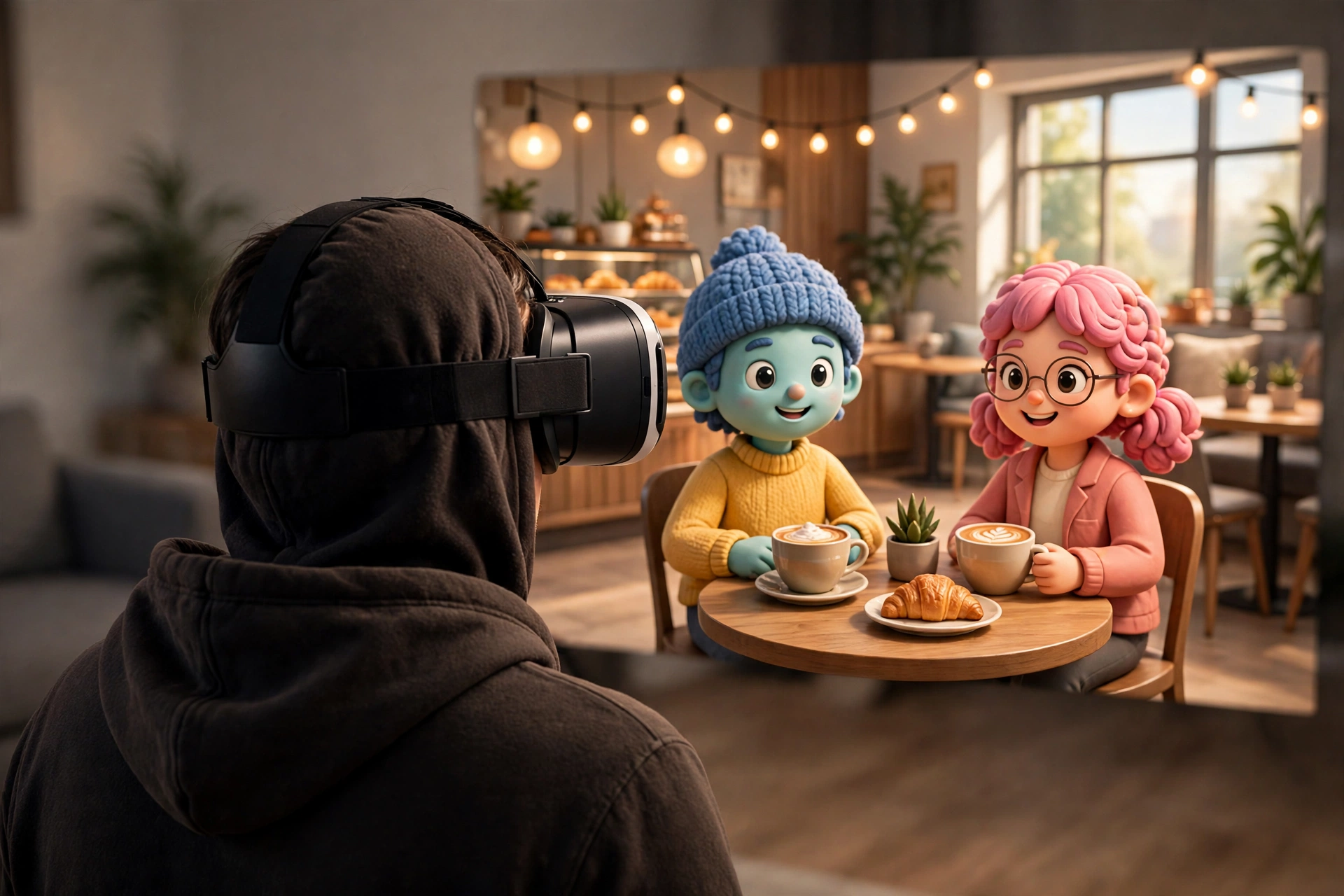
You match or connect with someone, often through a VR dating app or a social VR world, and agree on a time, just like a normal date. Then you both put on your headsets, open the app, and meet in a chosen virtual location — a quiet café, a rooftop at sunset, a cinema, or a game arcade.
You walk around together, sit down, talk, and do something: order virtual coffee, watch a short film, play a simple game, or just explore. Voice chat carries the conversation, and your avatar’s gestures add a layer that text never could. A date usually lasts 30 to 60 minutes, and when it ends you take off your headsets and you’re back in your own living rooms.
What are avatars, and how much do they matter?
An avatar is the digital body you use in virtual reality. It can look like a simplified cartoon version of you, or something far more detailed, depending on the platform. Some apps let you build one from a photo; others give you a set of styles to choose from.
Avatars matter more than most people expect. Your avatar is the first thing the other person sees, and how it moves — the way it nods, waves, or leans in — says a lot about you. A stiff, silent avatar can make a date feel cold, while one that gestures naturally makes the conversation feel warmer.
Do you need expensive equipment?
You need a VR headset, and that is the main cost. Standalone headsets — the kind that work without a computer or a games console — are the most popular choice, because they are simple to set up and easy to use from a sofa. You also need a stable internet connection and enough clear floor space to move safely. You don’t need gloves, a full-body suit, or a powerful gaming PC: a basic standalone headset, its two controllers, and a quiet room are enough. If you don’t own one, borrow a friend’s before buying, just to see whether you enjoy being in VR at all.
Is VR dating safe?
VR dating has the same risks as any online dating, plus a few of its own. Most platforms give you tools to protect yourself, and a few sensible habits cover most of the risk.
Keep your personal details to yourself at first. Don’t share your full name, address, workplace, or phone number until you trust the person, and use the app’s own chat rather than moving to a private channel straight away. If someone makes you uncomfortable, block them — and report them if they break the platform’s rules.
What are the downsides of VR dating?
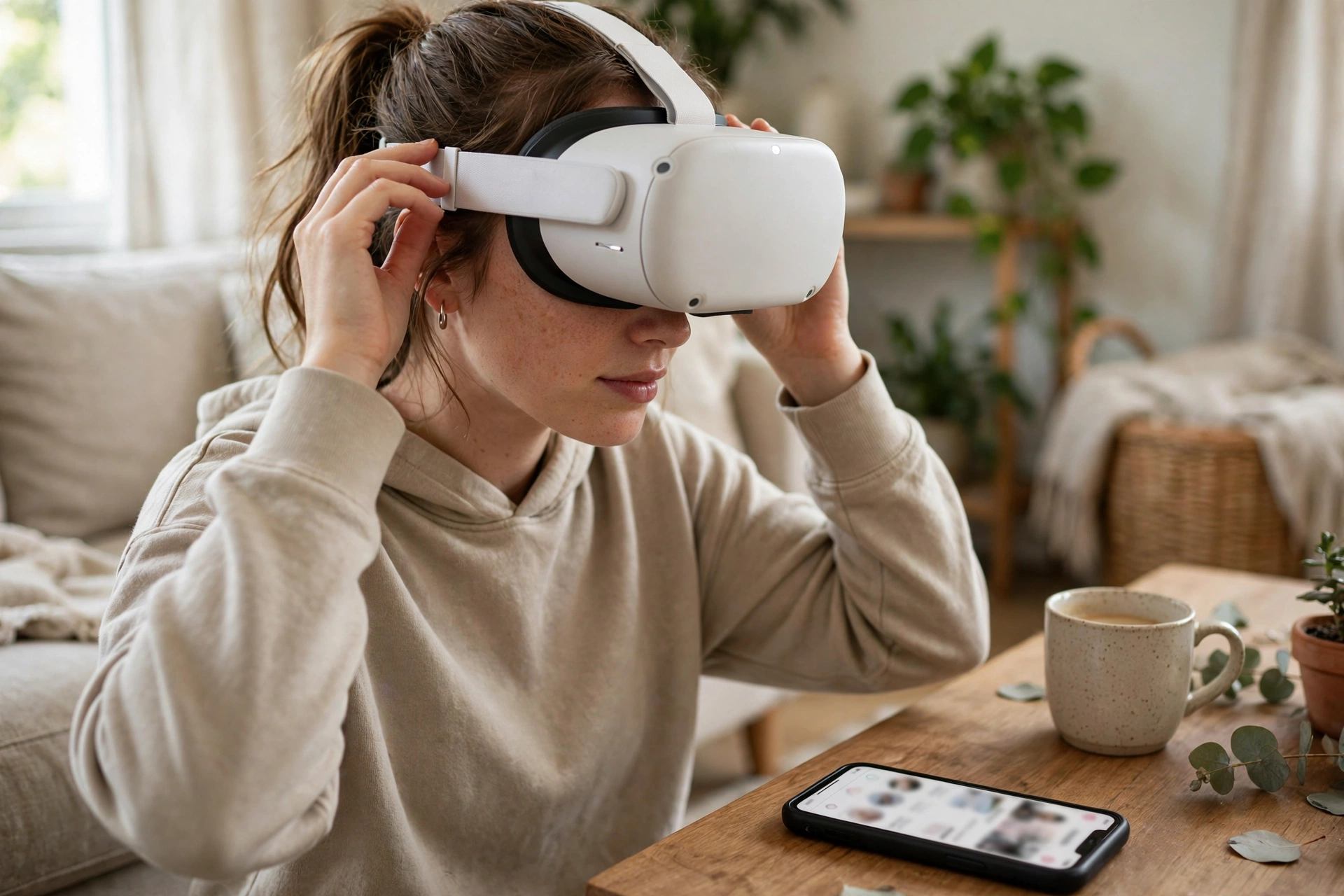
VR dating is fun, but it isn’t for everyone. The headset itself is the first problem: wearing it for an hour can feel heavy, warm, and tiring, and some people get motion sickness in VR. If you feel queasy, short dates are better than long ones.
There is also the question of chemistry. A VR date can tell you a lot about someone’s humour and manners, but it can’t tell you how you feel standing next to them. Eye contact and the small physical cues of being in the same room are all missing. That’s why most people who enjoy VR dating still see it as a step towards meeting in person, not a substitute for it.
Conclusion
VR dating turns a first date into a shared experience instead of a string of messages. You meet as avatars, talk in real time, and do something together in a virtual place — a café, a cinema, or a walk through a world that doesn’t exist. It’s more personal than swiping, and for some people it’s a genuinely good way to get to know someone. If you’re curious, the practical next step is simple: pick a VR dating app or a social VR world, set up an honest avatar, test your headset in a public space first, and see whether a virtual date feels like something you’d enjoy.
FAQs
What is VR dating?
VR dating is meeting someone inside a shared virtual reality world using a headset and an avatar. You talk in real time, move around together, and do activities like visiting a virtual café or watching a film, instead of just exchanging messages on a phone.
Do I need a VR headset to try VR dating?
Yes. You need a VR headset and a stable internet connection. A standalone headset that works without a computer is the simplest option, and you don’t need extra accessories like gloves or a full-body suit for a first date.
Is VR dating safe?
It can be, if you take the same care as with any online dating. Keep personal details private, use the app’s block and report tools, and meet in a public place if you move offline. Be aware that avatars can hide someone’s real age and appearance.
Can VR dating lead to a real relationship?
Yes, for some people. Many VR daters use it to get to know someone before meeting in person. The conversation and shared activities can build a real connection, but most couples still need to meet face to face to see whether the chemistry holds up offline.
Further reading
For more on the technology behind VR dating, see our guides to how VR headsets work, how VR avatars are built, how VR meetings bring people together, and how VR is used beyond gaming. For background on the technology itself, see Britannica’s virtual reality overview and the Wikipedia article on virtual reality.