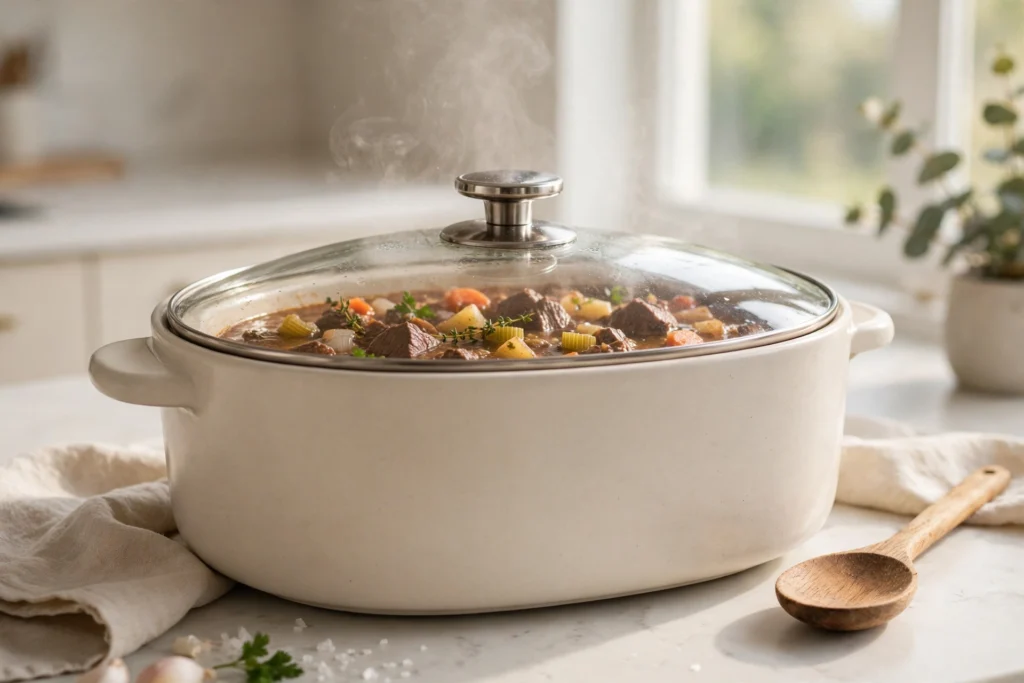
A slow cooker works by heating food gently and holding it at a low, steady temperature for hours. A heating element warms a thick ceramic pot, the lid traps steam and moisture, and the long, slow heat breaks down tough fibres in meat and vegetables until dinner is tender and ready when you are.
Key Takeaways
- A slow cooker is a heating element, a ceramic crock, and a tight lid — nothing more complicated than that.
- Food simmers at roughly 79 to 93°C for four to eight hours, well below a rolling boil.
- The lid traps steam, which condenses and drips back into the food.
- Tough, cheap cuts suit it best; delicate foods and dairy do not.
- Thaw meat first, keep the lid on, and boil dried kidney beans before they go in.
What sits inside a slow cooker?
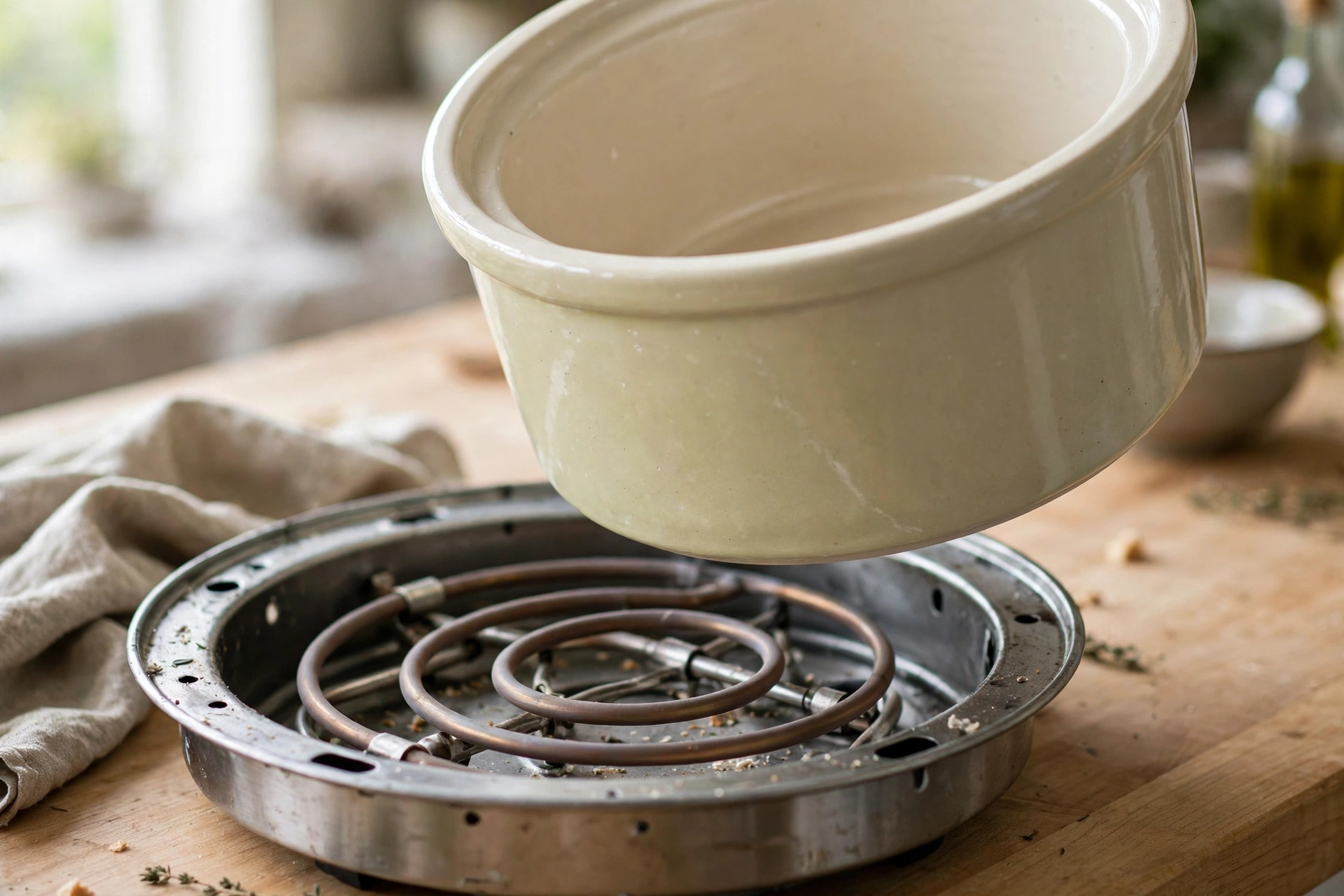
Only a handful of parts do the work. The outer housing, usually metal or plastic, holds a low-wattage electric heating element at the bottom, often running partway up the sides too, so heat reaches the pot from more than one direction.
Inside sits the crock: a heavy, glazed ceramic pot that lifts out for serving and washing. Ceramic heats slowly, holds heat evenly, and releases it gradually — exactly what a long cook needs. On top goes the lid, usually glass, sitting in a groove around the rim. A dial or small digital panel controls the settings: low, high, and keep warm, with timers and delayed starts on fancier models.
How does the heat actually cook the food?
Turn the cooker on and the element warms the crock from the outside in. The food climbs to a steady simmer, roughly 79 to 93°C, and stays there — lower on low, higher on high. It never reaches a hard boil, and that is the point.
At these temperatures the liquid in the pot — stock, water, or the juices the food releases — carries heat into every piece of food and spreads flavour as it goes. Meanwhile the long, moist heat breaks down collagen, the tough connective tissue in cheaper cuts, turning it into soft gelatin.
The lid completes the system. Steam rises, hits the cooler glass, condenses, and drips back into the pot, so moisture stays in the dish instead of escaping into the kitchen. Lift the lid and that trapped heat escapes, so peeking costs cooking time.
What happens inside, step by step?
Layer the ingredients: firm root vegetables at the bottom, where it is hottest, with the meat on top. Add about a third less liquid than a hob recipe needs, because almost nothing evaporates. Put the lid on and choose a setting — low takes seven to eight hours, high about three to four.
Then leave it alone. The element cycles on and off to hold the temperature steady. When the timer ends, many cookers switch to keep warm, holding food around 71 to 74°C until you eat. That setting holds a finished meal; it should never do the cooking.
If the sauce looks thin, take the lid off for the last half hour.
Low or high: which setting should you use?
Low and high reach roughly the same final temperature; the difference is how quickly they get there. Low suits an all-day cook while you are out; high finishes in about half the time.
Tip: start on high for the first hour, then switch to low — it clears the lukewarm stage quickly and finishes gently.
What cooks well — and what doesn’t?
Slow cookers shine with foods that need time. Tough cuts — pork shoulder, brisket, chuck steak, lamb shank — turn tender and rich. Soups, stews, curries, and chilli are the classics.
Some foods do not suit it. Pasta and rice turn to mush after hours in the pot, so add them near the end. Dairy curdles, so stir cream or cheese in during the last half hour. Delicate fish and most vegetables go soft if they cook all day.
One firm rule: dried kidney beans should never go straight in. They contain a natural toxin that low heat may not destroy — soak them overnight and boil them hard for ten minutes first, or use tinned beans.
Is it safe to leave a slow cooker on all day?
Yes, that is what it was designed for, with a few common-sense rules. Always thaw frozen meat in the fridge first — a frozen chunk keeps the pot lukewarm for too long. Fill the crock at least half full, and keep the lid on.
Leftovers need the same care as any cooked food: cool them quickly in shallow containers, refrigerate within two hours, and eat within a couple of days or freeze them. Reheat once, until steaming hot. Do not reheat cold food in the slow cooker — it warms too slowly. Use the hob or the microwave oven instead.
Slow cooker or pressure cooker: which should you pick?
They solve opposite problems. A slow cooker trades time for tenderness: set it in the morning, eat in the evening. A pressure cooker trades pressure for speed, cooking the same tough cut in under an hour by trapping steam at a higher temperature. If you cook ahead and like coming home to dinner, the slow cooker wins. If you decide at six what dinner will be, the pressure cooker is the better tool. Our guide to how a pressure cooker works explains the steam-and-pressure side in detail.
FAQs
Can I put frozen meat in a slow cooker?
No — thaw it in the fridge first. Frozen meat keeps the pot lukewarm for too long, which is a food safety risk.
Why is my slow cooker stew so watery?
Almost nothing evaporates under a sealed lid. Use about a third less stock than the recipe calls for, and take the lid off for the last 30 minutes if the sauce still looks thin.
Can I leave a slow cooker on while I’m out?
Yes — that is its main purpose. Fill it at least half full, keep the lid on, and set it on a stable, heatproof surface away from the counter’s edge.
Do I need to brown meat before slow cooking?
Not required, but it helps. Browning adds colour and flavour the pot cannot create on its own. A quick fry first is worth it.
How do I clean a slow cooker crock?
Let it cool, lift the crock out, and wash it with warm soapy water. Soak stubborn residue instead of scrubbing, and never put a hot crock under cold water — the glaze can crack.
Conclusion
A slow cooker is one of the simplest machines in the kitchen, and that simplicity is the appeal. A heating element, a ceramic pot, and a tight lid turn cheap cuts and a handful of vegetables into dinner while you get on with your day. If you have never tried one, start with something forgiving — a beef stew or a lentil chilli on low for seven hours. For more kitchen explainers, see how a rice cooker steams perfect grains, how a blender cuts and mixes, and how a microwave oven heats food from the inside out — and for the deeper science, Wikipedia’s slow cooker guide and HowStuffWorks’ guide to how slow cookers work are worth a read.