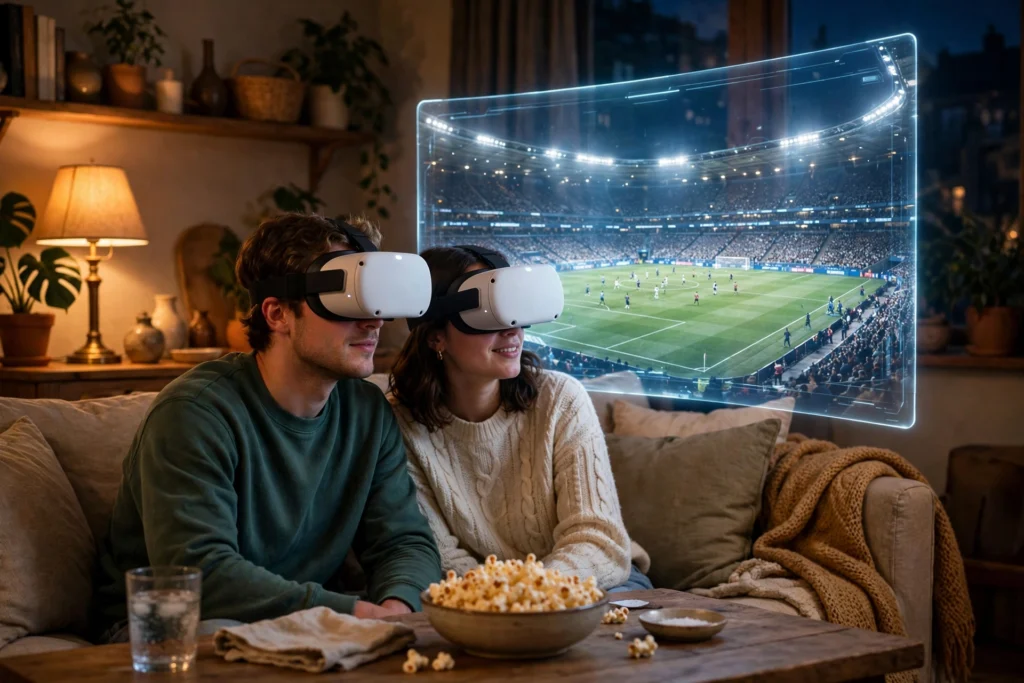
VR live sports puts you right inside the stadium without leaving your sofa. Instead of watching a match on a flat screen, you wear a headset and see the game on a giant virtual display, or from a courtside seat that feels almost real. It is the closest thing to being there when you cannot get a ticket.
Key Takeaways
- VR live sports streams a real match into a headset, either as a huge virtual screen or as a 360-degree view from inside the ground.
- You need a standalone VR headset, a sports app, and a fast, stable internet connection.
- Big-screen viewing and shared virtual lounges work best; courtside camera views are still limited to certain matches.
- Costs vary: the headset is the main expense, while sports apps range from free trials to monthly subscriptions.
- VR cannot fully replace the noise and atmosphere of a real stadium.
What does watching live sport in VR actually look like?
Picture this. You put on the headset, and your living room fades away. In front of you is a screen the size of a cinema wall, showing the match in sharp detail. Turn your head and you might see a virtual lounge, or other fans’ avatars sitting beside you. Some apps place you courtside or behind the goal, so the players look life-size.
The most common setup is the virtual big screen. It works with almost any streamed match and feels far more immersive than a television, because the screen fills your whole field of view. Some broadcasts use 360-degree cameras around the ground, letting you look around the stadium as the action unfolds.
How does the technology behind it work?
A VR headset is really two small screens, one for each eye, showing slightly different images so your brain reads depth. Head tracking follows every turn of your head and updates the picture in real time, which is what makes the stadium feel solid rather than flat. Our guide to how VR headsets work explains the screens, lenses and tracking in plain terms.
The match reaches you as a video stream, packaged for VR. The app decides how it is shown: on a virtual screen, inside a 3D stadium model, or as a 360-degree feed stitched together from cameras around the ground. Spatial audio adds crowd noise from the right direction.
What do you need to watch live sport in VR?
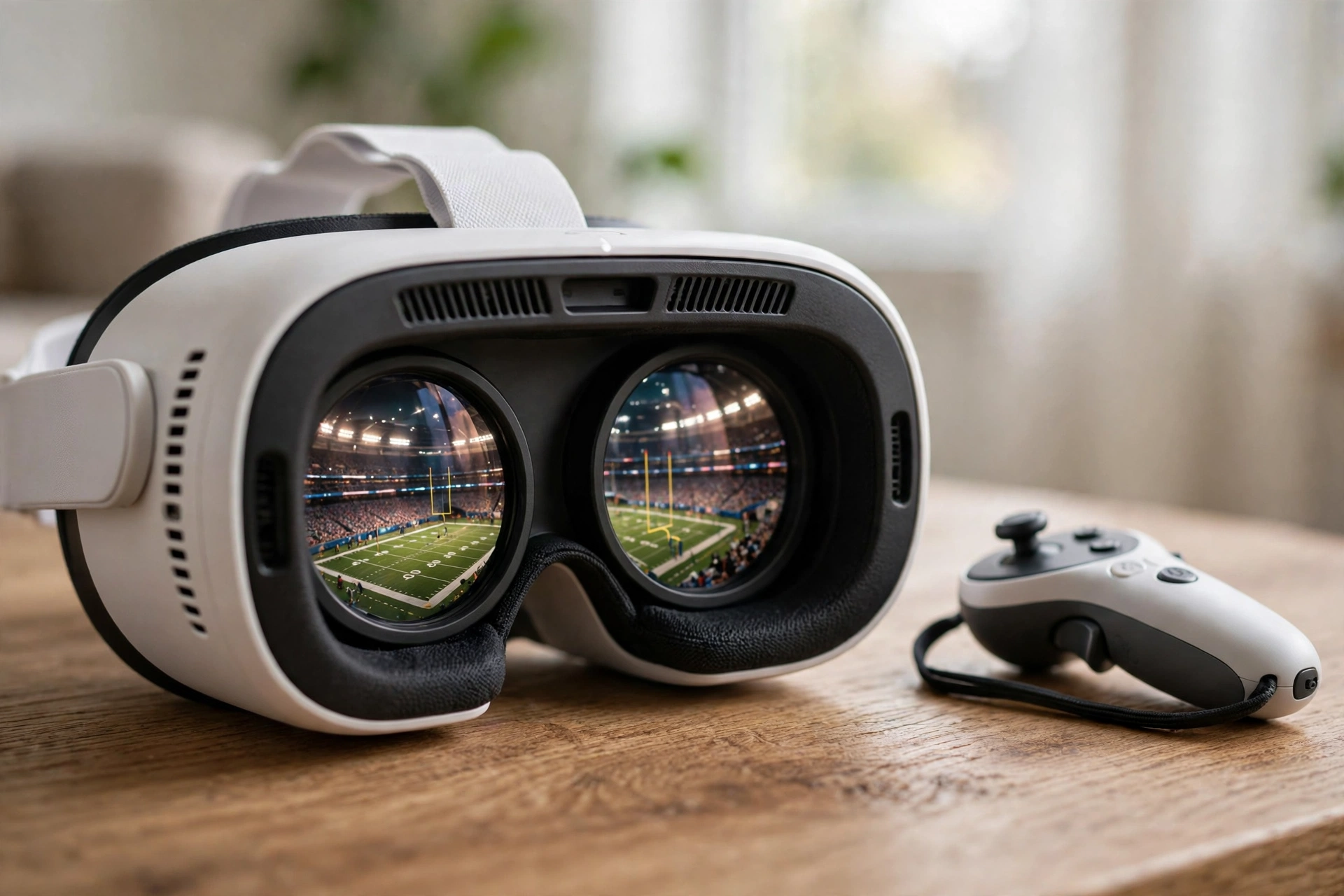
You do not need a gaming PC or a room full of gear. Most fans need four things: a standalone VR headset, a sports app or streaming service with VR support, a fast internet connection, and a bit of clear space around your chair.
Standalone headsets run apps on their own, and most sports apps are built for them. Some broadcasters offer dedicated VR apps; others let you open their normal stream inside a virtual cinema room. Availability changes by country and by league, so check your team’s broadcaster before buying anything.
A smooth VR stream needs more data than a phone stream, and a stuttering picture is far more noticeable when it fills your whole view.
Is it better than watching on television?
It depends on what you value. A VR headset gives you a screen far bigger than any television most people own, and the sense of sitting in a stadium is genuinely hard to match at home. Watching with friends’ avatars in a virtual lounge can also feel more social than texting during a match.
Television still wins on comfort. You can watch for hours without a headset on your face, glance at your phone, and chat with people in the room. VR is best in shorter bursts: a big match, a derby, a final.
Keep expectations honest, too. VR live sports is not the same as being at the ground. What it does well is bring the scale and the shared excitement closer to home.
Which sports work best in VR?
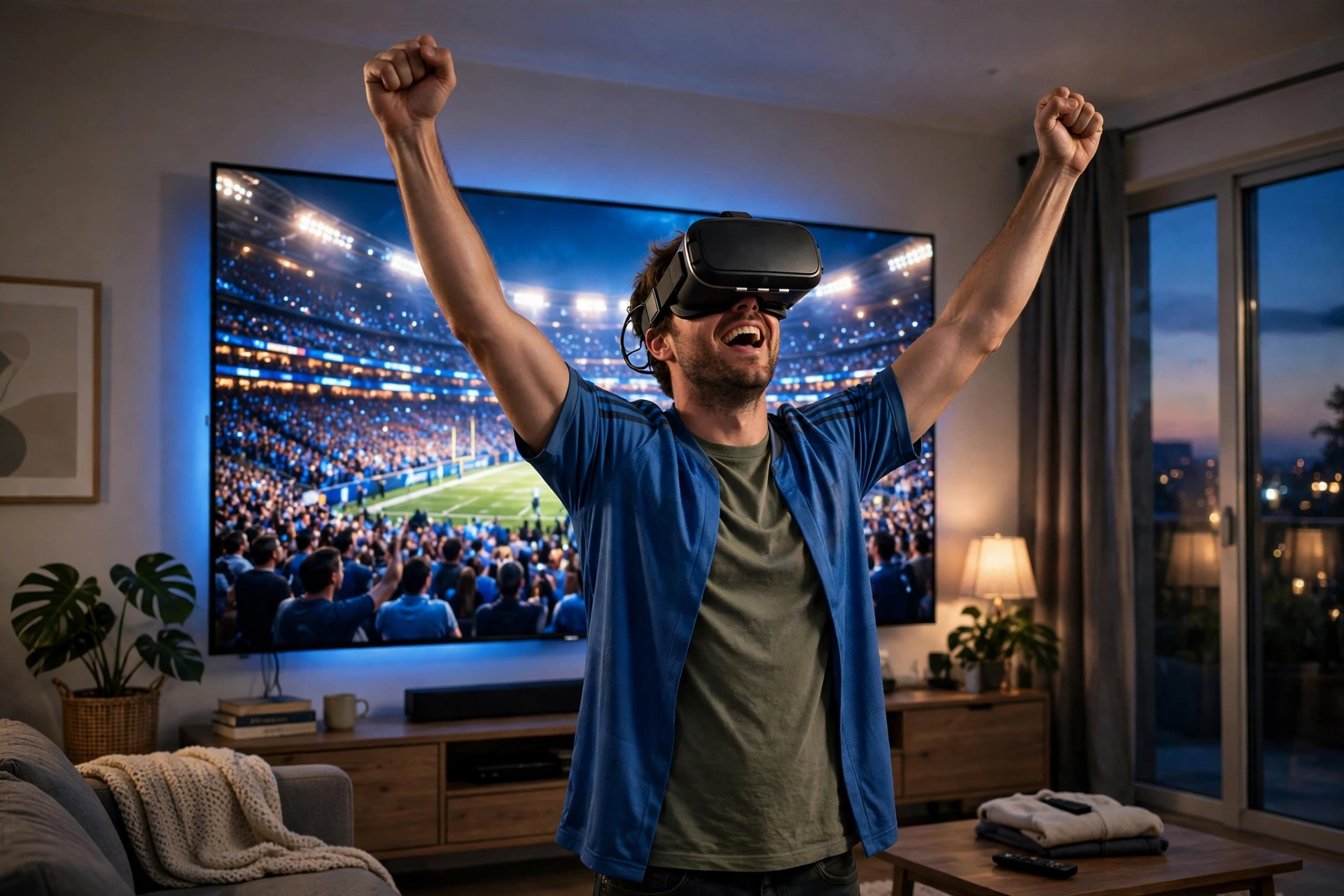
Football, basketball, American football and boxing tend to suit VR best, because the action is contained in one arena and the cameras can sit close to the play. A courtside basketball seat or a ringside boxing view translates well into a headset.
Sports spread across a huge area, like cycling or marathons, still work well on a giant virtual screen.
If you already enjoy VR for other live events, the sports version will feel familiar. Our look at VR live concerts covers the same big-screen and 360-degree ideas in a music setting.
How much does it cost?
The headset is the main cost, and prices vary widely between models and generations, so compare current options rather than assuming a fixed figure. Most sports apps charge a monthly subscription or a fee per event. Some leagues offer free VR streams as a trial, which is a good way to test whether you like it before paying.
Try a free trial or a single-event pass first. And remember that the same headset works for far more than sport — from VR sports training for athletes to the wider uses covered in our guide to virtual reality beyond gaming.
What are the downsides?
Motion sickness is the most common complaint. It usually comes from low frame rates or a shaky 360-degree feed rather than the virtual-screen mode, so if you feel queasy, switch to the screen view and take a break.
Battery life is another limit. Most standalone headsets last a couple of hours on a charge, which is fine for one match but tight for a whole afternoon. Plugging in during half-time solves it.
Finally, availability is patchy: not every league offers a VR option, and rights differ by country, so check before match day.
FAQs
Do I need a special headset for VR live sports?
No. A standard standalone VR headset works, as long as it can run the sports app you want.
Can I watch with friends in VR?
Yes, many sports apps include virtual lounges where you can sit beside friends’ avatars and talk during the match. Everyone needs their own headset and the same app.
Is VR live sports available for every match?
No. Only selected matches and events are broadcast in VR, and availability varies by league and country. The virtual big-screen mode works with more matches than the 360-degree courtside mode.
Does watching sport in VR use a lot of data?
Yes, more than watching on a phone or television. A 360-degree stream in particular needs a strong, stable connection, so use Wi-Fi before the match starts.
Will VR replace going to the stadium?
Not for most fans. It is a good option when tickets are sold out or travel is impractical, but the atmosphere of a real crowd is still something VR cannot fully copy.
Conclusion
VR live sports turns an ordinary evening on the sofa into something closer to a night at the ground: a huge screen, a sense of place, and friends beside you in a virtual lounge. It works best for big matches, it needs a decent headset and a strong connection, and it is still limited to selected events. The sensible next step is simple — check whether your team’s broadcaster offers a VR app and try a free trial for one match. For the background, the Britannica guide to virtual reality and the Wikipedia overview of virtual reality are solid places to start.