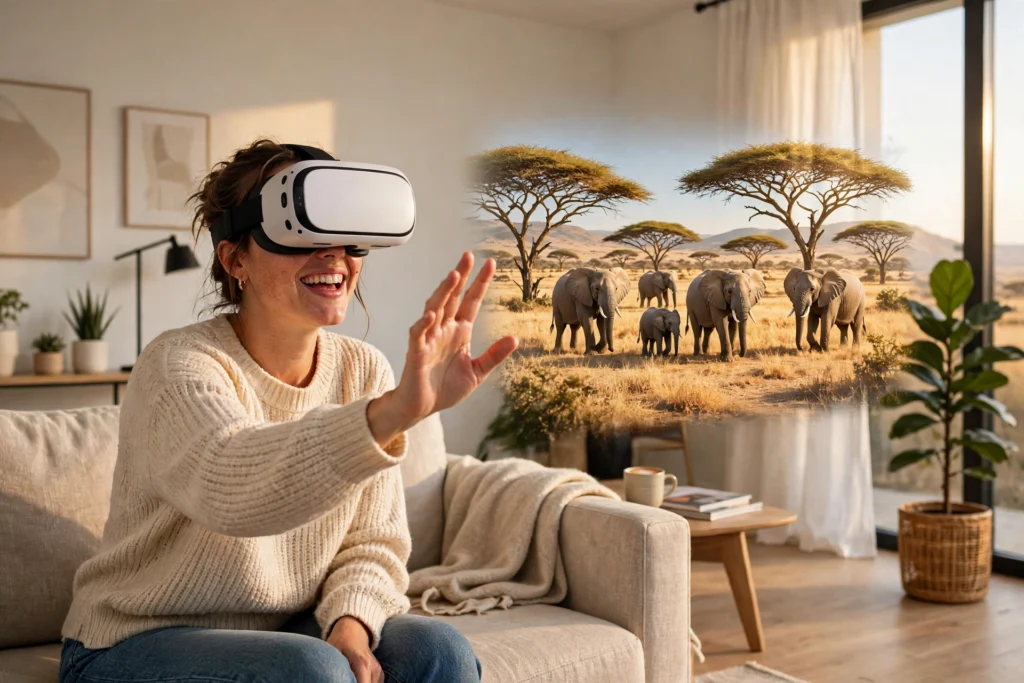
A VR safari puts you in the middle of a savannah, with elephants a few steps away and lions crossing the grass in front of you — all while you’re sitting on your own sofa. It’s a headset, a wildlife film or app, and a bit of room to look around. No flights, no jeep, no dust in your shoes.
Key Takeaways
- A VR safari is a 360-degree or 180-degree wildlife film, or an interactive app, watched through a VR headset.
- The best ones use real footage from places like Kenya and Rwanda, so the animals are genuine, not cartoons.
- Watch at home on a standalone headset, or try a motion-seat version at a zoo for a few dollars extra.
- It can’t replace a real safari, but it’s a fine way to meet wildlife you’d otherwise never see.
So what exactly counts as a VR safari?
The phrase covers three different things, and it’s worth knowing which one you’re getting before you pay for it.
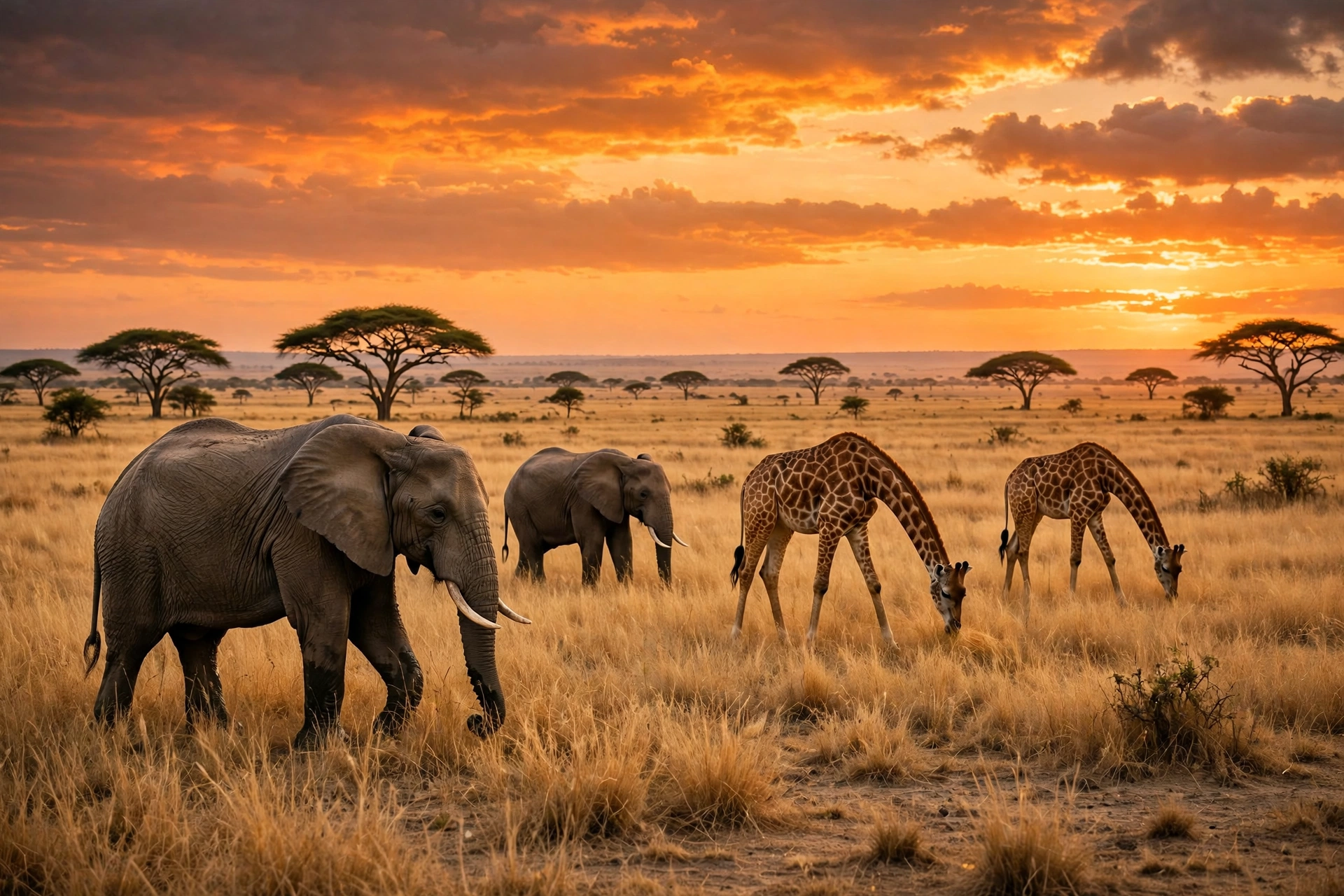
The most common is a filmed VR documentary. A camera rig records a real place in 360 degrees, and you watch it in a headset. Turn your head and the view turns with you. Ecosphere, made with the World Wildlife Fund, takes you to the rainforests of Borneo, the savannahs of Kenya, and the reefs of Raja Ampat. Murchison Falls, a 25-minute film on Meta Quest, follows elephants, giraffes, and lions through a Ugandan national park.
The second kind is a zoo VR theatre. You sit in a motion seat, put on a headset, and watch a short wildlife film while the seat moves with the action. Zoo Atlanta’s Wild Explorer runs Gorilla Trek and The Great Migration; each film lasts around seven minutes and costs $8 plus tax on top of admission.
The third kind is interactive. Apps and games let you walk around a virtual habitat rather than just watch a film — Living Room, a mixed-reality game for Quest 3, turns your living room into a small animal habitat.
What does it actually feel like?
The first minute is the strange part. Your brain knows you’re on a sofa, but your eyes say you’re standing in tall grass with an elephant twenty metres away. Most people stop noticing the sofa pretty quickly.
Filmed safaris feel the most real because the animals are real — an elephant filmed in the wild moves with a weight no animation quite matches. What you give up is control: you can’t walk closer, and you can’t choose what the camera looks at next.
Sound matters more than people expect. A good VR safari uses spatial audio, so a lion’s roar seems to come from the left and a bird calls from behind you. Britannica’s virtual reality overview explains how motion sensors track your head to keep the view matched to your movements. Use headphones rather than the headset’s speakers.
What gear do you need at home?
A standalone headset is enough. Something like a Meta Quest works on its own, with no PC and no cables, and most wildlife films and apps run on it directly. See how VR headsets work for what’s inside one. Check the age guidance before you buy: most headset makers suggest ages 10 and up, and short sessions suit children best. Our guide to VR for kids covers the comfort and safety basics.
How much does a VR safari cost?
It depends on which of the three kinds you pick.
| Option | What you get | Typical cost |
|---|---|---|
| Wildlife film on your own headset | A 180- or 360-degree film at home, yours to rewatch | A few dollars per film, or free with some apps |
| Zoo VR theatre | A short film in a motion seat, at the zoo | Around $6–$8 on top of zoo admission |
| Interactive wildlife app or game | A virtual habitat you can explore and play in | Roughly $20 for a full game on Quest |
A real safari, for comparison, usually runs into thousands of dollars once flights, lodging, and park fees are counted. A VR safari won’t give you the same trip, but the price gap explains why so many people try the virtual version first.
Where a VR safari falls short
A filmed VR safari shows you what the camera saw, not what you would have chosen to see. On a real safari, your guide stops the jeep when something interesting happens, and you watch a lion for as long as you like. In a film, the scene moves on when the director says so.
There’s no weather, no smell, and no sense of scale quite like the real thing. A VR elephant looks big, but it doesn’t shake the ground.
What VR does well is access. It takes people who can’t travel — because of cost, health, or age — to places they’d never otherwise see. It’s one of several ways VR works for travel, and the same idea takes you underwater in VR ocean exploration.
A first VR safari in five easy steps
Start with a film, not a game. A filmed wildlife documentary is the easiest way to judge whether VR safaris suit you.
Pick a short one — five to ten minutes is enough for a first session. If you feel uneasy, take the headset off and try again another day.
Clear a little space, and sit somewhere comfortable with room to turn your head.
Use headphones: spatial audio is half the experience.
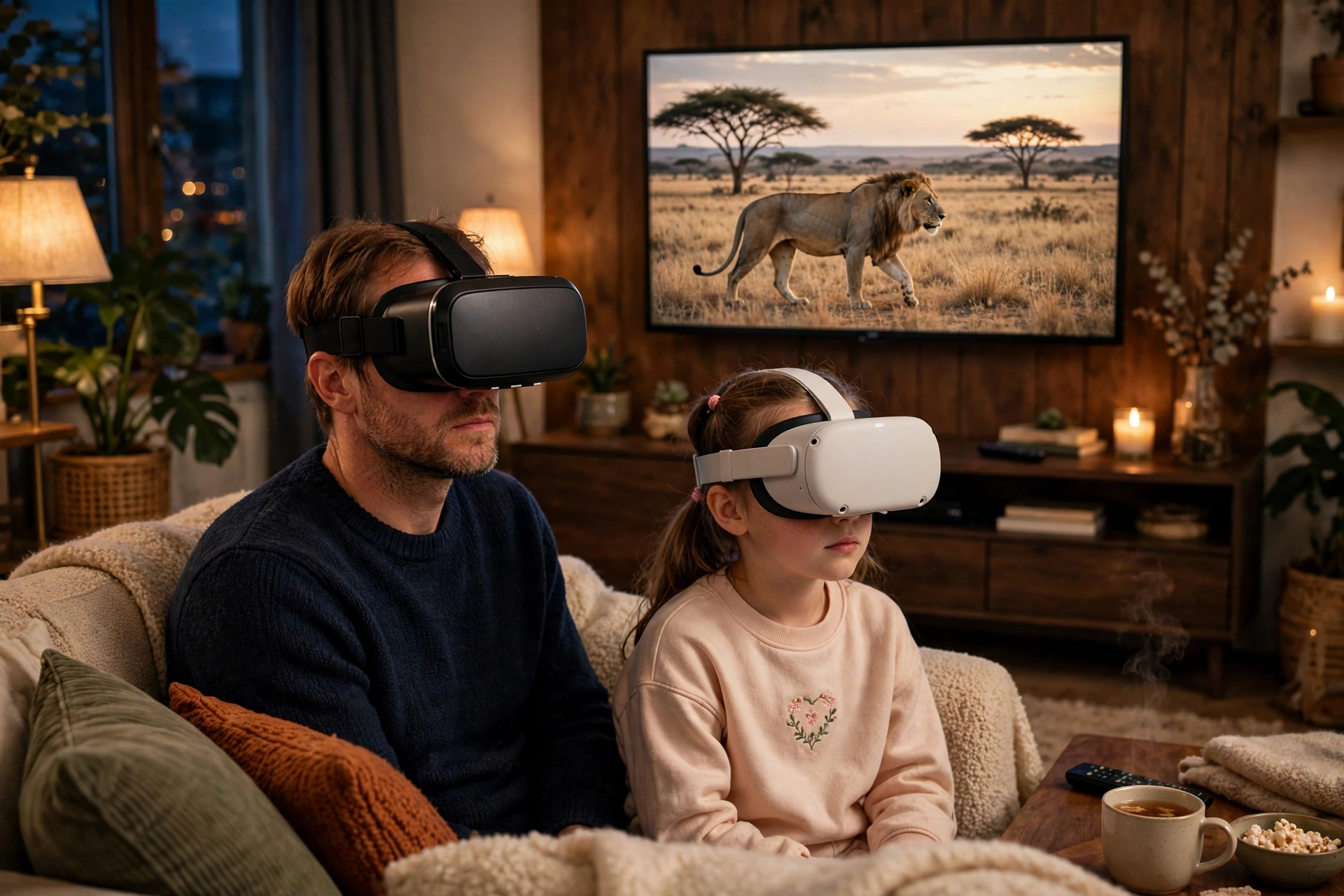
Watch it with someone — many headsets can cast what the wearer sees to a TV, so the rest of the room can follow along.
Is a VR safari worth it?
For most people, yes — as long as you know what you’re buying. A filmed safari on a headset you already own costs little and genuinely surprises people who’ve never tried VR.
It won’t replace the real thing, and it shouldn’t try to. But as a window into the wild from your living room, it’s a remarkably good one.
Frequently Asked Questions
What is a VR safari?
A VR safari is a wildlife experience watched through a VR headset — usually a filmed 360-degree documentary, a zoo motion-seat film, or an interactive app that lets you explore a virtual habitat.
Do I need a powerful computer for a VR safari?
No. Most wildlife films and apps run on a standalone headset like a Meta Quest, which needs no PC. A computer only matters if you want the wider range of PC VR nature experiences.
How long does a VR safari last?
Zoo theatre films run about six to seven minutes, while home films like Murchison Falls run around 25 minutes. Interactive apps have no fixed length — you stop when you like.
Can children try a VR safari?
Yes, with limits. Most headsets are suggested for ages 10 and up, and short sessions of ten to fifteen minutes work best. Check the age guidance on the headset and the app before you start.
Is a VR safari better than watching a nature documentary on TV?
It’s different, not simply better. VR puts you inside the scene, so animals feel close — but a TV documentary lets you watch together with others and usually tells a richer story.
Your next step
If you already own a headset, download one filmed wildlife experience — Ecosphere’s Kenya episode is a good first pick — and watch it seated, with headphones, in a quiet room. If you don’t own one, check whether a zoo near you runs a VR theatre: a single short film costs a few dollars and tells you in seven minutes whether VR safaris are for you.