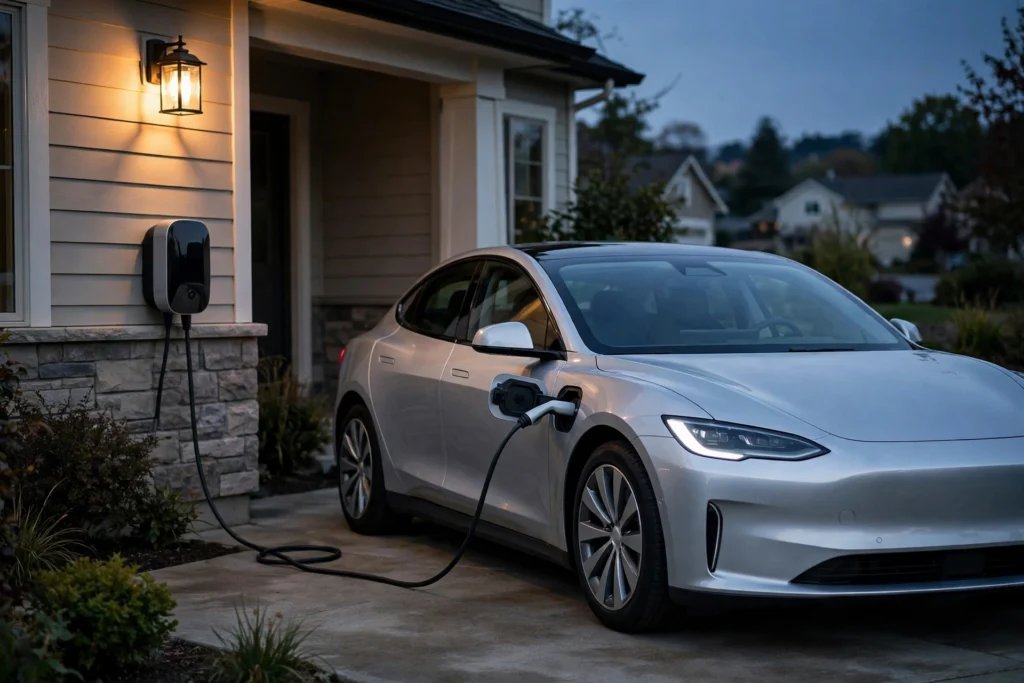
An EV charger is the bridge between the electricity grid and your car’s battery. It takes power from a socket or a charging post, turns it into a form the battery can store, and manages the flow so the battery fills safely. Which charger you use decides how fast that happens.
Key Takeaways
- An EV charger delivers power to the battery and controls the flow; the car’s onboard charger converts AC to DC on slower chargers.
- Level 1 uses an ordinary household socket and is the slowest option, adding only a few miles of range per hour.
- Level 2 uses a 240-volt circuit and is the usual home setup, filling most cars overnight.
- DC fast charging converts power inside the station and feeds the battery directly, so it is much quicker but best for longer trips.
- Charging slows down as the battery nears full, which is normal and protects the battery.
What does an EV charger actually do?
Think of the charger as a careful gatekeeper rather than a simple plug. When you connect a car, the charger and the car talk first: they confirm the plug is seated properly, check the battery’s state, and agree on how much power can flow safely. Only then does charging start, with the charger watching the session and stopping if something gets too hot or the battery reaches its target.
Why does AC or DC matter?
The grid delivers alternating current, or AC. A car battery stores direct current, or DC. So somewhere along the way, AC has to become DC — and where that conversion happens is the key difference between charger types.
On Level 1 and Level 2 chargers, the station supplies AC and the car’s onboard charger converts it to DC. That onboard charger is built into the car, and its size limits how fast AC charging can go. On a DC fast charger, the big converter sits inside the station instead, so DC goes straight into the battery and the onboard charger is bypassed. That is why fast charging is so much quicker.
What are the three charging levels?
Charging is usually described in three levels. The higher the level, the more power the charger can deliver and the faster the battery fills.
| Level | Supply | Power | Best for |
|---|---|---|---|
| Level 1 | Ordinary household socket | About 1.4–2.4 kW | Overnight top-ups, short commutes |
| Level 2 | Dedicated 240-volt circuit | About 7–19 kW | Home and workplace charging |
| DC fast charging | Three-phase commercial supply | About 50–350 kW | Road trips and quick top-ups |
Level 1 is the slowest by a wide margin. Plugged into a normal socket, most cars gain roughly 3–5 miles of range per hour, so a full charge can take a day or more. It suits short daily commutes, and it needs no special installation — the cable usually comes with the car.
Level 2 is the sweet spot for most owners. It needs a dedicated 240-volt circuit and a wall-mounted unit at home or a post at work. It typically adds 18–28 miles of range per hour and fills most cars overnight in four to eight hours.
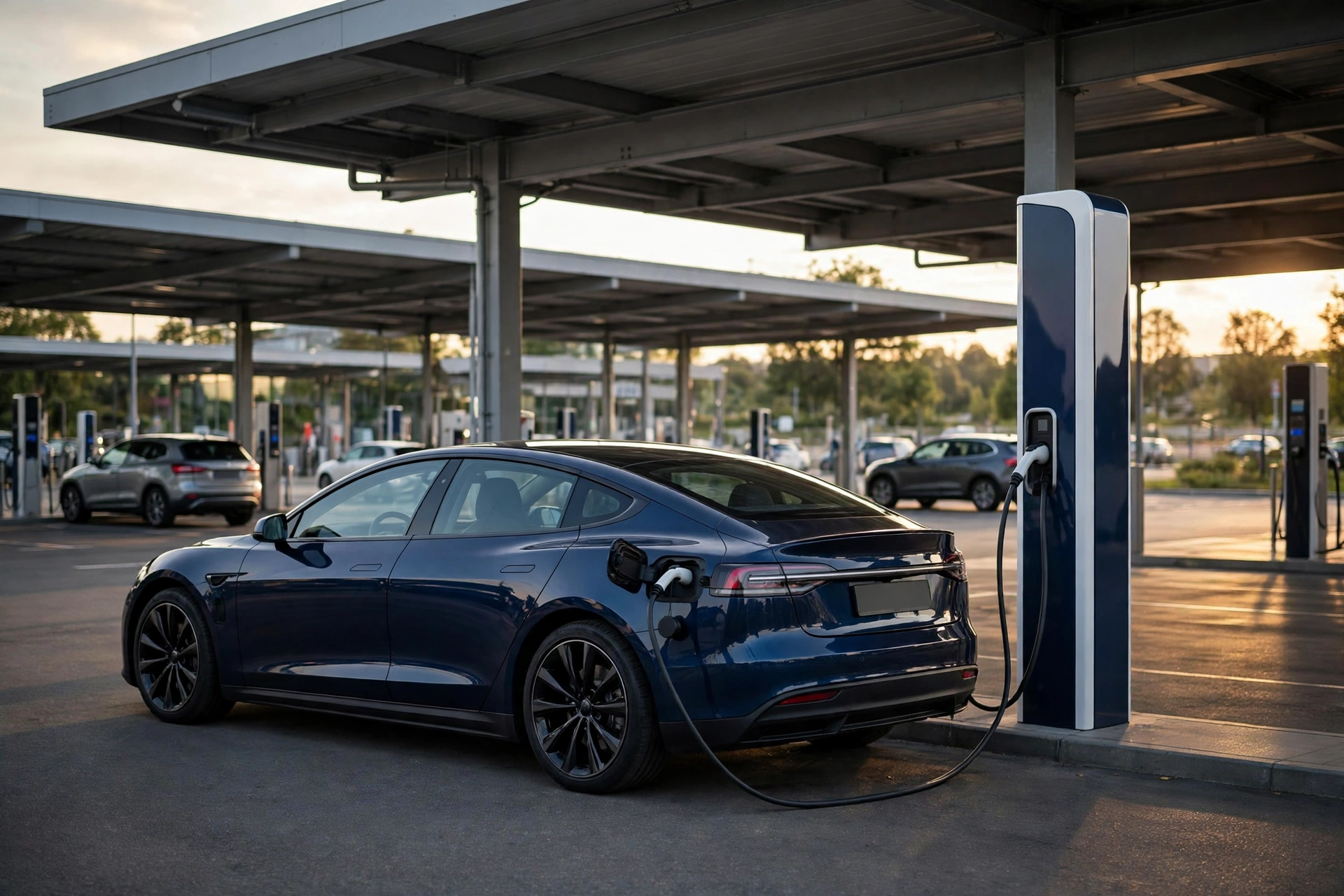
DC fast charging is the motorway option. The station converts the power itself and pushes DC straight into the battery at 50 kW or more. A typical session takes a battery to about 80% in 20–40 minutes — ideal for long journeys, though it is the most expensive way to charge.
A worked example: charging overnight at home
Picture a car with a 60 kWh battery arriving home at 20% charge, needing roughly 48 kWh to fill up. On a Level 1 socket at about 1.4 kW, that would take well over a day. On a 7 kW Level 2 home charger, it takes around seven hours, so the car is ready by morning. On a 150 kW DC fast charger, it could reach 80% in roughly half an hour. The exact numbers vary by car and charger, but the scale is the point: Level 2 turns charging into an overnight habit, and DC fast charging turns it into a coffee stop.
Why does charging slow down near full?
If you have watched a phone charge, you will have seen the same pattern: the first half fills quickly, then the pace drops. EV batteries behave the same way — as the battery approaches full, the charger deliberately reduces power to protect the cells from heat and stress. That is why fast-charging times are usually quoted to 80% rather than 100%: the last 20% can take almost as long as the first 80%, so on a road trip it is often quicker to stop at 80% and charge again later.
Will any charger fit my car?
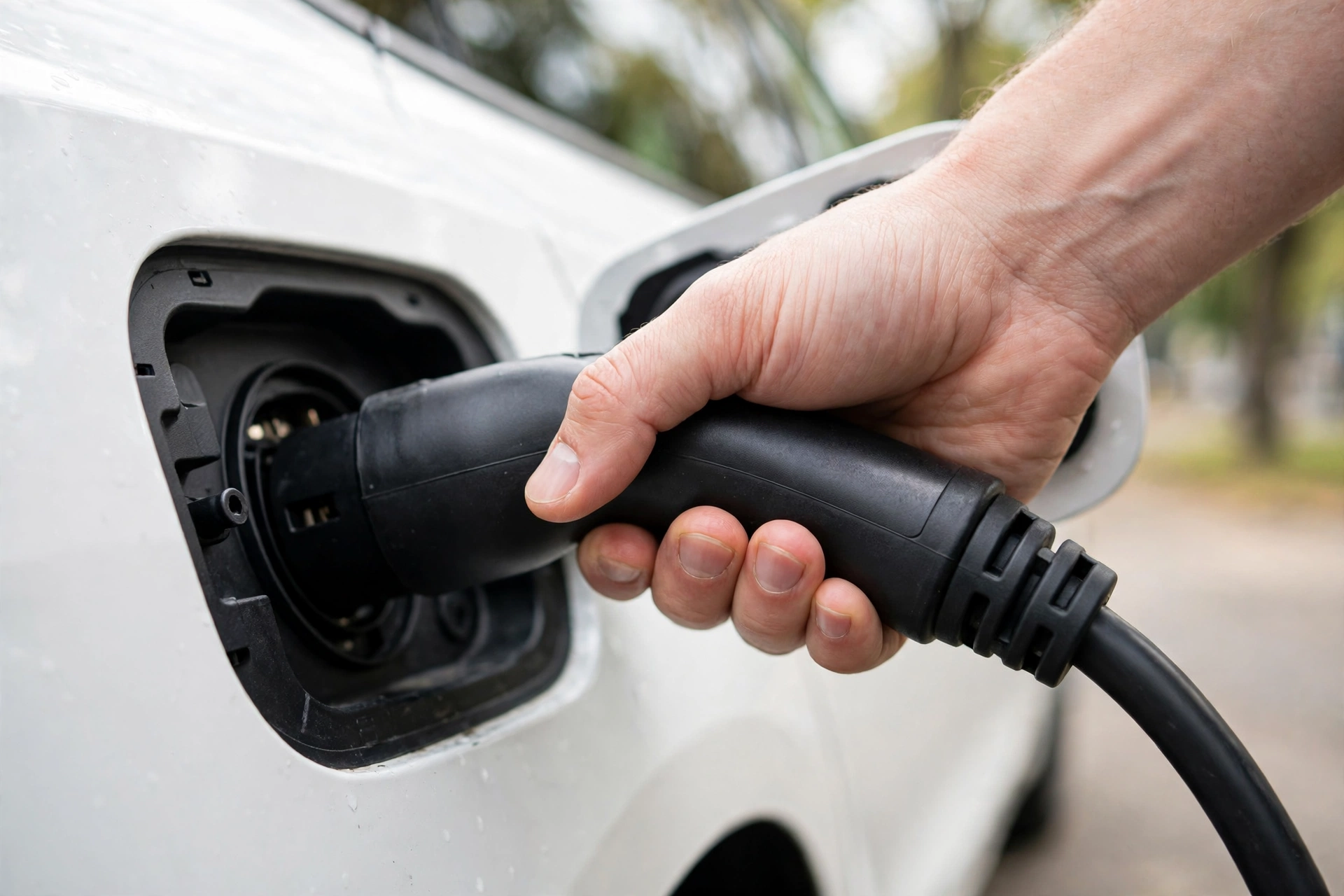
Mostly, yes — with one thing to check. In North America, Level 1 and Level 2 charging generally use the SAE J1772 connector, while DC fast charging adds two large pins below it in the Combined Charging System, or CCS. Some older Japanese models use a plug called CHAdeMO, and Tesla cars use their own connector, now standardised as the North American Charging Standard, or NACS.
Adapters exist for many combinations, and most new cars sold in North America now use NACS or ship with an adapter.
What should you check before installing a home charger?
First, your electrical panel needs spare capacity for a dedicated 240-volt circuit. Second, decide where the car parks and how long the cable needs to be — a cable that barely reaches is a daily annoyance. Third, look at smart features: many home chargers connect over Wi-Fi, so you can schedule charging for cheaper overnight hours and track energy use in an app.
Frequently Asked Questions
How long does it take to charge an electric car?
Level 1 can take a day or more, Level 2 usually fills a car overnight in four to eight hours, and DC fast charging typically reaches 80% in 20–40 minutes.
Is it bad to use DC fast charging every day?
Occasional fast charging is fine, but daily use can add extra heat and wear to the battery. Most owners use Level 2 at home and save fast charging for trips.
Can I charge an EV from a normal household socket?
Yes. Level 1 charging uses an ordinary socket and the cable that usually comes with the car. It is slow, but it works for short daily driving or as a backup.
Why does my EV charge slower in cold weather?
Cold batteries accept charge more slowly, and some energy goes to warming the battery first. Preconditioning while the car is still plugged in helps.
Do all public chargers work with all electric cars?
Not quite. Connector types differ, though adapters and the shift towards a common standard are making this easier. Check your car’s plug type in a charging app before you set off.
Conclusion
An EV charger is a managed power delivery system, not just a plug: it converts grid power into battery power, negotiates a safe charging rate with the car, and slows down as the battery fills. For most drivers, a Level 2 charger at home covers daily driving, with DC fast charging reserved for longer journeys.
If you are thinking about an electric car, start with your own routine. Work out your typical daily mileage, check whether your parking spot can take a 240-volt circuit, and try one public charging session before you commit.