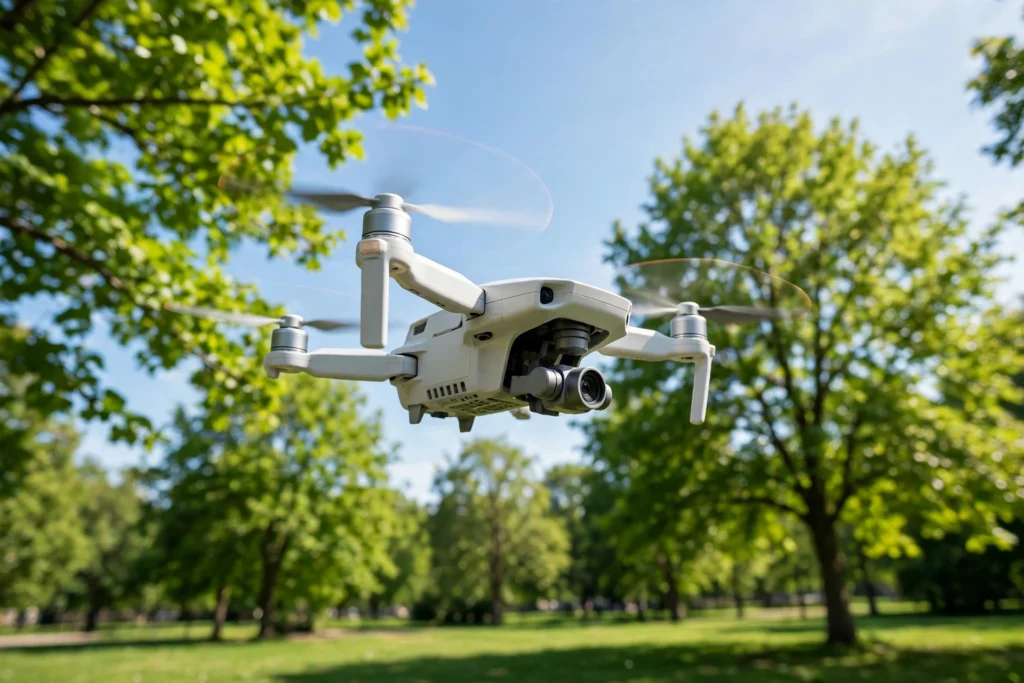
A drone robot is a small flying machine that takes off, hovers, and travels without a pilot on board. Spinning propellers provide lift, a flight controller keeps it balanced, and sensors plus GPS tell it where it is and what surrounds it.
That combination is why drones feel almost effortless to fly, even though a lot is happening at once. The rest of this guide explains each part in plain terms, what drones are used for, and what to check before a first flight.
Key Takeaways
- Most small drone robots are quadcopters: four propellers whose speeds are adjusted to lift, turn, and hover.
- A flight controller reads gyroscopes, accelerometers, and other sensors many times a second to keep the drone level.
- GPS, cameras, and obstacle sensors help a drone hold its position, follow a route, and avoid nearby objects.
- A pilot usually flies with a remote controller or a phone app, while some drones can also follow a pre-set path.
- Battery life, wind, and local flying rules are the main practical limits for everyday drone use.
What Is a Drone Robot?
A drone robot, often called an unmanned aerial vehicle or UAV, is an aircraft without a person on board. Some are flown live by a pilot on the ground. Others can fly a planned route on their own, with the pilot watching and ready to take over. The word “robot” fits because the machine senses its surroundings and adjusts itself, rather than simply responding to every stick movement like a basic remote-control toy.
Drones come in many sizes. Tiny indoor drones may weigh less than a phone and fit in a hand. Larger camera drones can carry a stabilised camera and fly for around half an hour on one battery. Much bigger drones are used for farm surveys, inspections, and deliveries. The basic idea is the same in each case: lift, balance, navigation, and a link back to the operator.
How Do Drone Robots Stay in the Air?
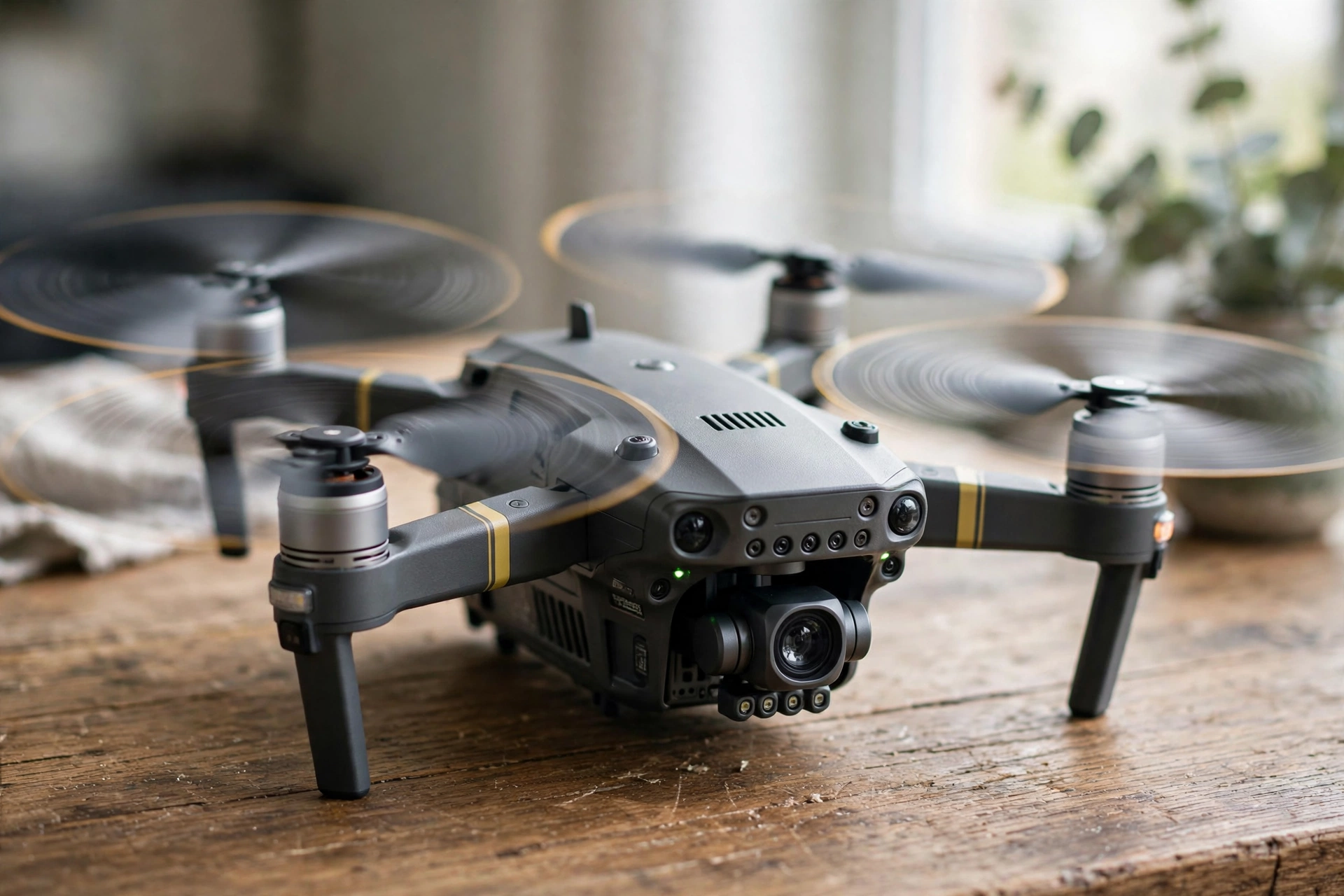
Lift comes from propellers. On a quadcopter, four motors spin four propellers, and the spinning blades push air downward. That downward push lifts the drone upward. Speeding up all four propellers makes it climb. Slowing them all down makes it descend. To move forward, the drone tilts slightly and the propellers push air partly backward. To turn, it speeds up the propellers on one side and slows down those on the other.
Balance is the clever part. A flight controller, a small computer on board, constantly checks the drone’s tilt and rotation. If a gust tips it to one side, the controller speeds up the motors on the low side to level it again. This happens so fast that the pilot rarely notices. Without that constant correction, a quadcopter would be very hard to keep steady, because it has no wings to hold it up.
How Do Drone Robots Know Where They Are?
Position comes from several sources working together. Outdoors, GPS gives the drone a rough location, much like a phone map. That is how many drones can hover in one spot even when the pilot lets go of the controls: the drone compares its GPS position with its target position and adjusts the motors to stay put. Barometric pressure sensors help estimate height, while downward-facing cameras or sensors can track the ground when GPS is weak, for example close to buildings.
Obstacle sensing is a separate job. Many drones carry cameras or small sensors that look forward, backward, or downward for nearby objects. If something is too close, the drone may slow down, stop, or warn the pilot, depending on its settings. These systems help, but they are not perfect. Thin branches, wires, and glass can be hard to detect, so a clear flying area still matters.
How Does a Pilot Control a Drone Robot?
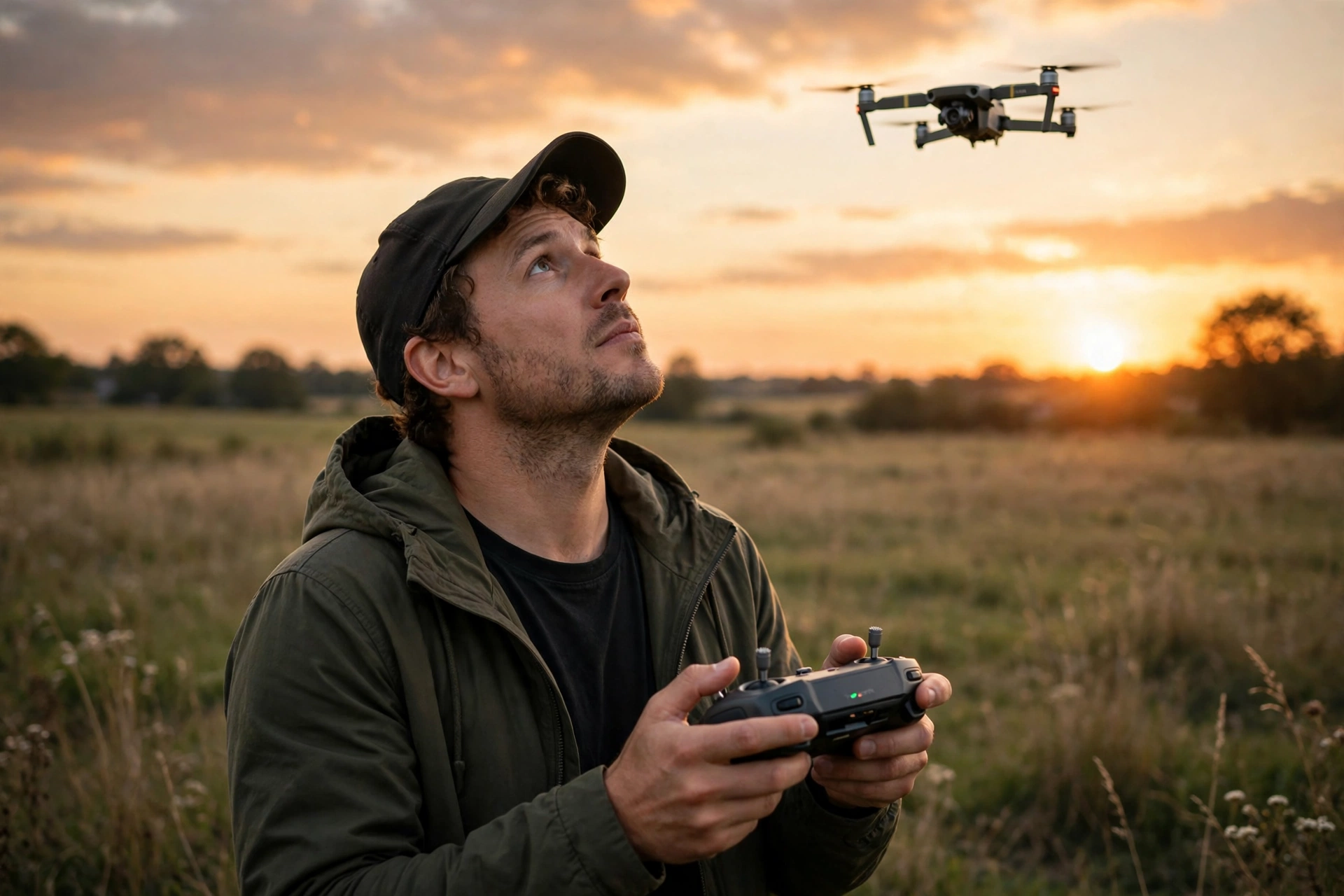
Most pilots use a remote controller with two sticks. One stick usually controls height and turning, while the other controls forward, backward, and sideways movement. A phone or tablet often clips onto the controller to show the camera view, battery level, and a map. Some drones can also be flown from a phone app alone, though a physical controller usually gives finer control.
Autonomous features sit on top of that manual control. A pilot may tap a point on a map, ask the drone to follow a person, or set it to return home automatically if the signal drops or the battery runs low. Those features still need a watchful pilot. The drone may not see every obstacle, and it cannot judge whether a location is safe or legal to fly in.
What Are Drone Robots Used For?
Photography and video are the most familiar uses. A drone can film a coastline, a wedding venue, or a roof from angles that would otherwise need a ladder or a helicopter. Farmers use drones to survey crops and spot dry or damaged patches across large fields. Inspectors use them to look at roofs, bridges, power lines, and wind turbines without climbing or closing a road.
Delivery and rescue work show the same pattern in a different setting. Small delivery drones can carry light parcels over short distances, while search teams can use a drone’s camera and heat sensor to scan an area faster than a ground team. The idea is consistent across these jobs: a drone goes where a person cannot easily go, gathers a view or a measurement, and comes back.
Related robots use similar building blocks on the ground and in water. Robot arms combine motors and sensors for precise movement, warehouse robots follow planned routes indoors, delivery robots navigate streets and sidewalks, and underwater robots use thrusters and sonar in a very different environment. Drone robots apply the same principles — motors, sensors, and a planned route — in the air.
What Limits Drone Robots?
Battery life is the most obvious limit. Most small camera drones fly for roughly 20 to 40 minutes, depending on wind, weight, and how hard the motors work. Wind is another limit: strong gusts drain the battery faster and can push a light drone off course. Rain, fog, and very cold weather can also shorten flights or damage electronics, so calm, dry conditions are best for learning.
Rules matter just as much as technology. Many countries require registration for larger drones, limit how high or how far a drone can fly, and ban flights near airports, crowds, and some public buildings. Check the local rules before flying, keep the drone in sight, and stay away from people, roads, and wildlife. A drone that can fly further than the pilot can see it is not a reason to fly it out of sight.
Frequently Asked Questions
How long can a drone robot fly on one battery?
It depends on the model and conditions. Many small camera drones manage roughly 20 to 40 minutes in calm weather, while tiny toy drones may manage only a few minutes. Wind, extra weight, and frequent climbing all reduce flight time.
Do drone robots need GPS to fly?
Not always, but GPS helps a lot outdoors. Without GPS, a drone can still fly manually, and some use downward cameras to hold position indoors. GPS makes hovering, returning home, and following a route much more reliable outside.
Can a drone robot avoid obstacles on its own?
Many can detect larger obstacles and slow down or stop, but no consumer drone sees everything. Thin wires, branches, and reflective surfaces can be missed, so the pilot should still choose an open area and keep watching the drone.
Are drone robots hard for a beginner to fly?
Most modern drones are easier than they look, because the flight controller handles balance and hovering. Start in a wide, open space, learn the controls at low height, and practise landing before trying longer flights or camera moves.
What should I check before a first drone flight?
Check the battery, propellers, and local flying rules, and pick a calm, open location away from people, roads, and airports. Keep the drone in sight, start with short flights, and set a return-home point before takeoff if your drone offers one.
Conclusion
Drone robots work because four simple systems work together: propellers for lift, a flight controller for balance, sensors and GPS for position, and a controller or planned route for direction. Together, they let a small machine hover steadily, follow a path, and bring back photos or measurements from places that are hard to reach on foot.
If you want to go deeper, start with the wider background. The Britannica overview of uncrewed aerial vehicles explains how drones developed and where they are used, and the Britannica robotics overview places them in the wider field of robotics. A practical next step is to choose one calm, open practice spot, learn hovering and gentle turns there, and only move on to longer routes once landing and return-home feel routine.