AI recognise faces by turning a photo into a set of measurements, then comparing those measurements with faces it already knows. First it finds the face, then it maps points such as the eyes, nose and mouth, and finally it checks the result against a stored record — all in a second or less on a modern phone.
Key Takeaways
- Face recognition has four steps: detect, line up, measure, and compare.
- A face becomes a list of numbers, sometimes called a faceprint.
- Verification checks one claimed identity; identification searches a whole database.
- Phones, airports and photo apps use the same basic idea in very different ways.
- Accuracy depends on light, angle, image quality and training data.
What happens when AI recognises a face?
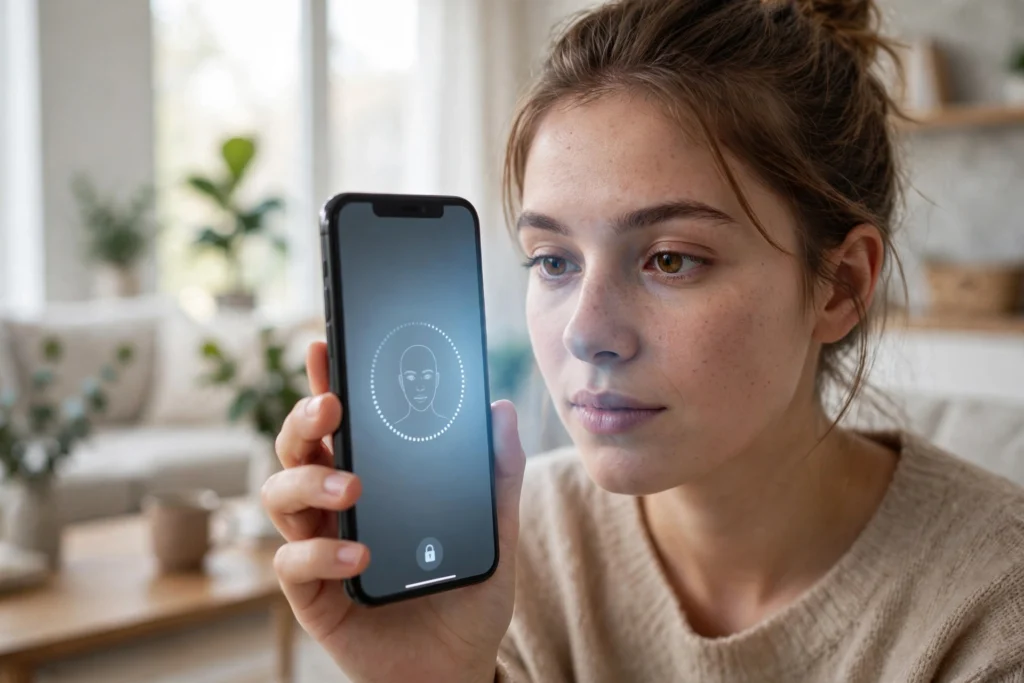
Your phone unlocks by running the camera image through a short pipeline. First comes detection: the system scans for face-like patterns — two eyes above a nose above a mouth — and finds them in a fraction of a second. This is computer vision, the part of AI that understands images.
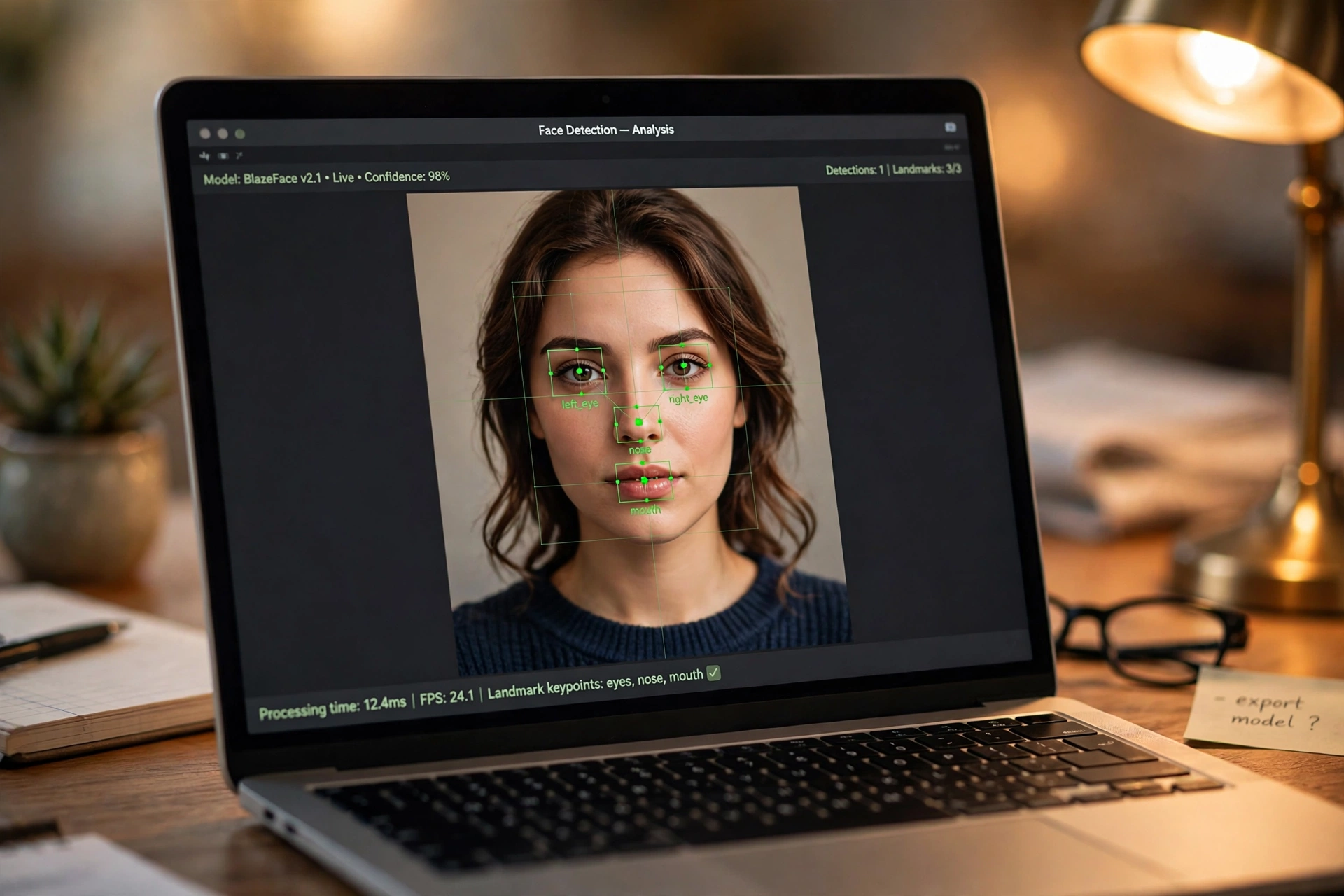
Next comes alignment: the software rotates and scales the face until the eyes sit level. Then comes measurement, the real work — the system picks out landmarks such as the eye corners, nose tip and mouth edges, measures the distances between them, and boils it all into a set of numbers.
Finally comes comparison: those numbers are checked against stored records to produce a similarity score. Clear the threshold and you get a match; fall short and you get a polite refusal.
How does AI turn a face into numbers?
A face recognition system does not store your photo and compare pictures side by side. Instead, it converts each face into a long list of numbers — a kind of mathematical fingerprint for your face.
A neural network does the conversion. During training, it sees huge numbers of labelled face photos and learns which features tell one person from another. A mole might matter; a shadow probably does not.
The result is usually a vector of a few hundred numbers. Two photos of the same person produce vectors that sit close together, while photos of different people sit far apart — so the system compares faces with simple arithmetic, and the stored record is not a photo at all. This is built on machine learning, the same broad idea behind photo apps that group your holiday pictures.
What is the difference between verification and identification?
These two words sound similar, but they describe two very different jobs. Verification is a one-to-one check: you claim to be someone, and the system compares your face with the single record linked to that claim. That is why phone unlocking feels so reliable.
Identification is a one-to-many search: the system takes a face and searches a whole database to find out who it belongs to, as in an airport watchlist check. It is much harder, because every extra record is another chance for a false match.
A facial recognition system can do either job, but the accuracy, risks and rules change completely between the two. When a headline says face recognition went wrong, it is usually identification, not phone unlocking.
Where is face recognition used today?
You have probably used face recognition more often than you realise. On your phone, face unlock replaces a PIN, and photo apps group pictures of the same person so you can search for “Mum” instead of scrolling through thousands of shots.
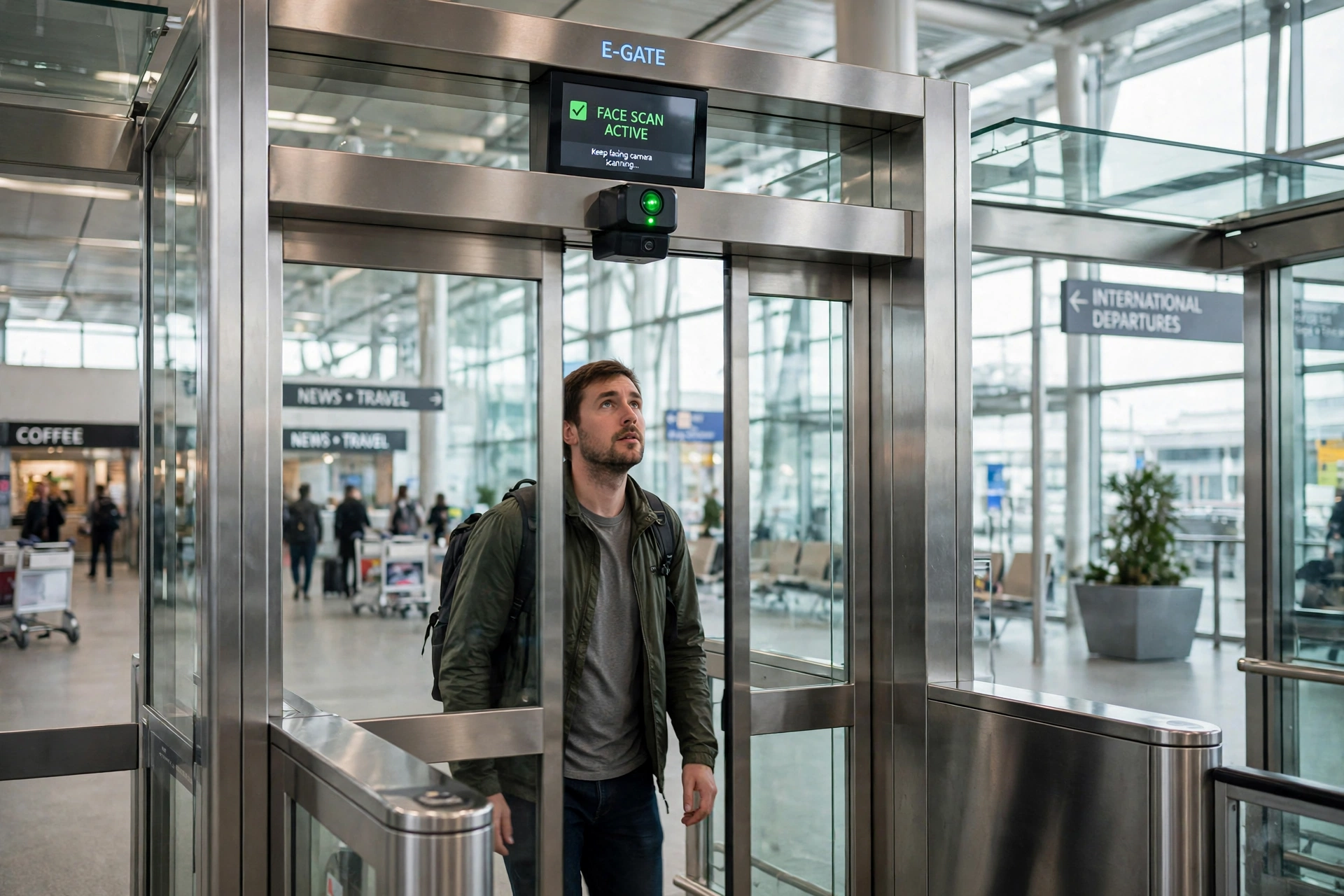
Airports are another big user: an e-gate compares the traveller’s face with the photo in their passport chip, and opens if they match. The same idea appears at some office buildings, where a camera at the door replaces a key card.
Behind the scenes, it also organises photo libraries, tags people in posts, and checks that the person taking an online exam is the student who enrolled. What changes is who holds the database, who gave consent, and what happens when it gets it wrong.
Why does face recognition sometimes get it wrong?
Light is the first problem: harsh sunlight, deep shadow or a dim room all make the measurements noisier. Angle matters too — a face turned three-quarters away is harder to match — and a mask, sunglasses or a new beard can shift the numbers.
The training data matters as well. If the faces a system learned from were mostly of one age group or skin tone, it works best on people who look like that group and worse on everyone else. Independent testing has repeatedly found these gaps, and NIST’s Face Recognition Vendor Test measures commercial systems on large photo sets to track them.
Some people simply look alike, and a loose threshold may accept the wrong person — while a tight one turns genuine users away. Every system is a compromise between those two errors.
What about privacy and consent?
A face is different from a password. You can change a password; you cannot change your face. That is why the privacy questions around face recognition are sharper than for most other technology.
The key question is consent: did the person agree to have their face measured and stored? Unlocking your own phone is the easy case — you set it up and the data stays on the device. A camera scanning faces in a public place is the hard case, because the people scanned may never know it happened.
Different places have answered differently: some cities have banned government use outright, while others allow it with strict rules. The debate is part of the wider AI ethics conversation.
Frequently Asked Questions
Does face recognition store a photo of my face?
Usually not. Most systems store a mathematical template — a list of numbers derived from your face — rather than the photo itself. The photo is used once to create the template and then discarded.
Can face recognition be fooled by a photo?
A basic system can be, which is why modern phones check for liveness — depth sensing, or asking you to blink. A flat photo has no depth, so depth-sensing systems can tell.
Why does face recognition fail in poor light?
The camera needs enough detail to find landmarks and measure distances. In dim light or strong backlight, edges blur and shadows hide features. Infrared cameras help, which is why some phones unlock fine at night.
Is face recognition the same as face detection?
No. Detection only finds that a face is present and where it is. Recognition goes further: it works out whose face it is by comparing it with stored records.
Can I opt out of face recognition?
It depends on the setting. On your own phone and in most apps, you can switch it off in settings. In public places, opting out is harder, because you may not know a camera is running.
Conclusion
AI recognise faces by measuring them, not by looking at them the way we do. Detection finds the face, alignment straightens it, a neural network turns it into numbers, and a comparison decides whether it matches. Start with your own phone: check your face unlock settings and decide whether you are happy with them.